
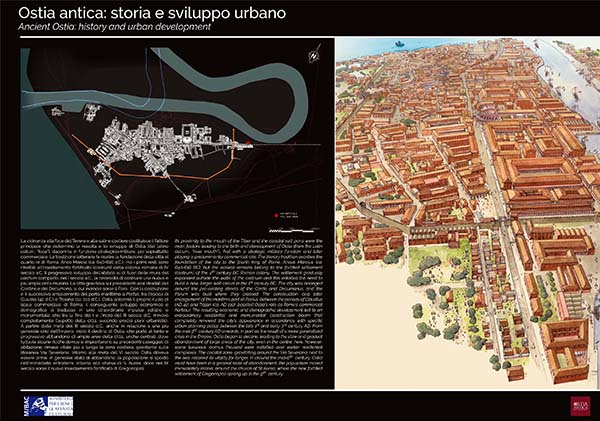
Its proximity to the mouth of the Tiber and the coastal salt pans were the main factors leading to the birth and development of Ostia (from the Latin ostium, “river mouth”), first with a strategic military function and later playing a predominantly commercial role. The literary...

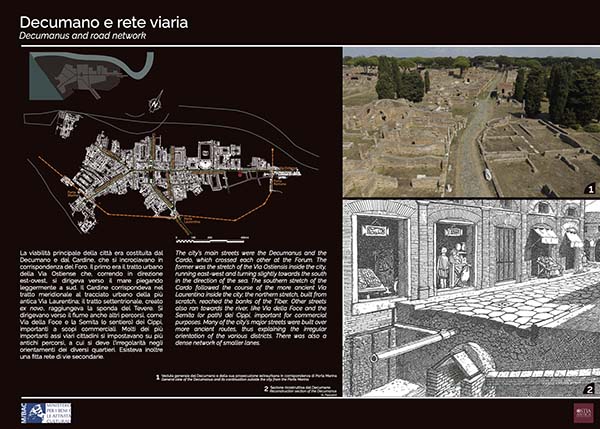
The city’s main streets were the Decumanus and the Cardo, which crossed each other at the Forum. The former was the stretch of the Via Ostiensis inside the city, running east-west and turning slightly towards the south in the direction of the sea. The southern stretch of the Cardo followed...
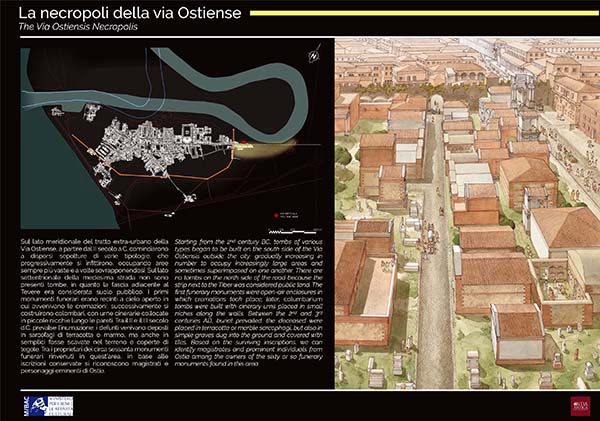
Starting from the 2nd century BC, tombs of various types began to be built on the south side of the Via Ostiensis outside the city, gradually increasing in number to occupy increasingly large areas and sometimes superimposed on one another. There are no tombs on the north side of the road...
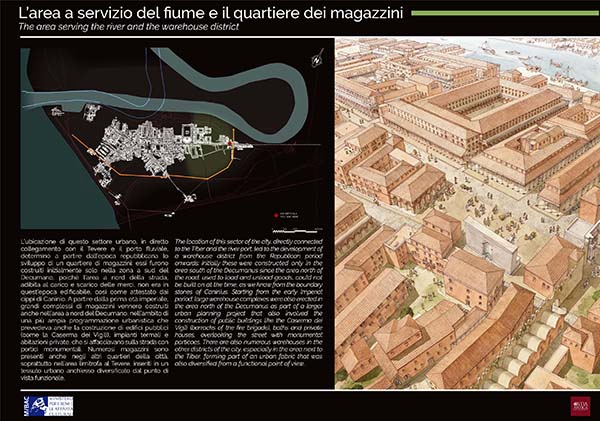
The location of this sector of the city, directly connected to the Tiber and the river port, led to the development of a warehouse district from the Republican period onwards: initially these were constructed only in the area south of the Decumanus since the area north of the road, used to...
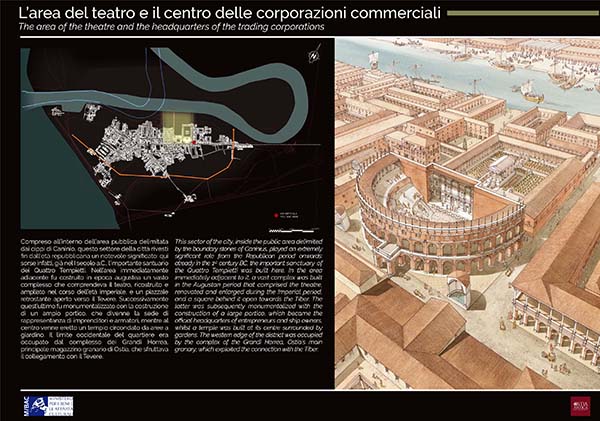
This sector of the city, inside the public area delimited by the boundary stones of Caninius, played an extremely significant role from the Republican period onwards: already in the 1st century BC, the important sanctuary of the Quattro Tempietti was built here. In the area immediately...
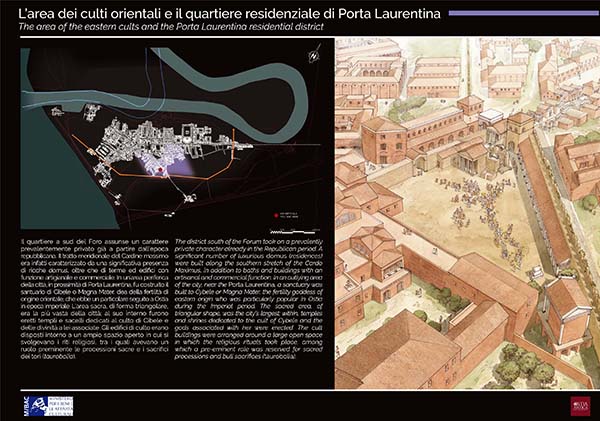
The district south of the Forum took on a prevalently private character already in the Republican period. A significant number of luxurious domus (residences) were built along the southern stretch of the Cardo Maximus, in addition to baths and buildings with an artisanal and commercial...
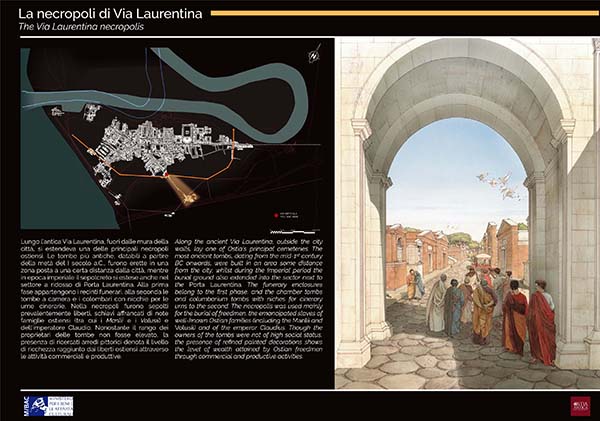
Along the ancient Via Laurentina, outside the city walls, lay one of Ostia’s principal cemeteries. The most ancient tombs, dating from the mid-1st century BC onwards, were built in an area some distance from the city, whilst during the Imperial period the burial ground also extended into...
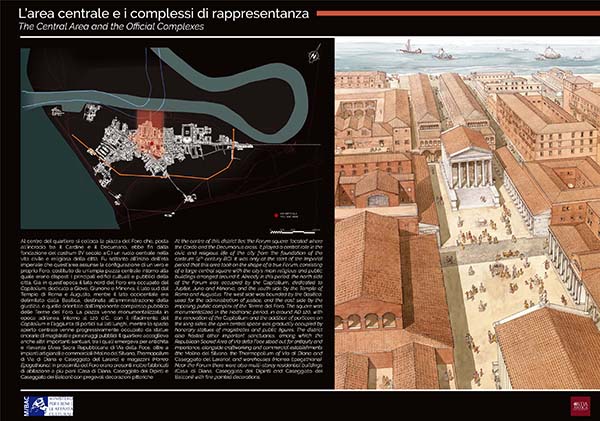
At the centre of this district lies the Forum square: located where the Cardo and the Decumanus cross, it played a central role in the civic and religious life of the city from the foundation of the castrum (4th century BC). It was only at the start of the Imperial period that this...
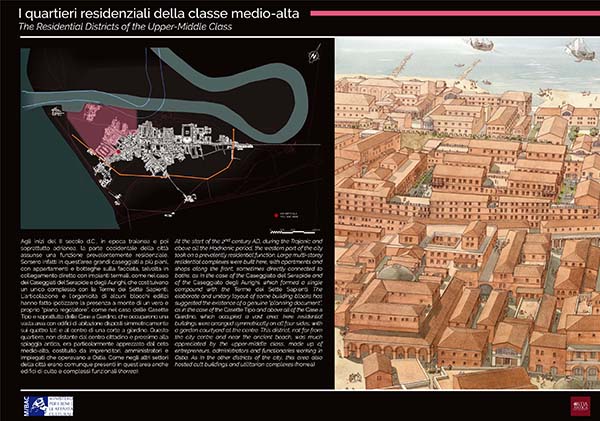
At the start of the 2nd century AD, during the Trajanic and above all the Hadrianic period, the western part of the city took on a prevalently residential function. Largemulti-storey residential complexes were built here, with apartments and shops along the front, sometimes directly connected...
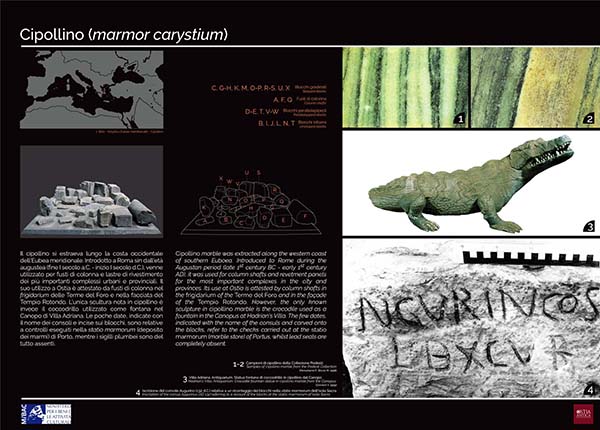
Cipollino marble was extracted along the western coast of southern Euboea. Introduced to Rome during the Augustan period (late 1st century BC - early 1st century AD), it was used for column shafts and revetment panels for the most important complexes in the city and provinces. Its use at...
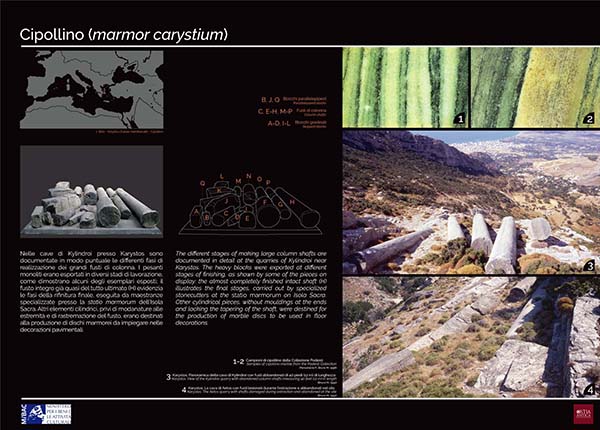
The different stages of making large column shafts are documented in detail at the quarries of Kylindroi near Karystos. The heavy blocks were exported at different stages of finishing, as shown by some of the pieces on display: the almost completely finished intact shaft (H) illustrates the...
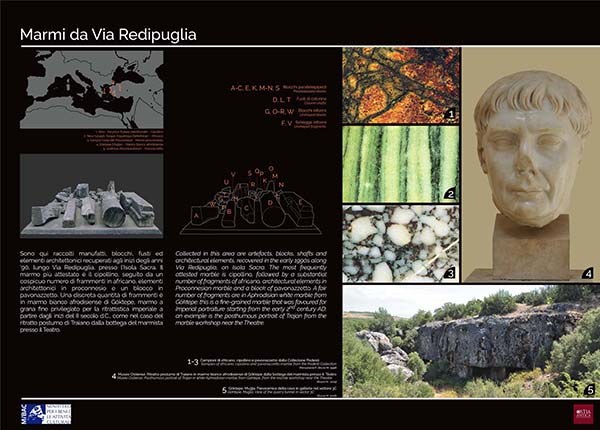
Collected in this area are artefacts, blocks, shafts and architectural elements, recovered in the early 1990s along Via Redipuglia, on Isola Sacra. The most frequently attested marble is cipollino, followed by a substantial number of fragments of africano, architectural elements...
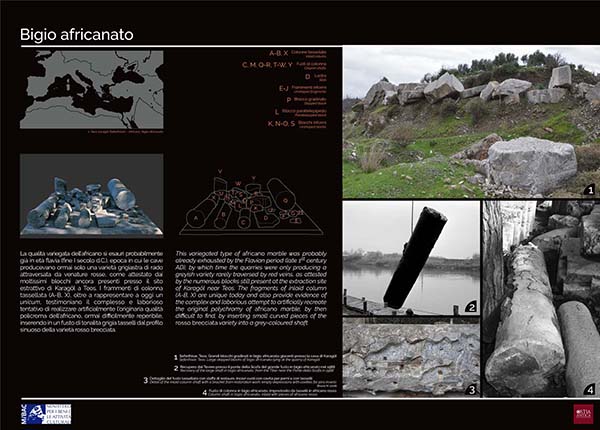
This variegated type of africano marble was probably already exhausted by the Flavian period (late 1st century AD), by which time the quarries were only producing a greyish variety rarely traversed by red veins, as attested by the numerous blocks still present at the extraction site of...
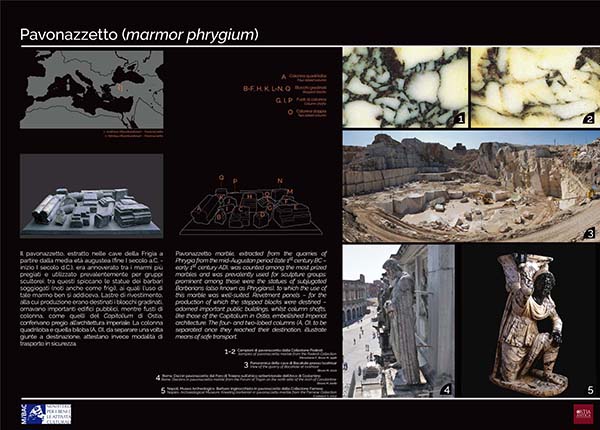
Pavonazzetto marble, extracted from the quarries of Phrygia from the mid-Augustan period (late 1st century BC – early 1st century AD), was counted among the most prized marbles and was prevalently used for sculpture groups: prominent among these were the statues of subjugated Barbarians...
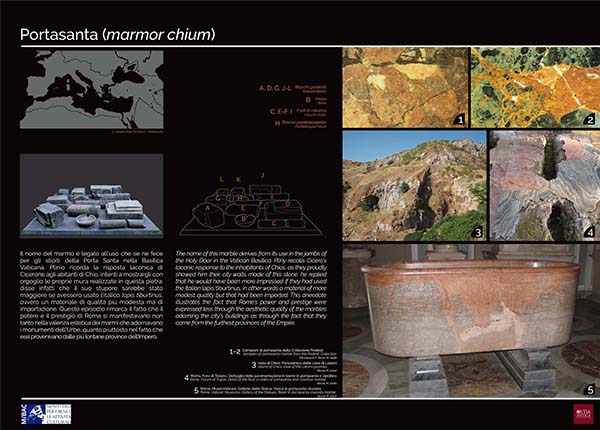
The name of this marble derives from its use in the jambs of the Holy Door in the Vatican Basilica. Pliny recalls Cicero’s laconic response to the inhabitants of Chios, as they proudly showed him their city walls made of this stone: he replied that he would have been more impressed if they...
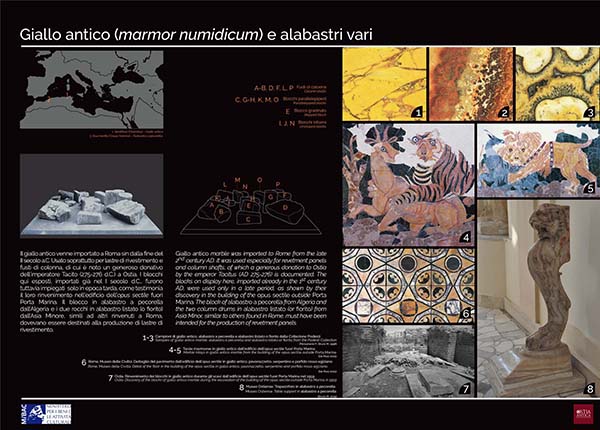
Giallo antico marble was imported to Rome from the late 2nd century AD. It was used especially for revetment panels and column shafts, of which a generous donation to Ostia by the emperor Tacitus (AD 275-276) is documented. The blocks on display here, imported already in the 1st century AD,...
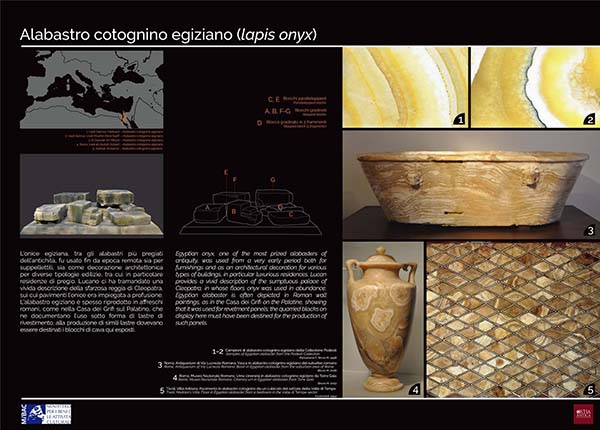
Egyptian onyx, one of the most prized alabasters of antiquity, was used from a very early period both for furnishings and as an architectural decoration for various types of buildings, in particular luxurious residences. Lucan provides a vivid description of the sumptuous palace of Cleopatra,...