

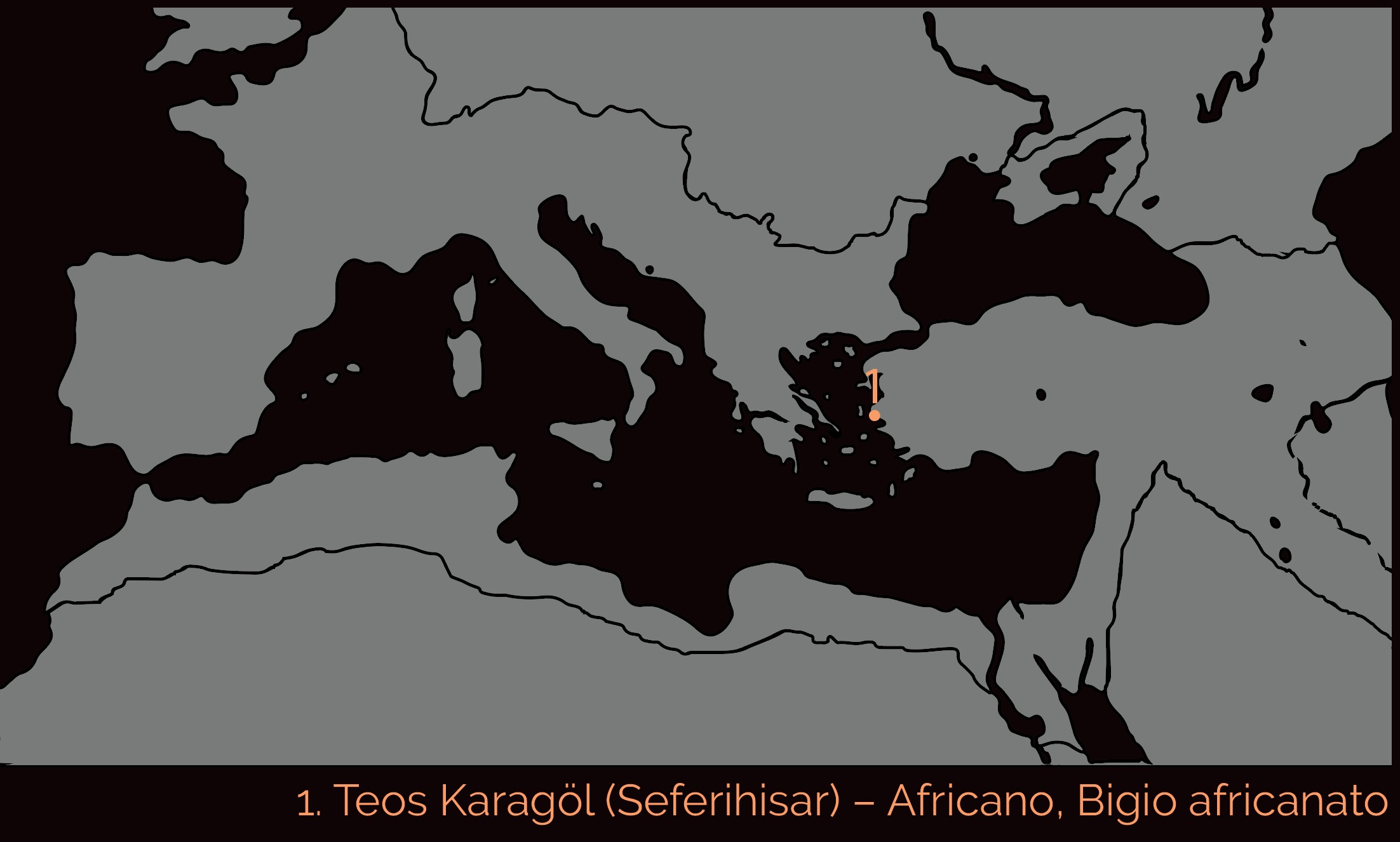
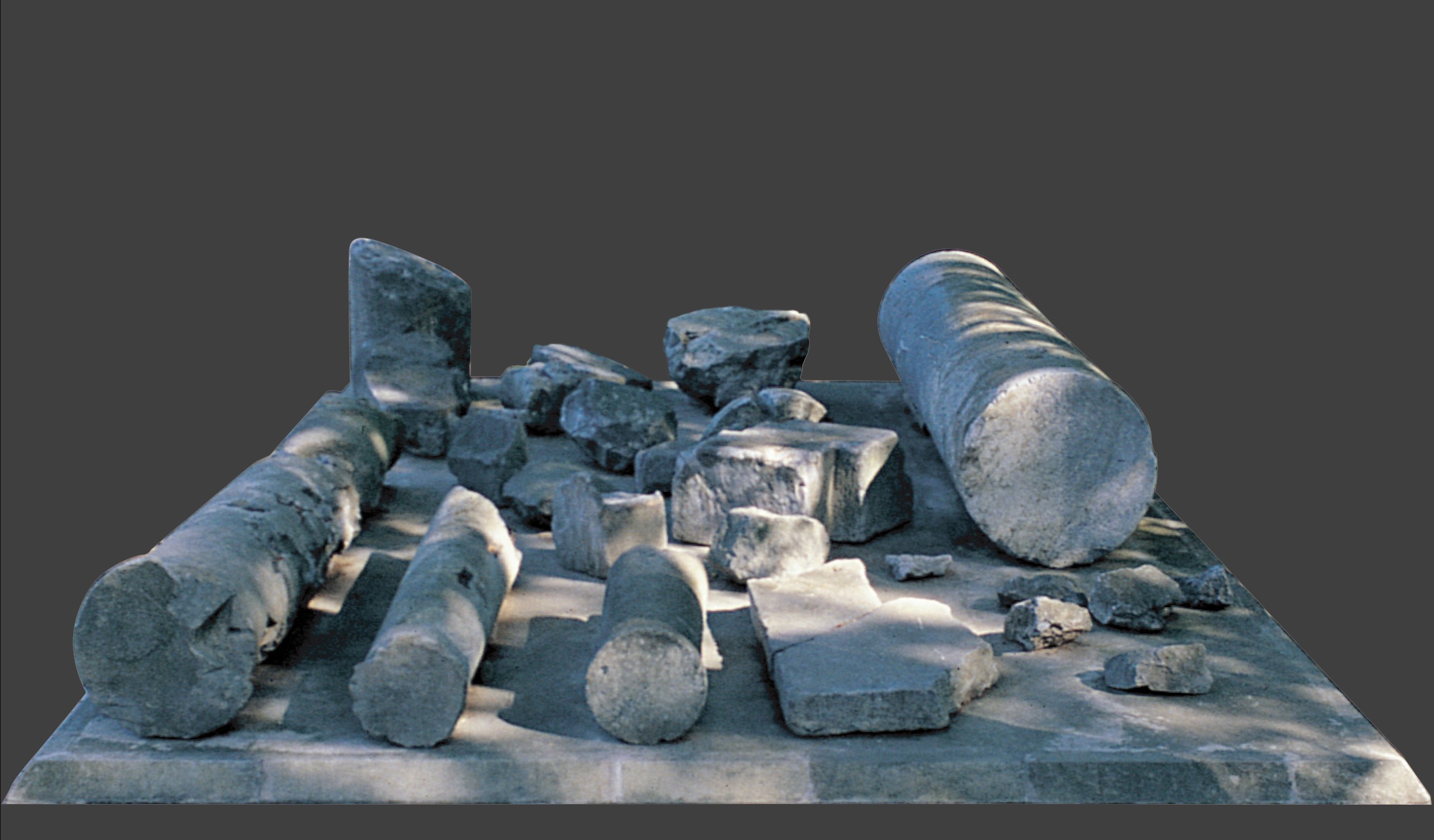
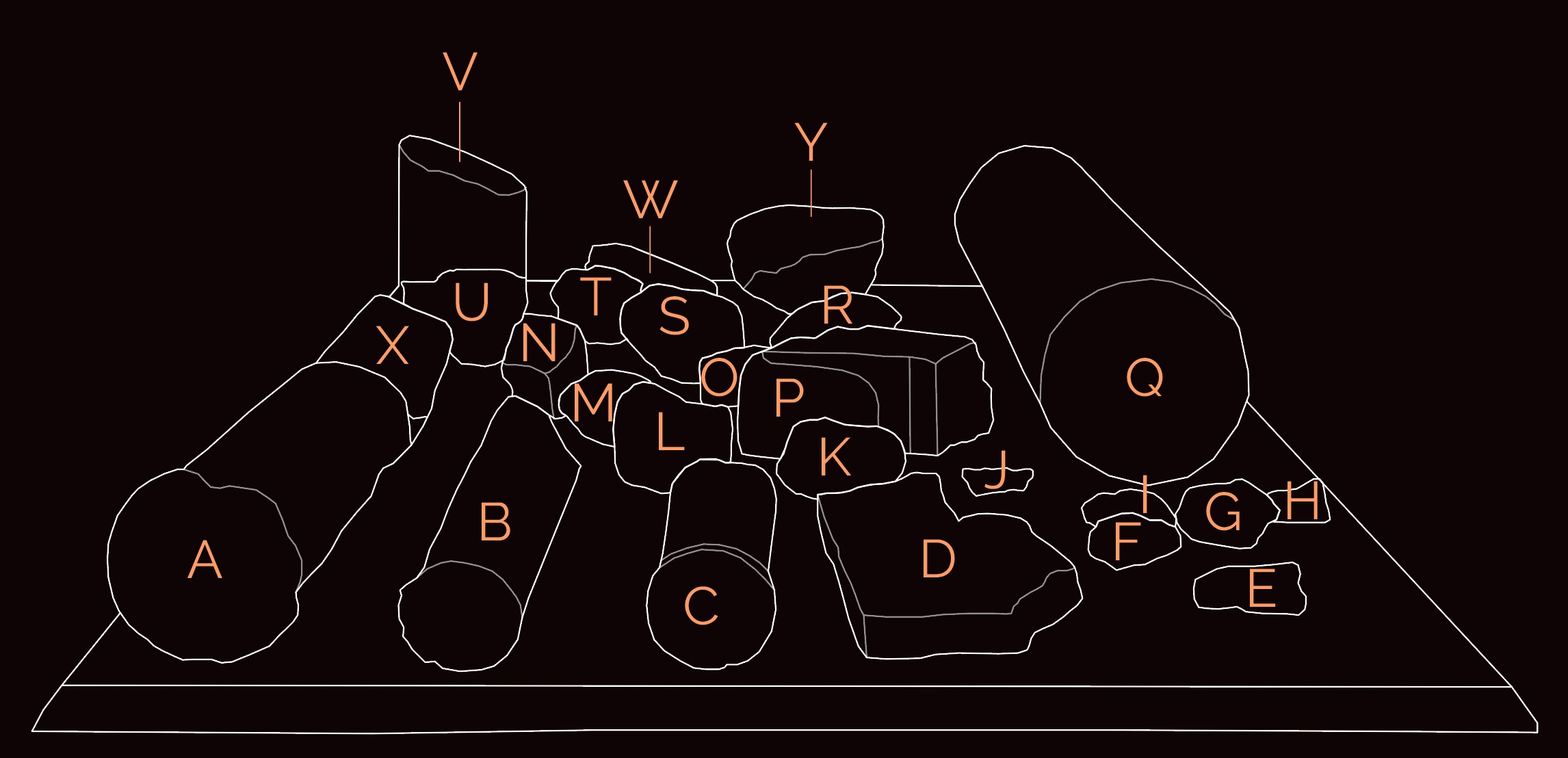
This variegated type of africano marble was probably already exhausted by the Flavian period (late 1st century AD), by which time the quarries were only producing a greyish variety rarely traversed by red veins, as attested by the numerous blocks still present at the extraction site of Karagöl near Teos. The fragments of inlaid column (A-B, X) are unique today and also provide evidence of the complex and laborious attempt to artificially recreate the original polychromy of africano marble, by then difficult to find, by inserting small curved pieces of the rosso brecciata variety into a grey-coloured shaft.
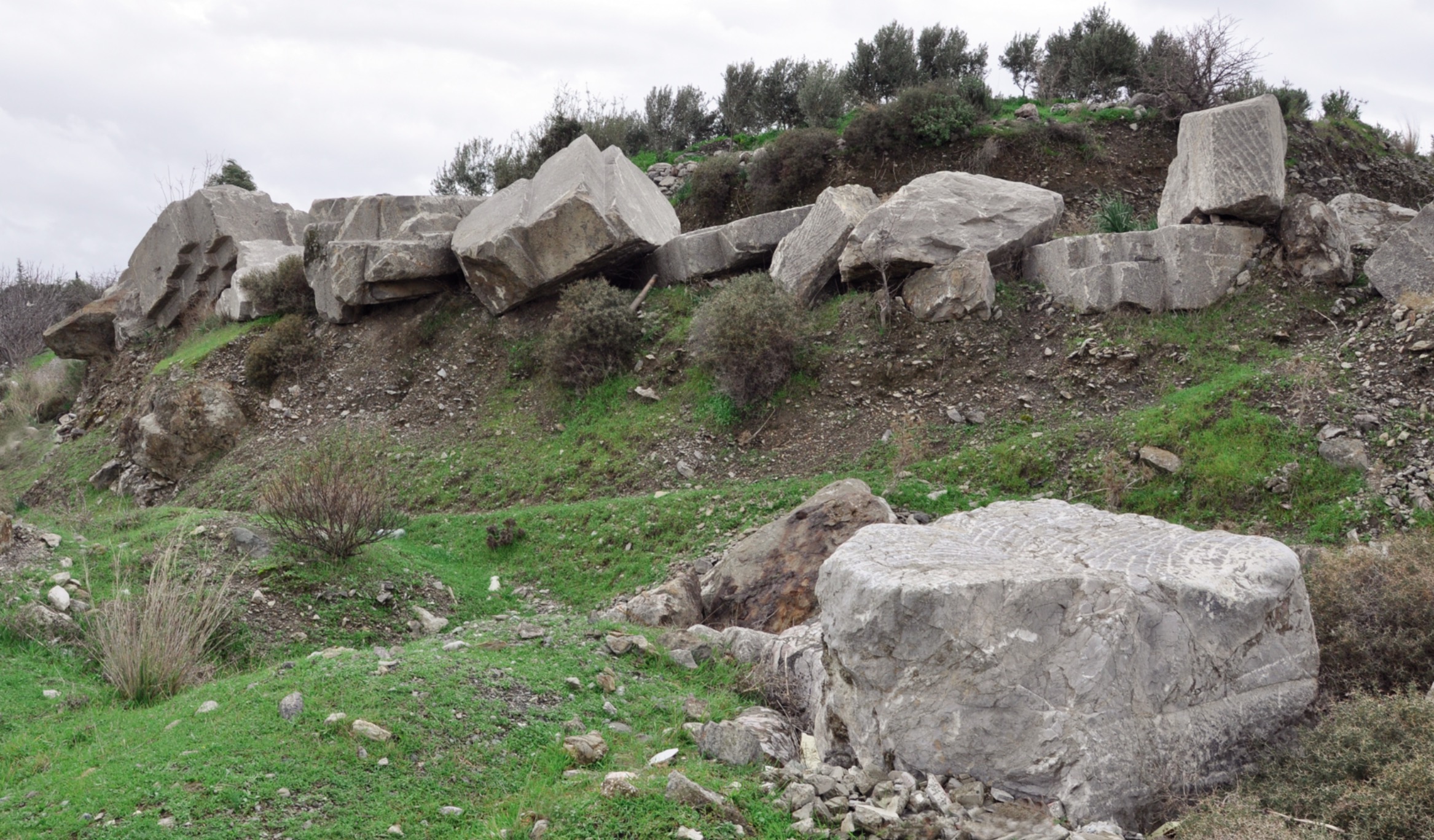
Seferihisar, Teos. Large stepped blocks of bigio africanato lying at the quarry of Karagöl
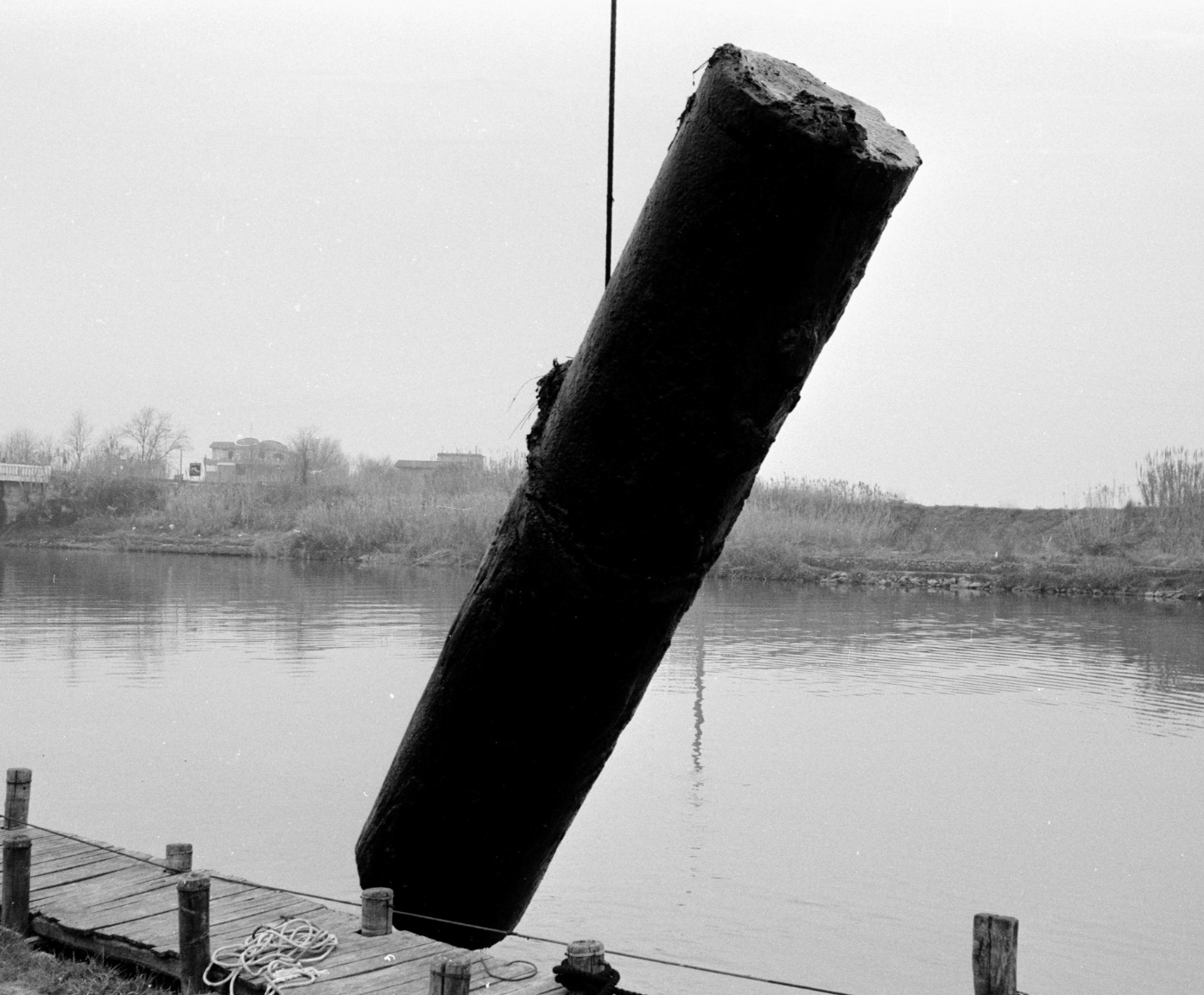
Recovery of the large shaft in bigio africanato from the Tiber near the Ponte della Scafa in 1988
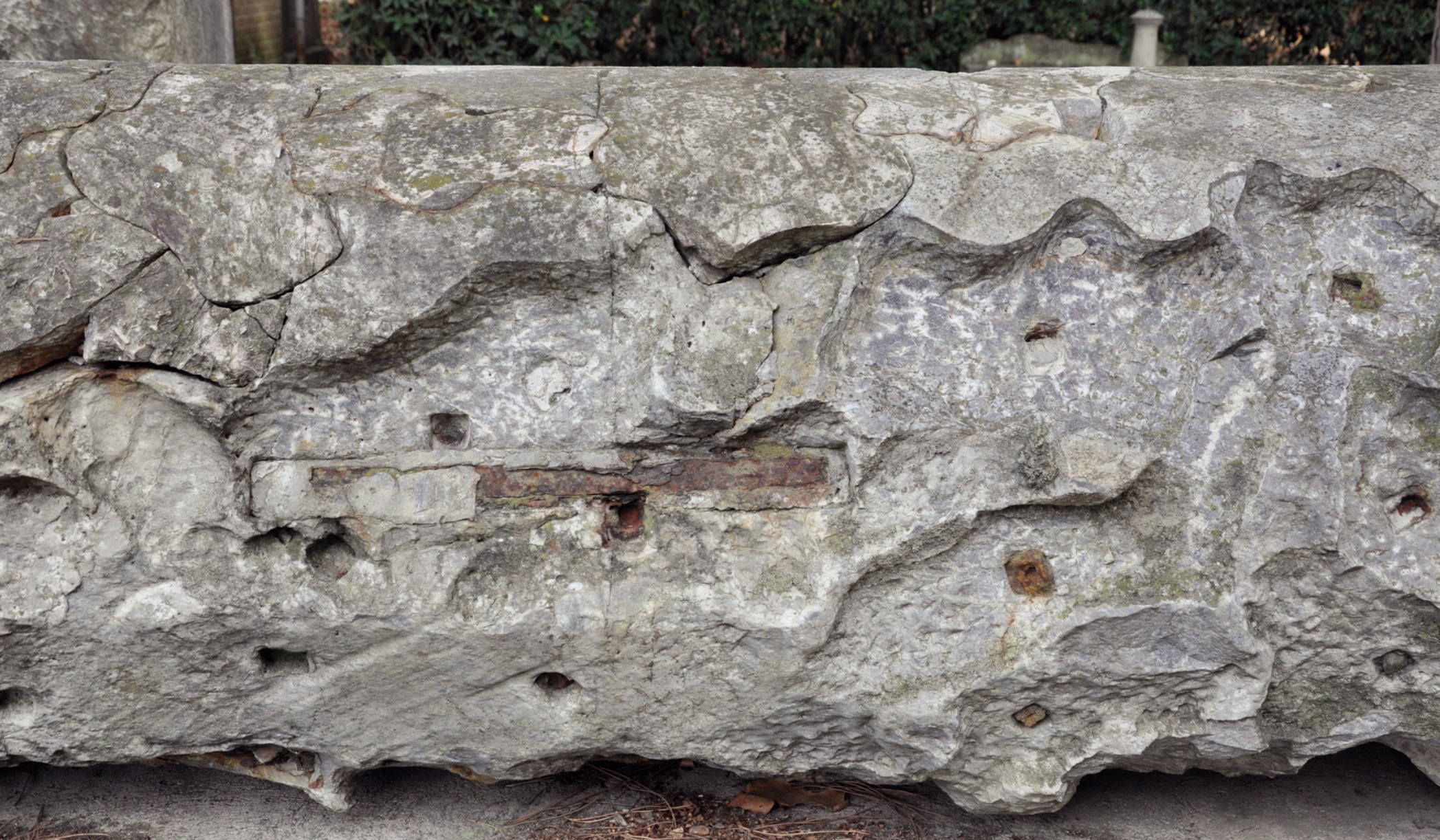
Detail of the inlaid column shaft with a bracket from restoration work, empty depressions with cavities for pins inserts
(Bruno M. 2008)
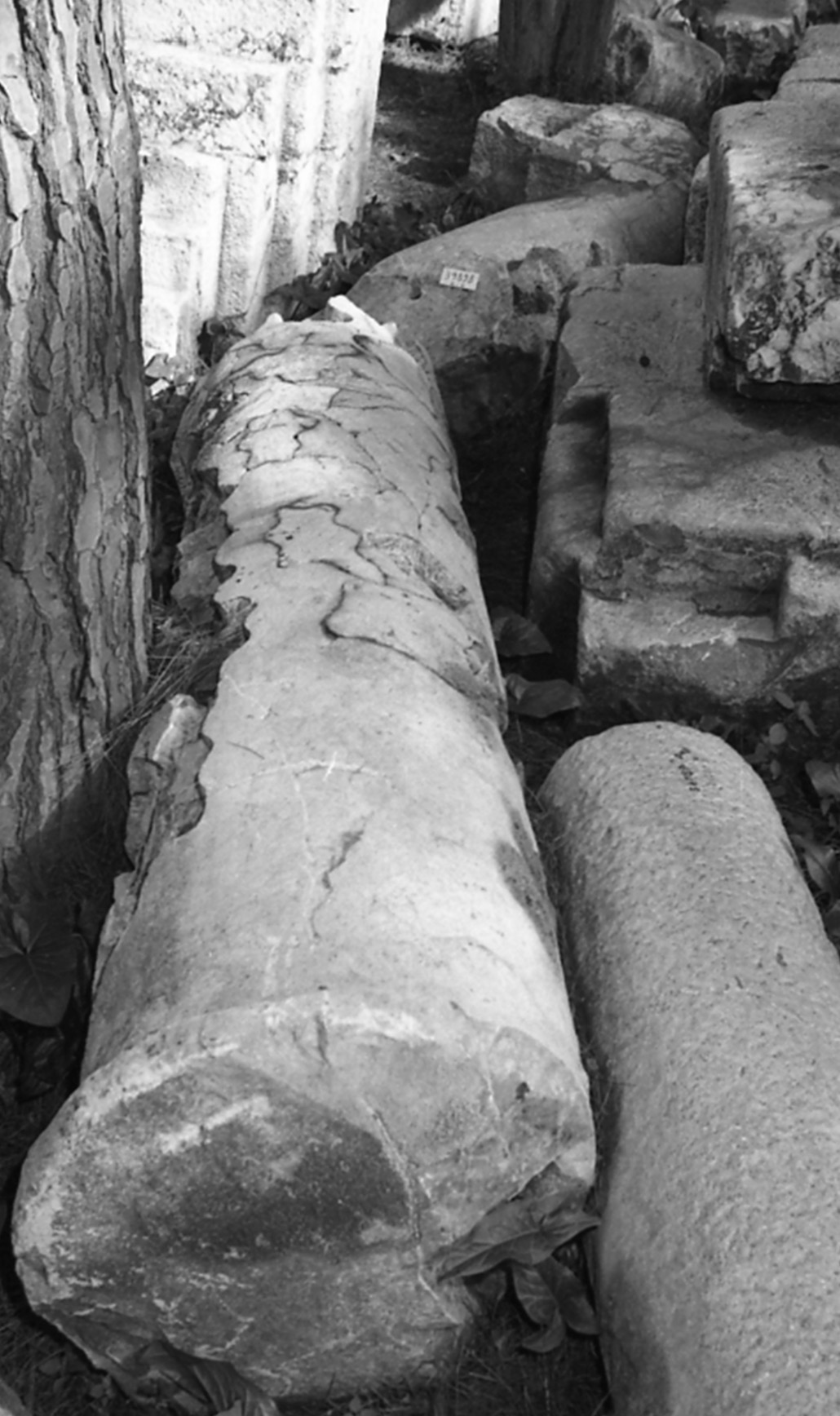
Column shaft in bigio africanato, inlaid with pieces of africano rosso