

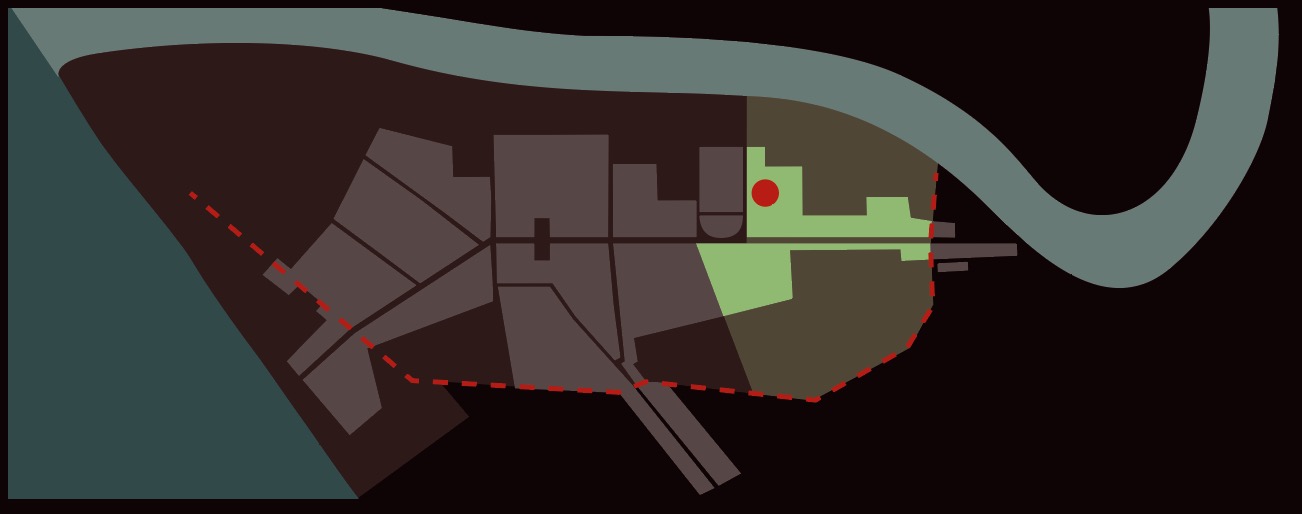
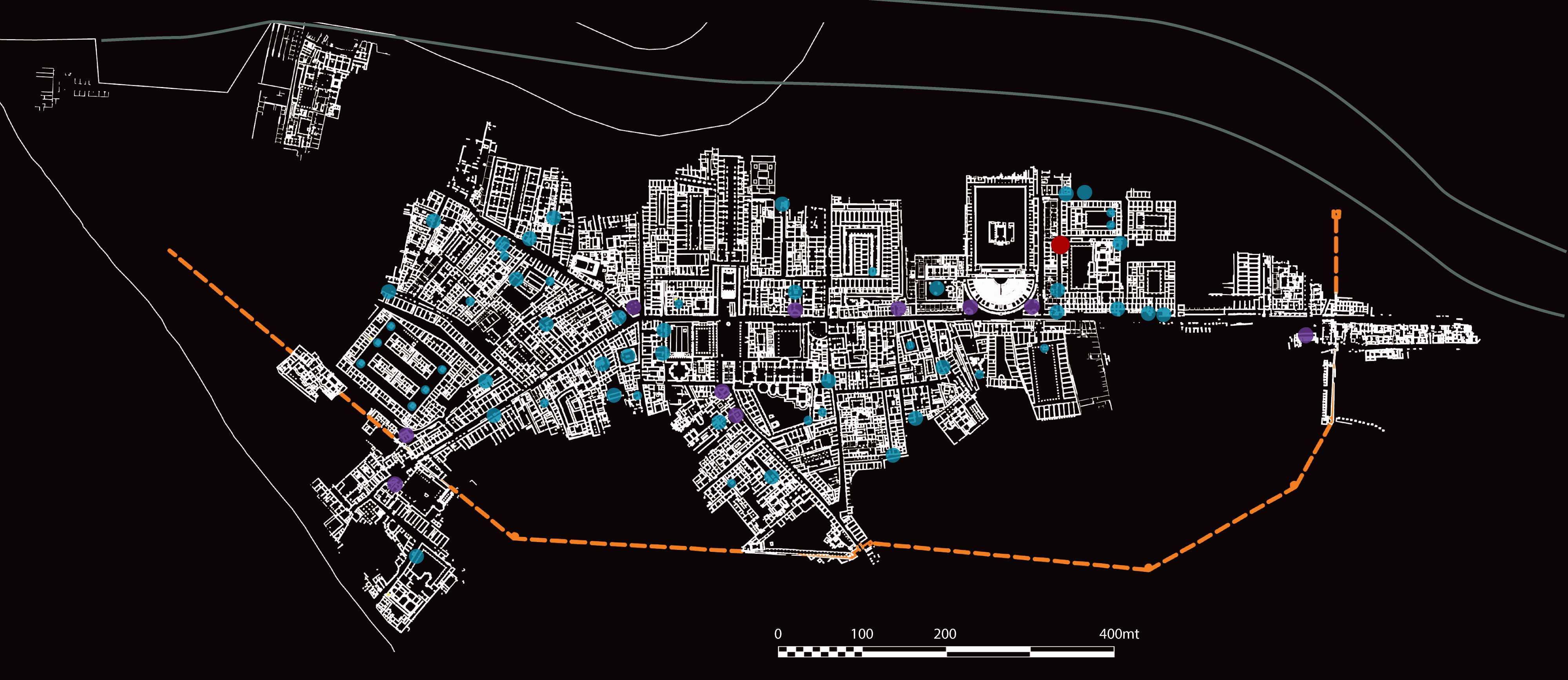

After the construction of the city’s aqueduct in the 1st century AD, Ostia was provided with a series of water fountains, distributed among both public areas and the communal spaces of buildings. The appearance of these fountains varied depending on their location and visibility: in the city squares and along the main streets monumental nymphaea and fountains, whilst along the smaller lanes and inside buildings, the simpler “trunk-shaped” fountains were preferred, so-called for the characteristic shape of their roof. This type of fountain, of which numerous examples survive in Ostia, is characterized by the presence of a basin (A) covered with a barrel vault and accessed through a little window (B) and in this case connected to a tank at the back (C): water could be drawn through the opening using pails or from the two spouts at the front, beneath which purpose-made depressions (D) in the floor allowed for the correct positioning of the recipients.
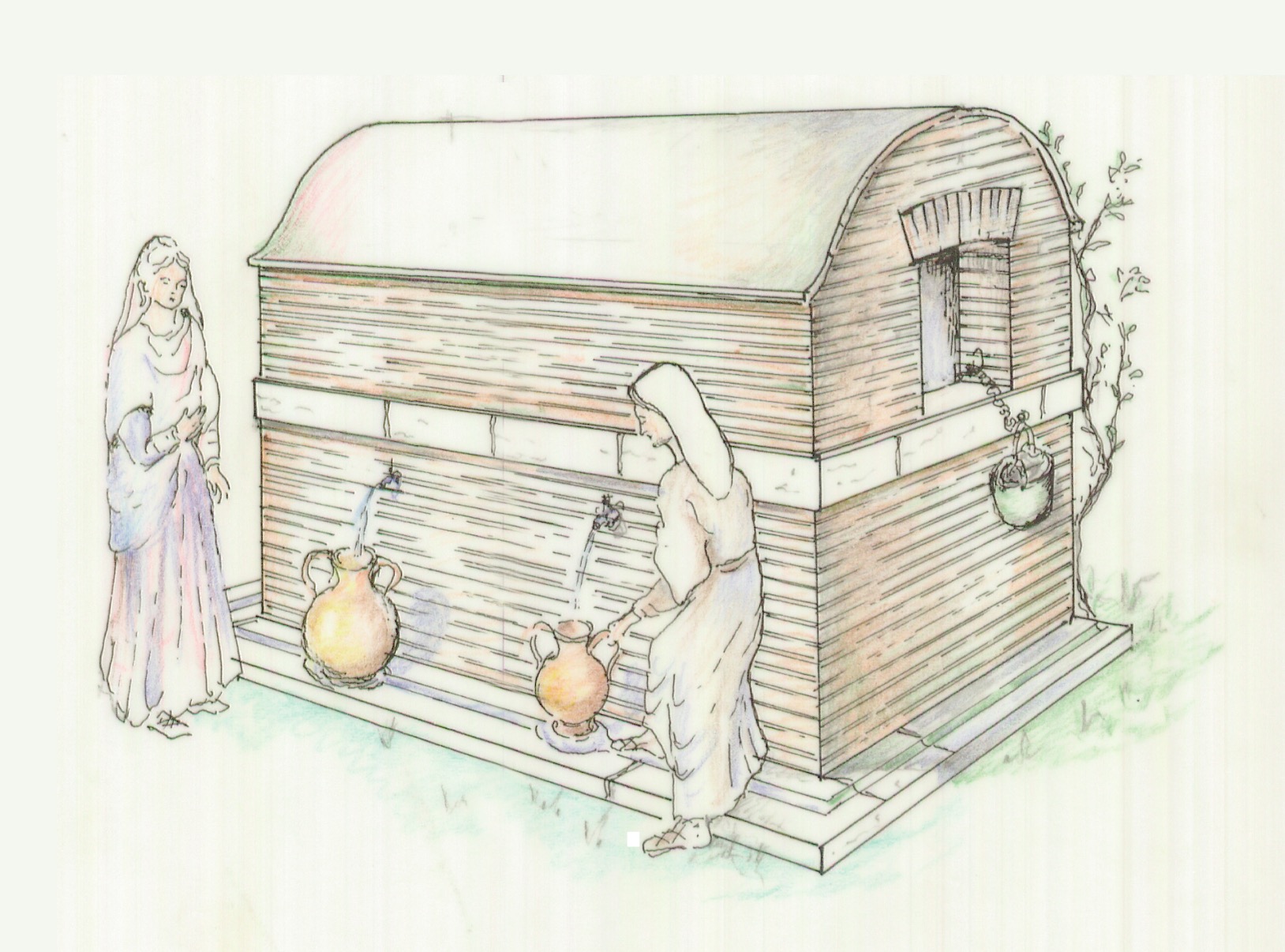
Reconstruction of a fountain of the “trunk-shaped” type preserved in the Case a Giardino
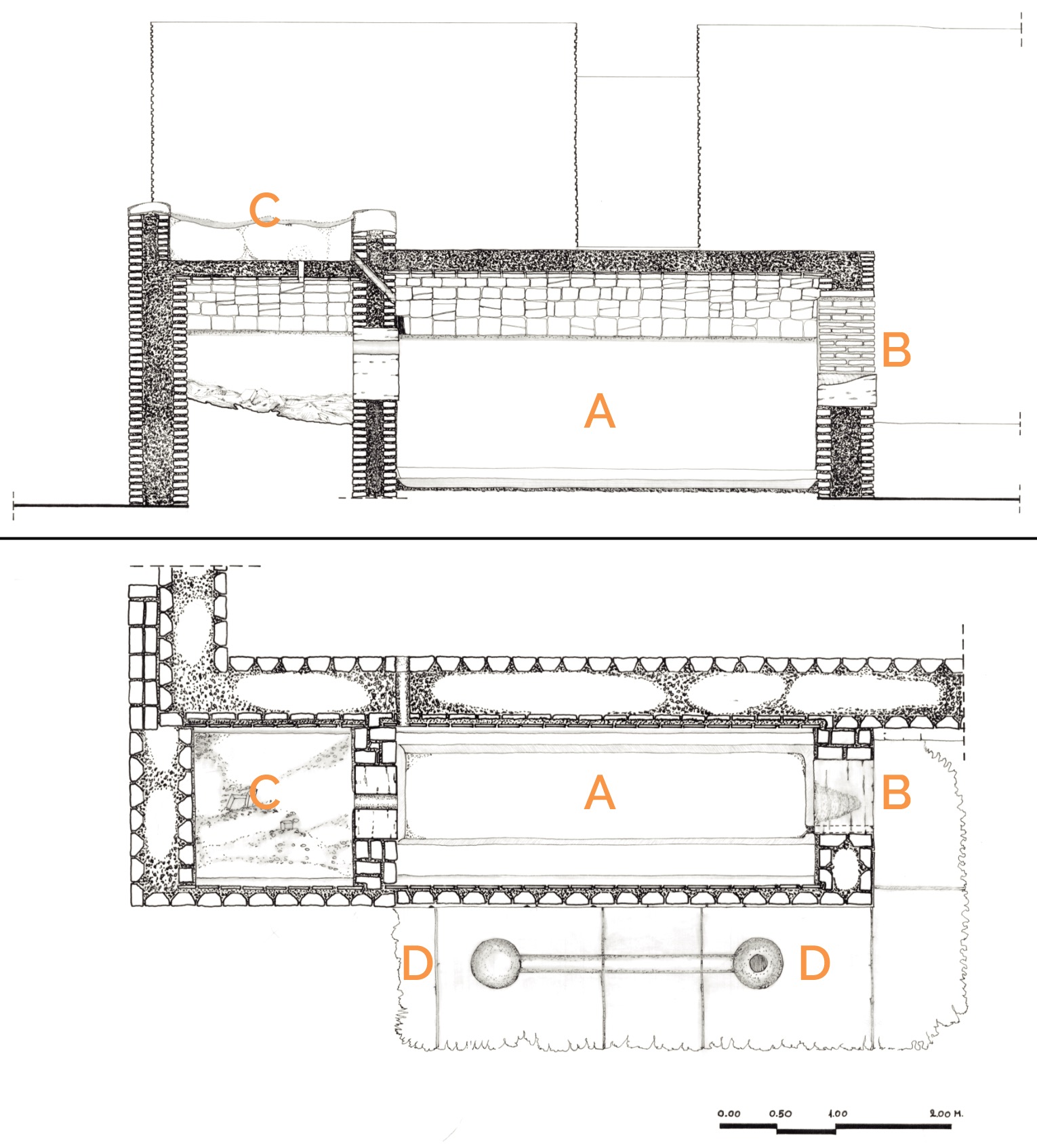
Section and plan of the fountain in Via della Fontana
(S. Pittas, K. Mountzouridis, D. Kunavos)
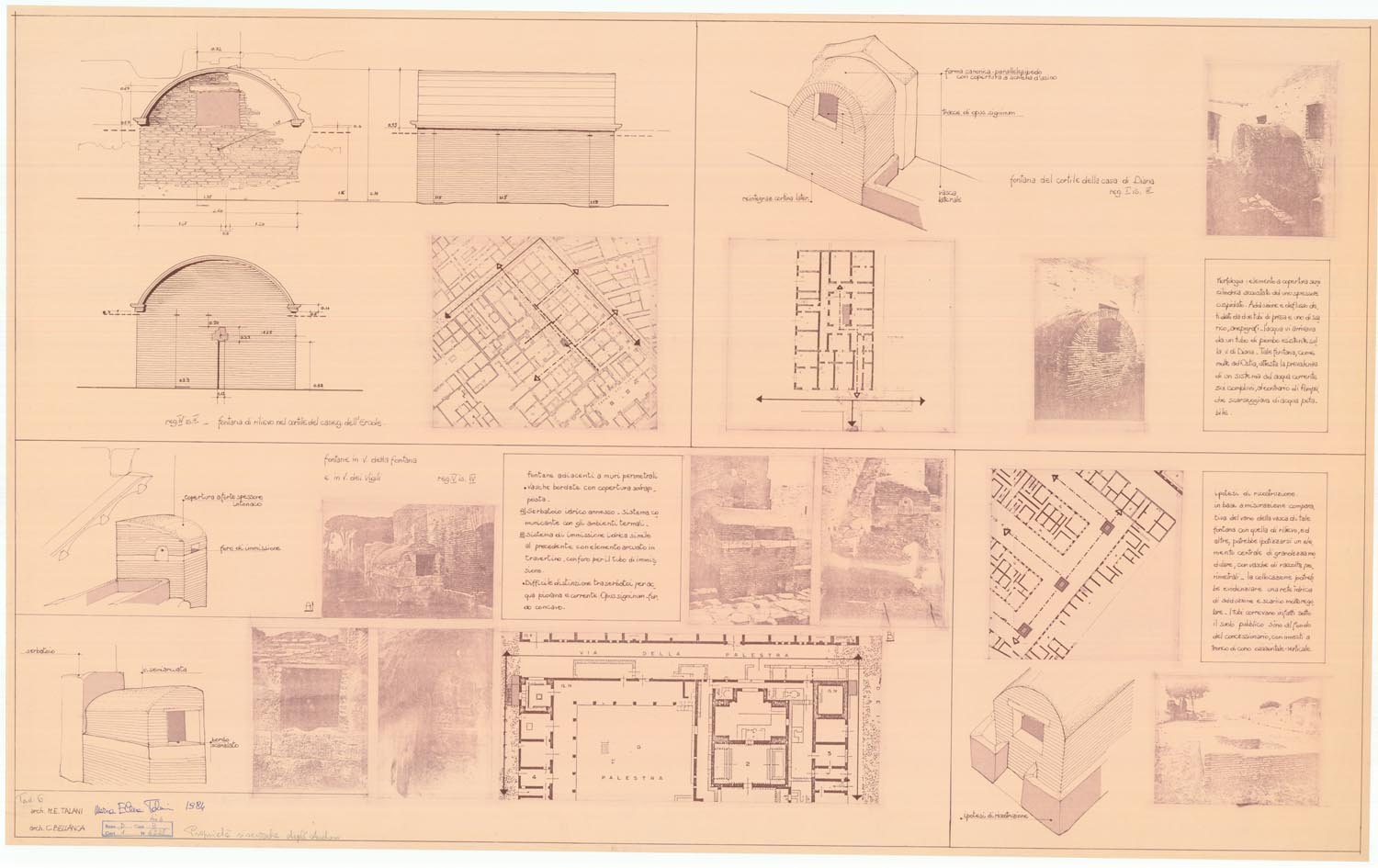
Studio of barrel-vault fountains in Ostia Antica
(M.E. Talani, C. Bellanca)
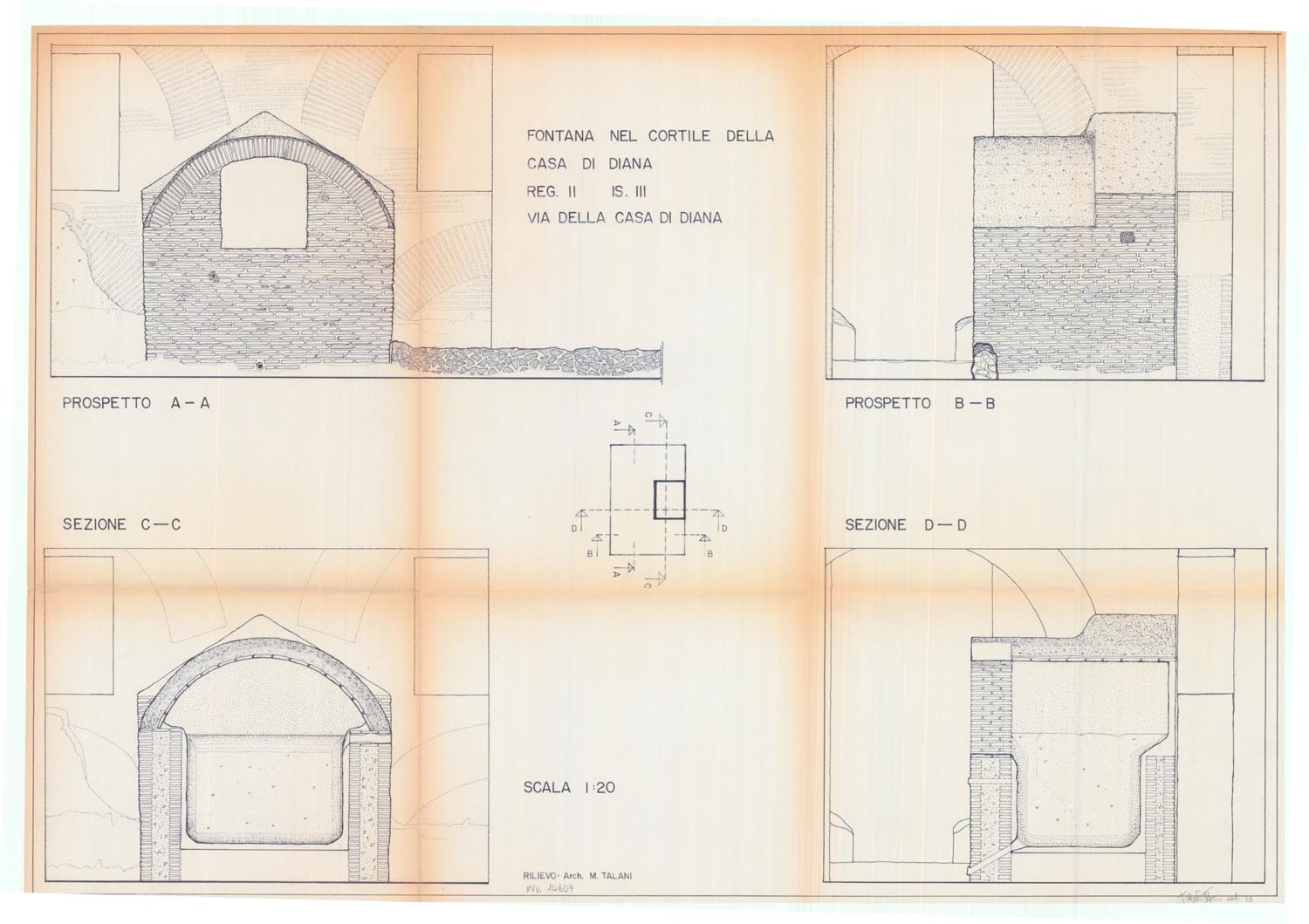
Relief of the barrel-vault fountain in the House of Diana
(M.E. Talani)
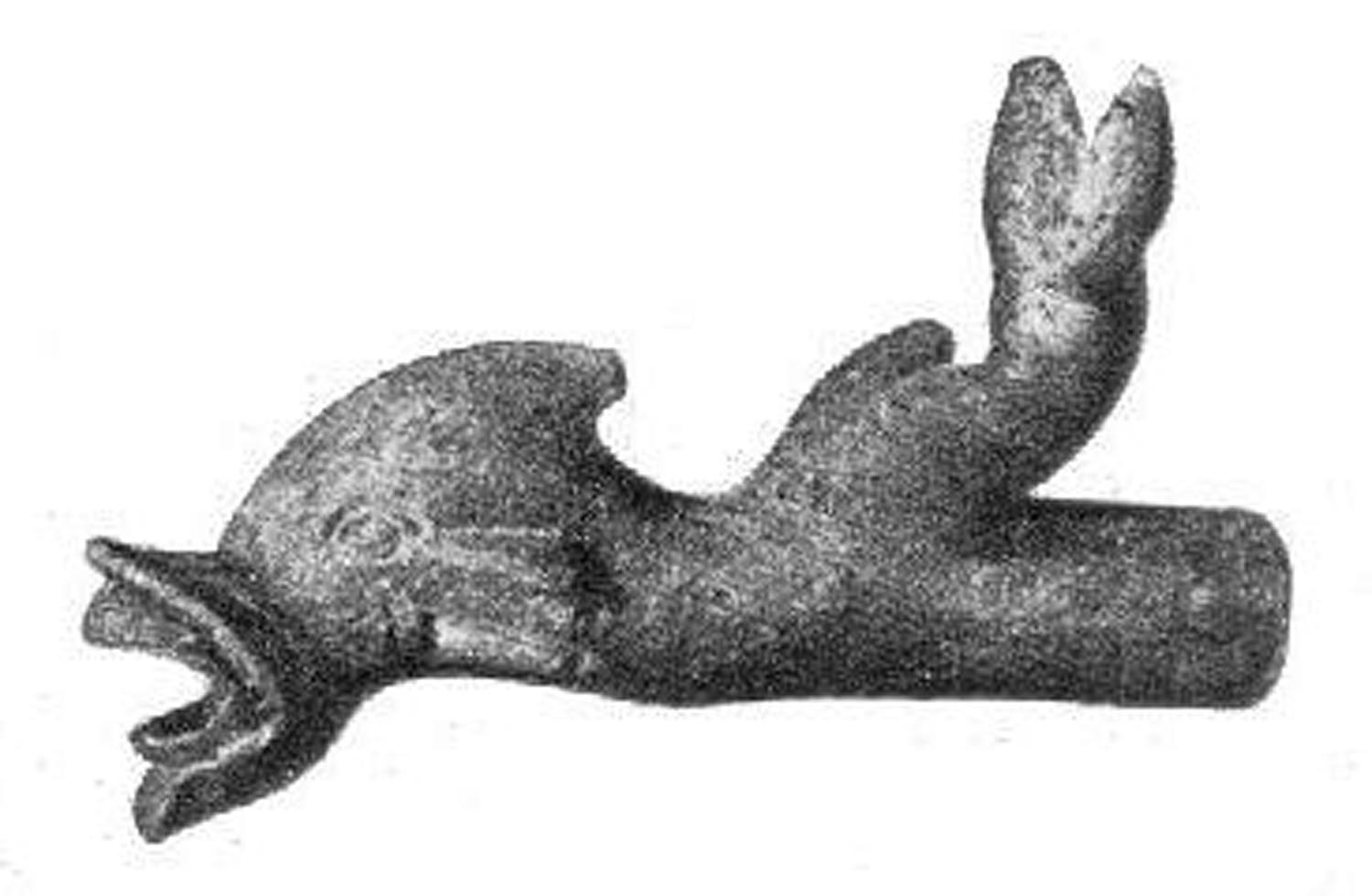
Dolphin-shaped nozzle of the fountain on Via della Fontana