

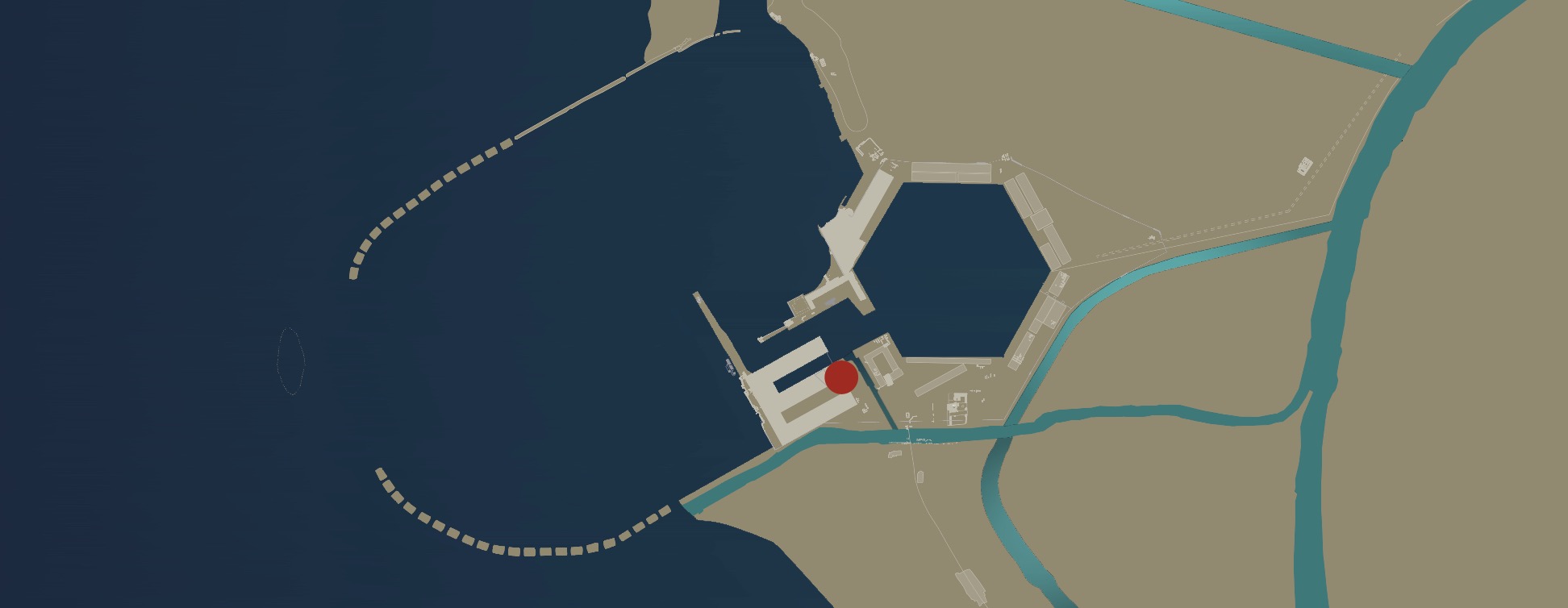

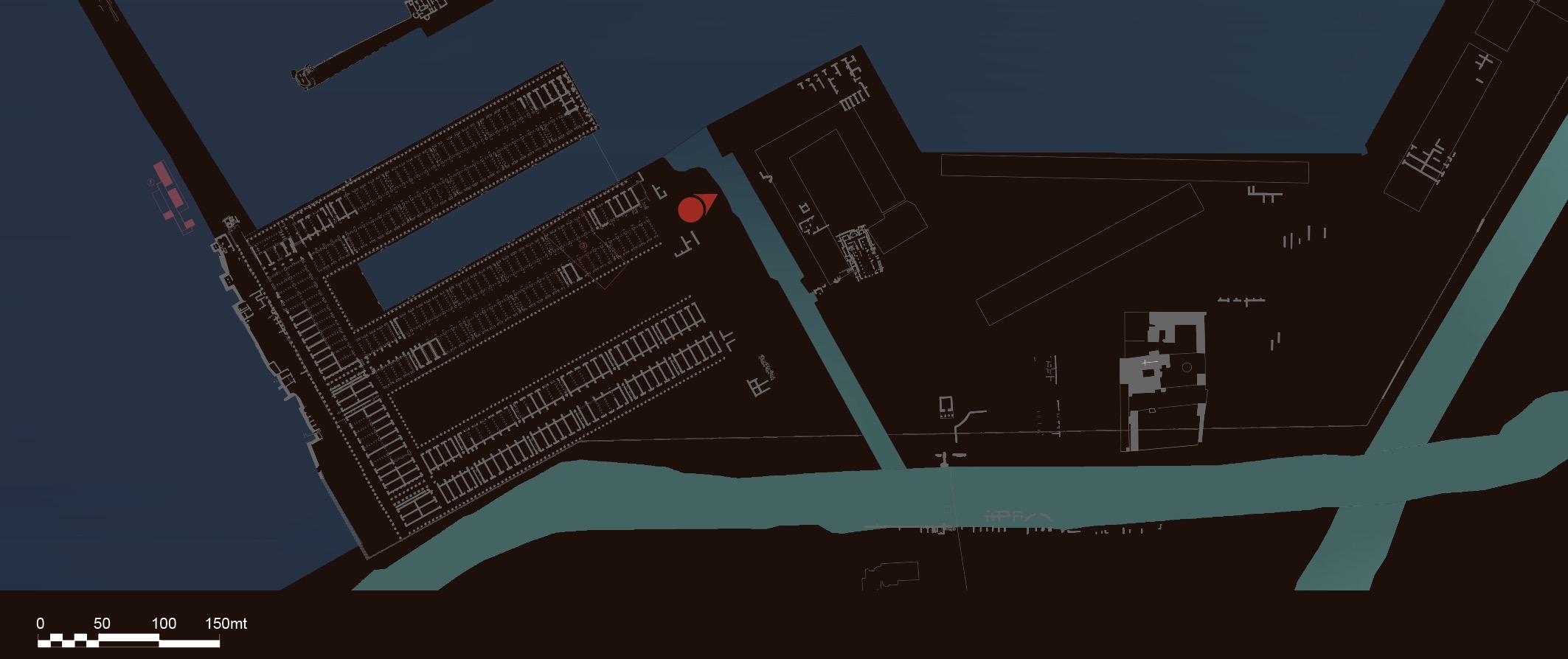
Built in the Claudian Age, the transverse channel had the function of linking the port complex with Fossa Traiana. From here, the river barges (naves caudicariae) were floated up the Fossa and then the Tiber to Rome, pulled by oxen or slaves using a towing system. The average time for this journey was about three days. The construction activities in this sector were documented from the Imperial age to the early medieval age, and bear witness to prolonged use. The description of the port complex drawn up in the 16th century by Antonio Labacco mentions the presence of two bridges, also depicted in the Renaissance-era reconstructed views, which were likely to have been mobile in order to allow the passage of masted vessels.
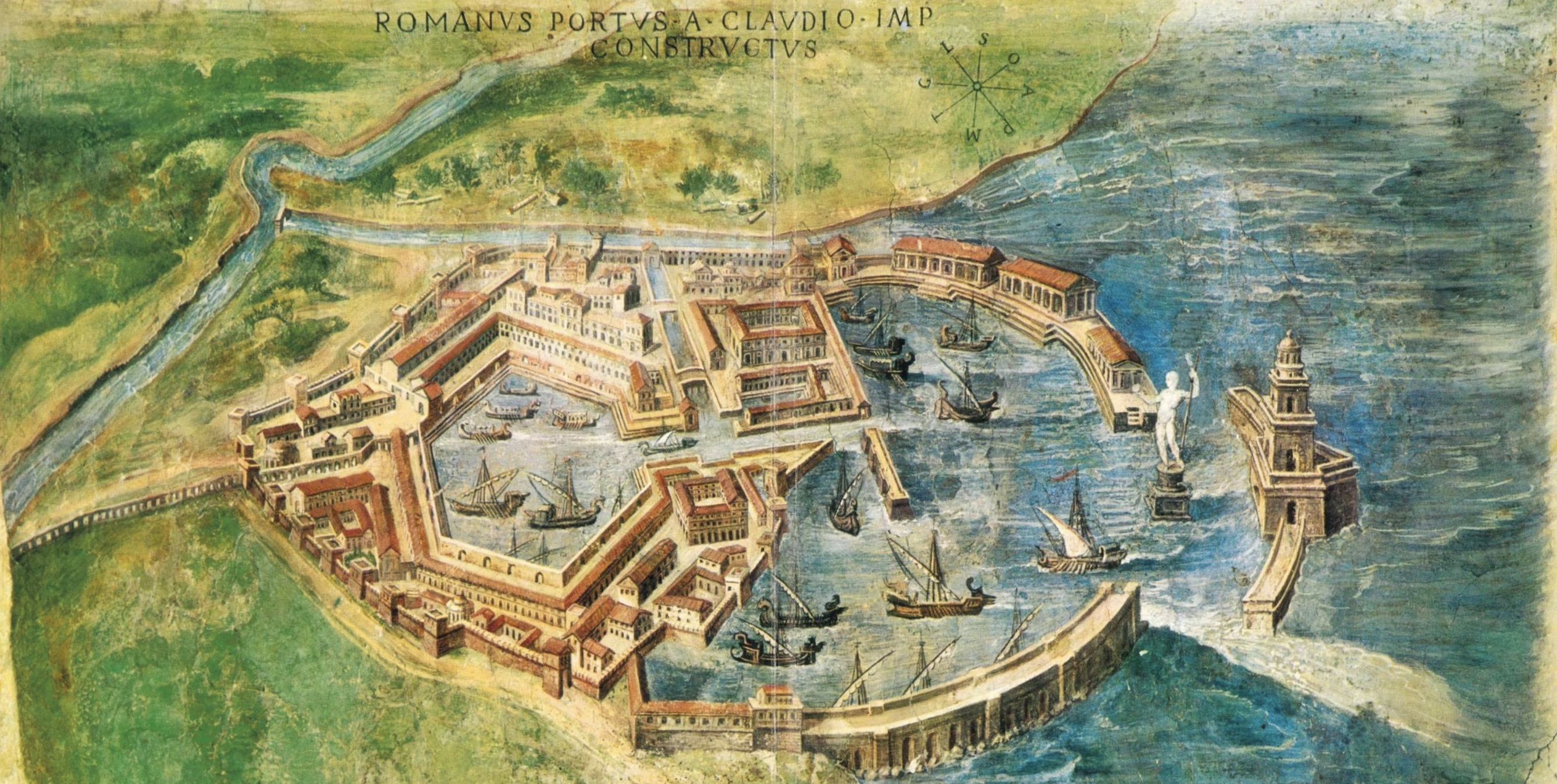
Fresco with reconstructed view of the Imperial ports, done in 1582
(I. Danti)
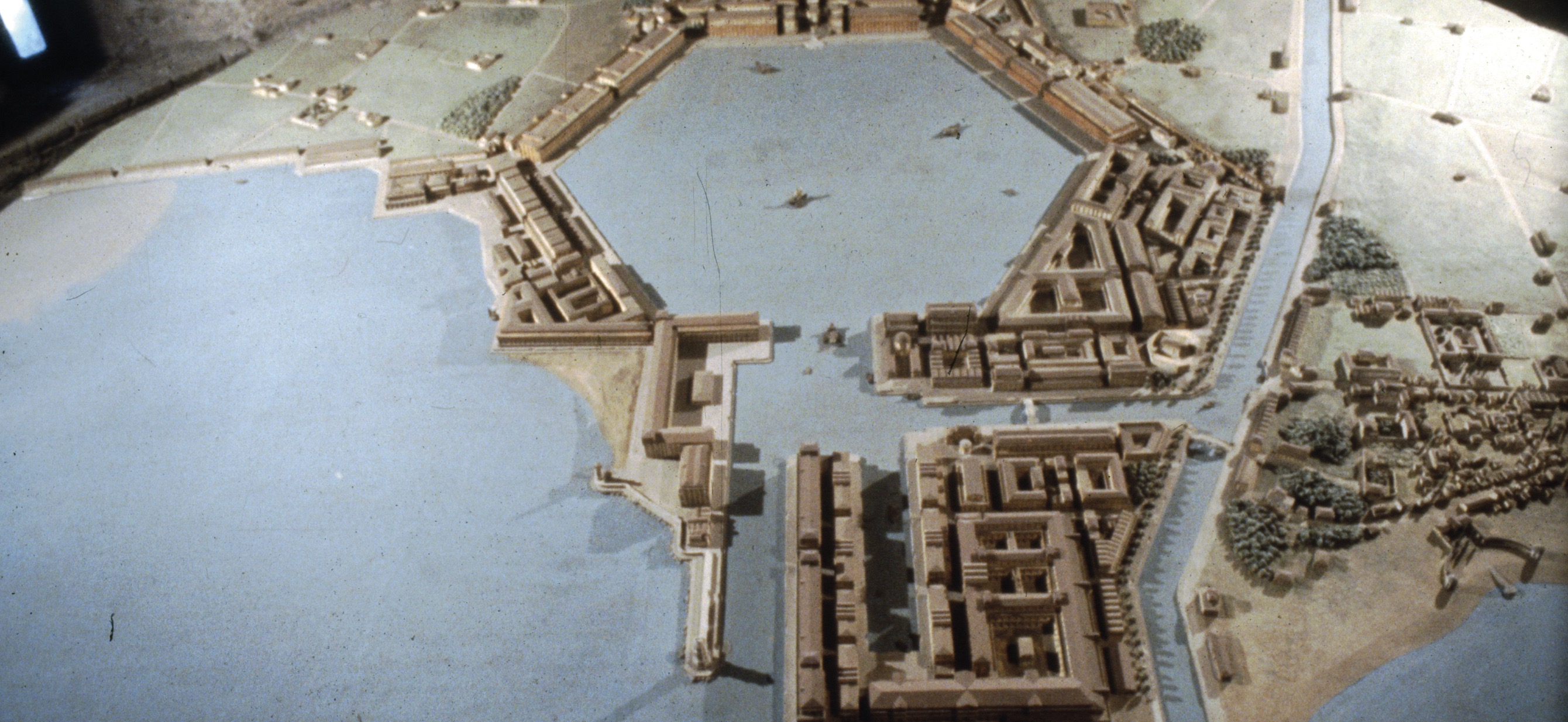
Model of the Imperial ports, done in 1937
(I. Gismondi)
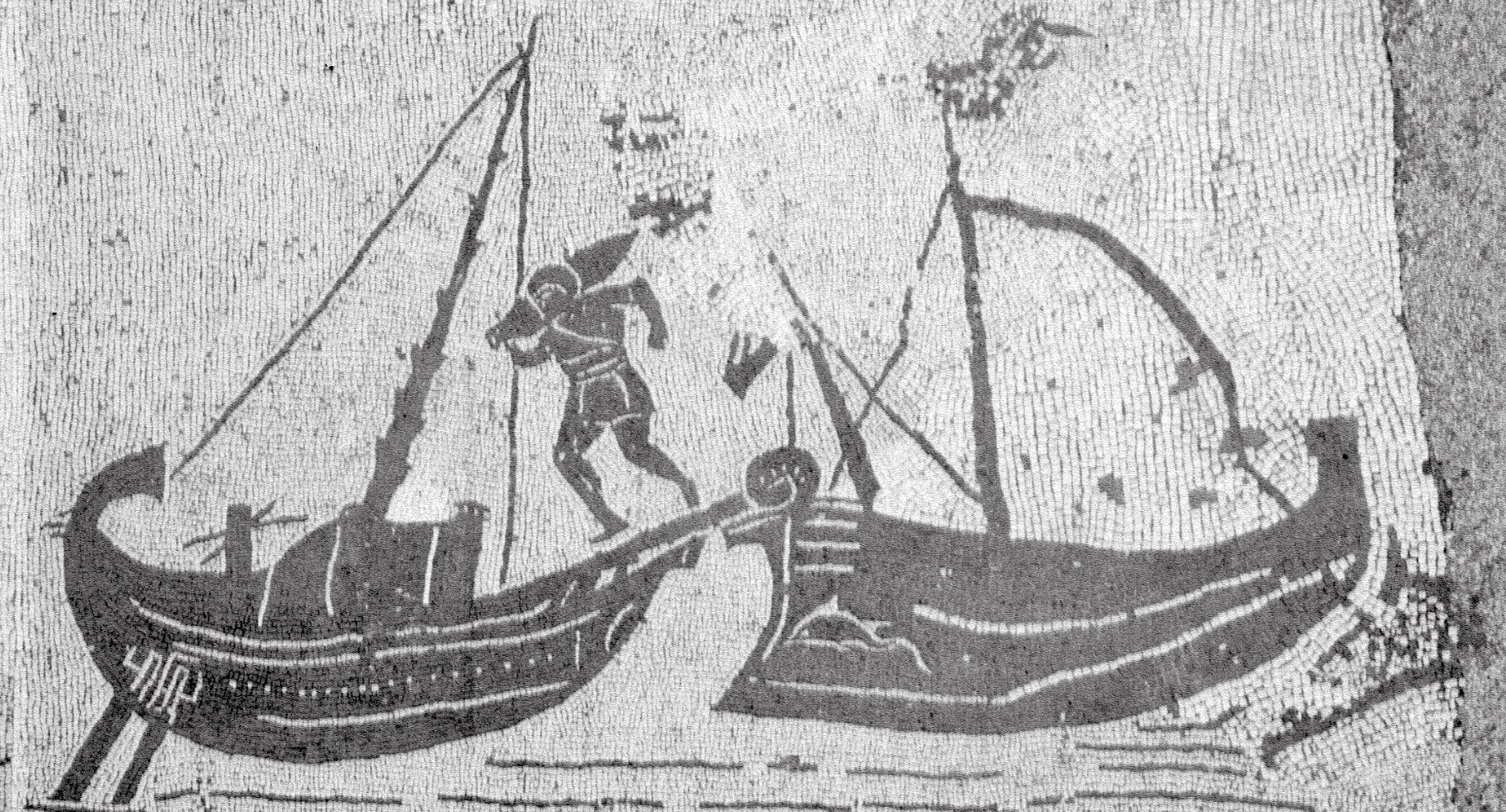
Mosaic depicting a scene of transfer from a navis oneraria (seafaring cargo ship) to a navis caudicaria (river barge)
(Ostia antica, Piazzale delle Corporazioni)
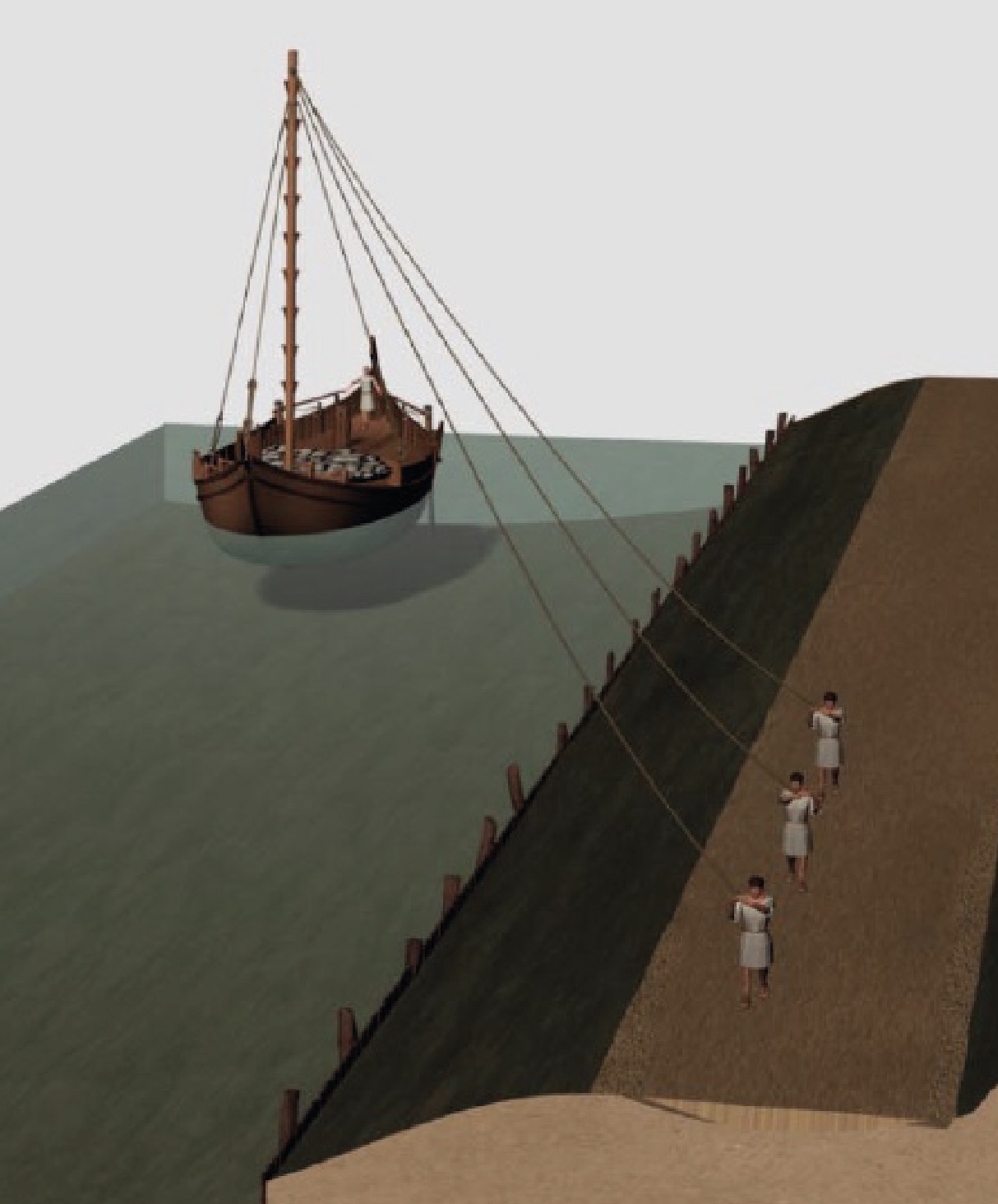
Hauling a navis caudicaria from the bank of the Tiber
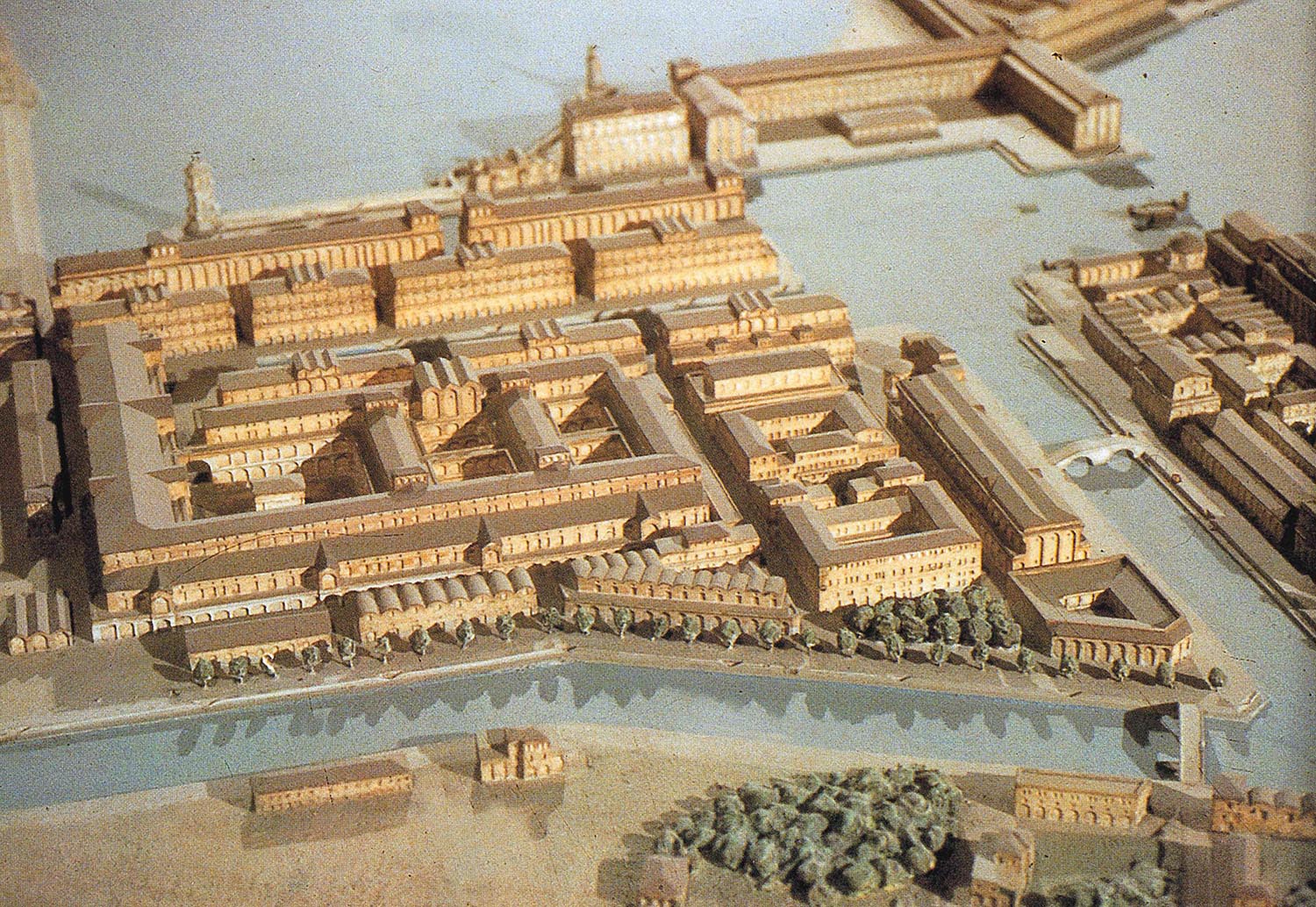
Detail of the model by Italo Gismondi. The transverse channel is at right