

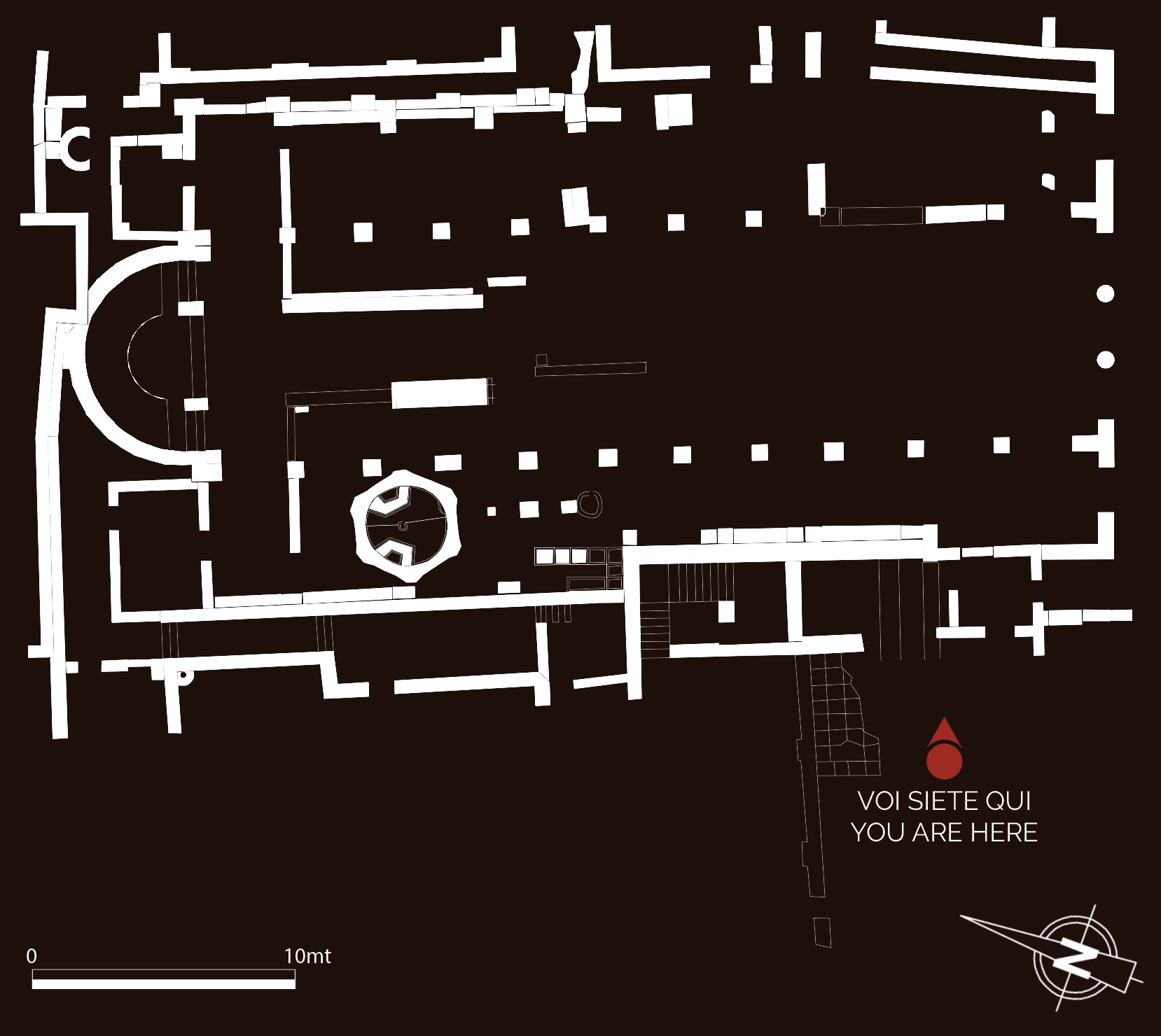
Around 430 AD, the building took on the typical basilica form, with the insertion of a semicircular apse on the northern side. Between the second half of the 5th and the middle of the 6th centuries AD, major modifications were made: the colonnades were extended, a new façade was built, and the liturgical space was given a new arrangement. In the 8th century AD, a baptismal font was placed inside the left nave. The early medieval ages marked the beginning of burial practices inside the basilica. Between the late 11th and the early 12th centuries AD, works to consolidate the bearing structures were performed, and the presbytery area was modified. In the 14th century AD, after a phase of abandonment and the first plundering activities, a large portion of the masonry collapsed.

Photo from a hot-air balloon
(M. Letizia)
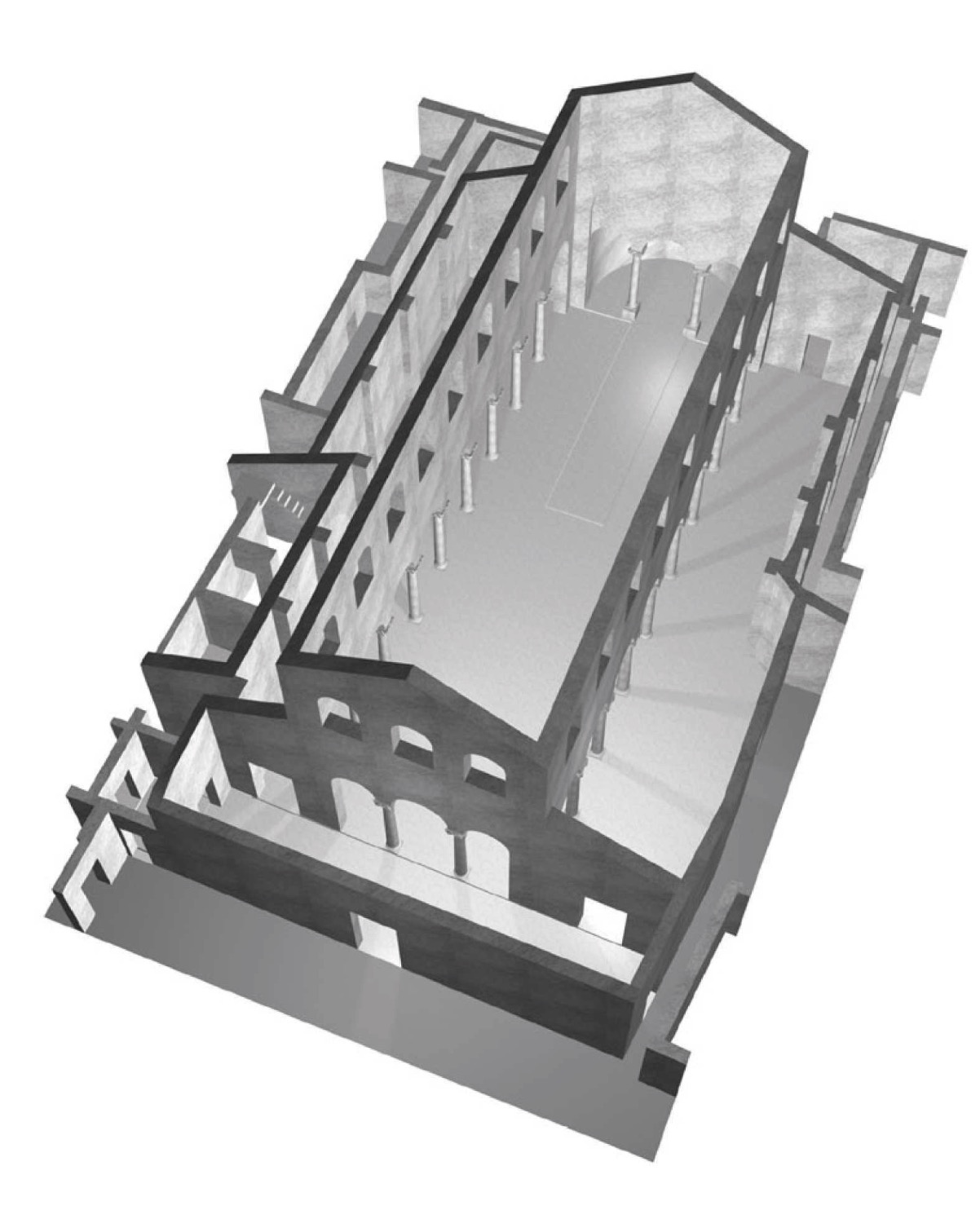
Reconstruction of the 5th century AD basilica
(G. Irace, R. Loreti)
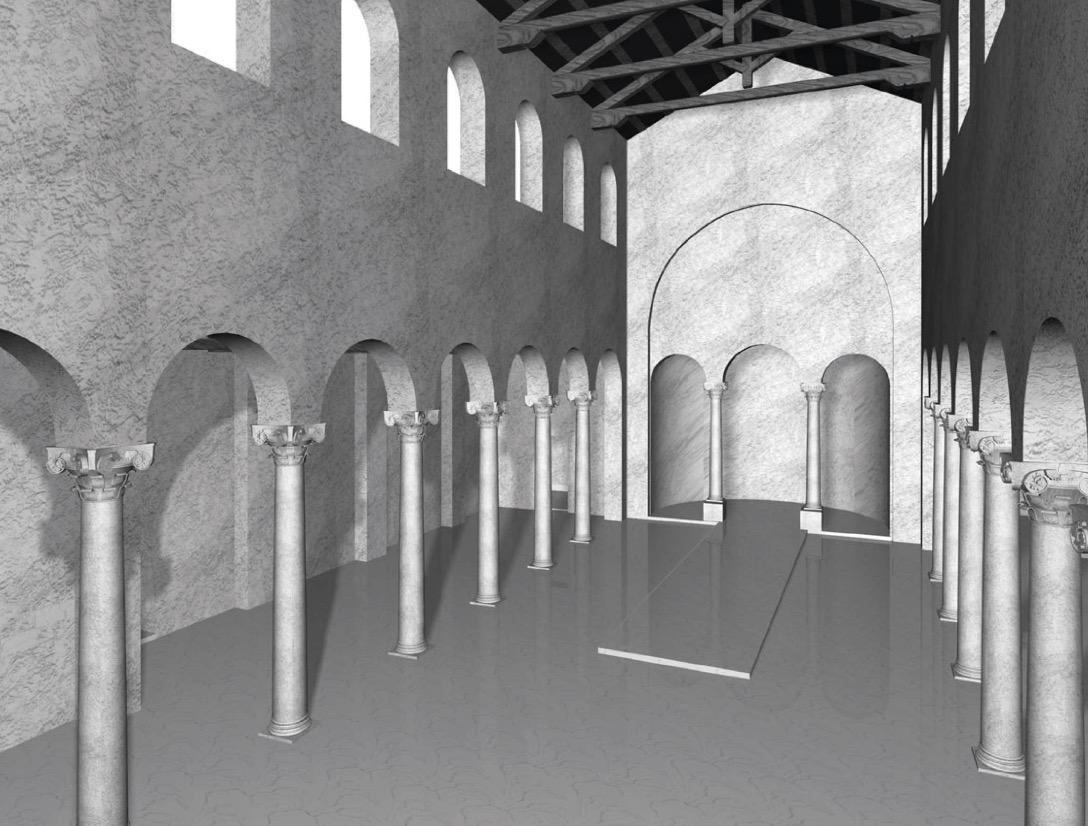
Reconstruction of the presbytery of the 5th century AD basilica
(G. Irace, R. Loreti)
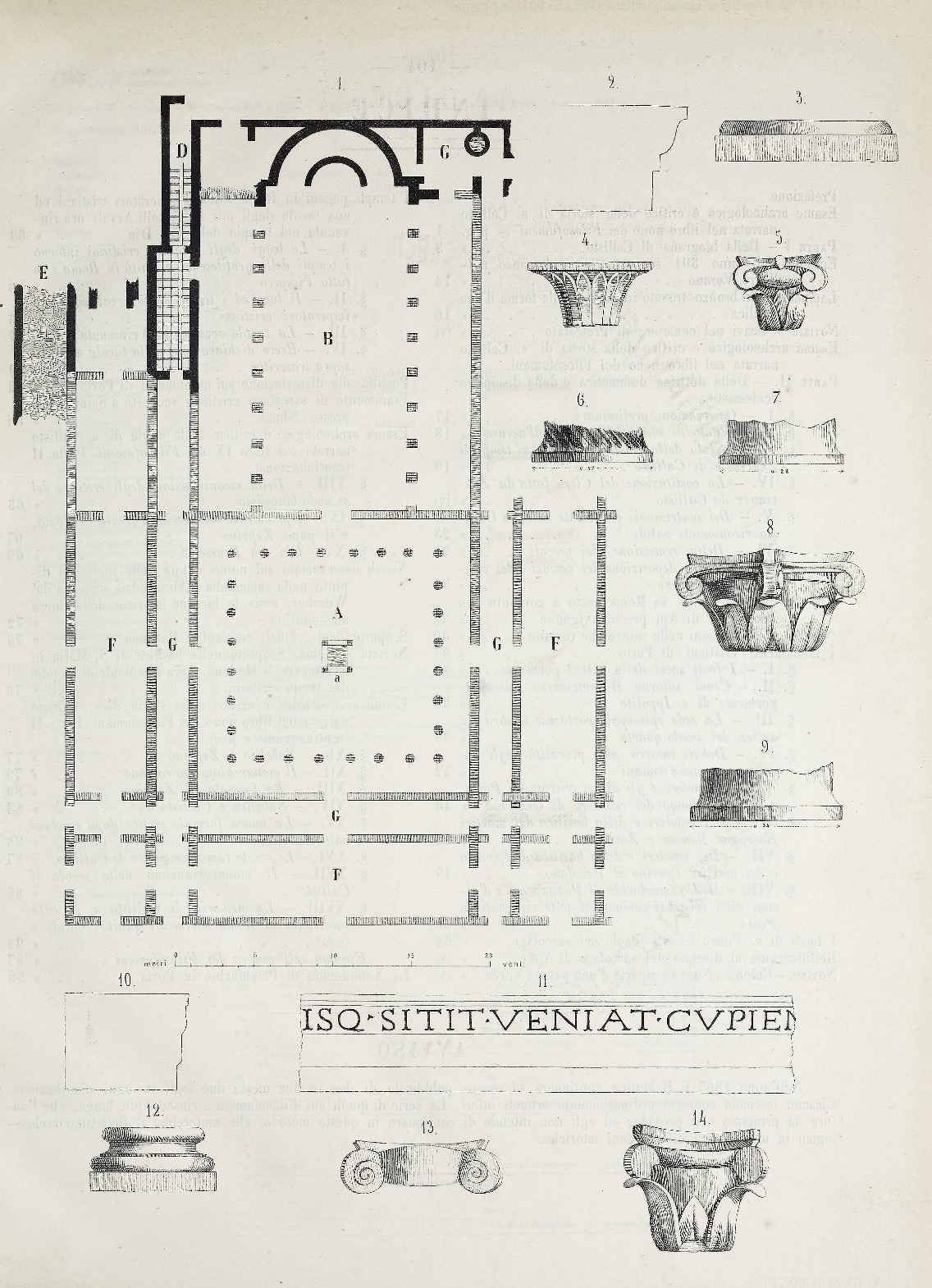
Map of excavations by Rodolfo Lanciani, with drawing of basilica’s architectural decorations

Fragments of decorative painting (first half of 6th century AD)

Brick and mosaic flooring in the northern sector of the aula, no longer visible today

Baptismal font from the Carolingian Age

Hypothesized reconstruction of the decorative painting of the western perimeter wall
(G. Bordi, V. Valentini)

Hypothesized reconstruction of the basilica’s external appearance in the early 6th century AD
(G. Irace, R. Loreti)