

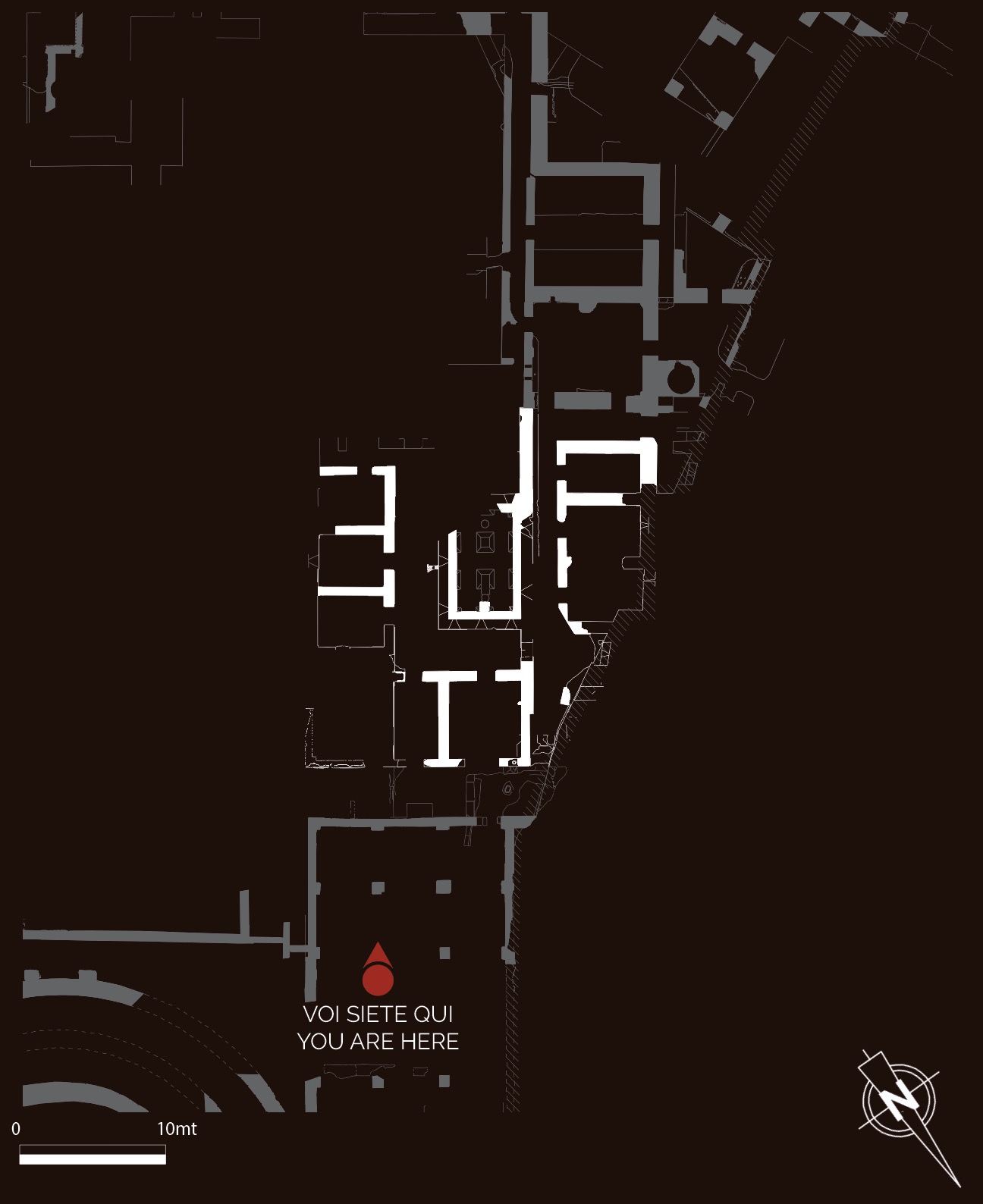
Organized around an upper peristyle called a residential Peristilium, this residential complex had rooms with floors in opus sectile, the preparatory layers of which remain, and a latrine. The short side of the peristyle’s portico, of which the lower portions of the two corner pillars and a brick column are conserved, was paved with polychrome mosaic. Between the Imperial Palace’s new front, built after the destruction of the amphitheatre in front of it, and the residential Peristilium, there is a corridor in an east-west orientation that conserves a mosaic pavement with black and white tesserae, flanked by a courtyard probably used as a garden.
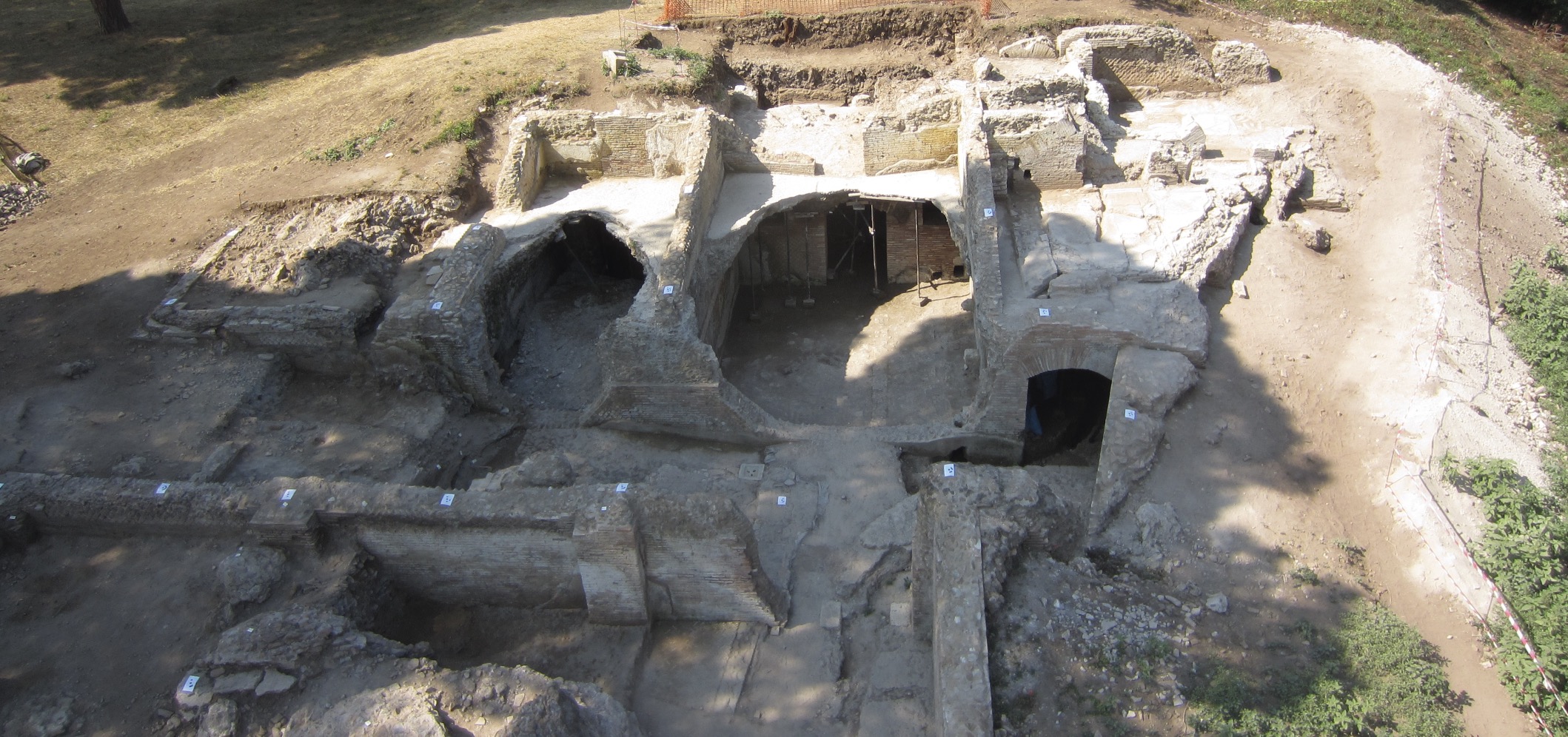
Aerial view of so-called Building 8 upon the completion of the 2013 excavation
(Portus Project)
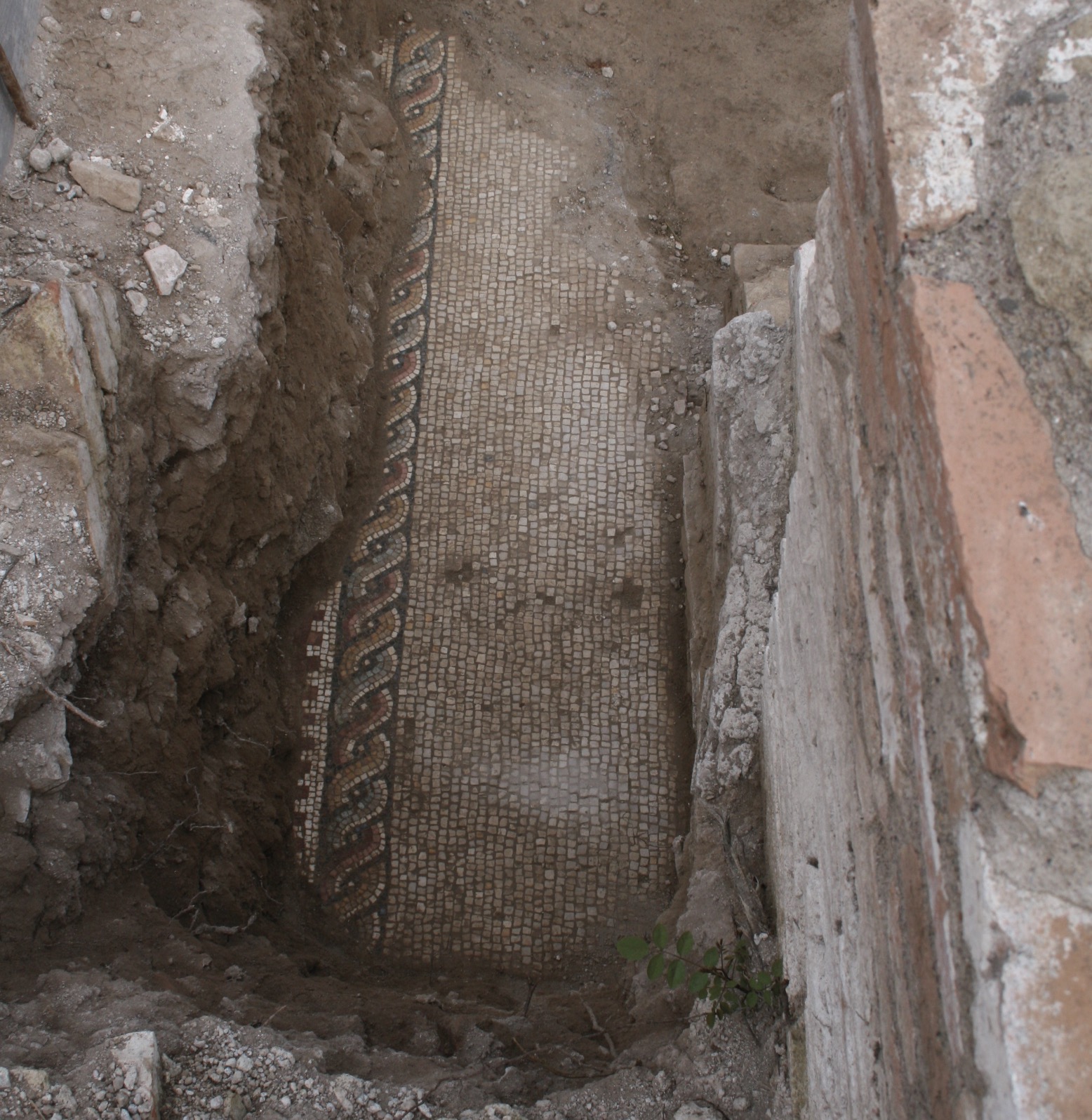
Polychrome mosaic of the residential Peristilium
(Portus Project)
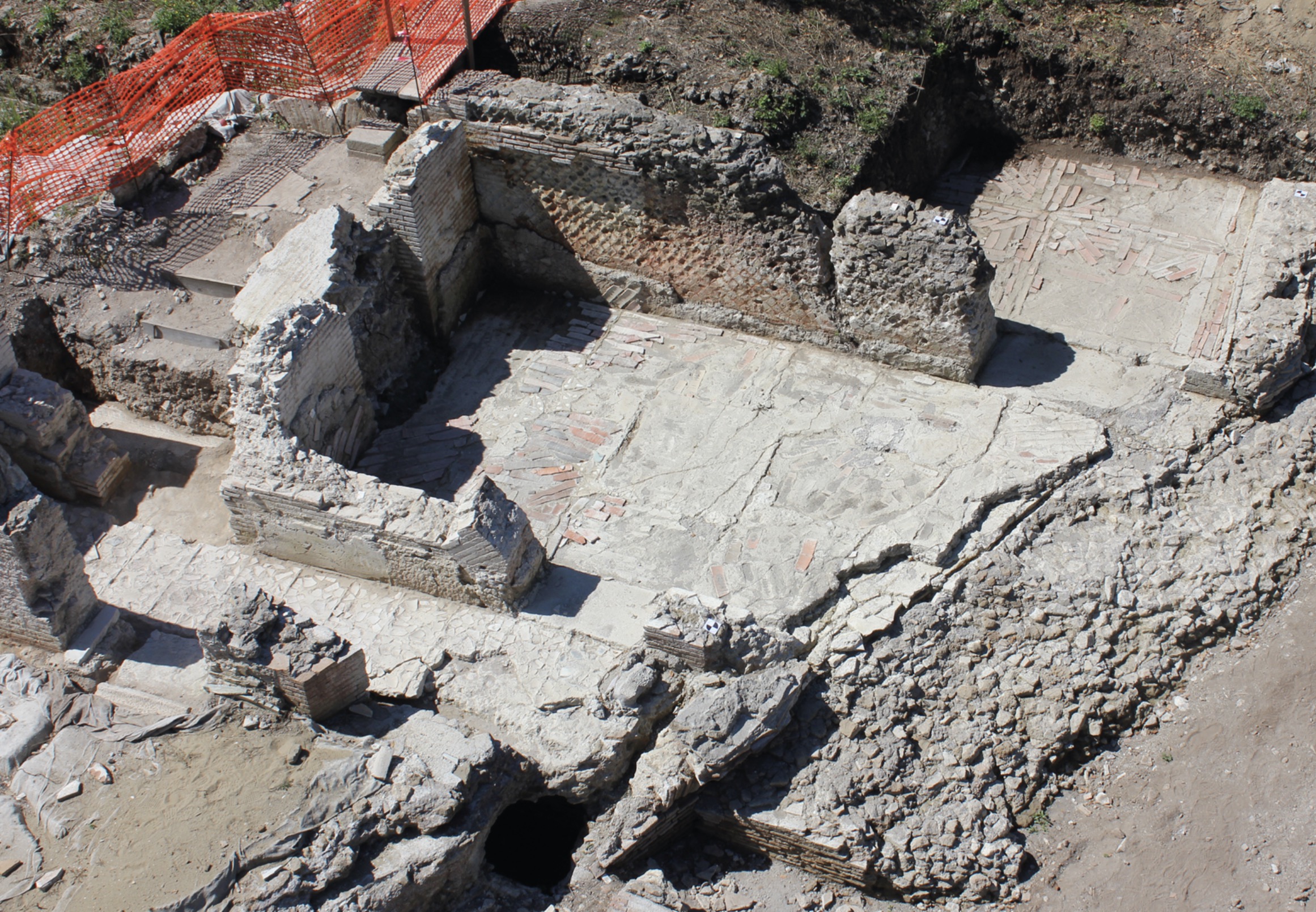
Aerial view of the rooms with the preparatory levels of the floor in opus sectile
(Portus Project)
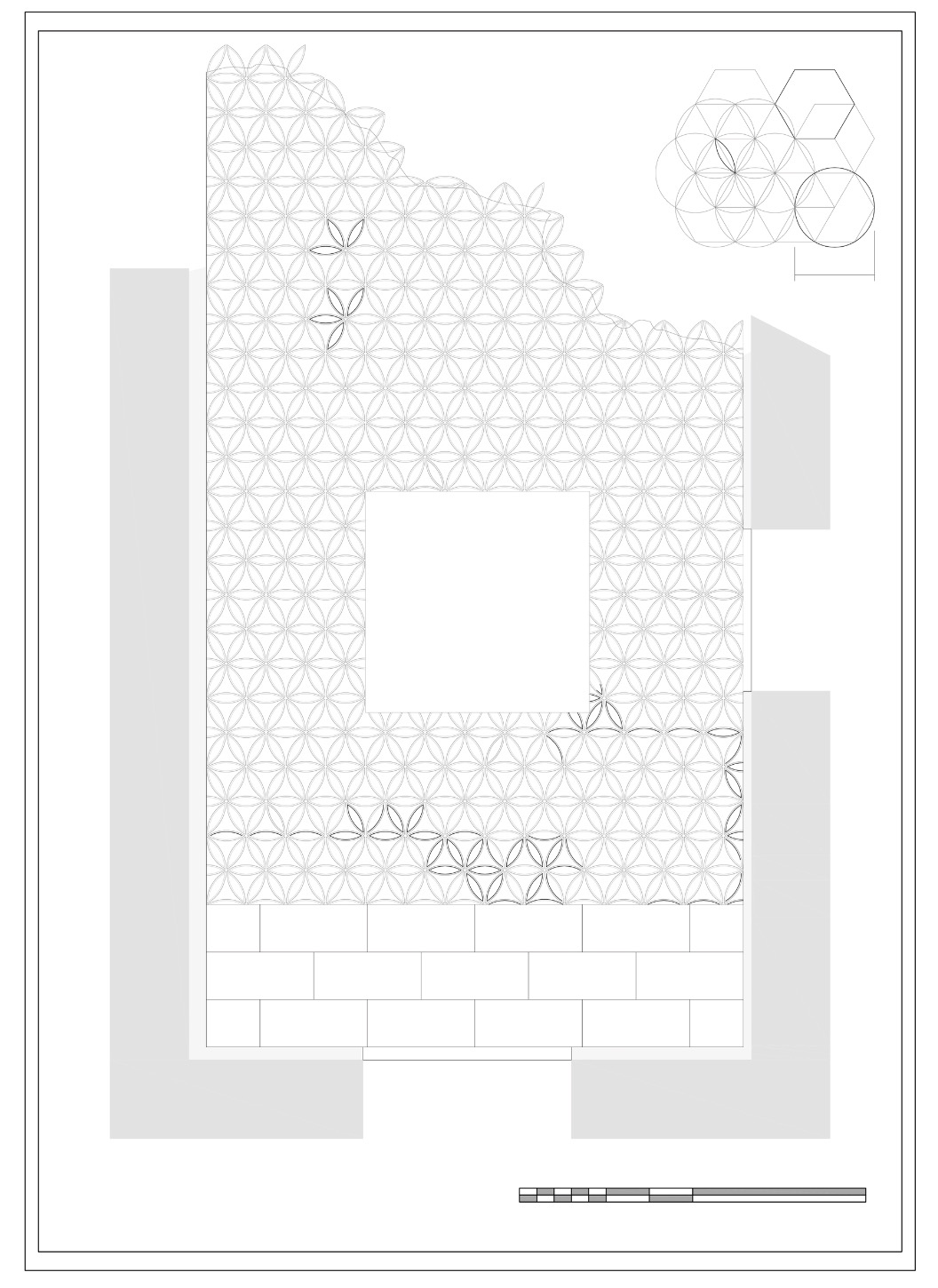
Reconstruction of the decorative scheme of the floor in opus sectile
(E. Gallocchio)
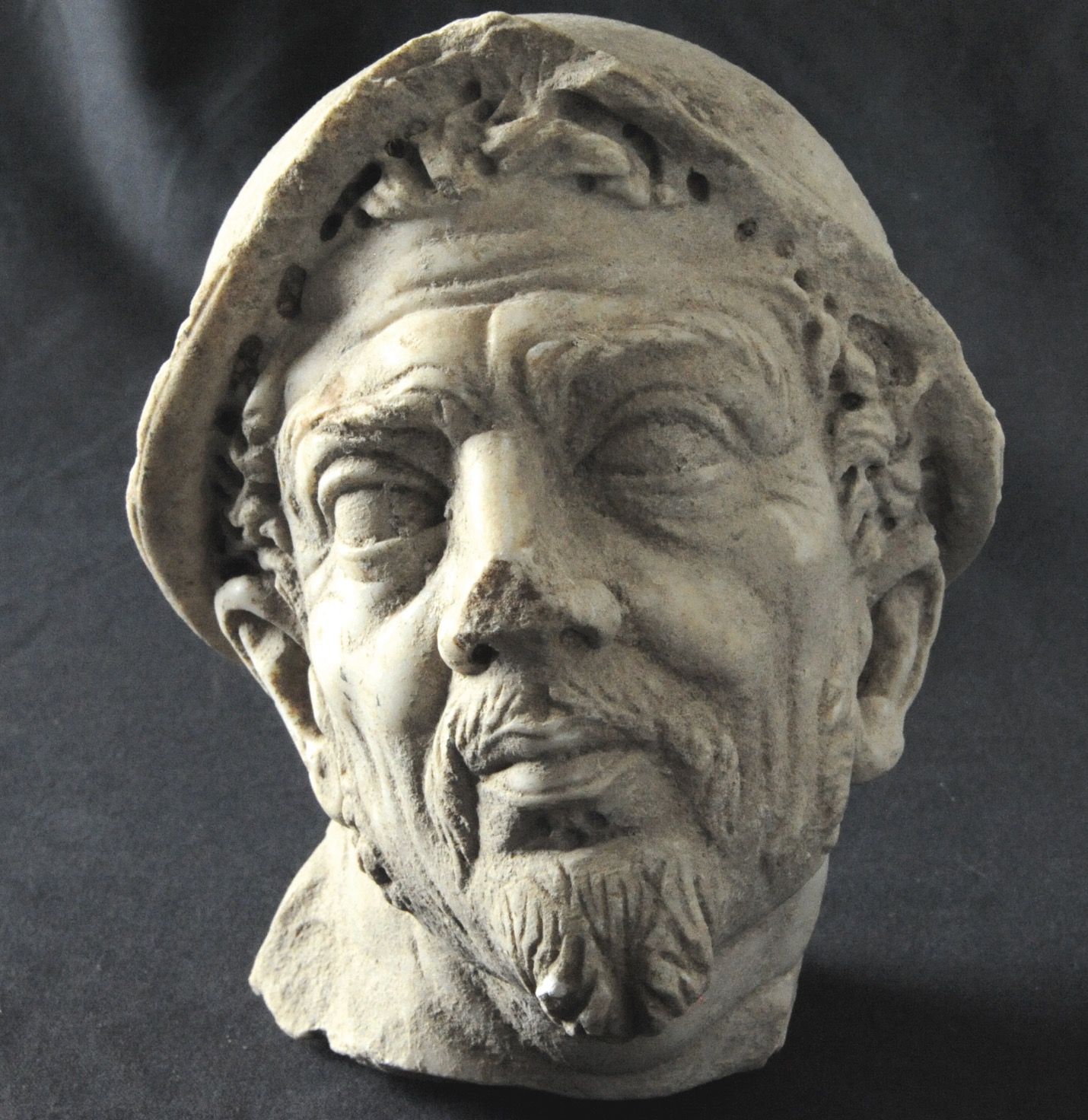
Marble head of a fisherman discovered in correspondence with the Imperial Palace’s new front
(Depositi ostiensi)
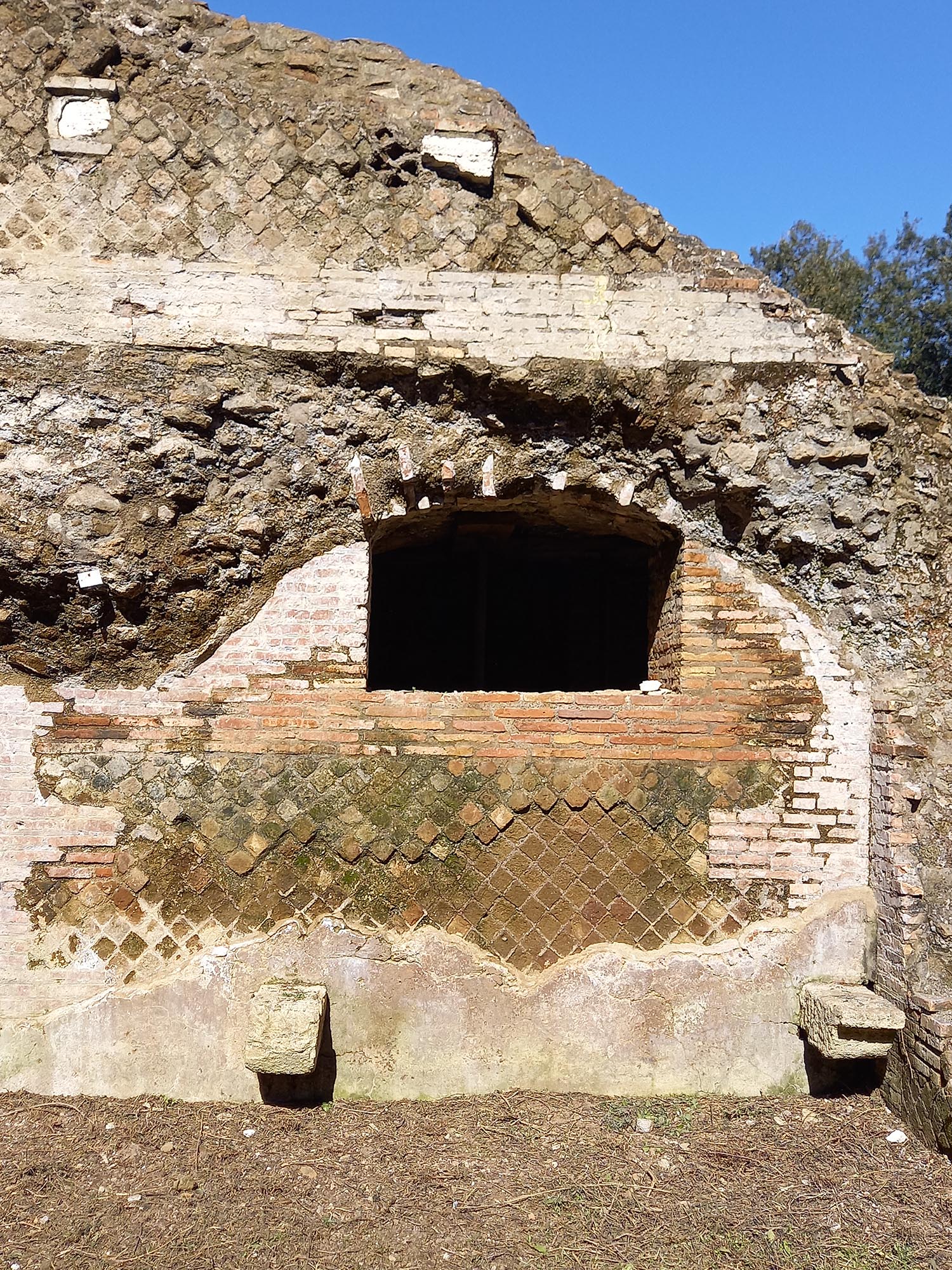
Lower latrine with travertine corbels, with seats resting on them
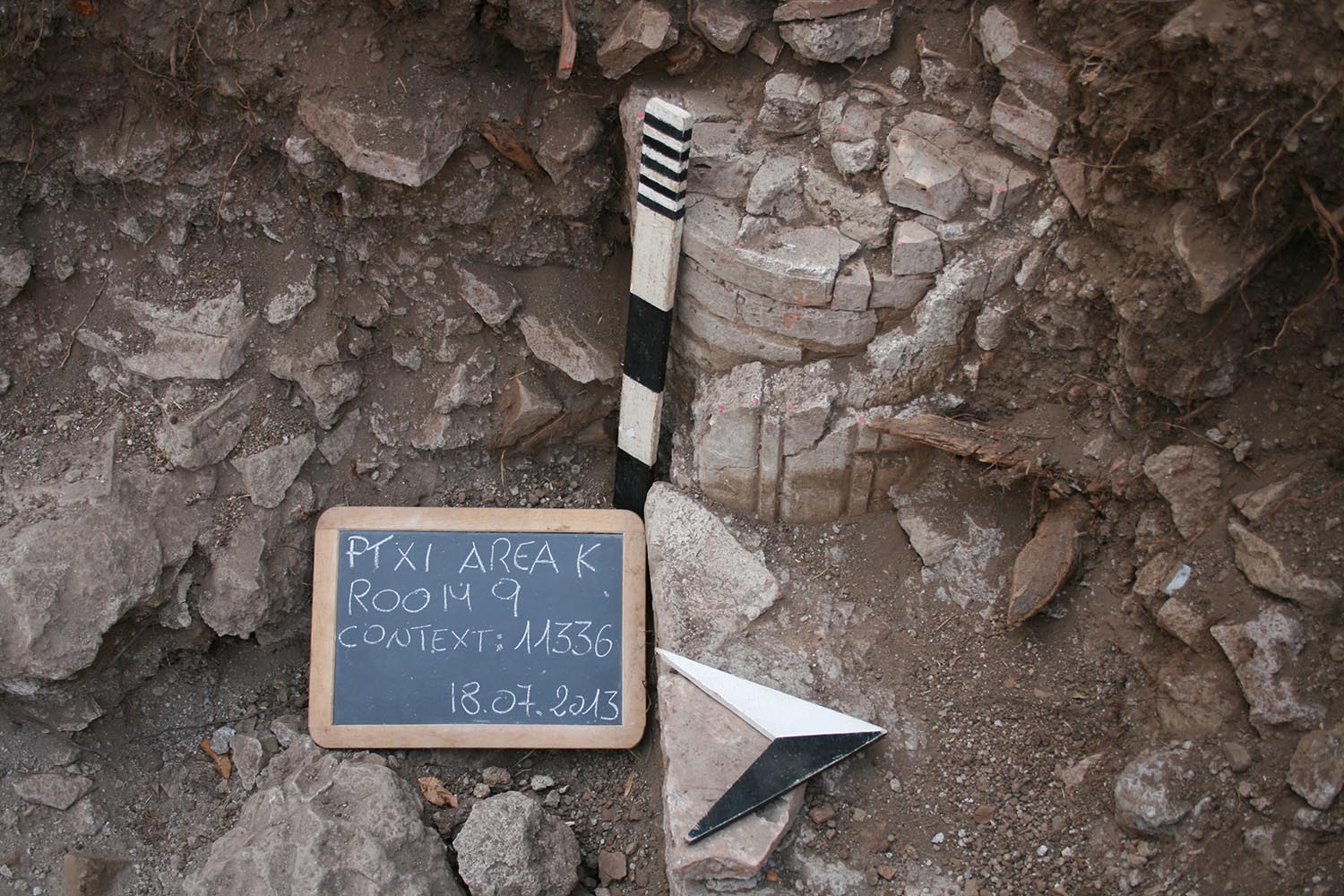
Brick column of the residential Peristilium with stucco lining
(photo: Portus Project)

East-west corridor mosaic with black and white tesserae
(photo: Portus Project)
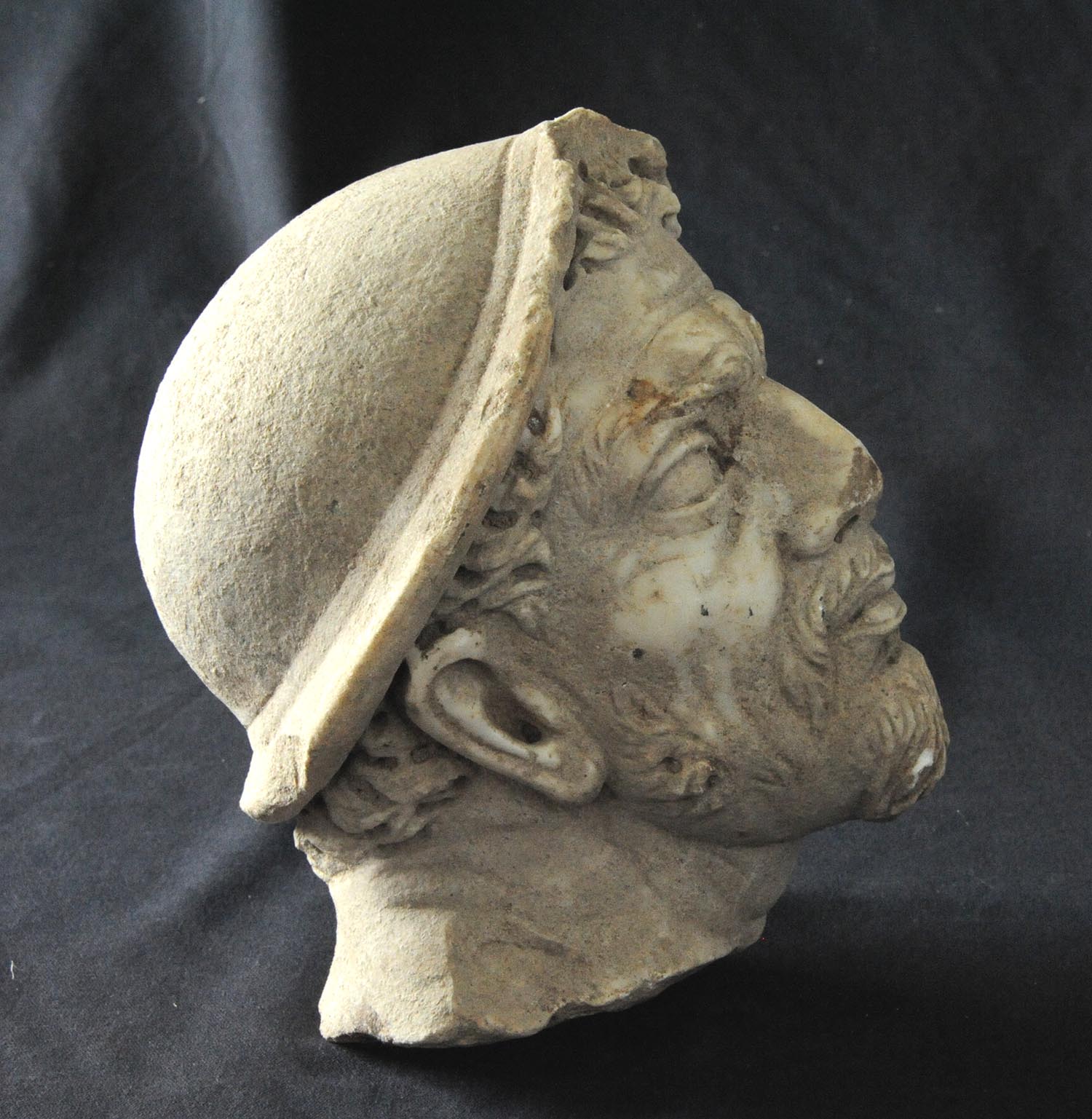
Marble head of a fisherman discovered in correspondence with the Imperial Palace’s new front