

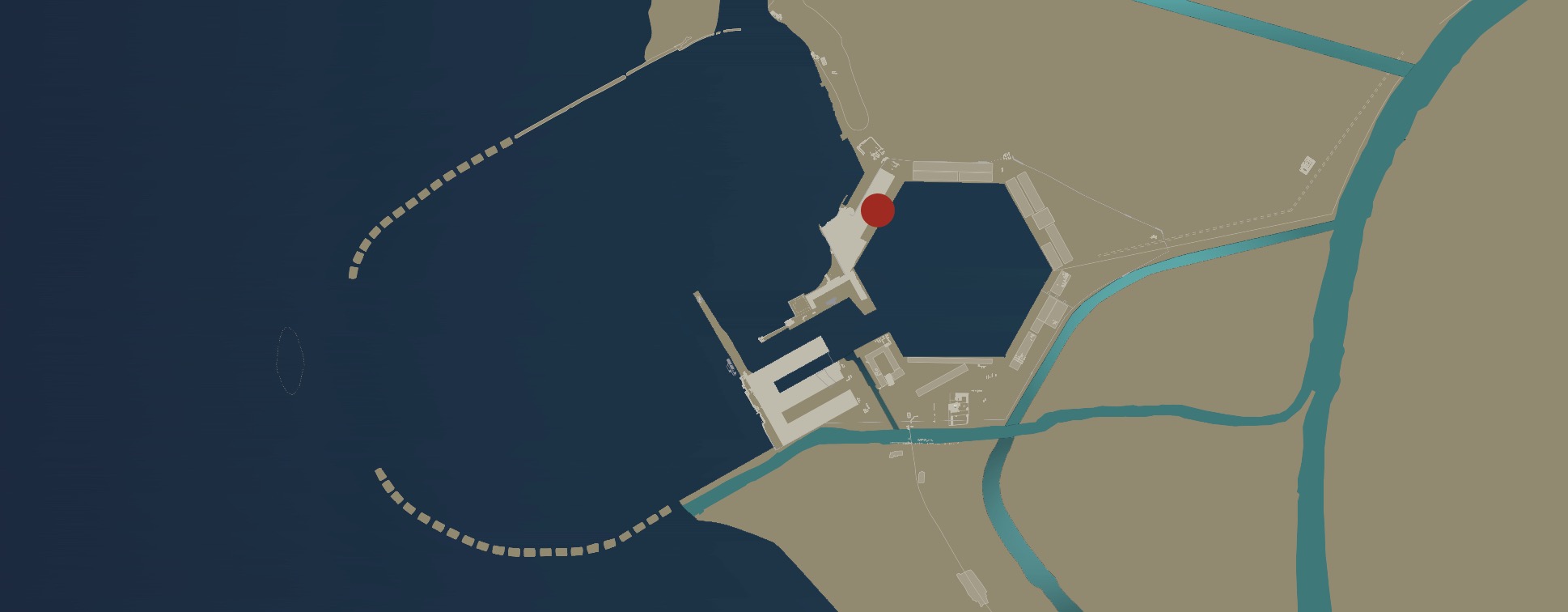
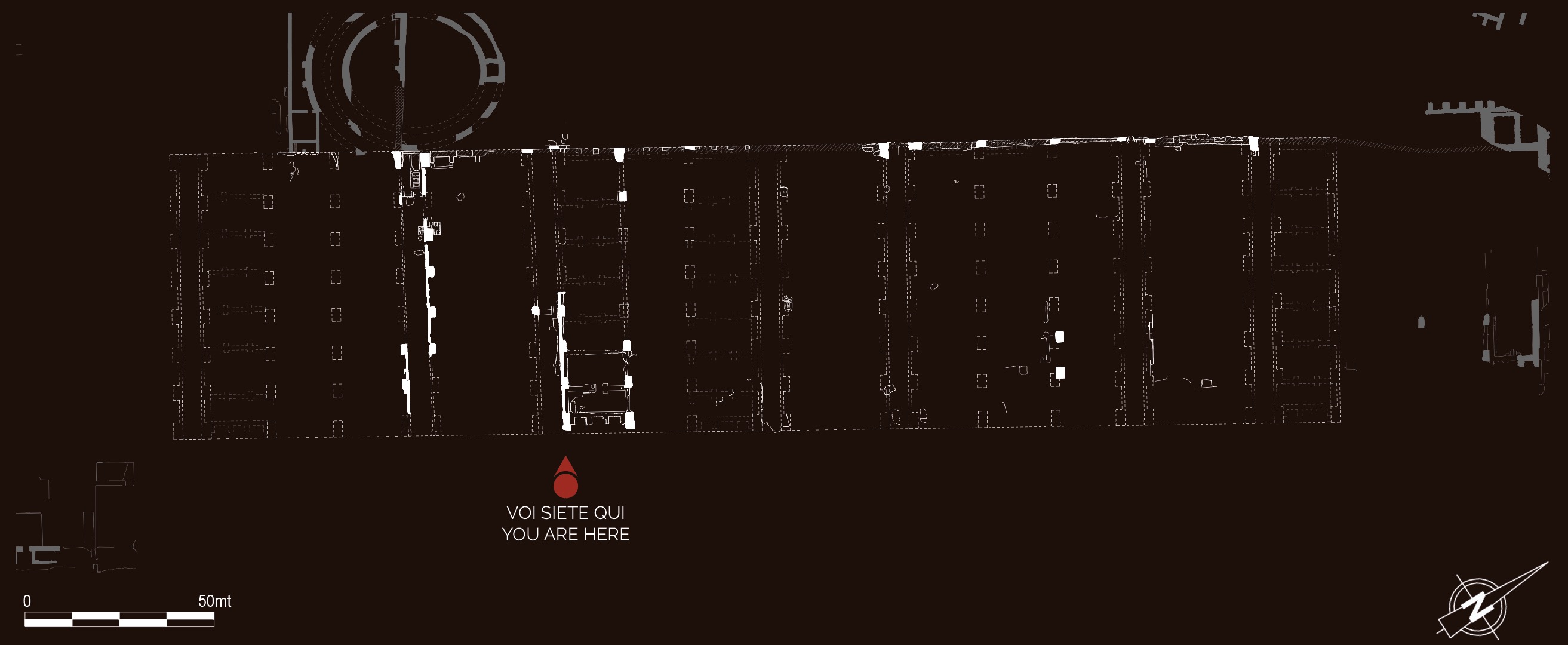
The Navalia were intended for the sheltering and maintenance of military vessels, as shown by the discovery of bronze ship nails from the Age of Trajan (98-117 AD). The complex, 240 metres in length, consisted of three large, identical modular sections facing both basins, with a corridor 4.5 meters wide, three naves about 12 metres wide, a corridor 5 meters wide, and a nave 20 meters in length. In the 2nd century AD, part of the building was transformed into a warehouse. Visible today are one of the nave’s long sides, characterized by large pillars from the Age of Trajan incorporated into later masonry. In Late Antiquity, the front of the Navalia facing the basin of Claudius was closed by the walls, and the area took on a funerary function, as demonstrated by the discovery of many burials, two of which in masonry.
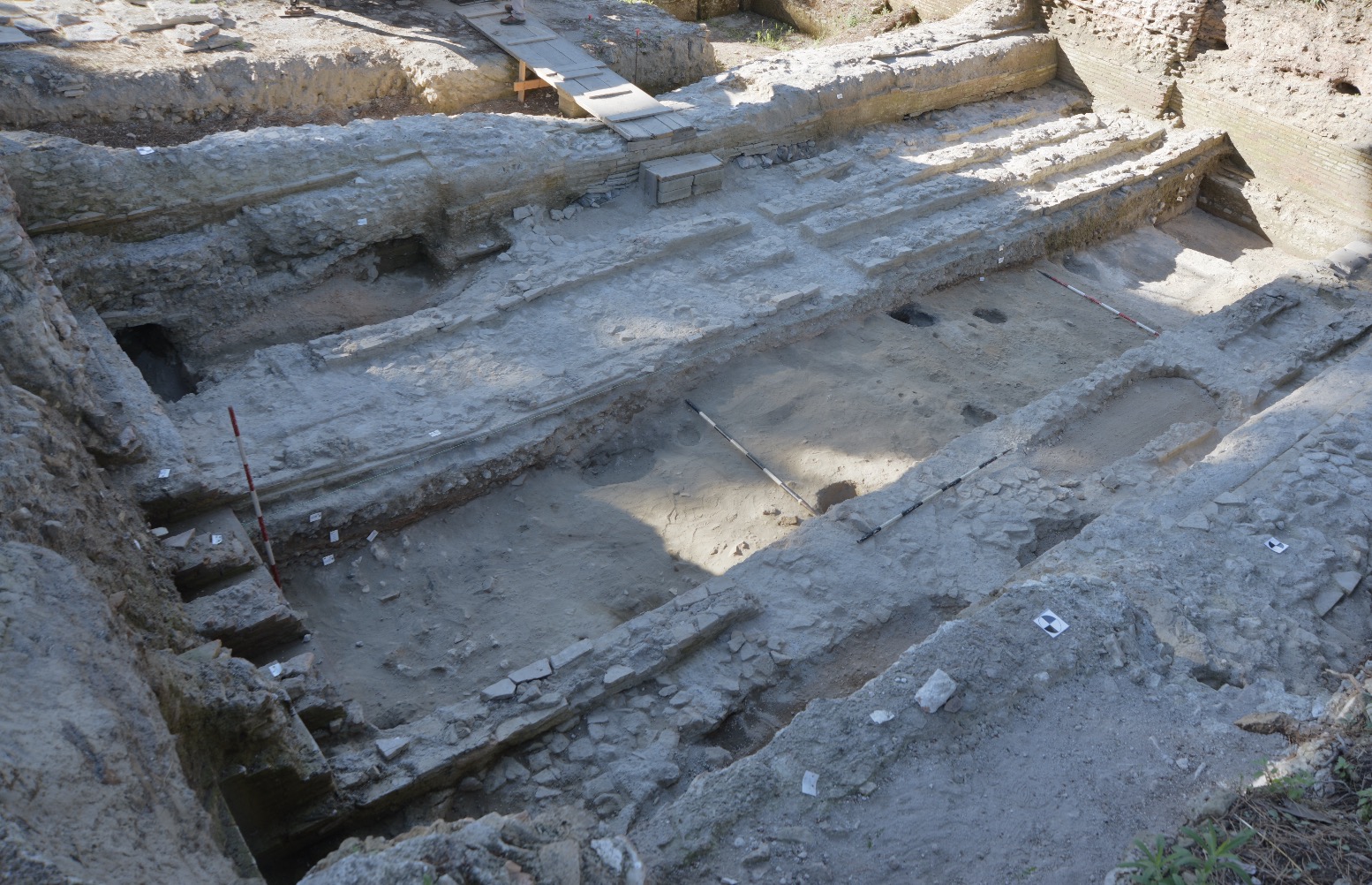
Trench of one of the large naves
(Portus Project)
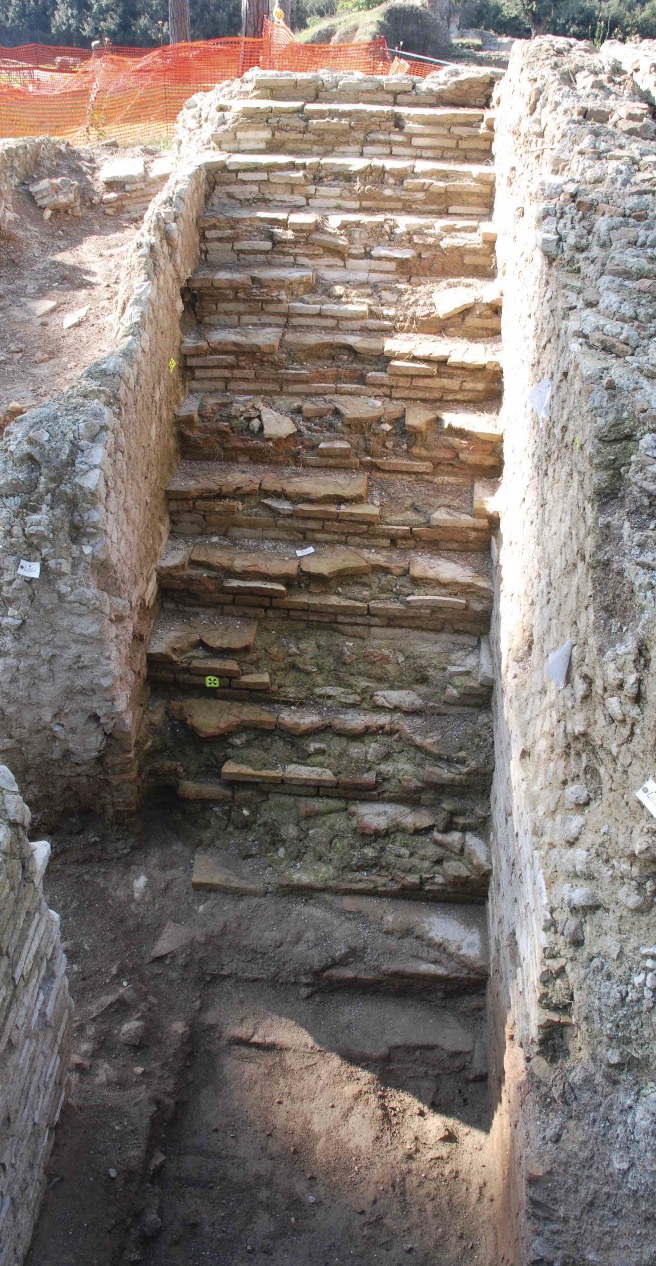
Brick staircase of the 2nd century AD phase
(Portus Project)
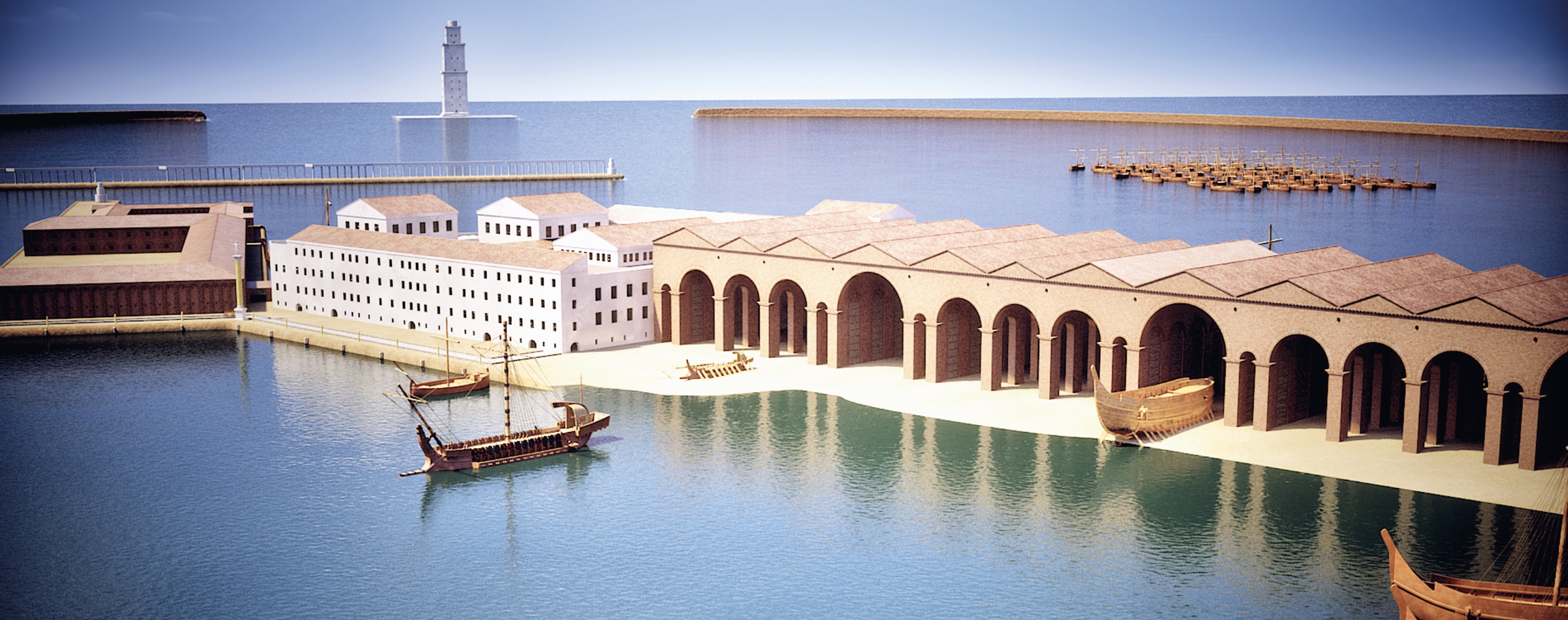
Reconstruction of the Navalia viewed from the basin of Trajan
(Portus Project/Artas Media)
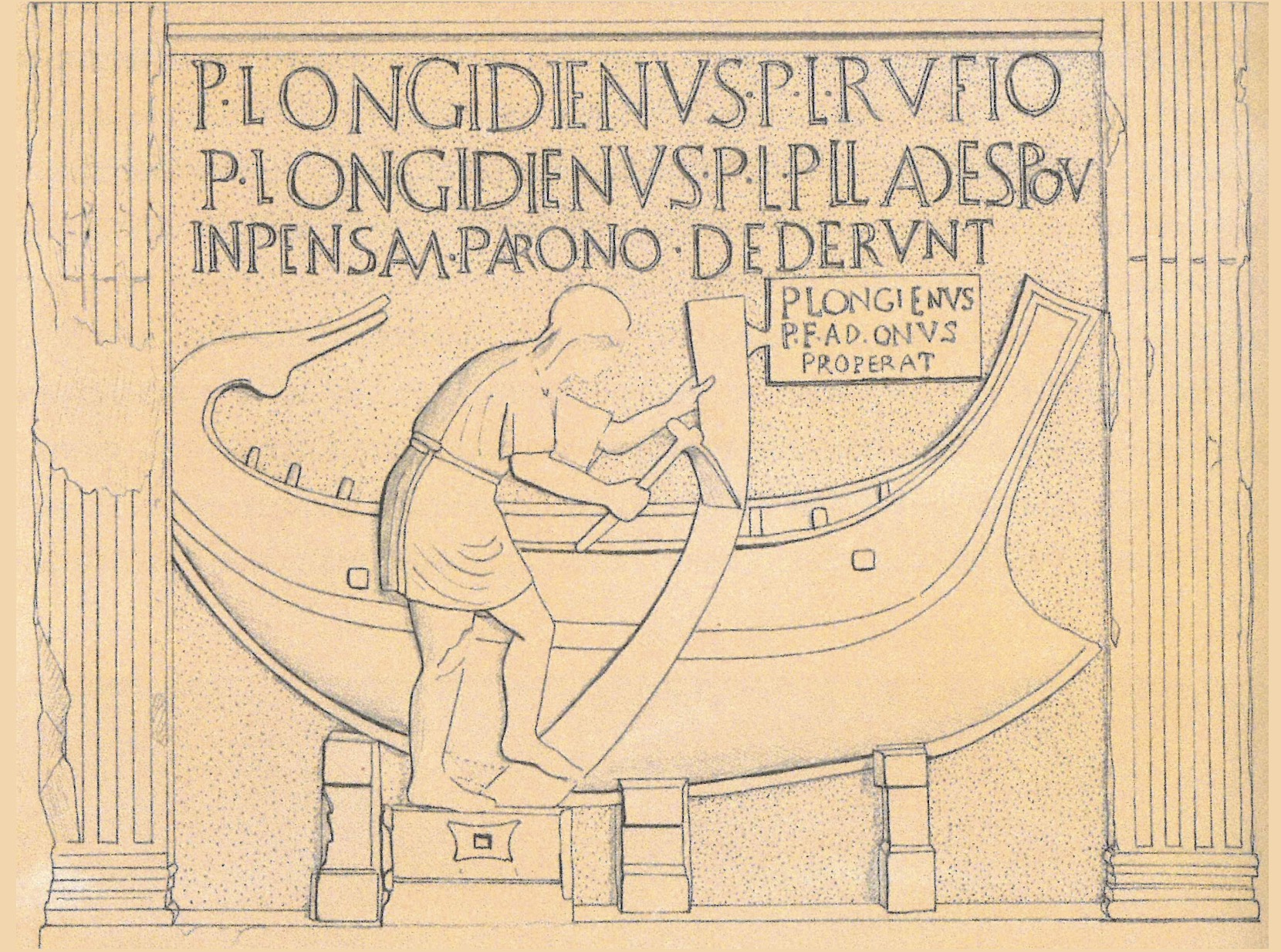
Drawing of the stele of the shipwright Publius Longidienus, conserved at Museo Nazionale di Ravenna
(J.-C. Golvin)
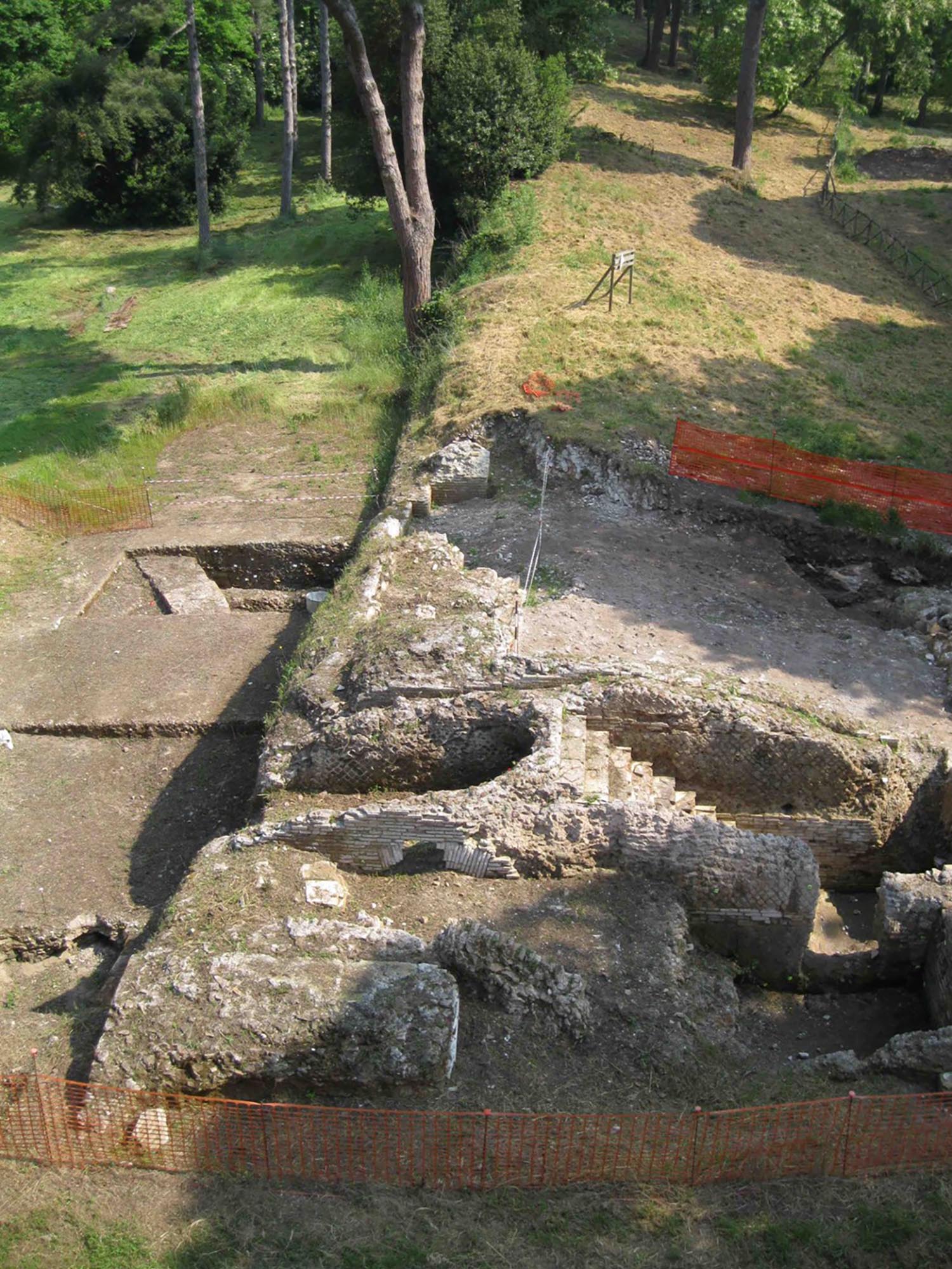
Aerial view of the brick staircase of the 2nd century AD phase
(photo: Portus Project)
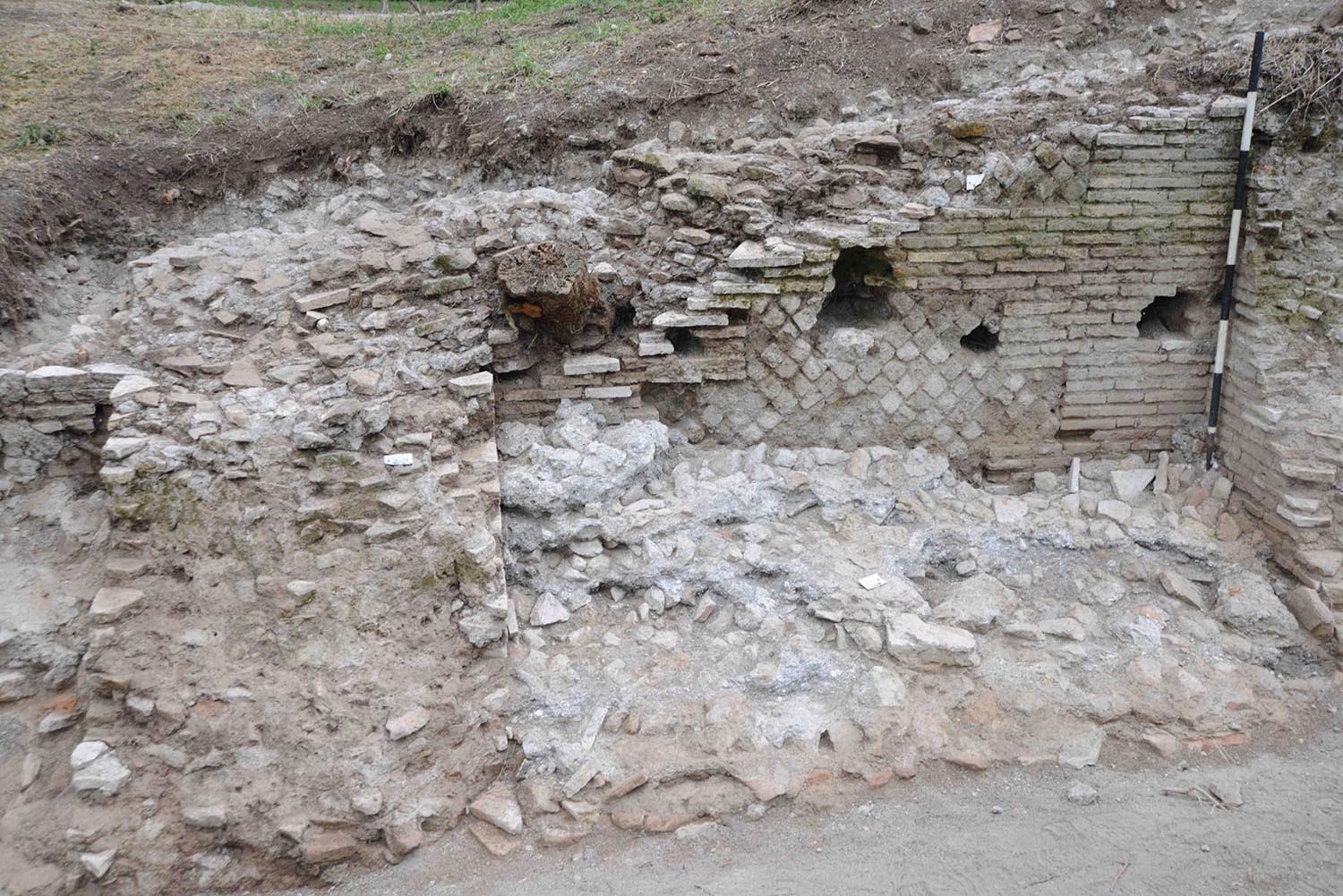
Detail of the masonry of the northern façade: the Late Antique walls are built against the 2nd century AD wall, between two buttresses
(photo: Portus Project)
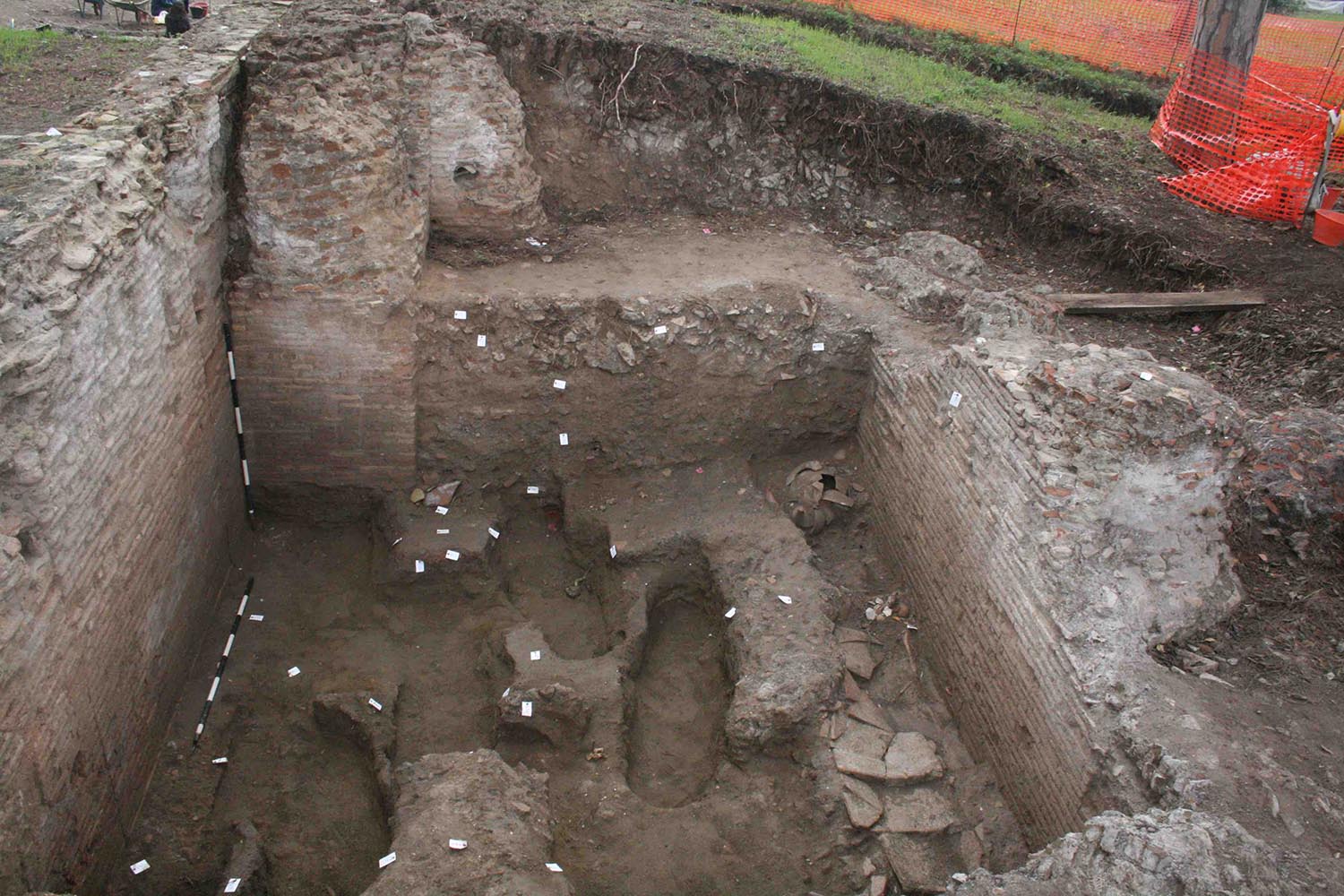
Section of the corridor alongside the large nave, reused in Late Antiquity as a burial ground
(photo: Portus Project)
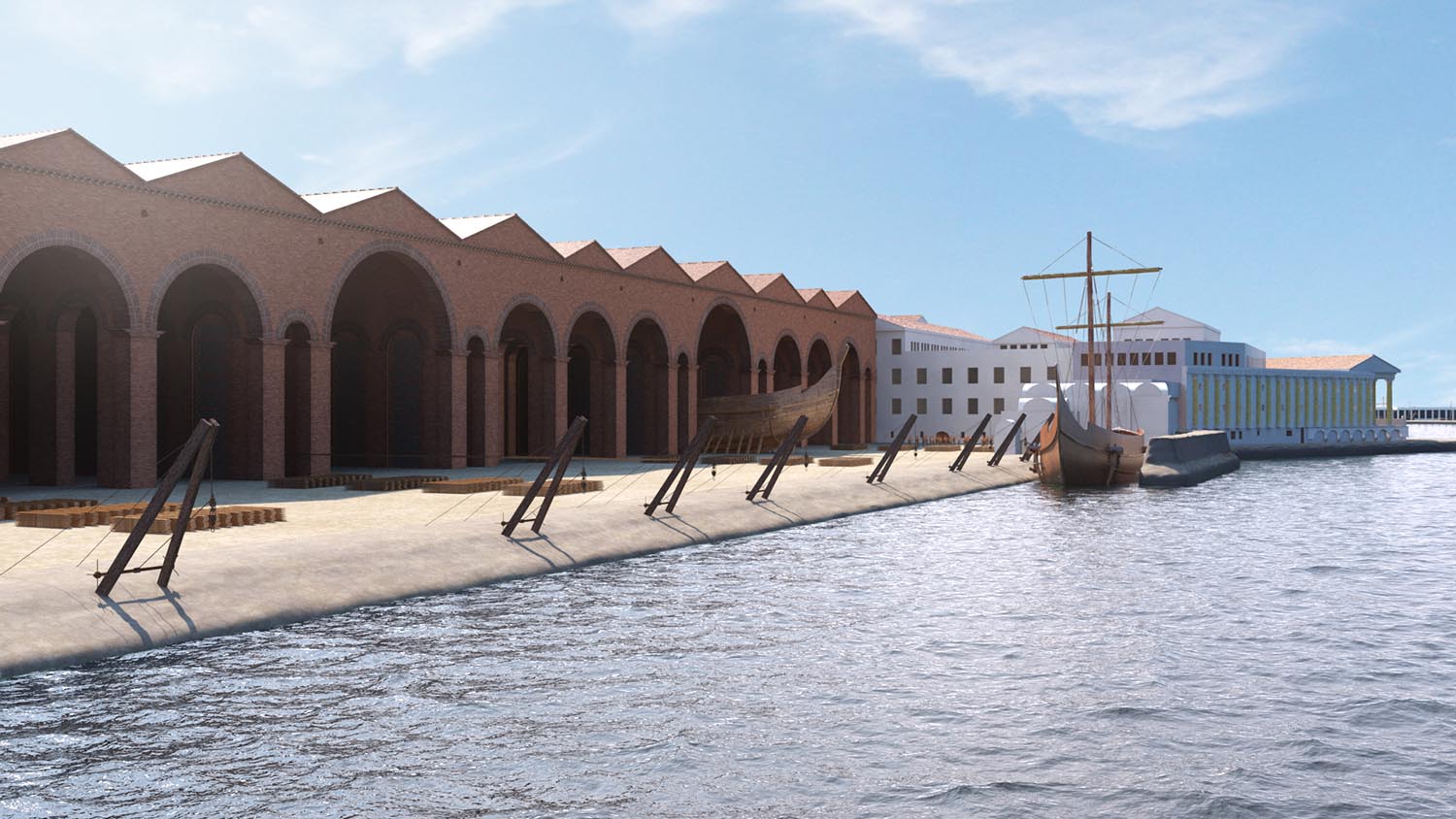
Reconstruction of the Navalia viewed from the basin of Claudius
(Portus Project/Artas Media)
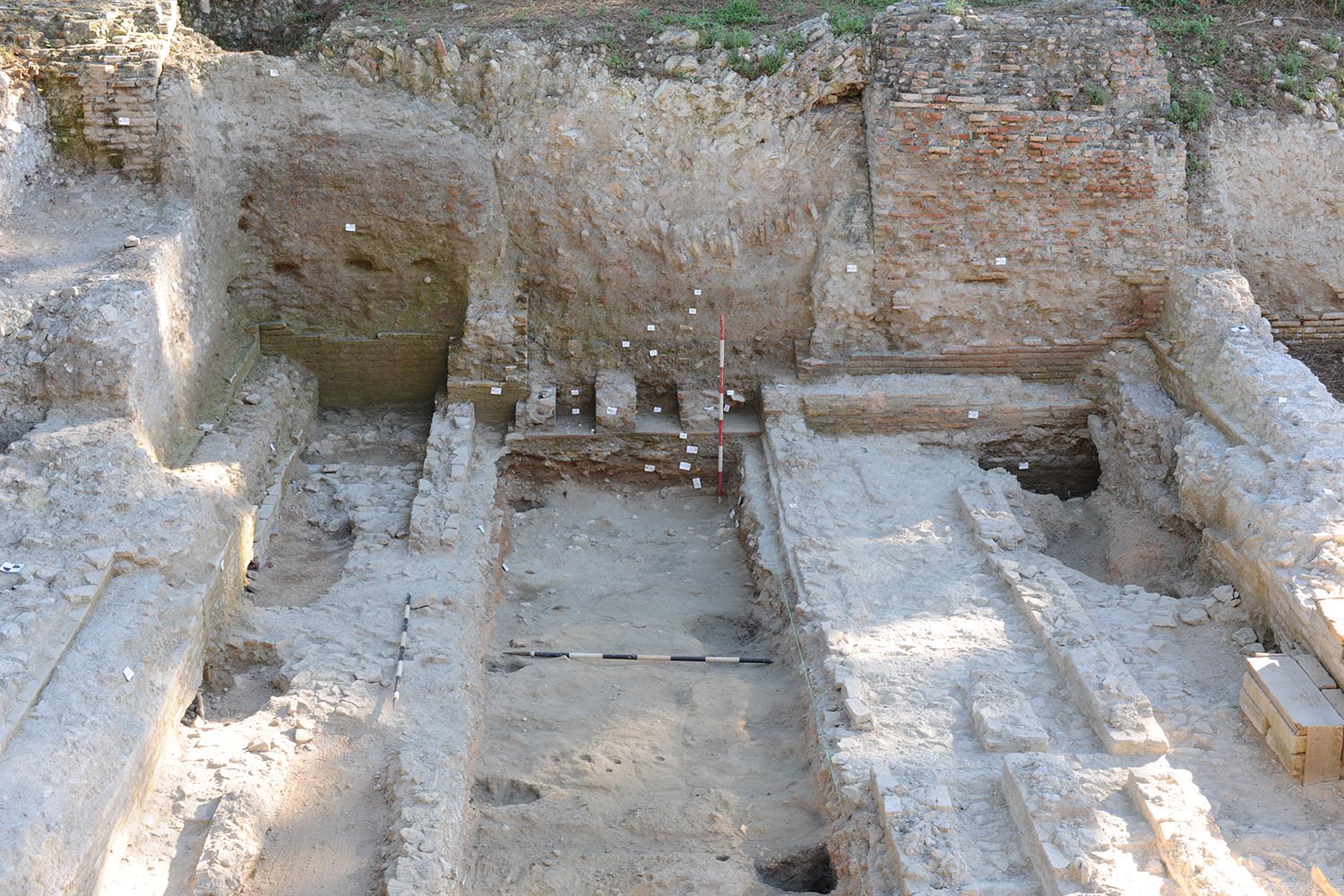
Detail of the assay of one of the large naves
(photo: Portus Project)