

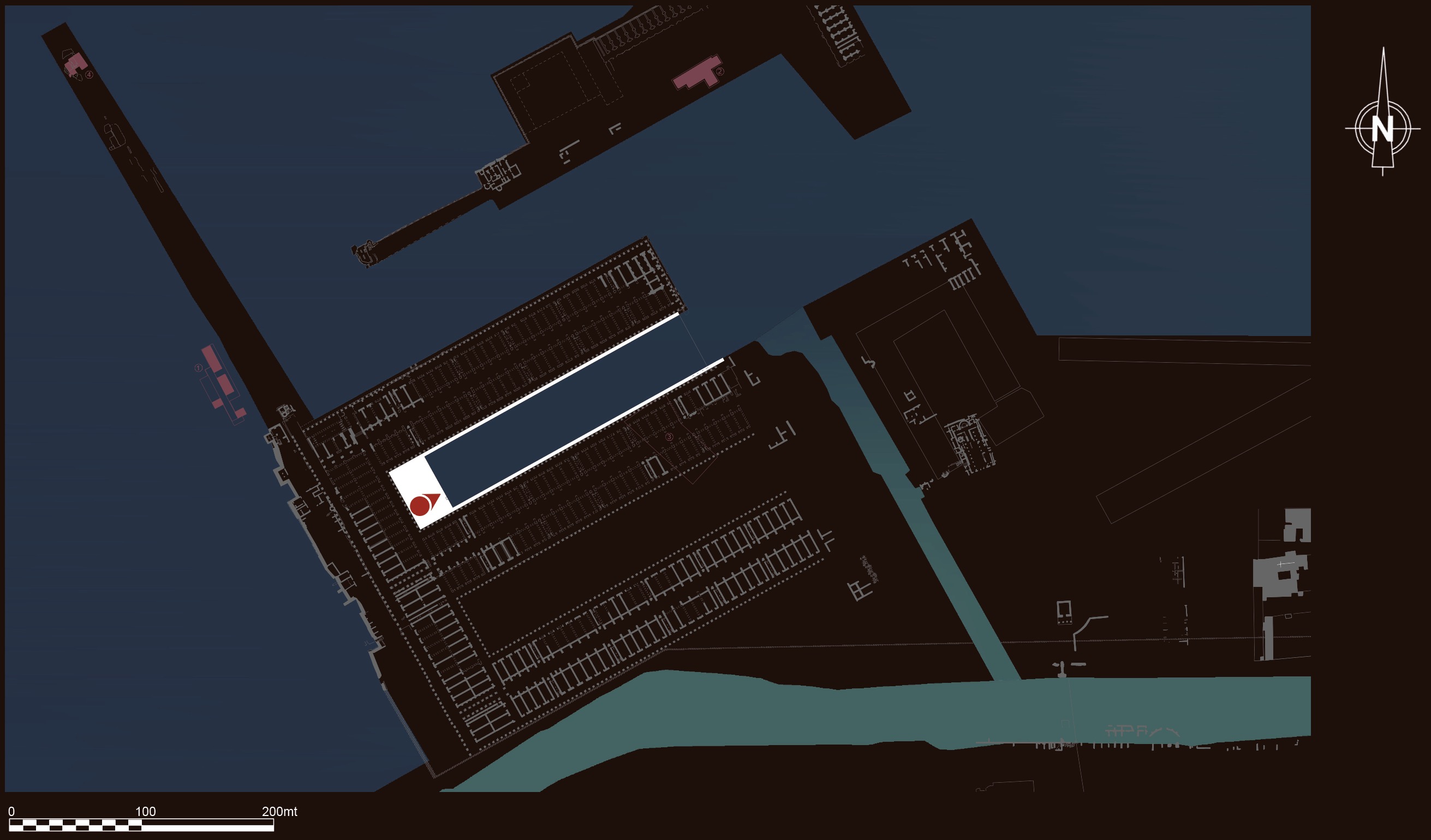
The wet dock is a very large, rectangular basin surrounded on three sides by Trajan’s Warehouses. Already planned in the original design of the Harbour of Claudius to function as an inner basin, it saw at least two major construction phases: the first during the reigns of Claudius and Nero (42-68 AD), shown by the discovery of the brick stamp in the most ancient structures of the quays; and the second from the Severan Age (193-235 AD), when the colonnades of the warehouses’ porticoes were closed to increase the complex’s storage capacity, while the quay was considerably enlarged along its entire perimeter. The basin is estimated to have been about 8 metres in depth, but it has not been possible to determine whether the bottom was paved, as in the case of the hexagonal basin and of Fossa Traiana. The banks, like those at the Harbour of Trajan, were scarped to attenuate wave energy. Large travertine blocks with holes anchored to the quays were used for mooring the ships. The wet dock was designed to accommodate shallow-draught vessels, and was likely used to moor naves caudicariae (barges designed for river navigation).
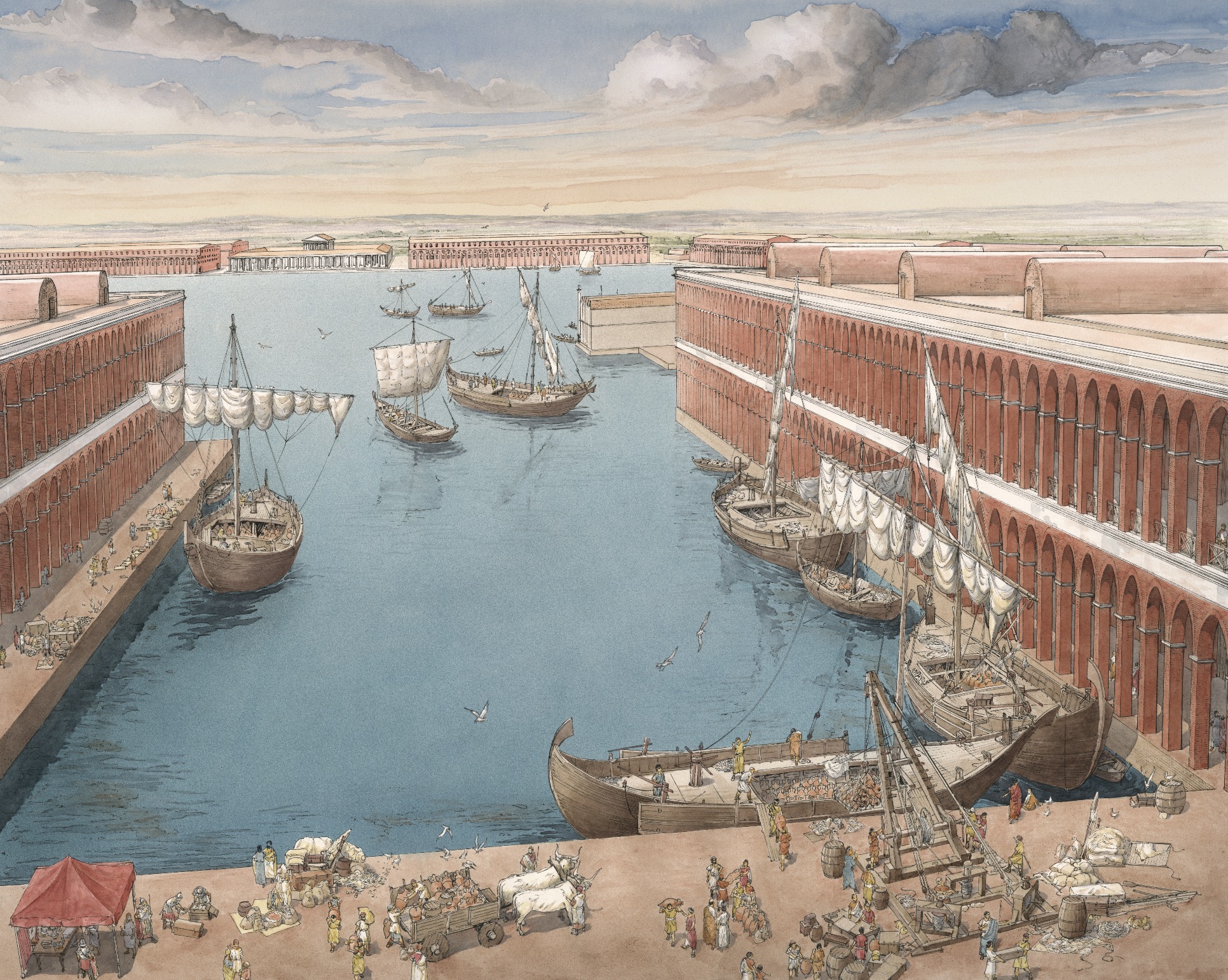
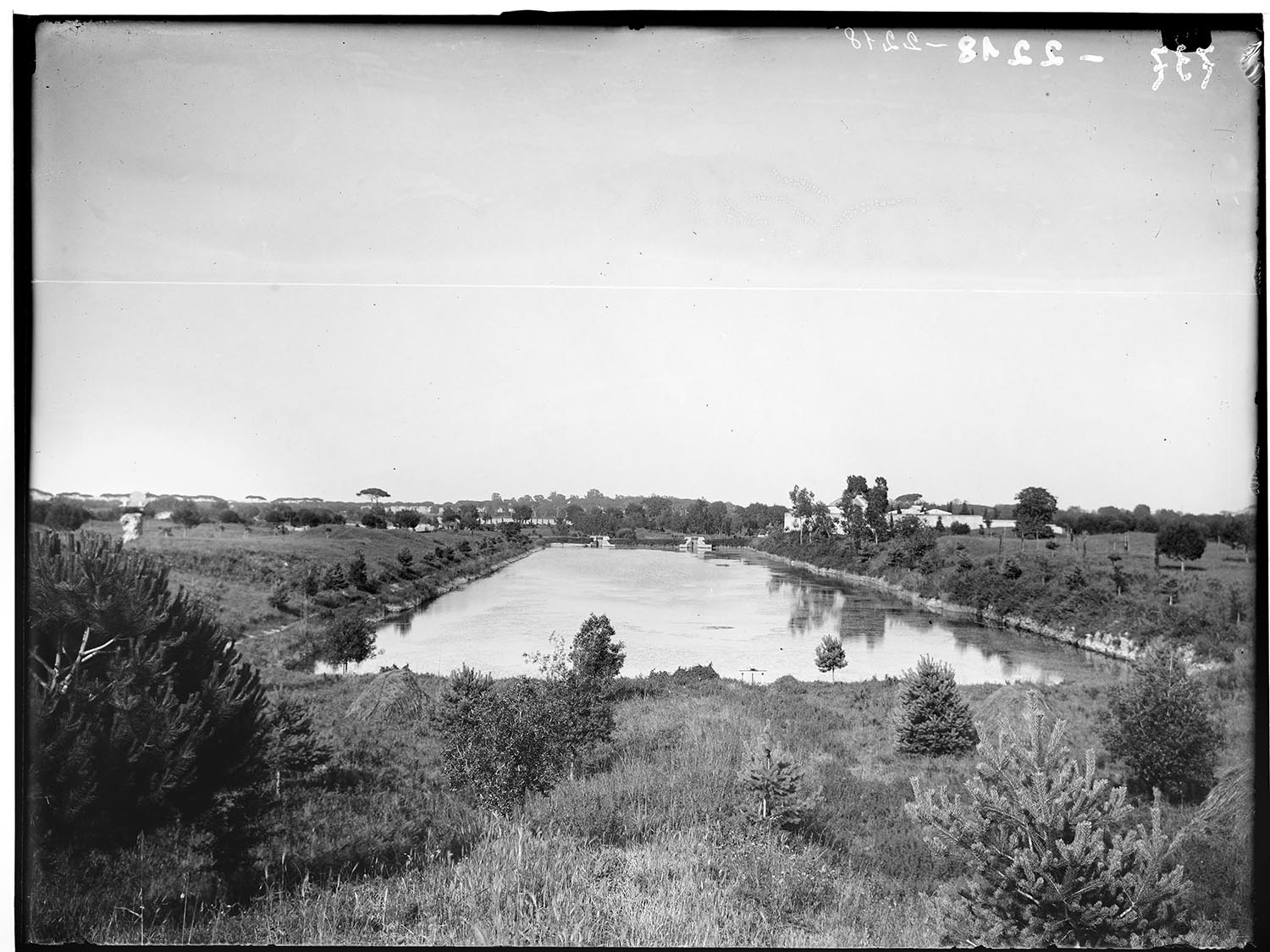
The wet dock’s appearance in the 1920s
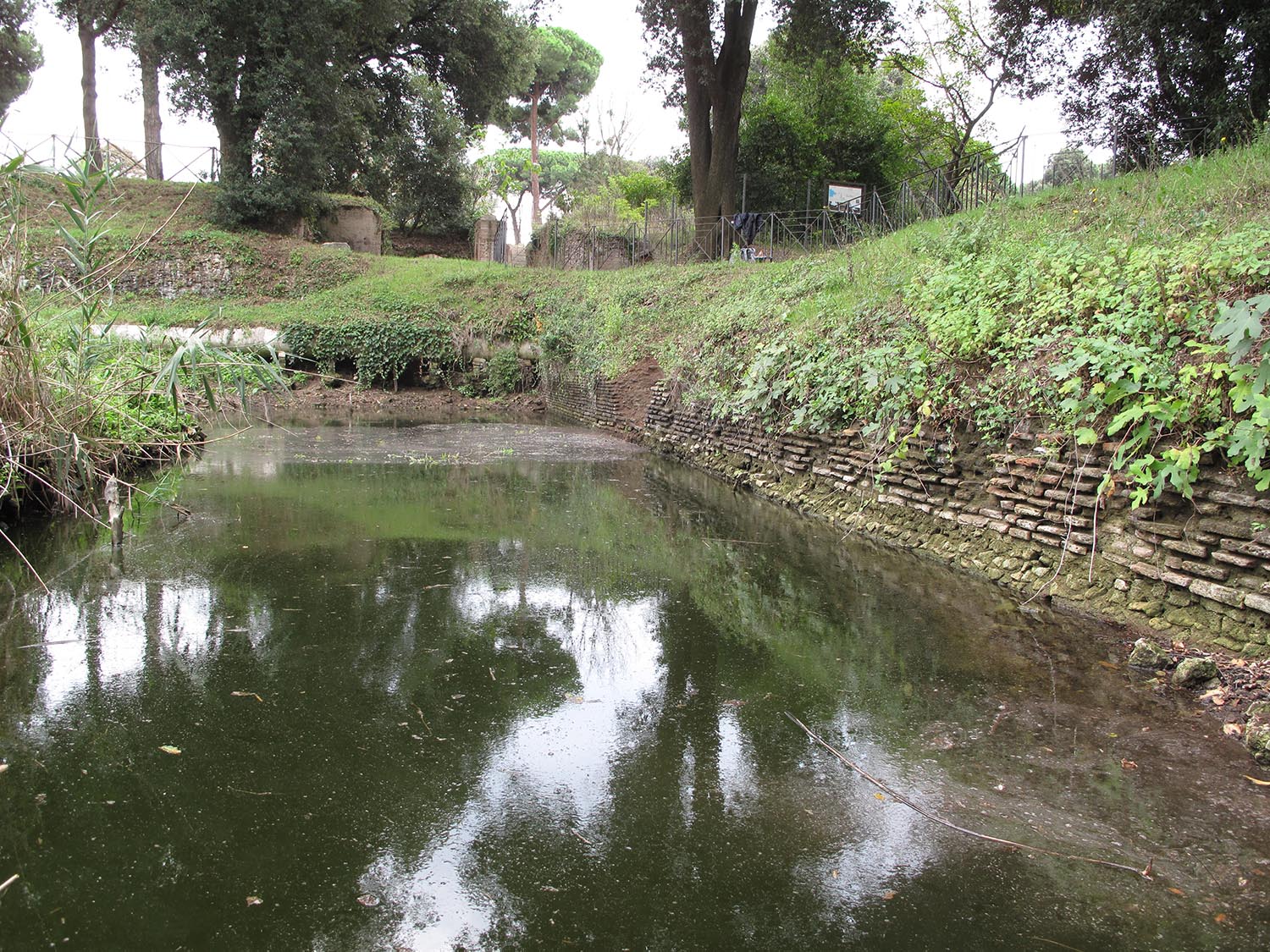
The quay on the short side of the wet dock
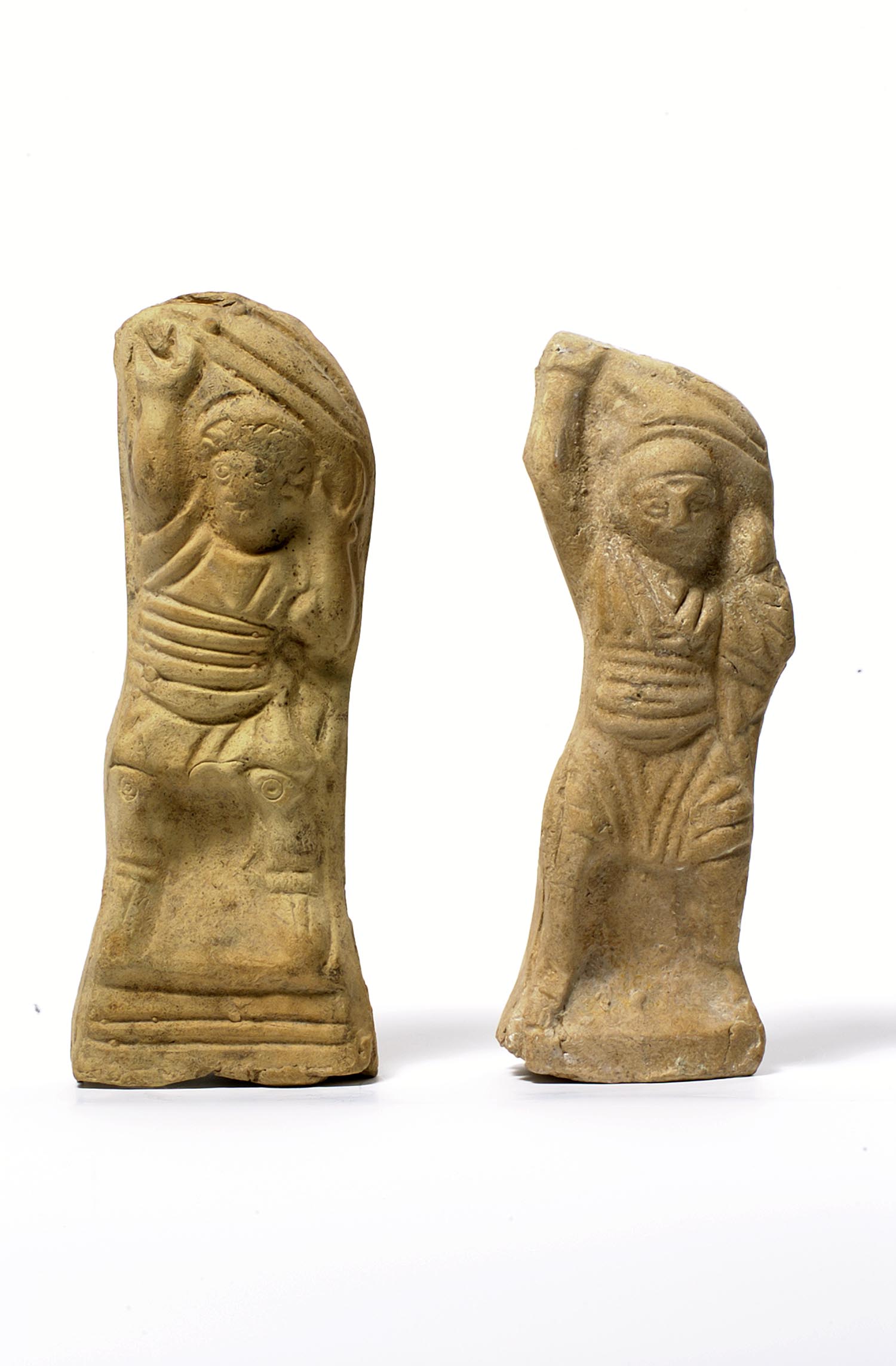
Statuettes of saccarii (dock workers), from Ostia Antica
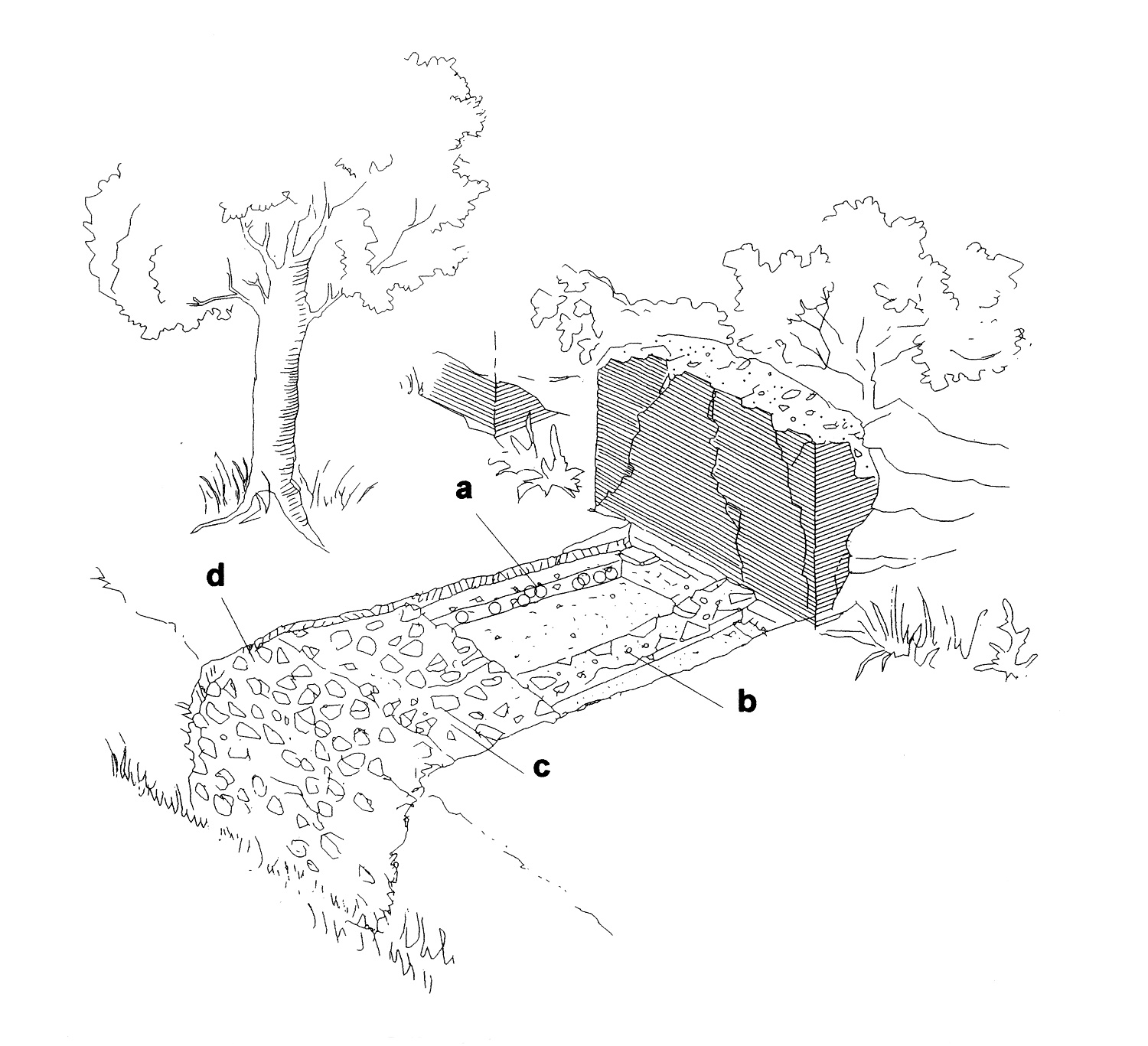
Explanatory drawing of the wet dock’s quay
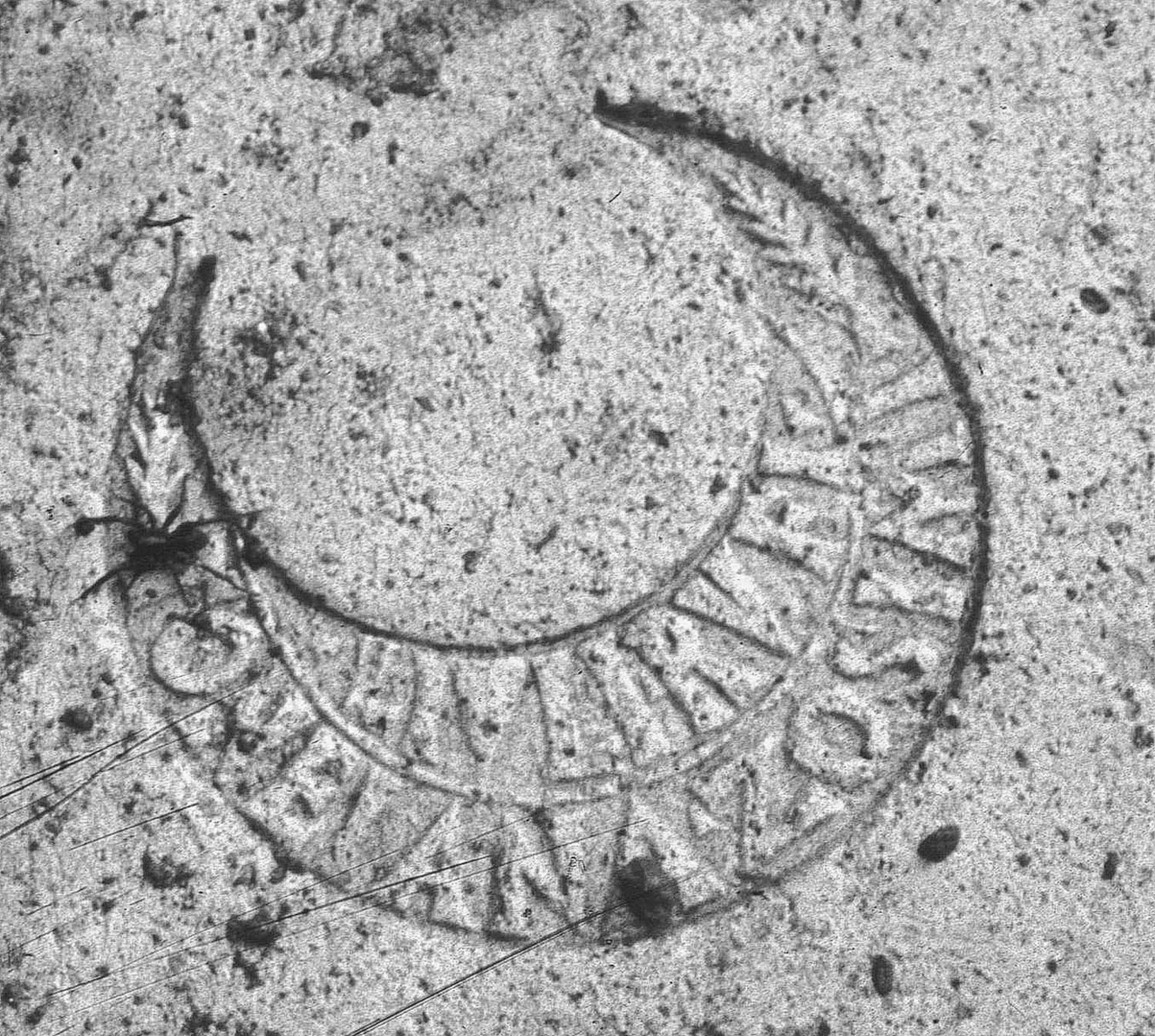
Crescent moon stamp from the wet dock
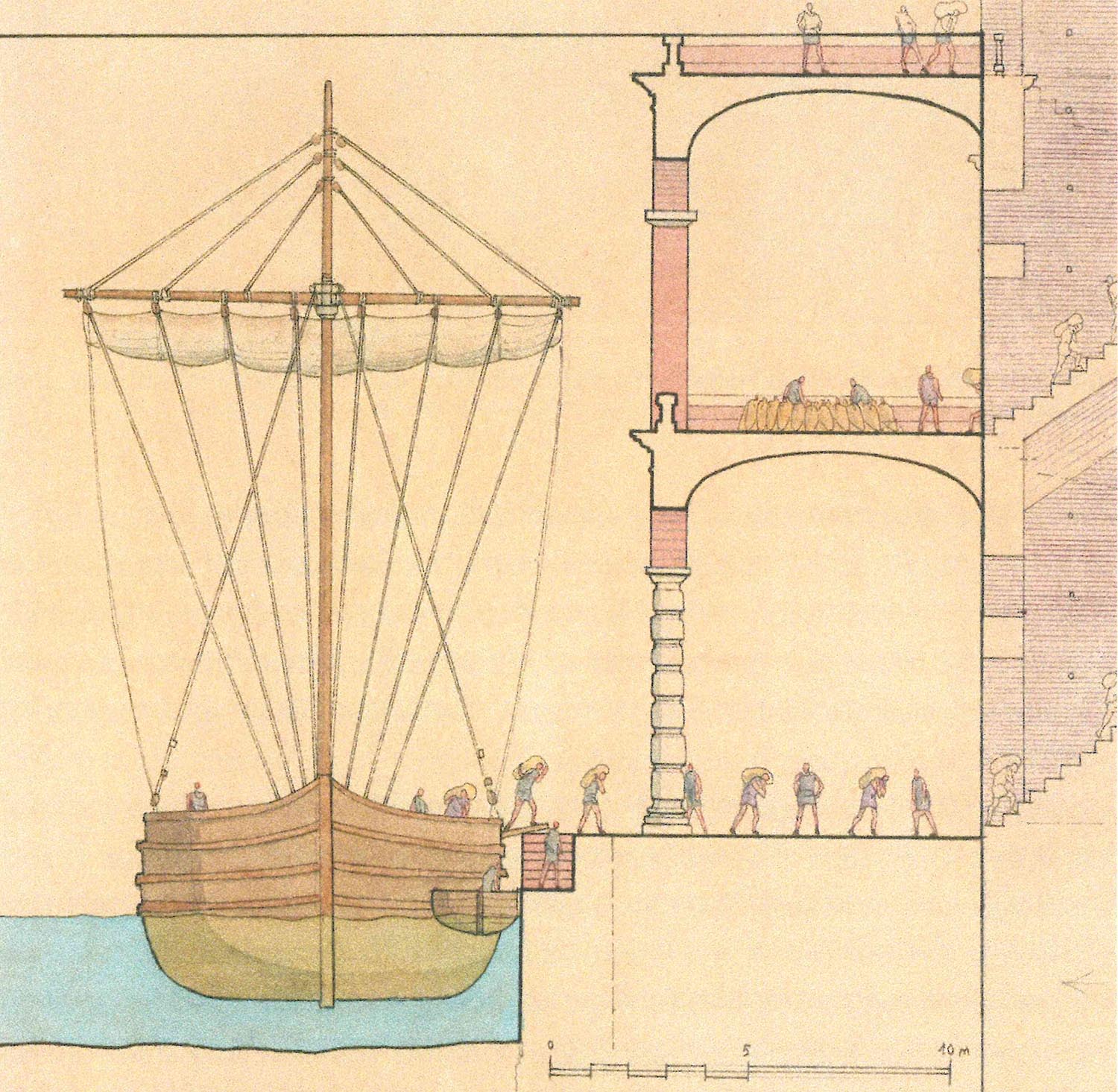
Drawing depicting unloading operations on the wet dock’s quay
(J.-C. Golvin)