



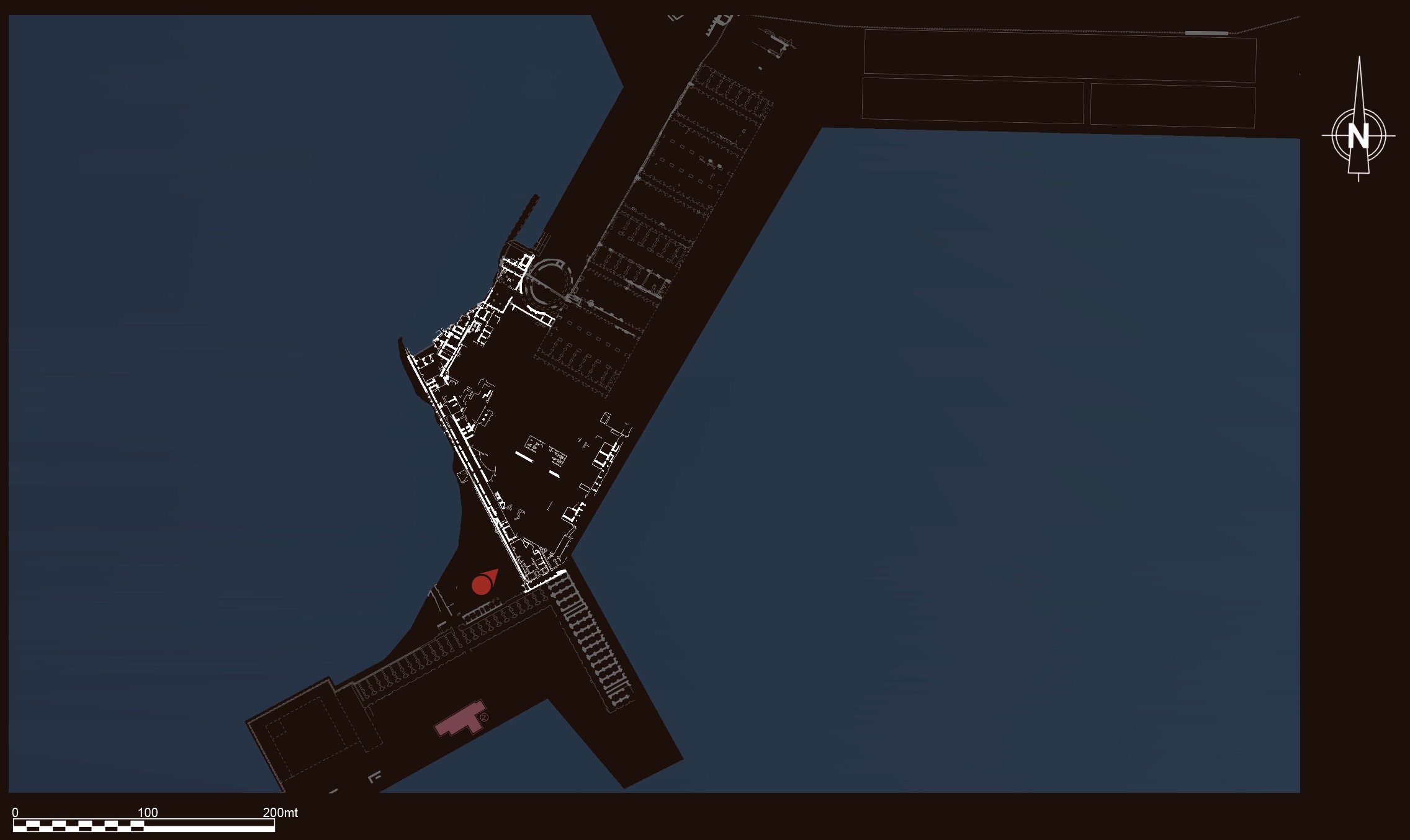
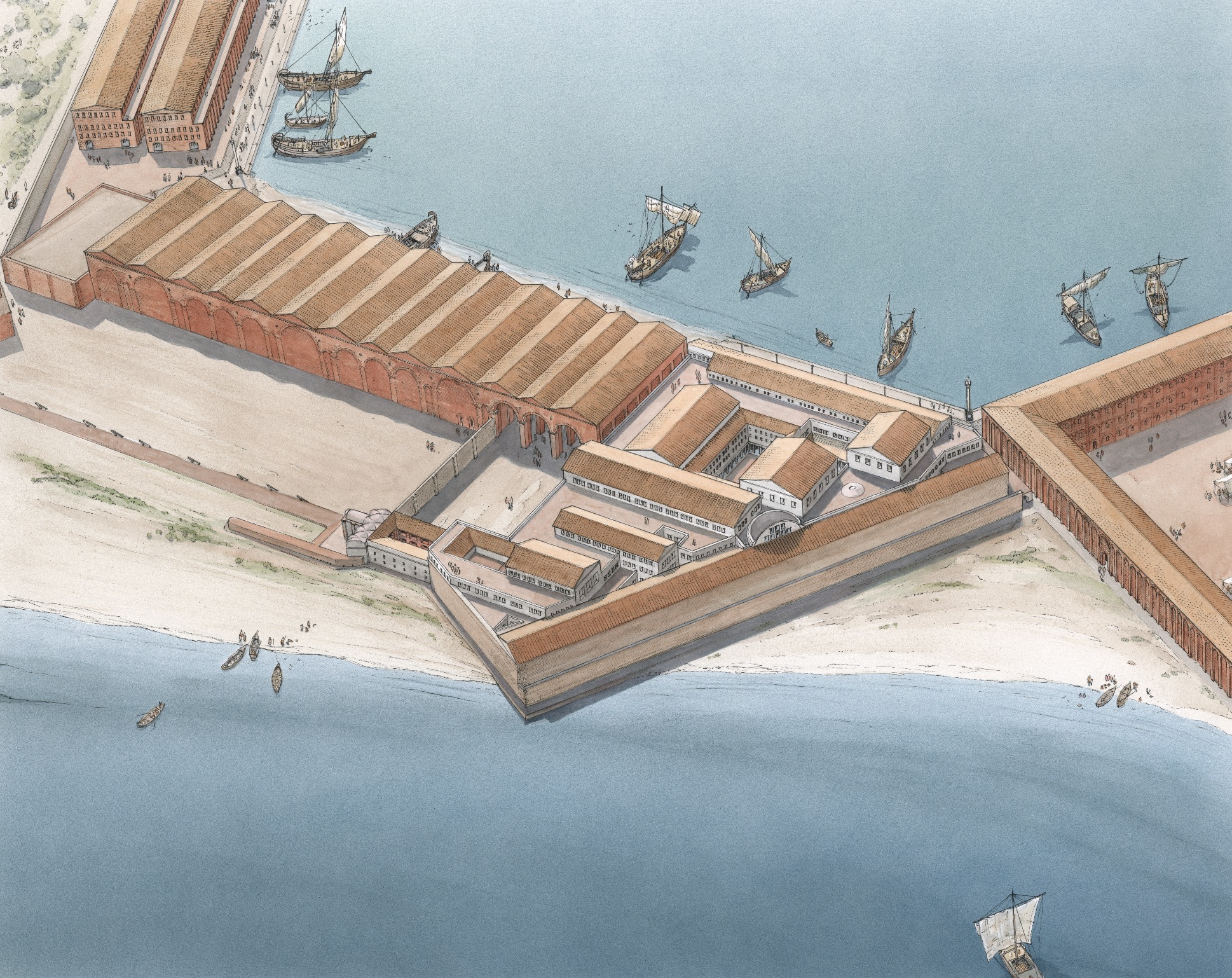
Starting from the 4th century AD, the Imperial Palace underwent a profound transformation. During this phase, the most significant intervention was the complete demolition of the amphitheatre, of which only its foundations were spared, covered by a levelling layer of sand and construction debris. The Palace was given a new front organized in a number of environments, one of which was the small latrine, enriched with marble wall and pavement linings. At the northeast corner of the complex, around a pre-existing peristyle situated on the first storey, luxurious residential environments were set up, provided with a large latrine. In the second half of the 5th century AD, the Imperial Palace underwent additional modifications: it was incorporated into the city wall of Portus, which in this section was built against the building’s northern façade, ran along the basin of the Harbour of Claudius, and incorporated Castellum Aquae (which was probably transformed into a tower), and then continued in a north-south direction towards the northern façade of the Navalia.
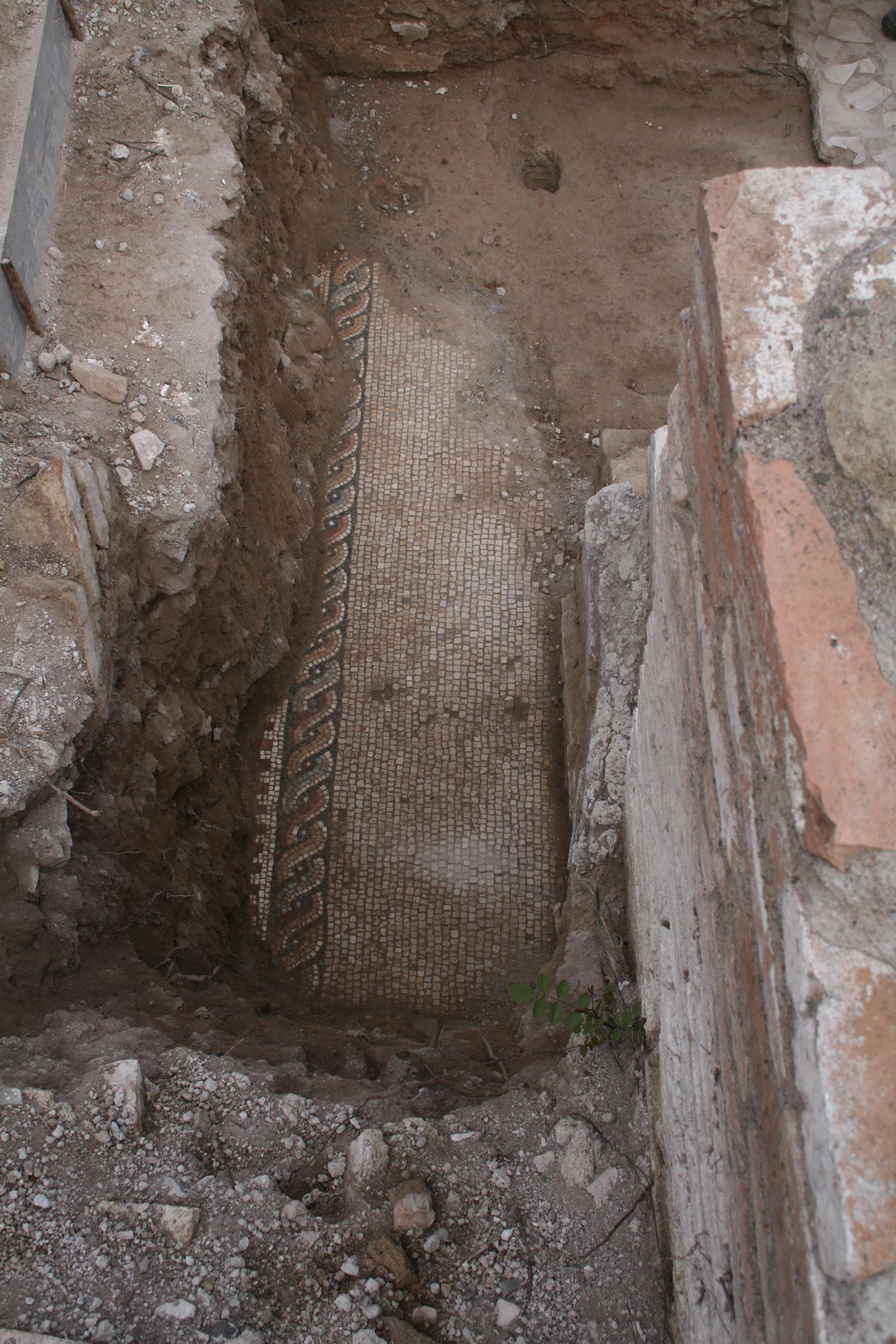
Polychrome mosaic of the residential Peristilium
(photo: Portus Project)
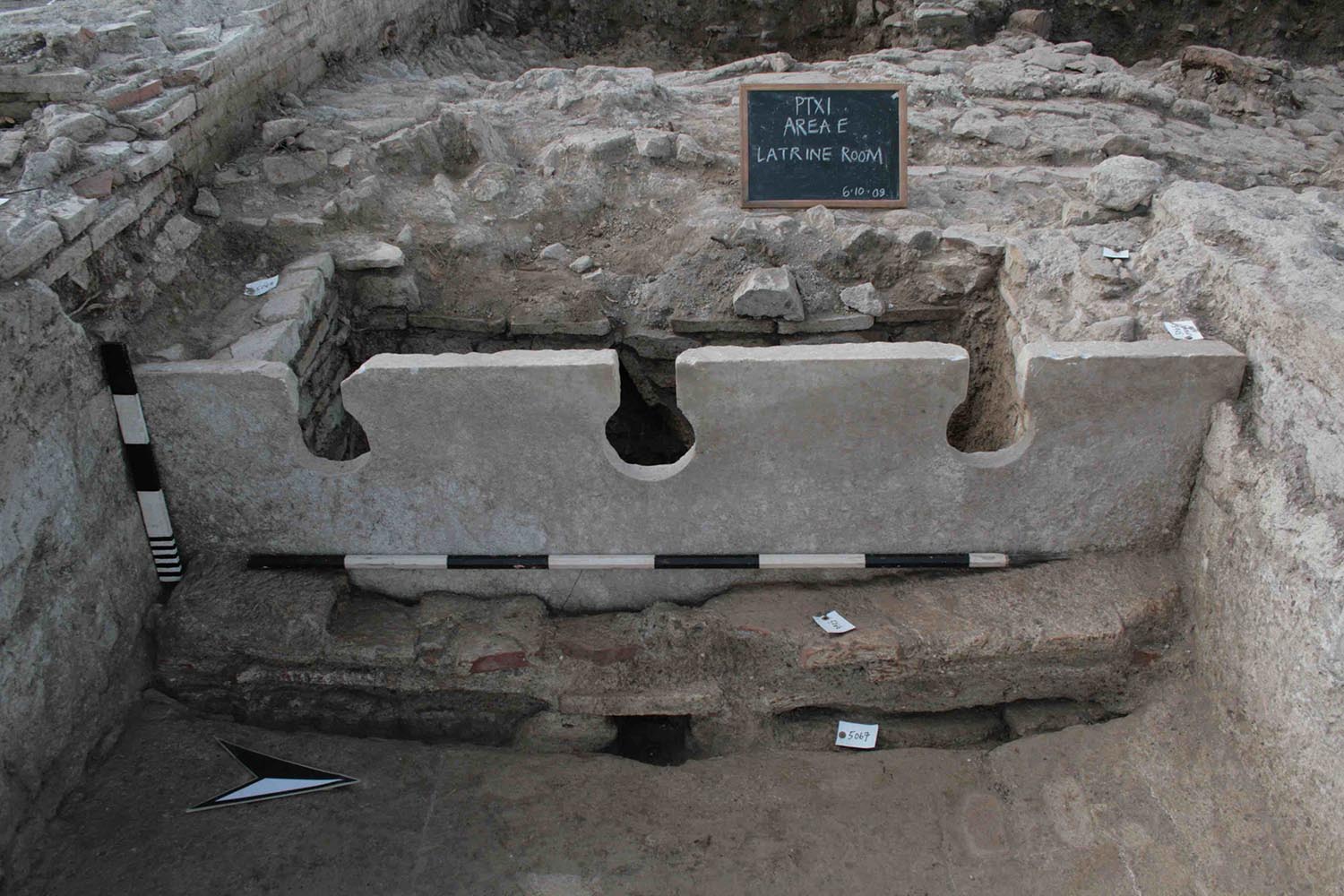
Detail of the latrine’s balcony
(photo: Portus Project)

Latrine’s sewer opening
(photo: Portus Project)

Deposition inside burial in amphorae
(photo: Portus Project)