

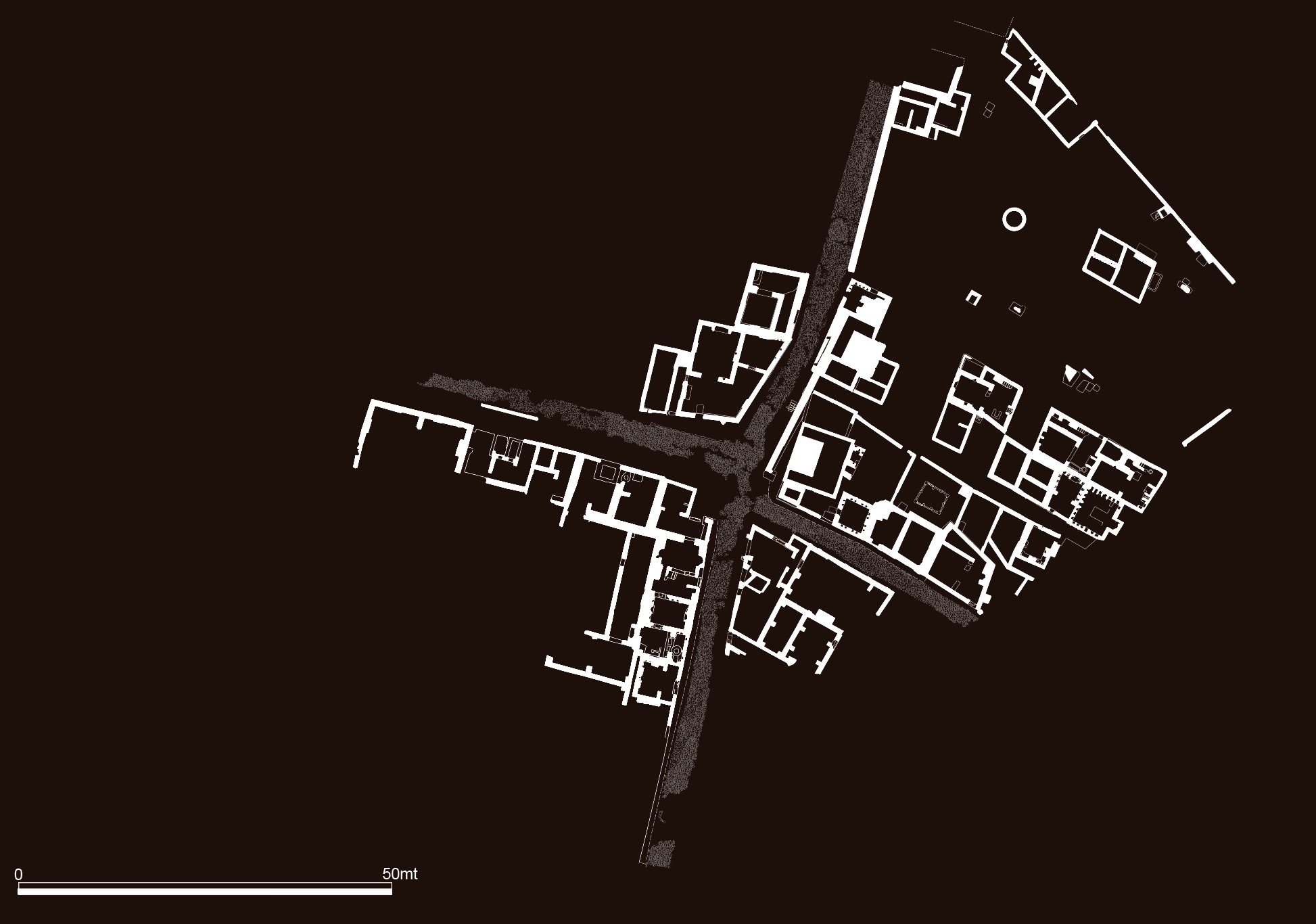
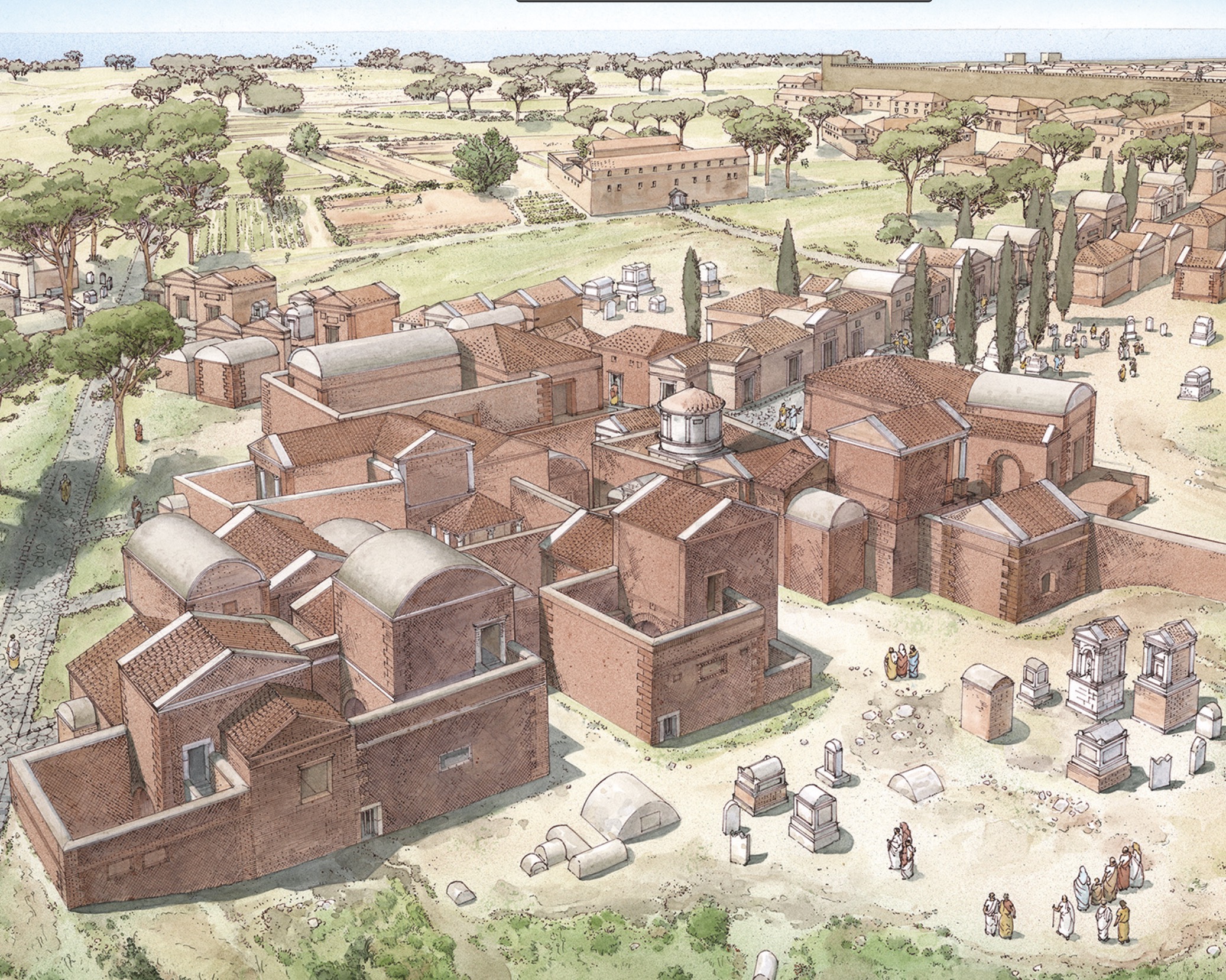
The tombs visible today are a small part of the larger burial ground that stretched south of Ostia along the Via Laurentina; the funerary buildings, arranged on several levels, were aligned along the Via Laurentina and the connected roads, delimiting to the north a large plaza dotted with more modest burials.
While the most ancient tombs date to the mid-1st century BC, the earliest intensive occupation of the area dates to the late 1stcentury BC and the first half of the 1st century AD, when open-air enclosures, chamber tombs, and columbaria to house the cremated remains of the deceased began to collect along the road frontages. Bearing witness to the final phase of the necropolis’s use (2nd-3rd centuries AD) are the large funerary buildings set up mainly for interments, built upon the more ancient tombs: following a major raising of road elevations and of the surrounding levels, it came a few decades before the area was abandoned for good, an event that may be dated to the 3rd century AD.
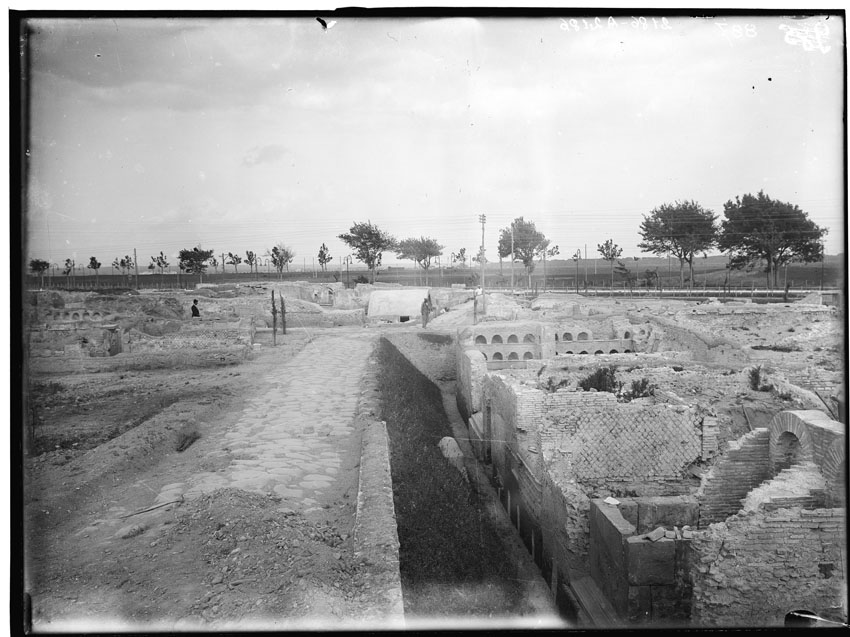
View of the Laurentina Necropolis at the time of excavation
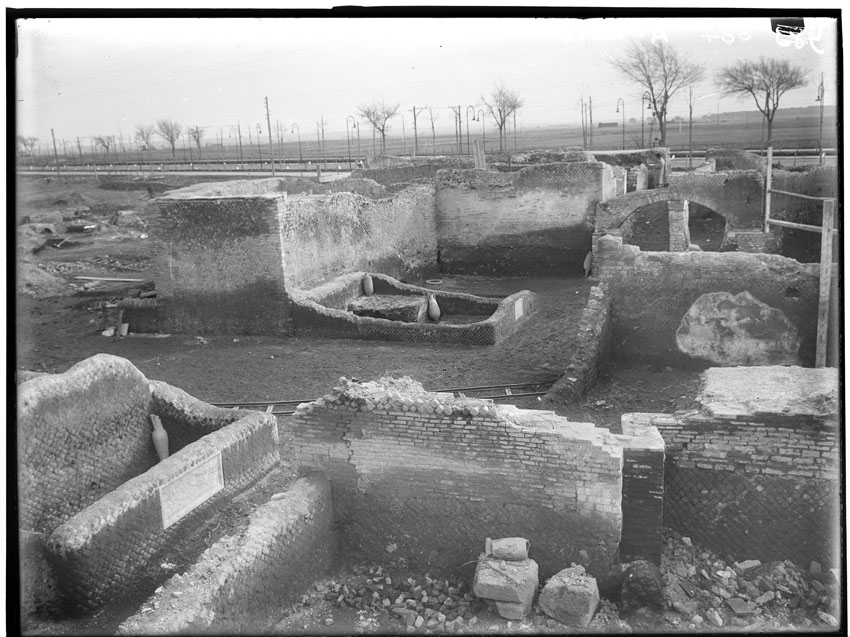
View of the Laurentina Necropolis at the time of excavation
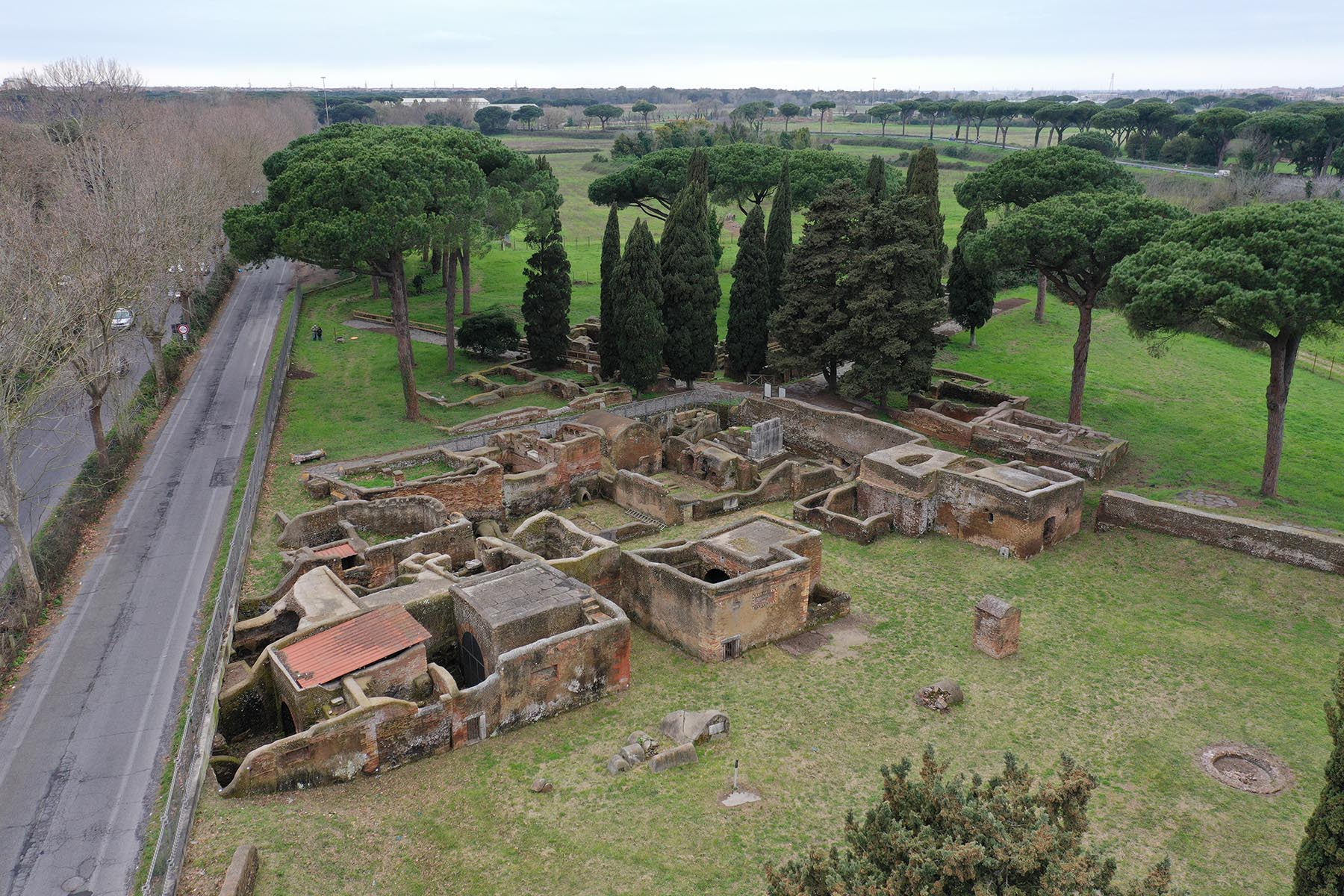
General view of the Laurentina Necropolis