

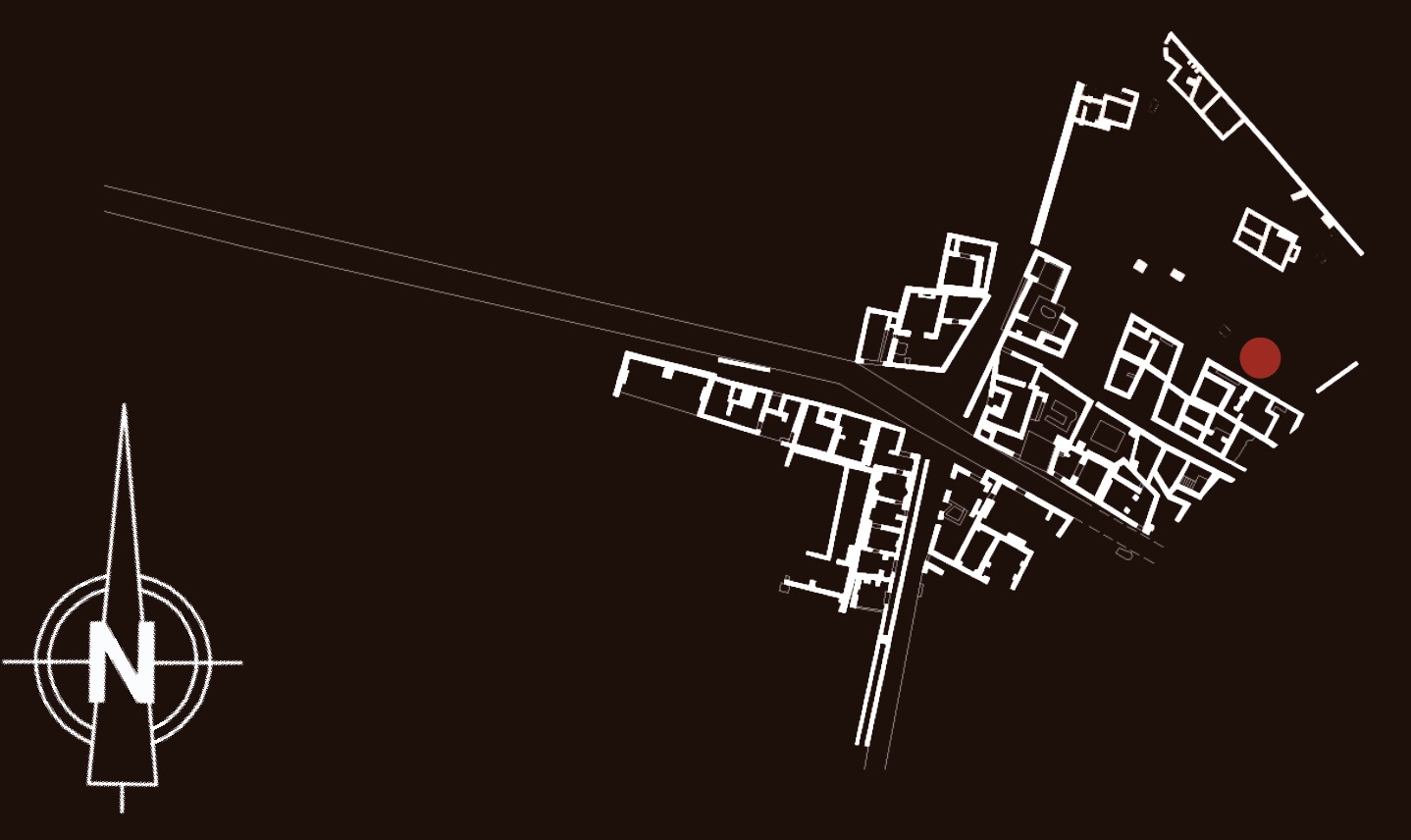
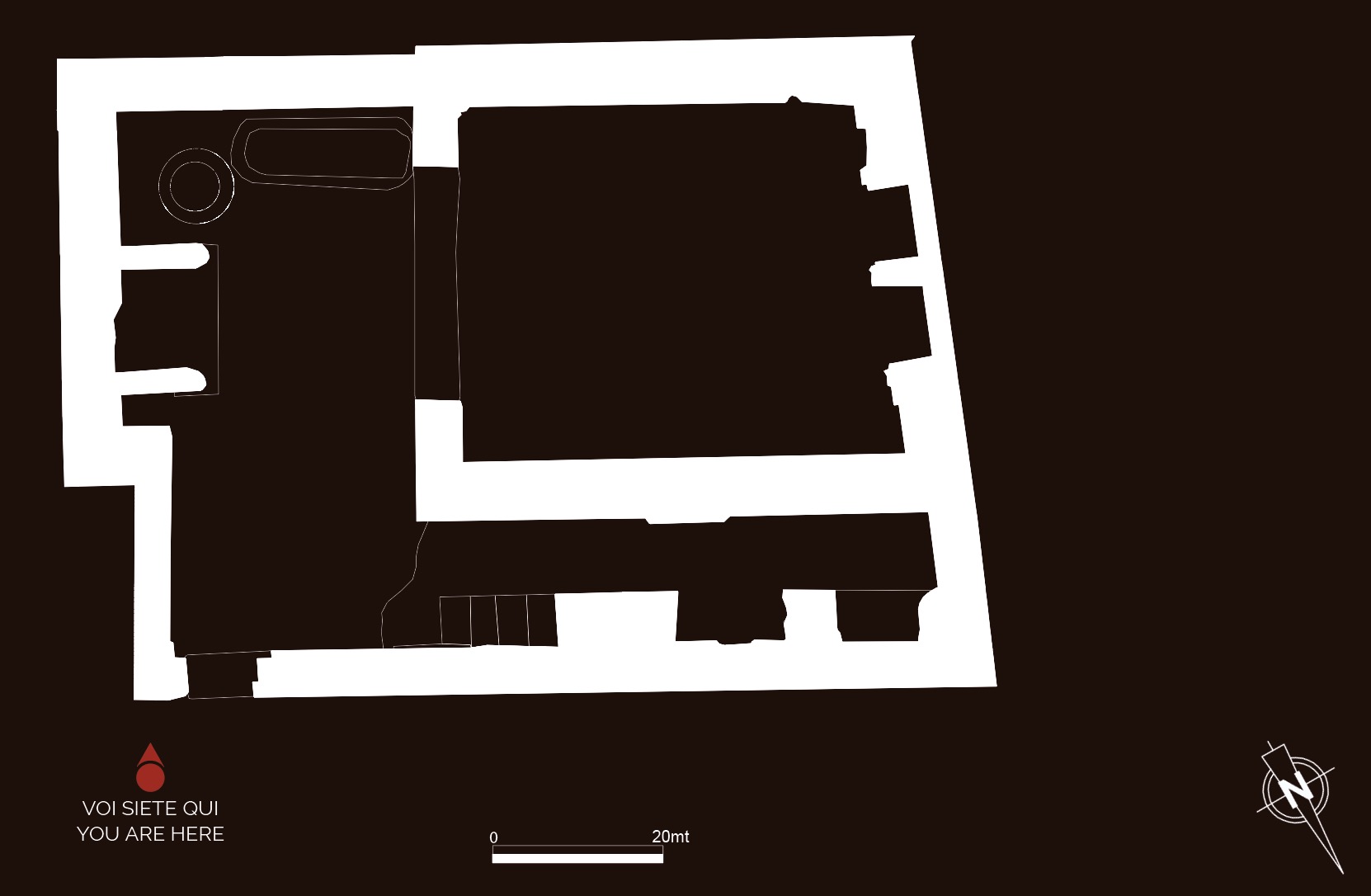
Belonging to D(ecimus) Folius Dionysi l(ibertus) Mela and dated to the first half of the 1st century AD, it is also known as the ‘Tomb of Orpheus in the Underworld’ due to the subject of the main fresco, now at the Vatican Museums. With the adjacent burials, it exemplifies the appearance of the columbaria of the first Imperial Age, articulated in an exterior enclosure and interior burial chamber, both with niches for cremations, and endowed with a stairway that provided access to the first level. The chamber’s interior, with a funerary triclinium, conserved a cycle of paintings on the walls and vault, with birds on pomegranates and other motifs against a red and yellow background.

Detail of the ‘Orpheus in the Underworld’ fresco conserved at the Vatican Museums
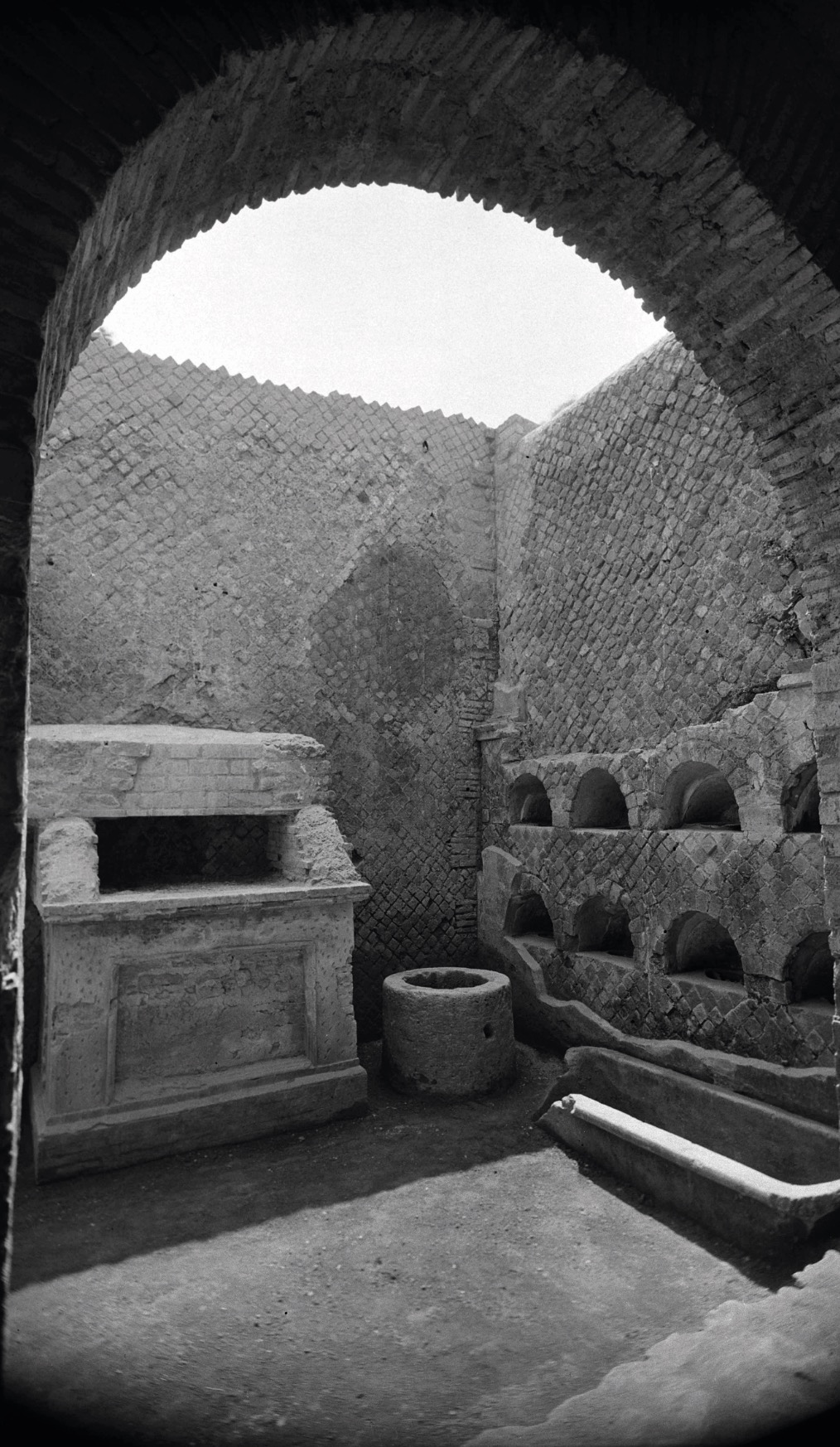
View of the enclosure’s interior
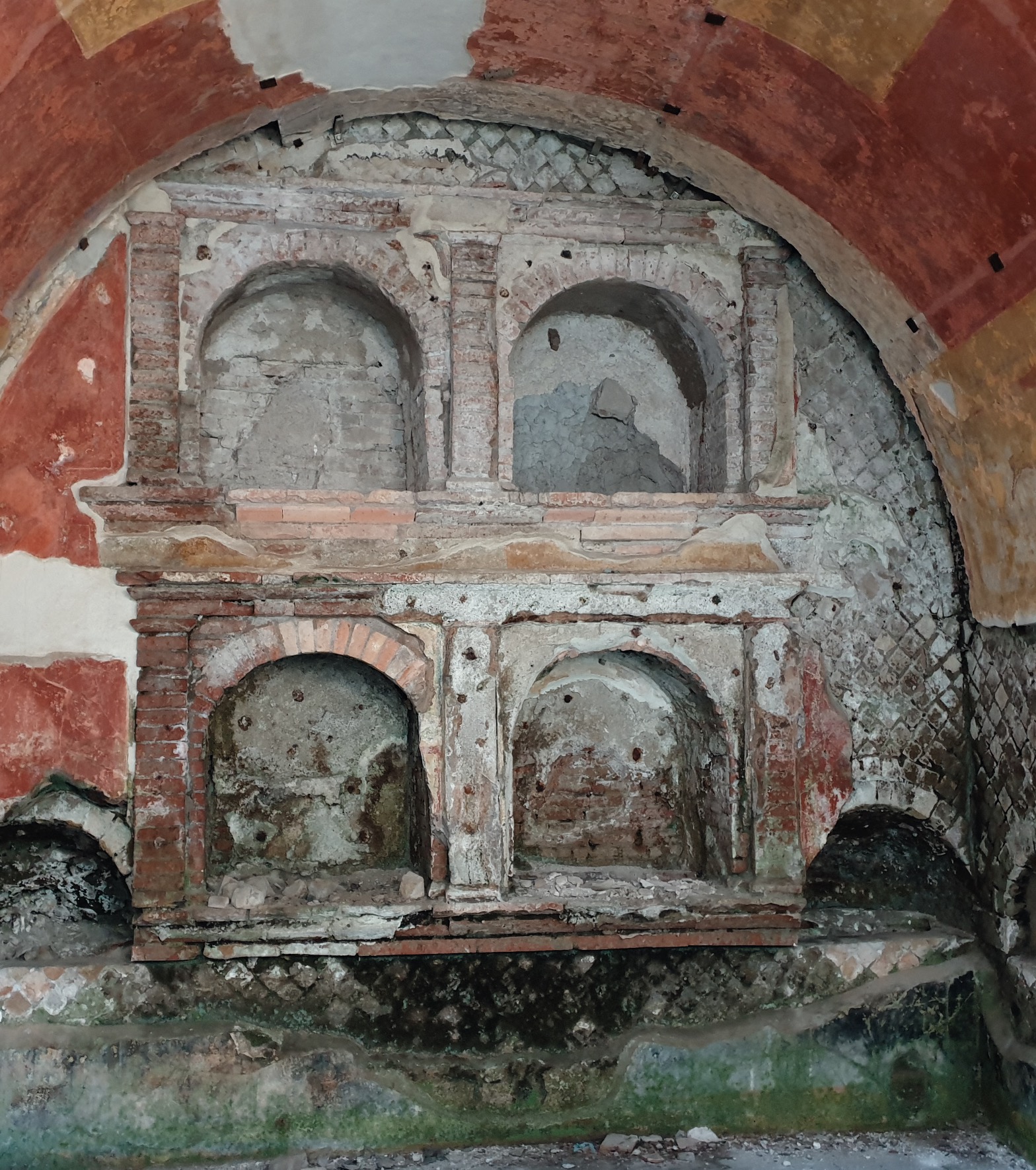
View of the interior of the burial chamber
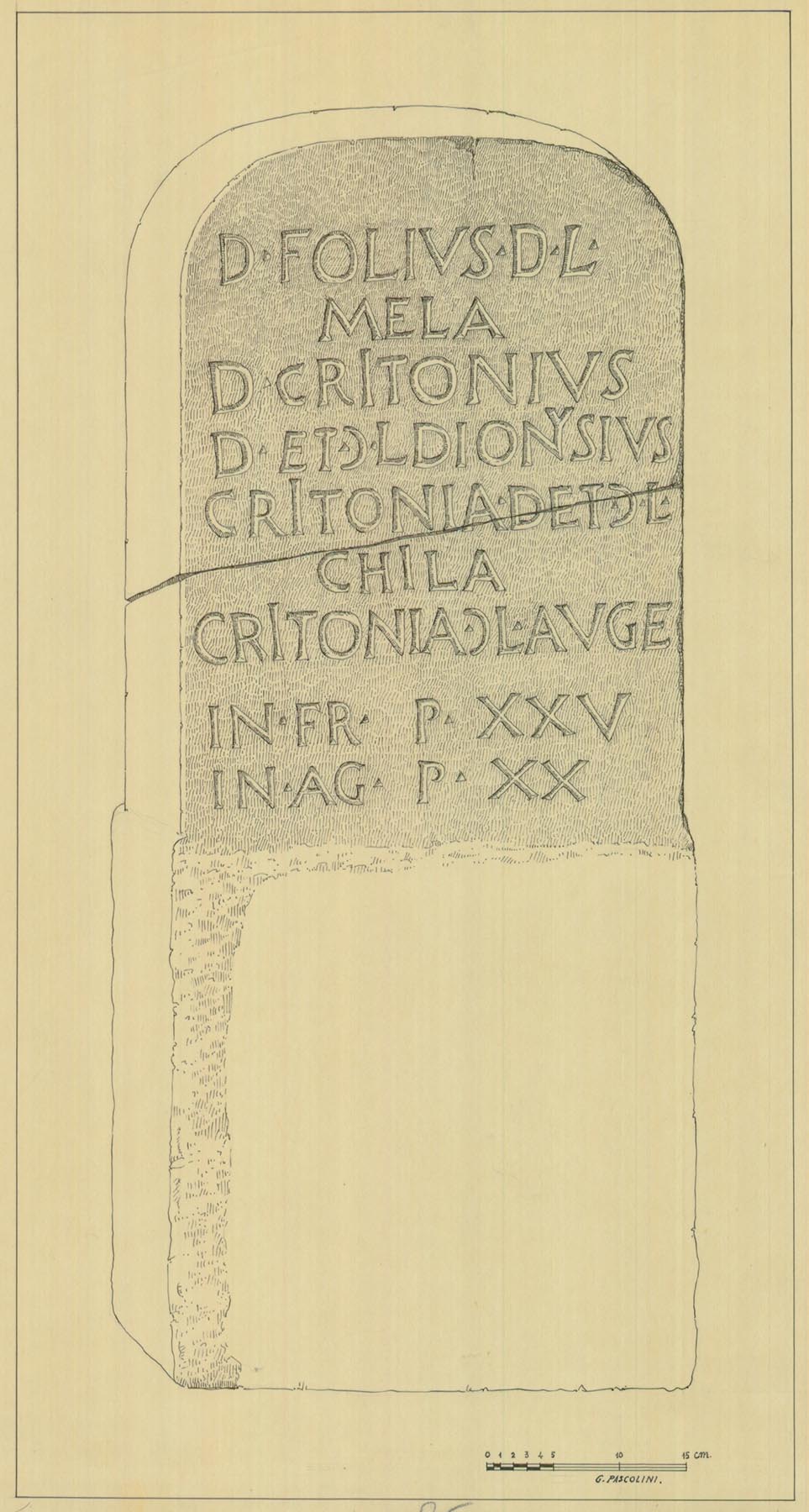
Tomb 33, funerary cippus
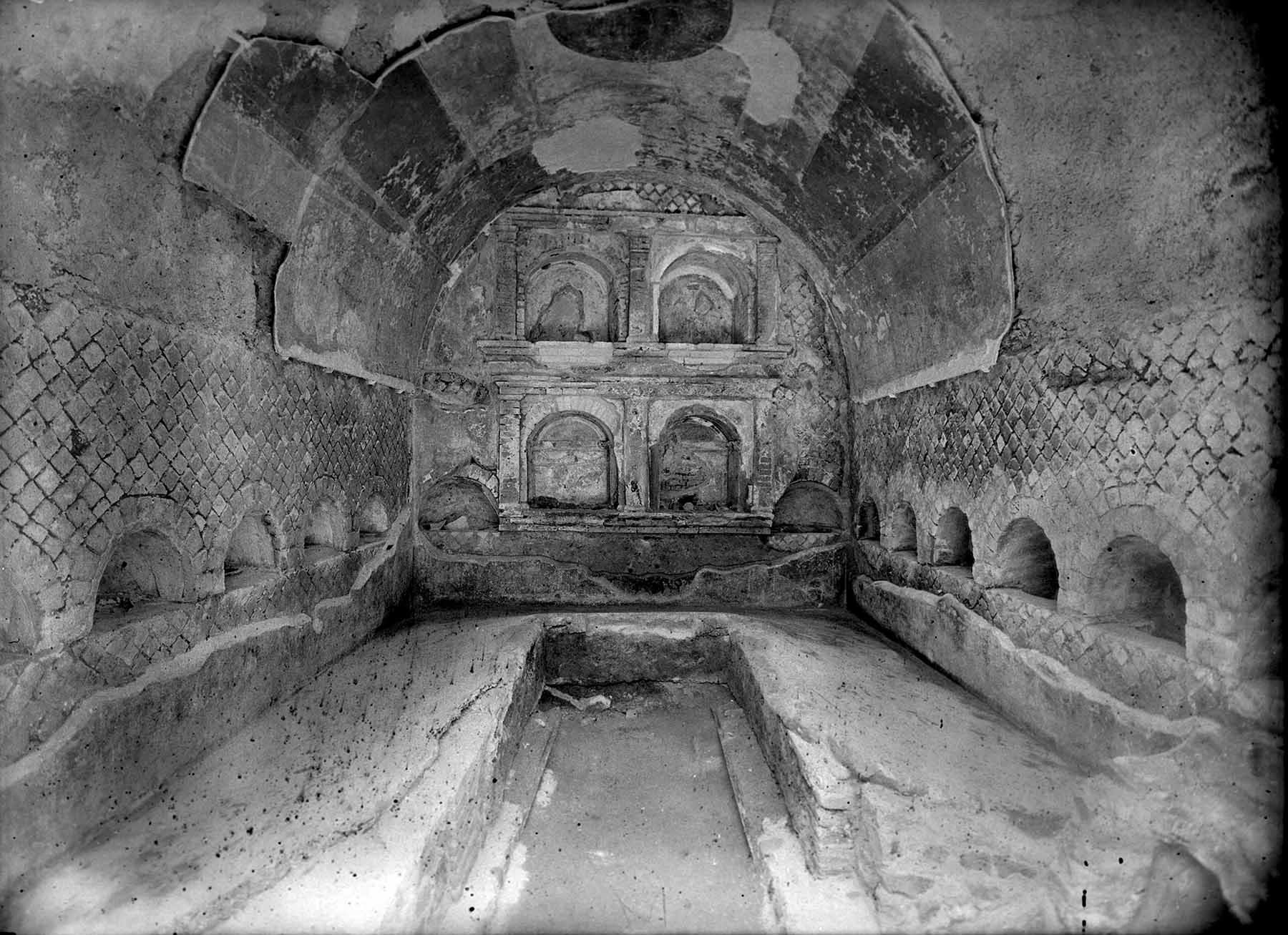
Tomb 33, interior of the funerary chamber
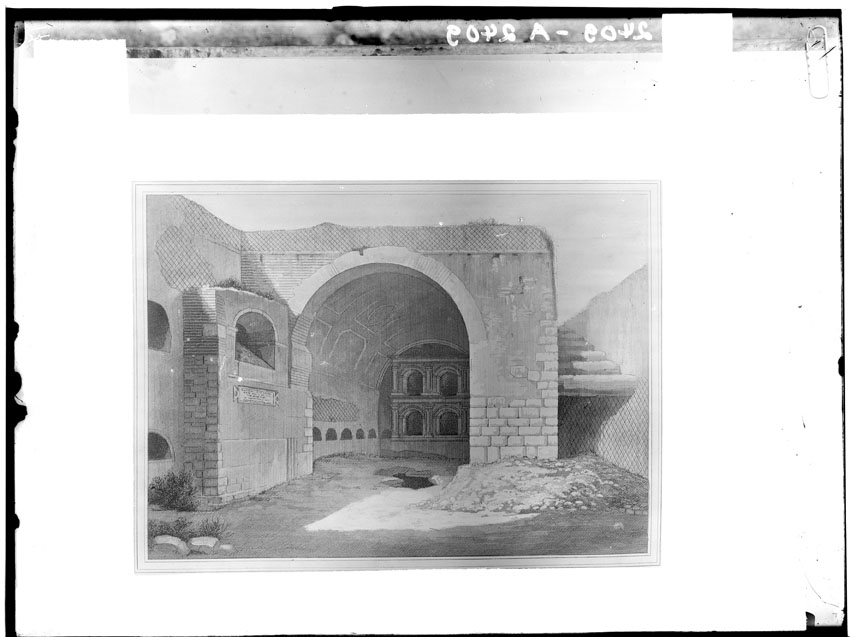
Tomb 33, 19th-century print