

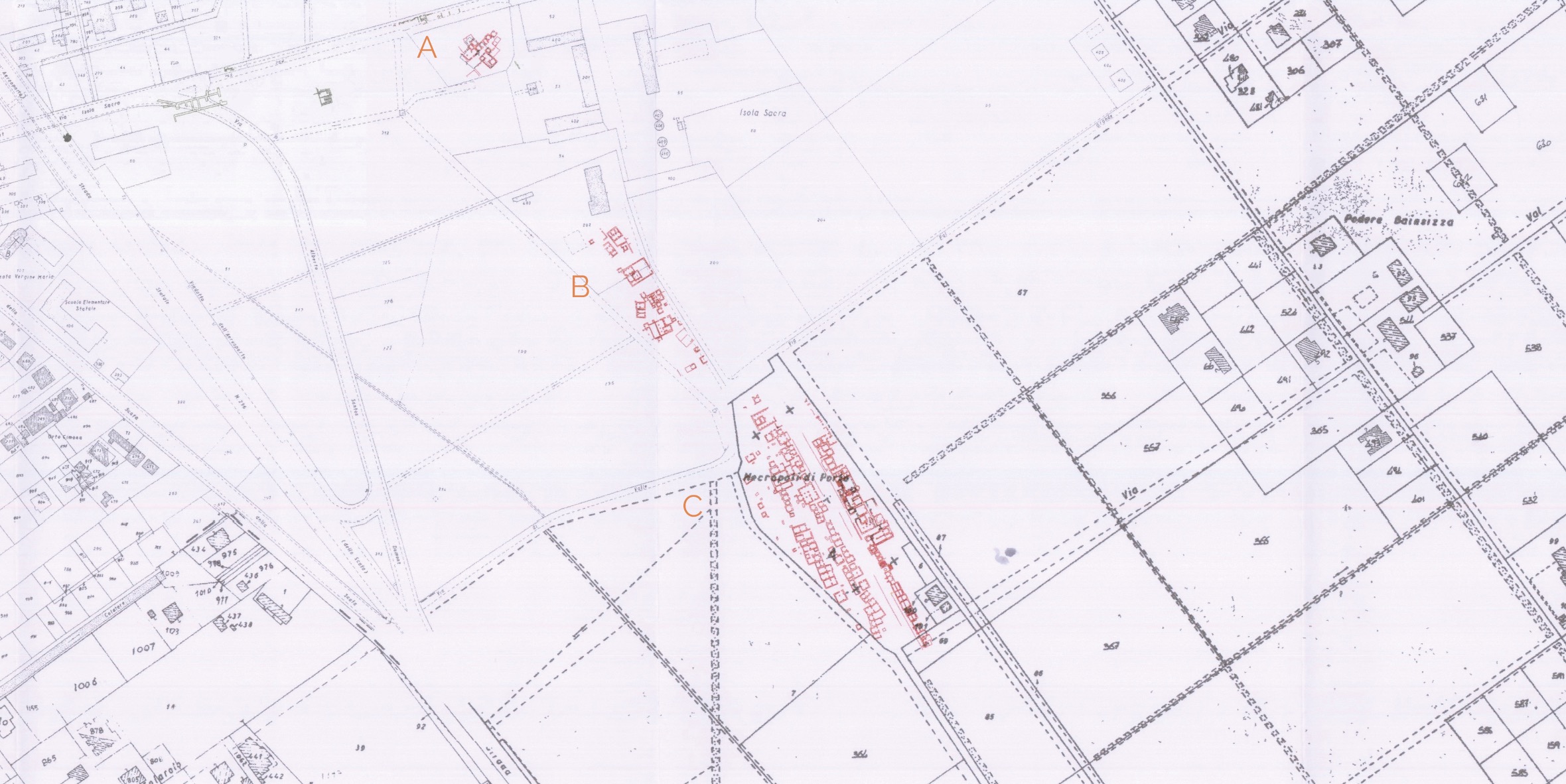
In the 1920s, during the works to drain the territory and the construction of farm houses in the area assigned to the veterans’ organization Opera Nazionale Combattenti (O.N.C.), tombs decorated with paintings, stuccowork, and mosaics, which to this day constitute the northernmost nucleus of the Necropolis (A), were discovered under the direction of Guida Calza. This initial discovery was followed by the systematic excavation, also conducted by Calza, of the settlement’s vast southern area (C). Between these two nuclei, another group of tombs (B) was explored and reburied after their decorations were detached and transferred to the Depositi Ostiensi warehouse for conservation reasons due to the surface level of groundwater. The most ancient burial levels were identified in the western side during the stratigraphic investigations lead between 1968 and 1989 which allowed an extensive hydraulic reclamation intervention to be planned. Tombs on the western side are identified with progressive Arabic numerals (1, 2, 3, etc.) from south to north, while for graves on the eastern side the number is preceded by the letter E, indicating the cardinal point (east).
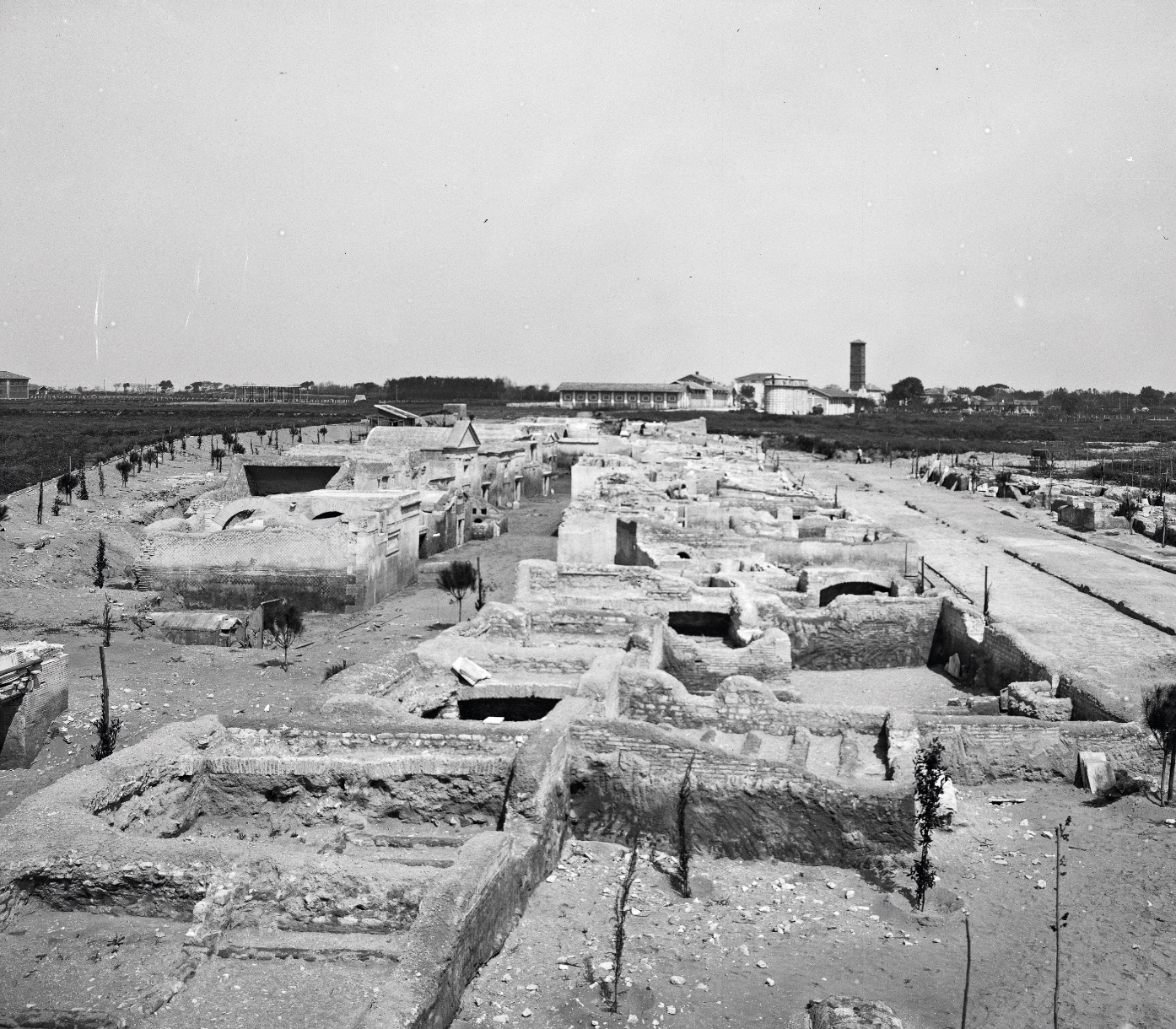
Historical photograph of the southern sector of the Necropolis seen from the south (1939)
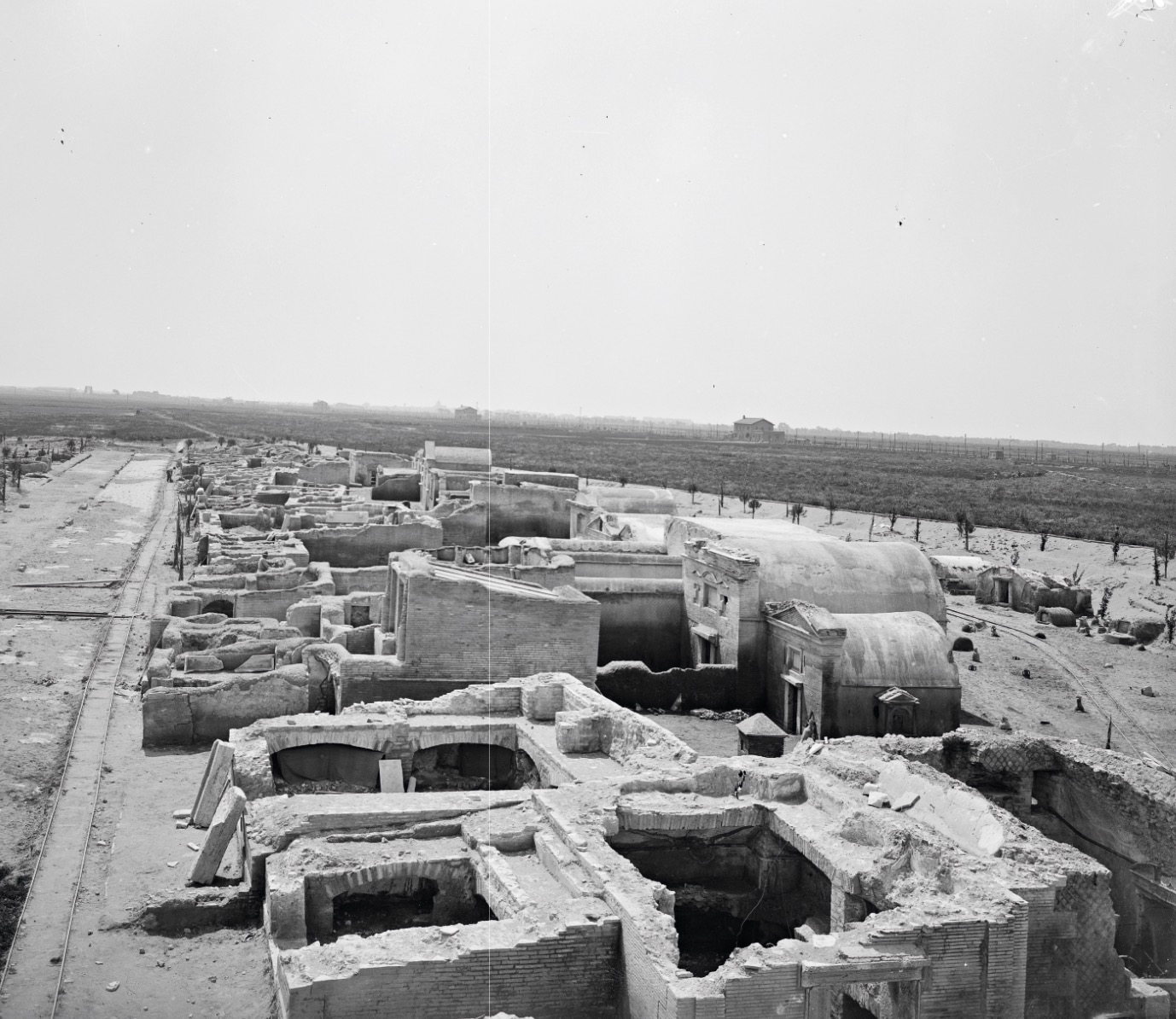
Historical photograph of the southern sector of the Necropolis seen from the northwest (1939)
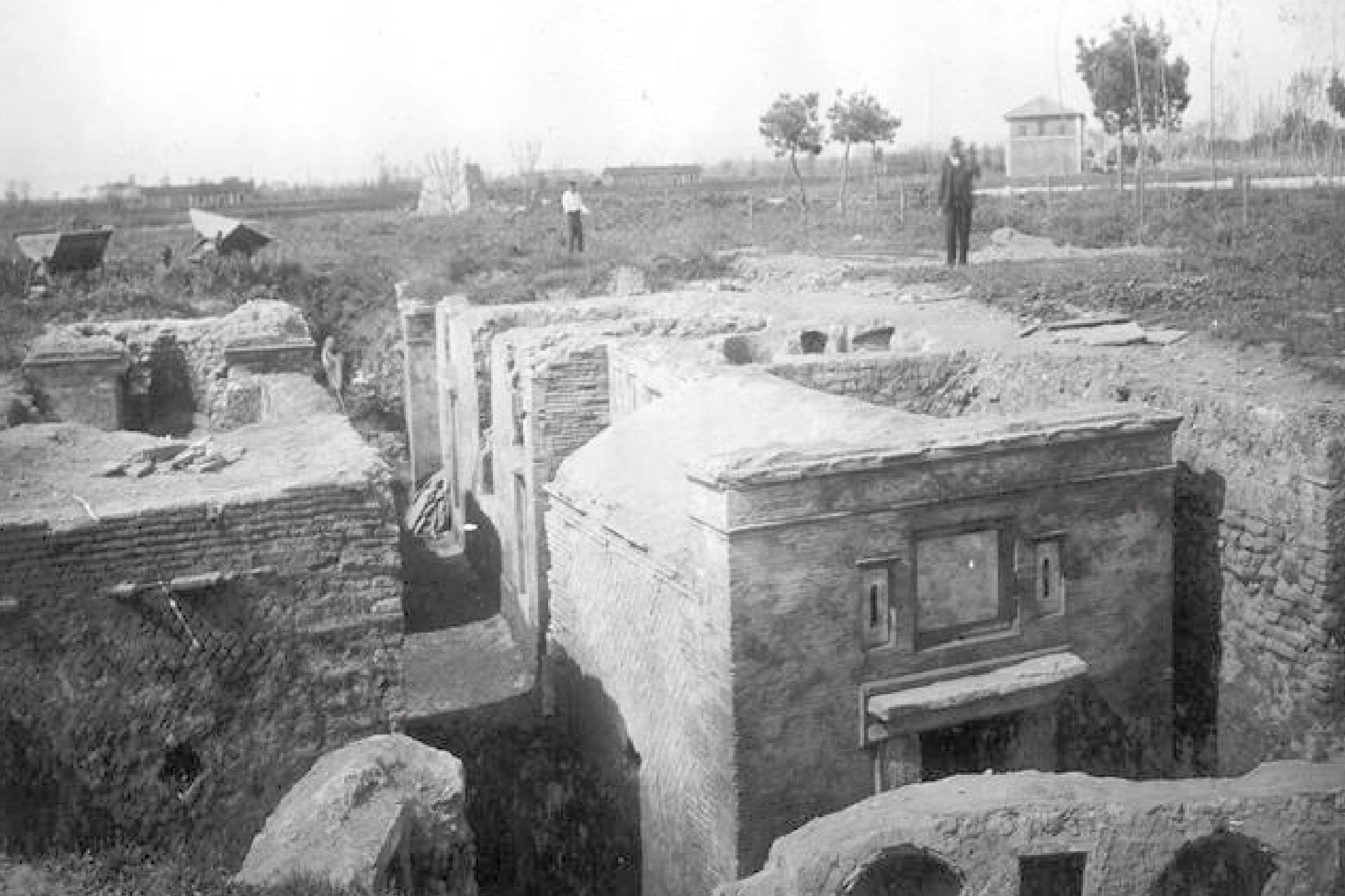
Historical photograph of the northern sector of the Necropolis, “former O.N.C tombs” nucleus

Statue of Iulia Procula, discovered in tomb 106
(Museo Ostiense)
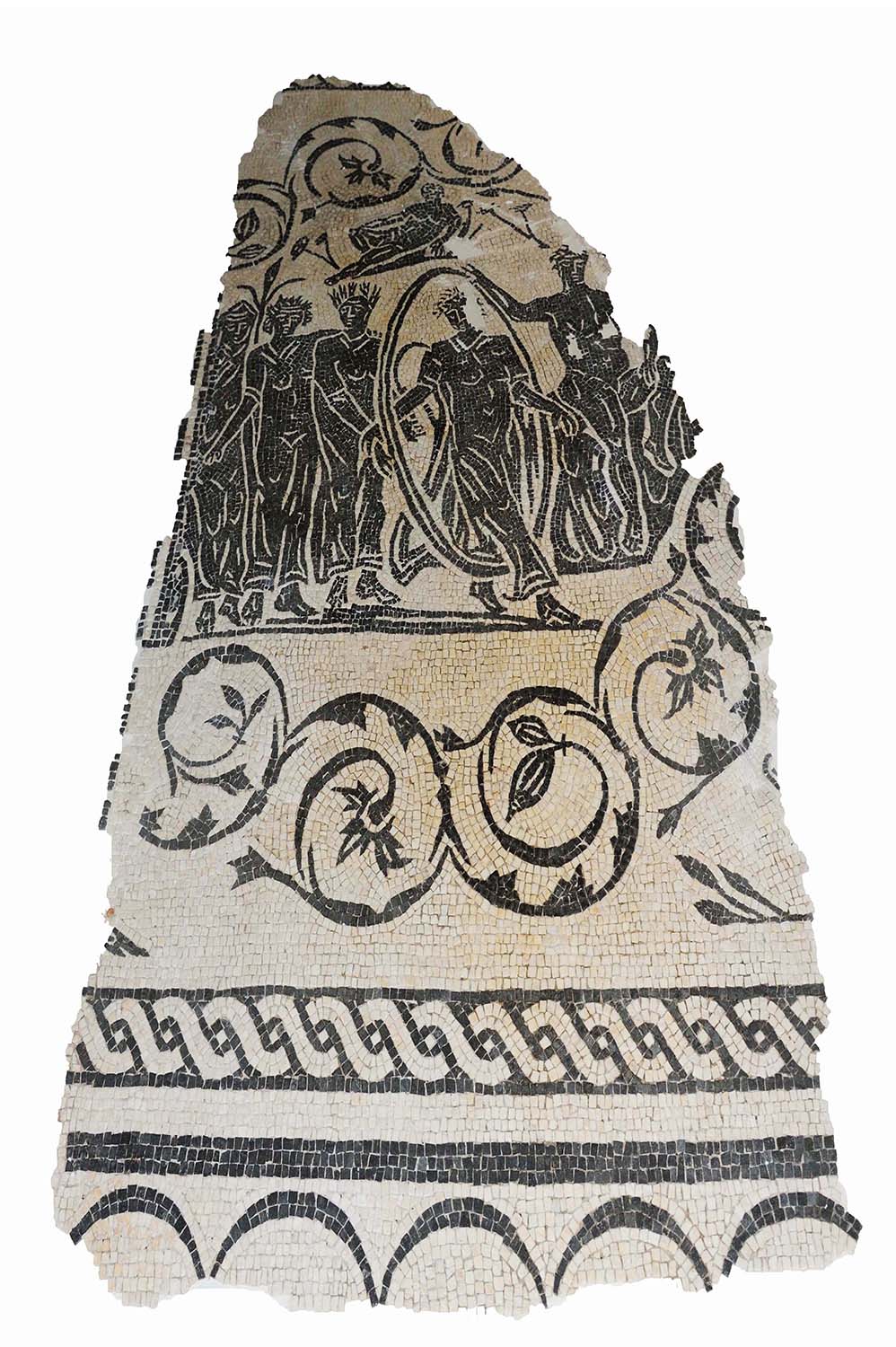
Mosaic with the Zodiac and the seasons, discovered in tomb 101
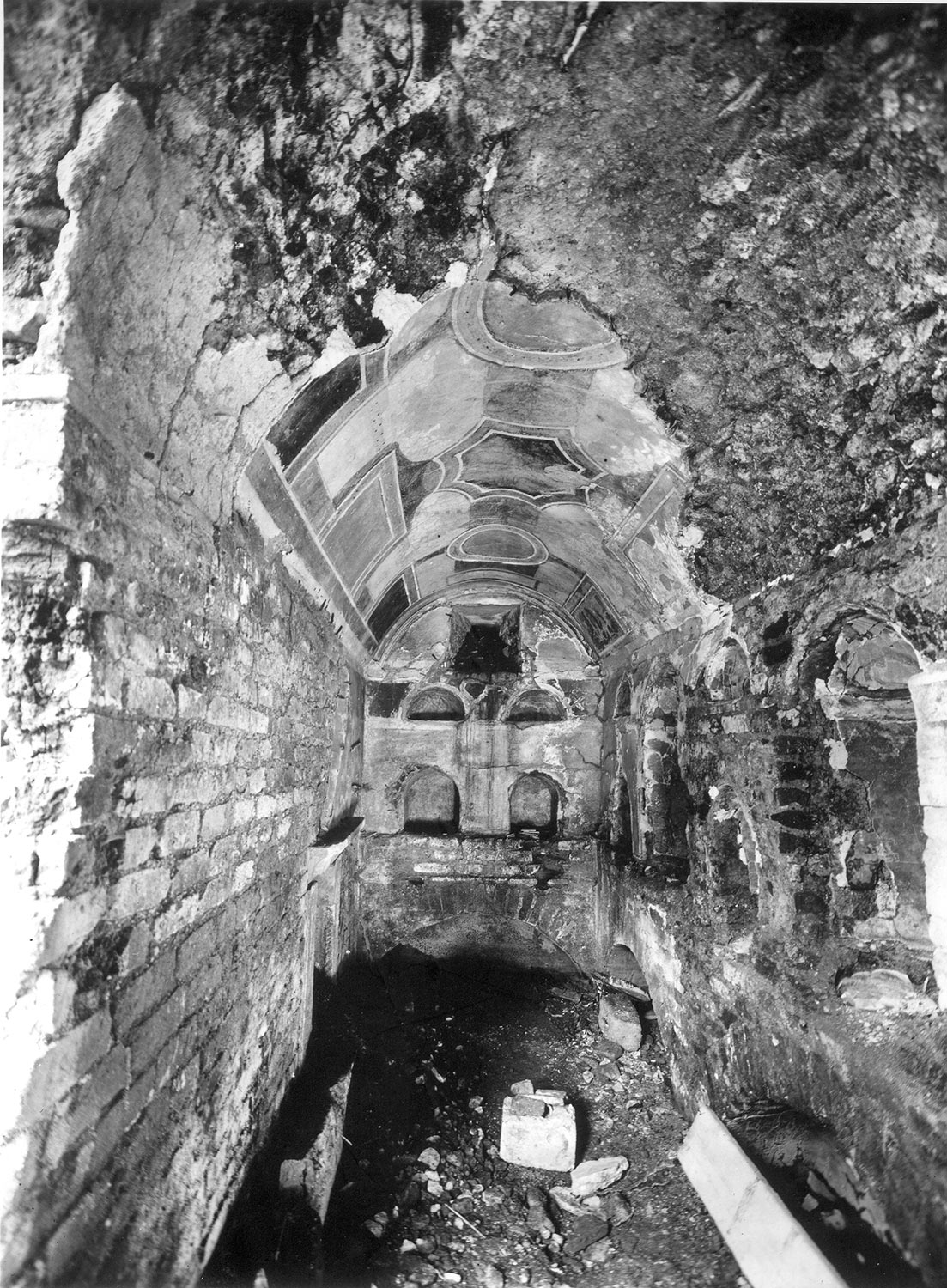
Historical photograph of the painted vault in tomb N in the northern sector of the Necropolis, “former O.N.C tombs” nucleus (1939), now at Depositi Ostiensi

Historical photograph of the southern sector of the Necropolis during the 1940 flood
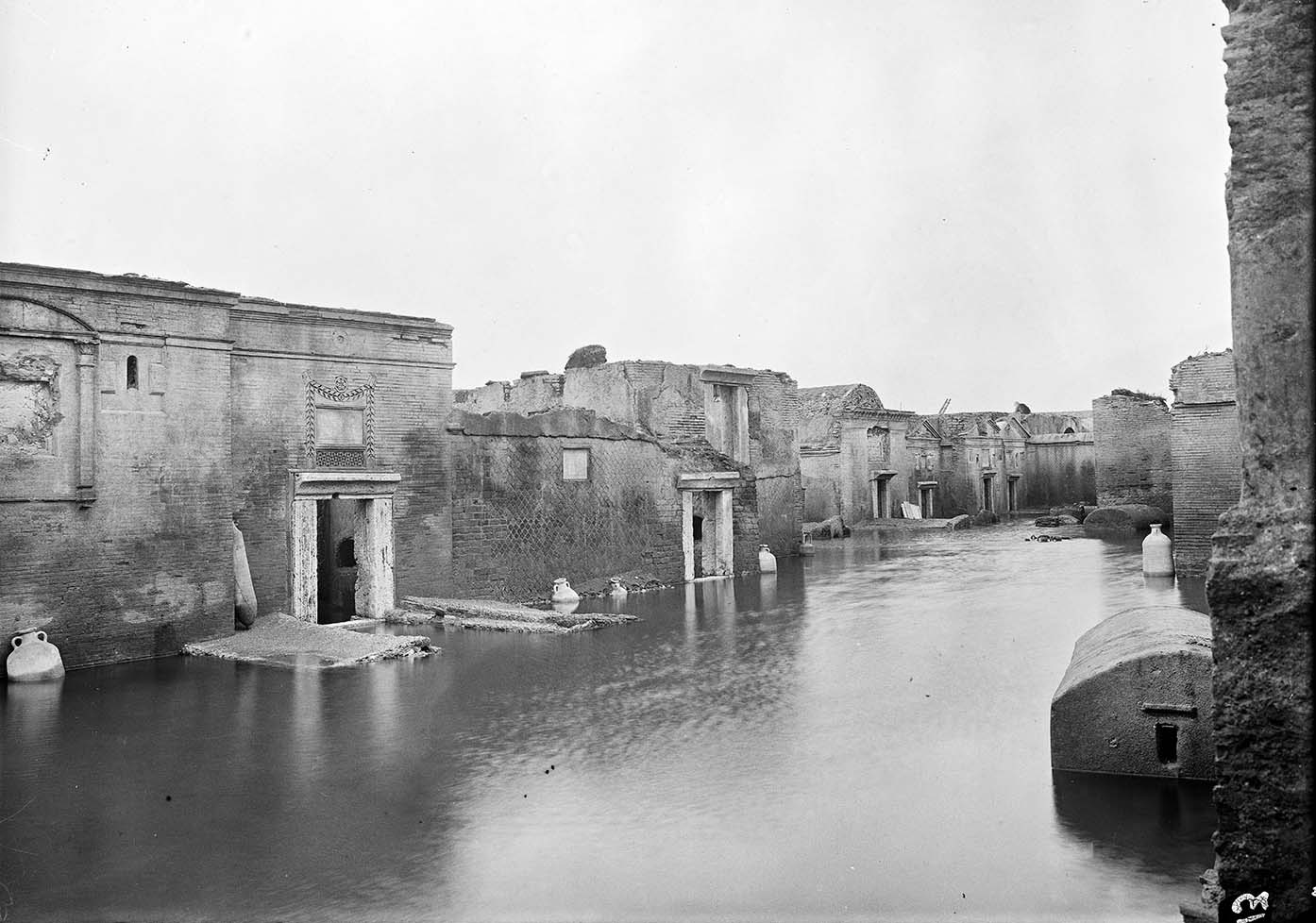
Historical photograph of the southern sector of the Necropolis during the 1940 flood
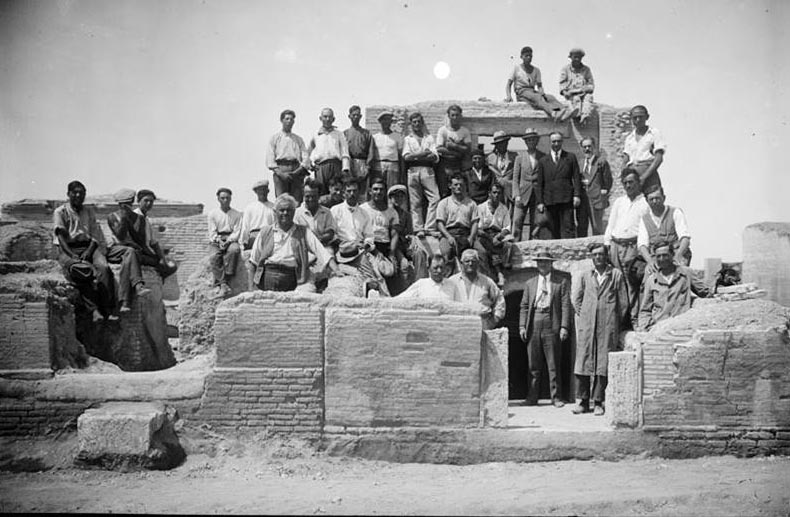
Historical photograph of the excavations of the southern sector of the Necropolis, with Guido Calza and workmen (1940)