

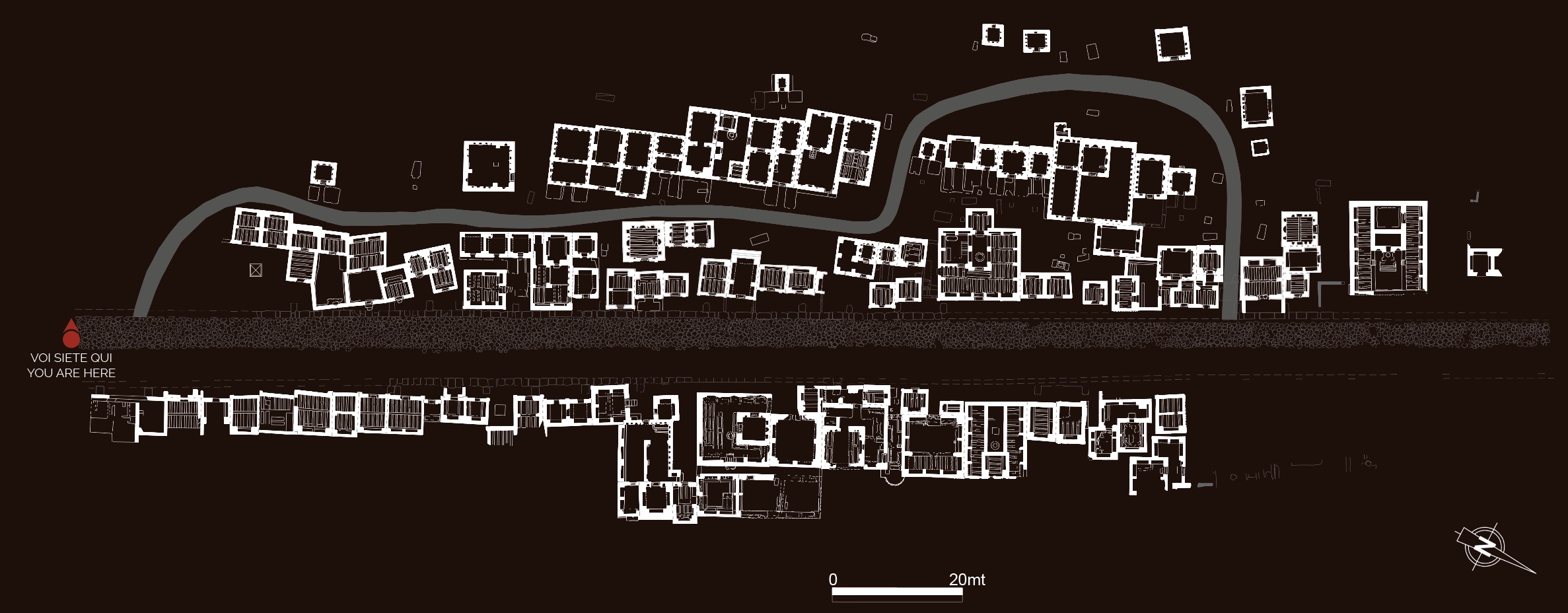
In the early phase (1st century A.D.) the Necropolis consisted of burials in semi-cylindrical masonry caissons irregularly arranged along the Via Flavia-Severiana, which in this section was raised and dual carriageway. The funerary buildings were mainly built between the early 2nd and mid-3rd century AD, with transformations and reutilisations attested up to the 4th century AD, and progressively occupied the empty spaces behind the pre-existing tombs. In many cases new constructions were erected over the latter, due to silting up because of the proximity to the coastline, which caused the levels to rise, and to meet the desire to erect monuments visible on the street front. Alongside funerary buildings with rich decorative decorations are simple individual tombs of different types. Monumental tombs have paintings and stuccoes with various figurative themes that mark out the partitions of the walls and decorate arcosoli, niches and ceilings. The mosaic floors, whose primary function was to seal the burials beneath, were already destroyed in ancient times following new depositions.
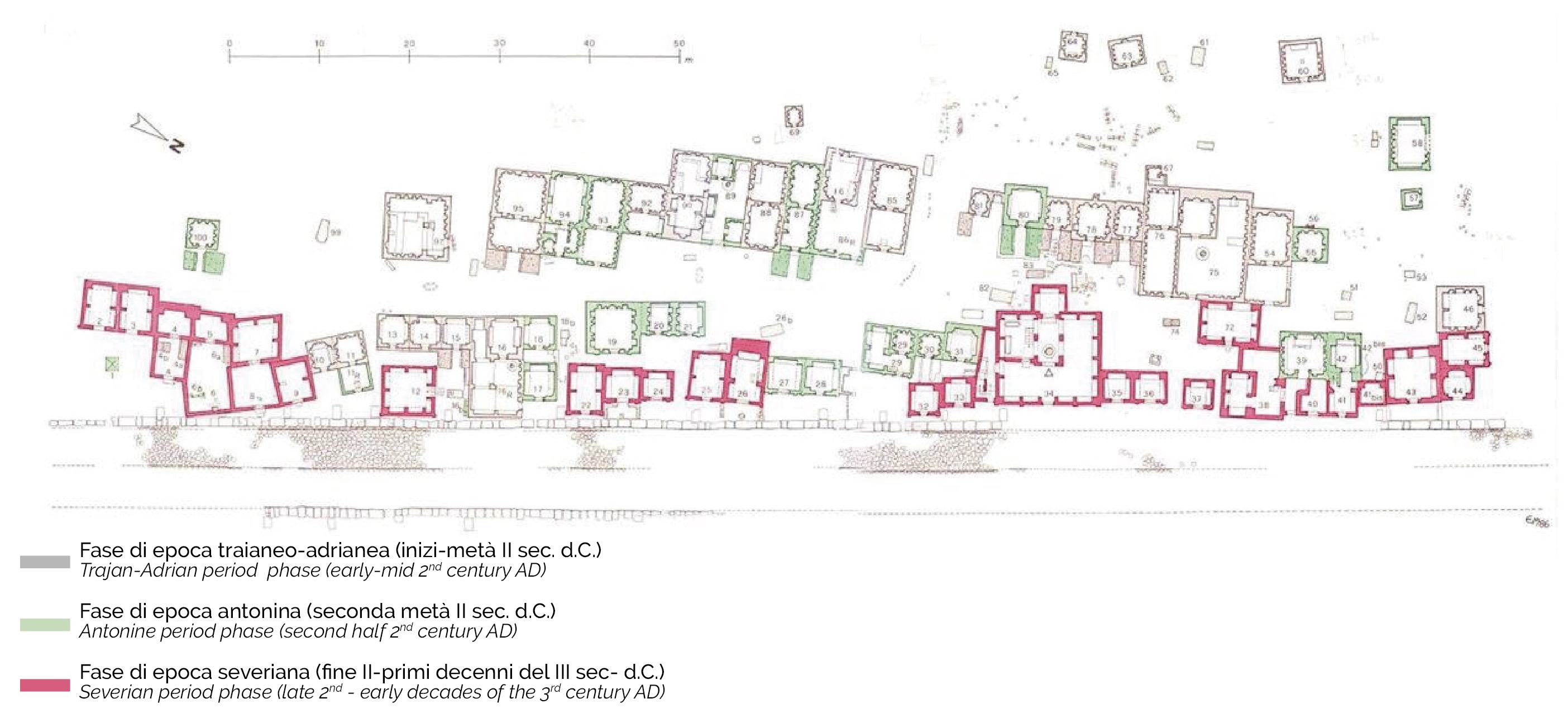
General plan of the Necropolis, showing the periods of construction
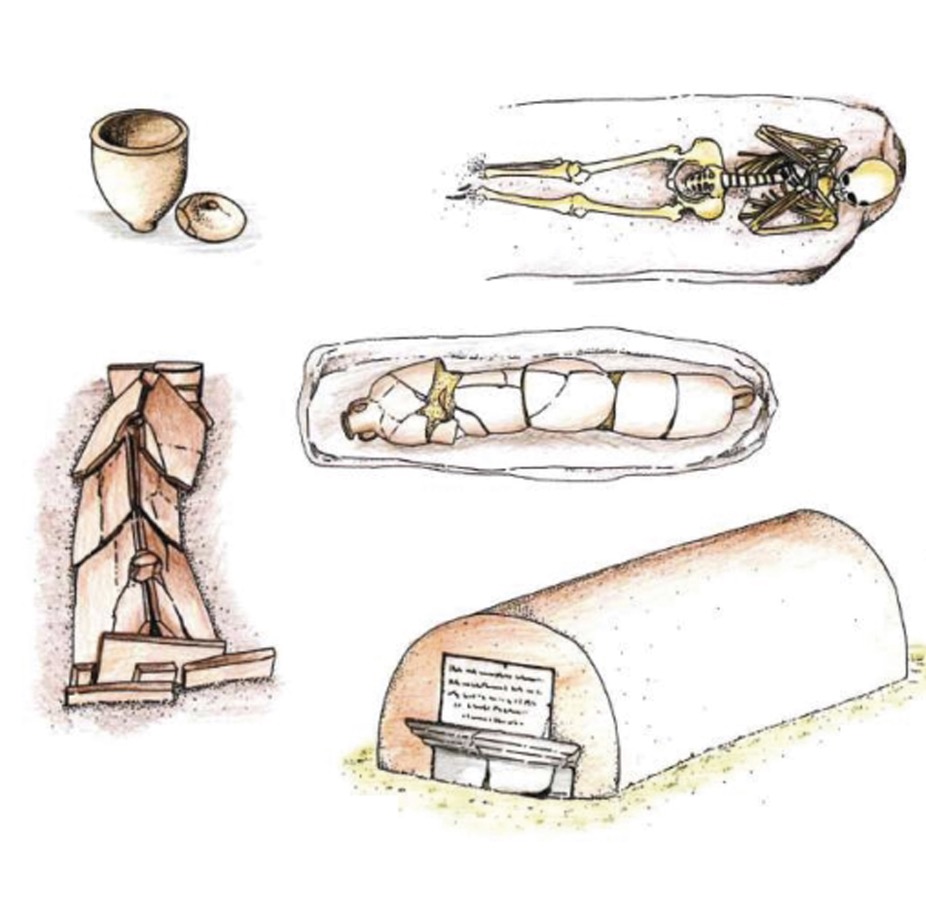
Drawing exemplifying the types of burials
(M. G. Pasi)
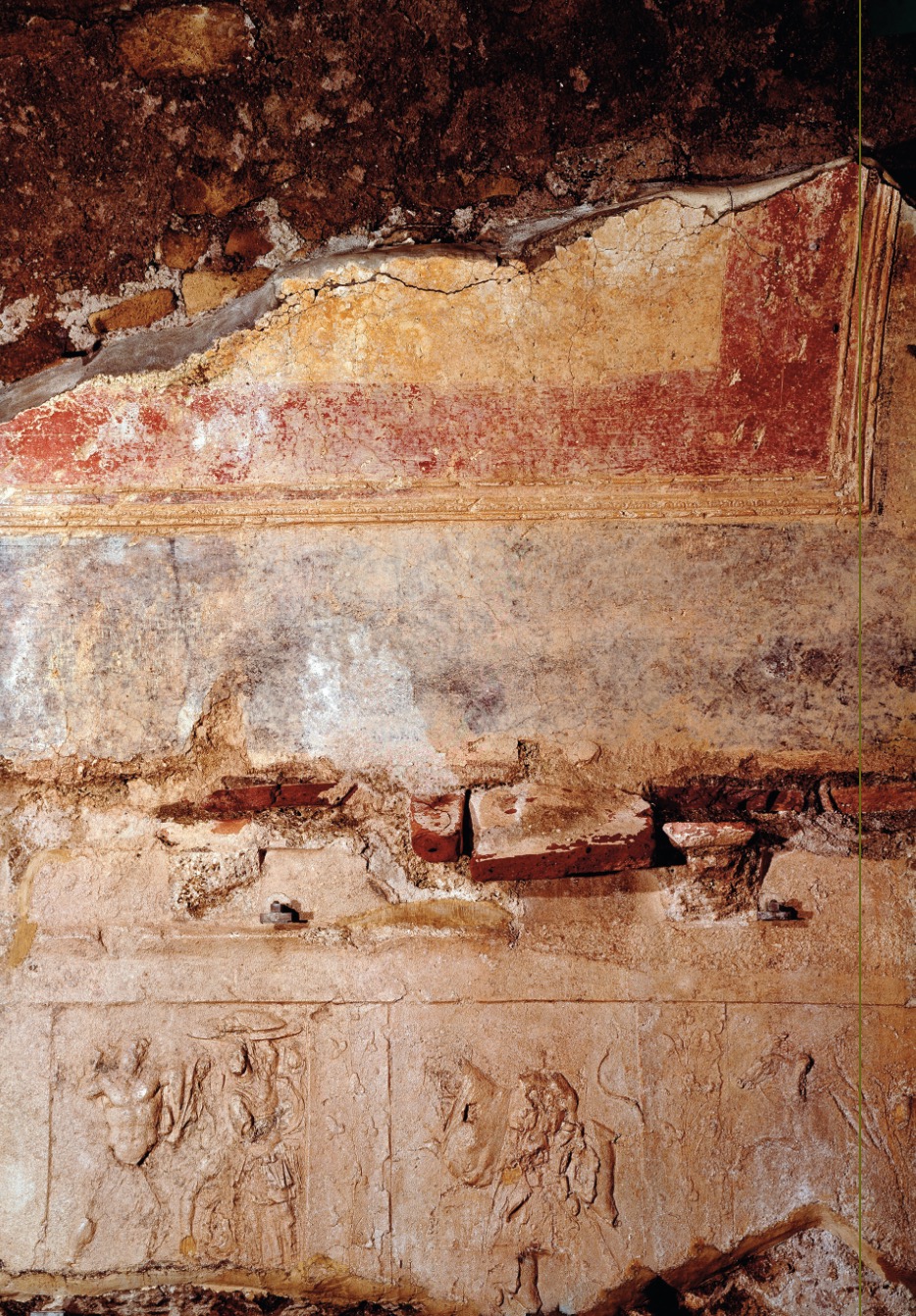
Stucco and painted decoration of the vault in tomb 95
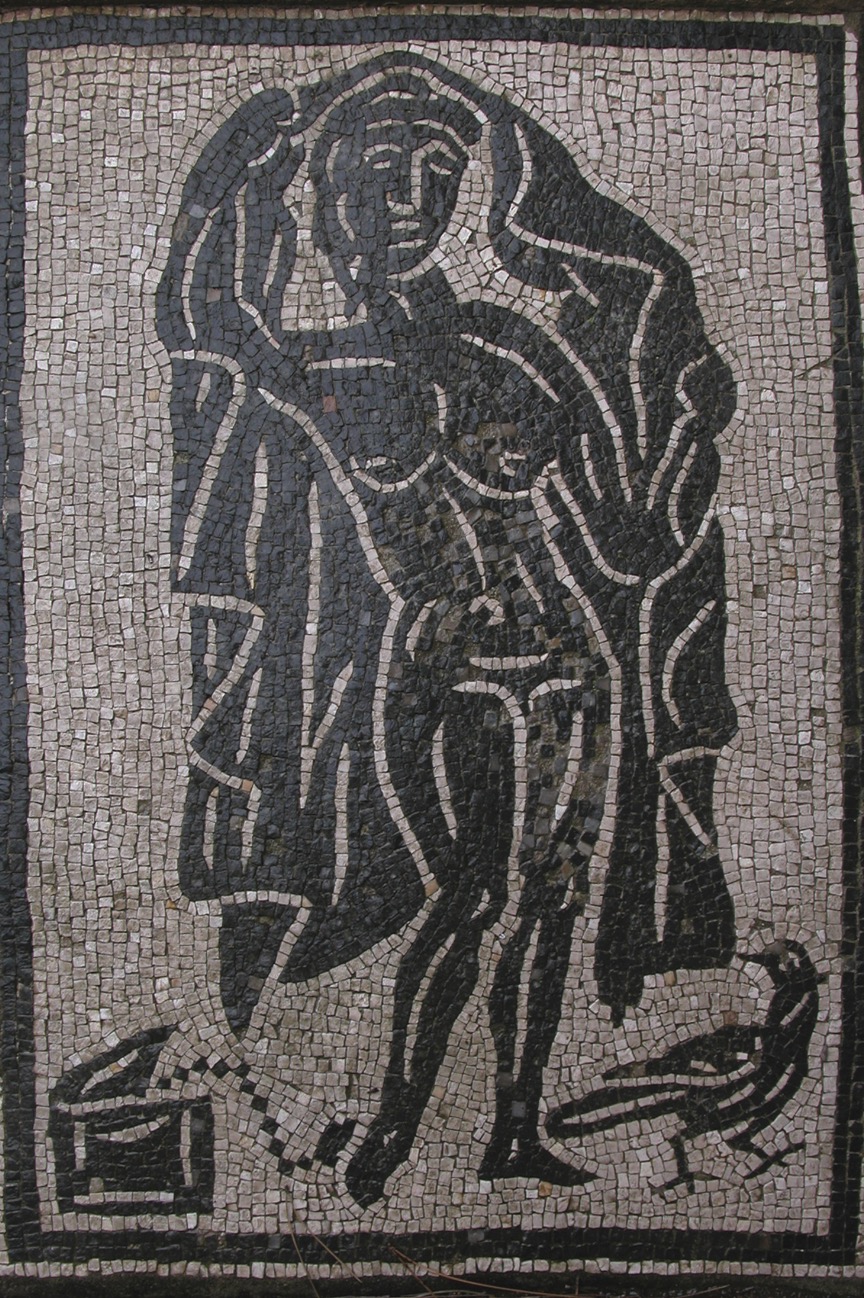
Tomb 75 mosaic
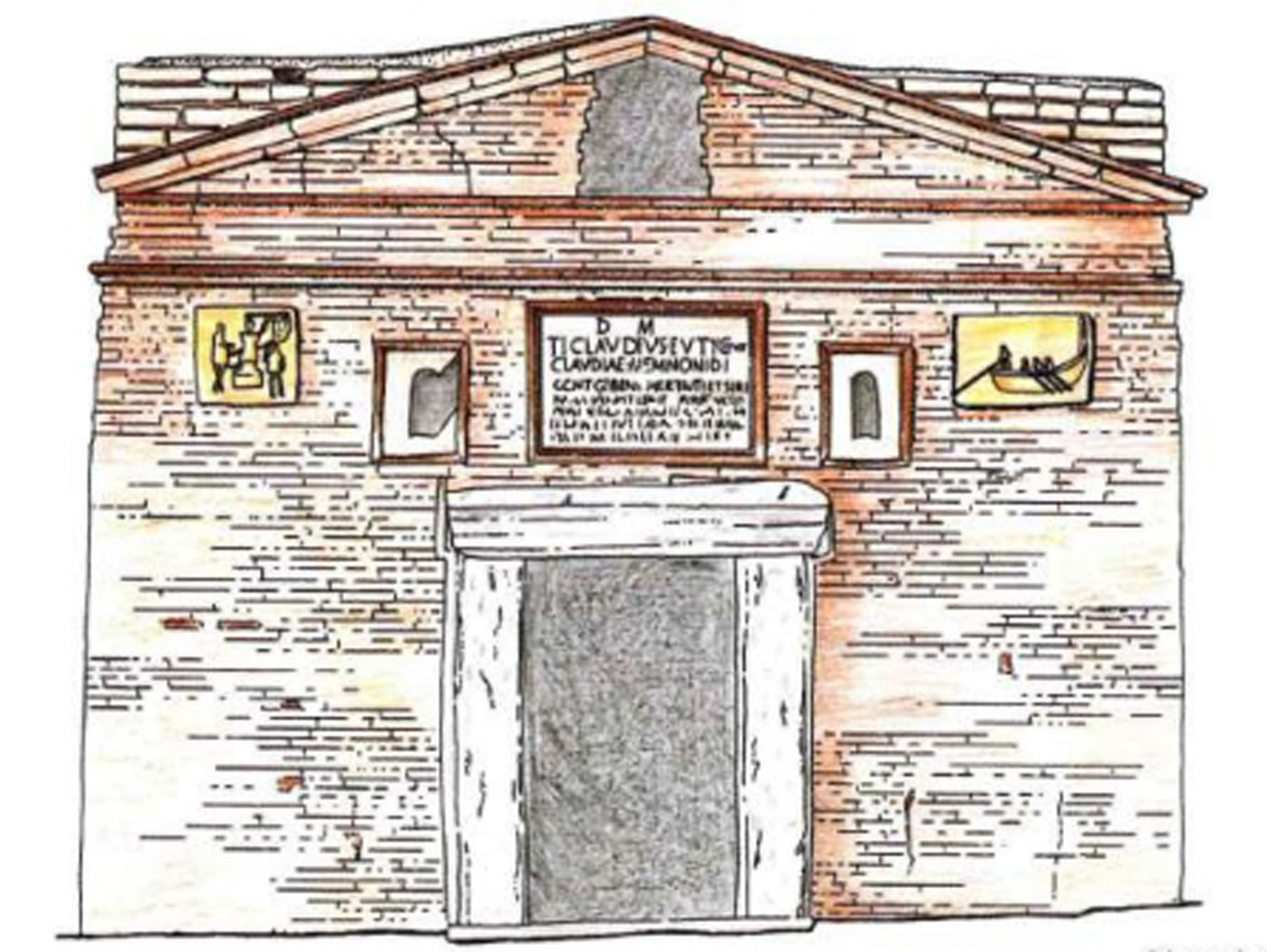
Reconstructive drawing with the façade of tomb 78
(M. G. Pasi)
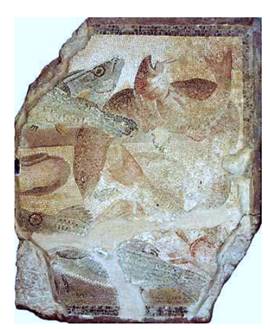
Emblem from tomb 18
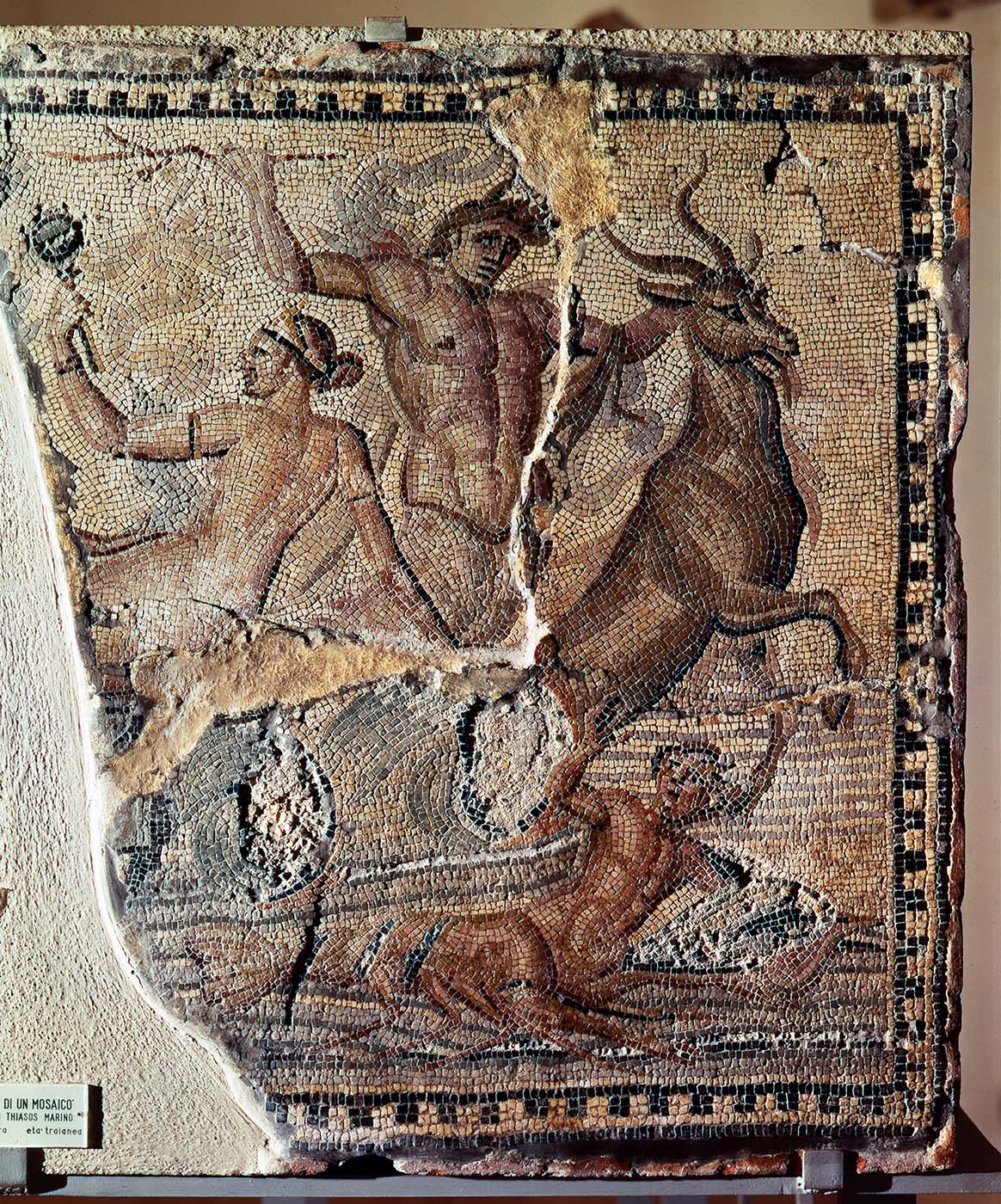
Emblem not discovered in situ
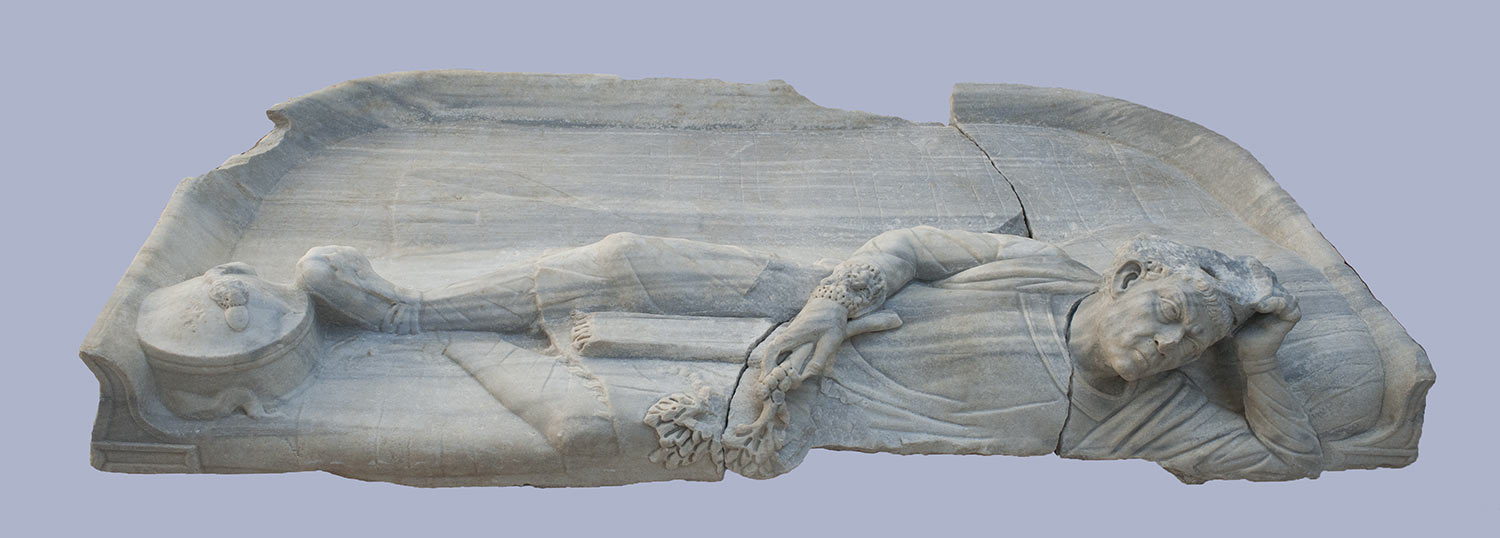
Sarcophagus lid depicting Archgallo
(Museo Ostiense)
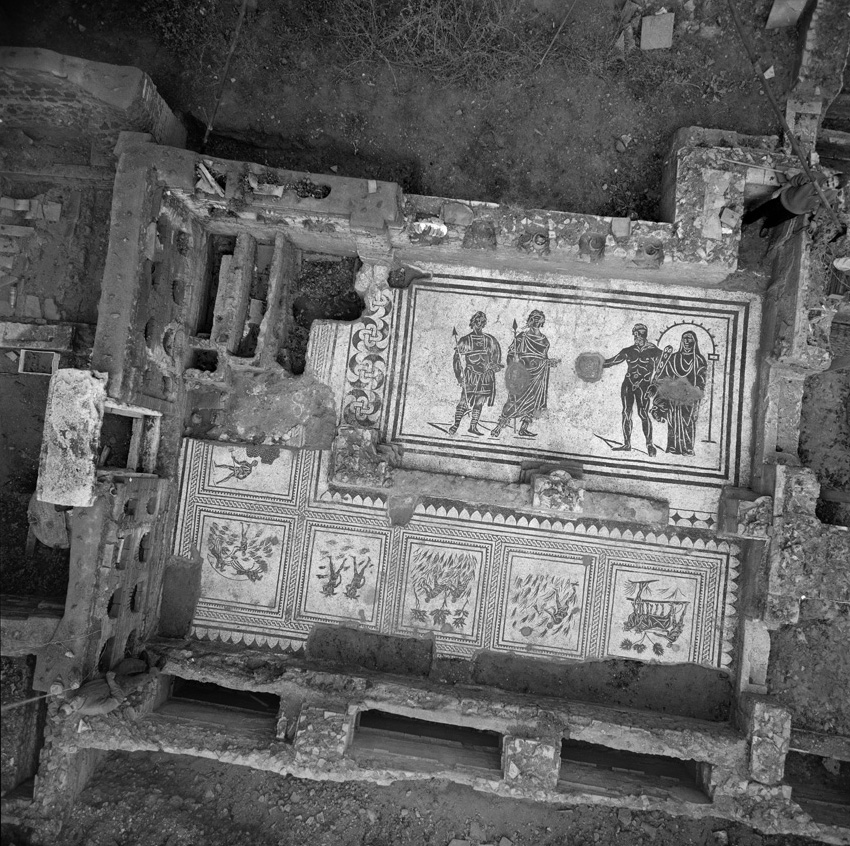
Mosaics from tomb E 25, “della Mietitura” (“of the harvest”)