

The choice of cremation or interment has no influence on the tomb’s outward appearance, but conditions its interior articulation: the lower register of the walls might house arcosolia for the interred, and the upper one niches containing ollas for the cremated. Beneath the floor, there are frequent formae – rectangular fossae delimited by low walls for the deposition of interments on several levels. The two rituals, resulting from individual choices even within a single family circle, coexisted throughout the Age of the Antonines (138-192 AD), with interment gradually prevailing during the 3rd century AD. Ledges are placed against the façade of some tombs; these were used as seats or klinai (beds), with an inclined plane and masonry supports for wooden boards. These preparations were functional to holding the funeral banquet, whose importance is underscored by the frequent presence, both inside monumental tombs and in connection with simple burials, of libation ducts made using amphora necks or hollow, rectangular-section bricks. As for the few grave goods that have been discovered, these come mostly from individual burials: small items of personal adornment, coins, glass unguentaria, and oil lamps. Finds of small, disc-shaped vases and clay incense burners are characteristic and frequent in connection with banquet preparations. On the tombs’ main front, between polychrome cornices in black pumice and reddish brick, marble slabs were placed, with Latin (less often Greek) inscriptions bearing the names of the owners, as well as indications on the size of the tomb and the regulations regarding its use. Sometimes the profession practised during life is illustrated by scenes depicted on clay tiles placed at the sides of the inscription. Studying these elements allows the deceased persons’ social class to be defined: a middle class consisting for the most part of freedmen engaged in trade and the crafts, the activities of broad strata of Portus’s population.
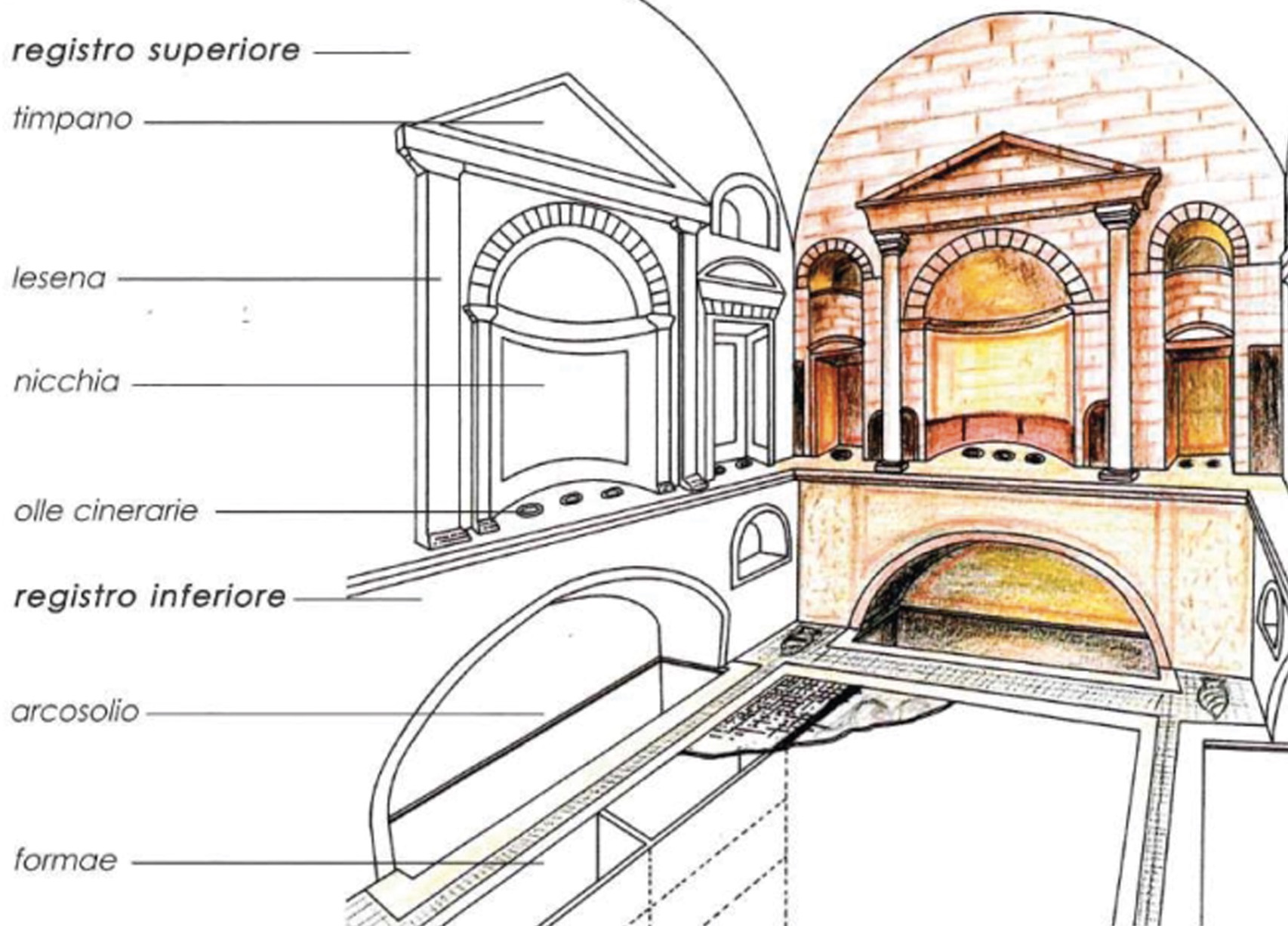
Drawing of the interior of a cella-type tomb intended for mixed ritual
(M. G. Pasi)
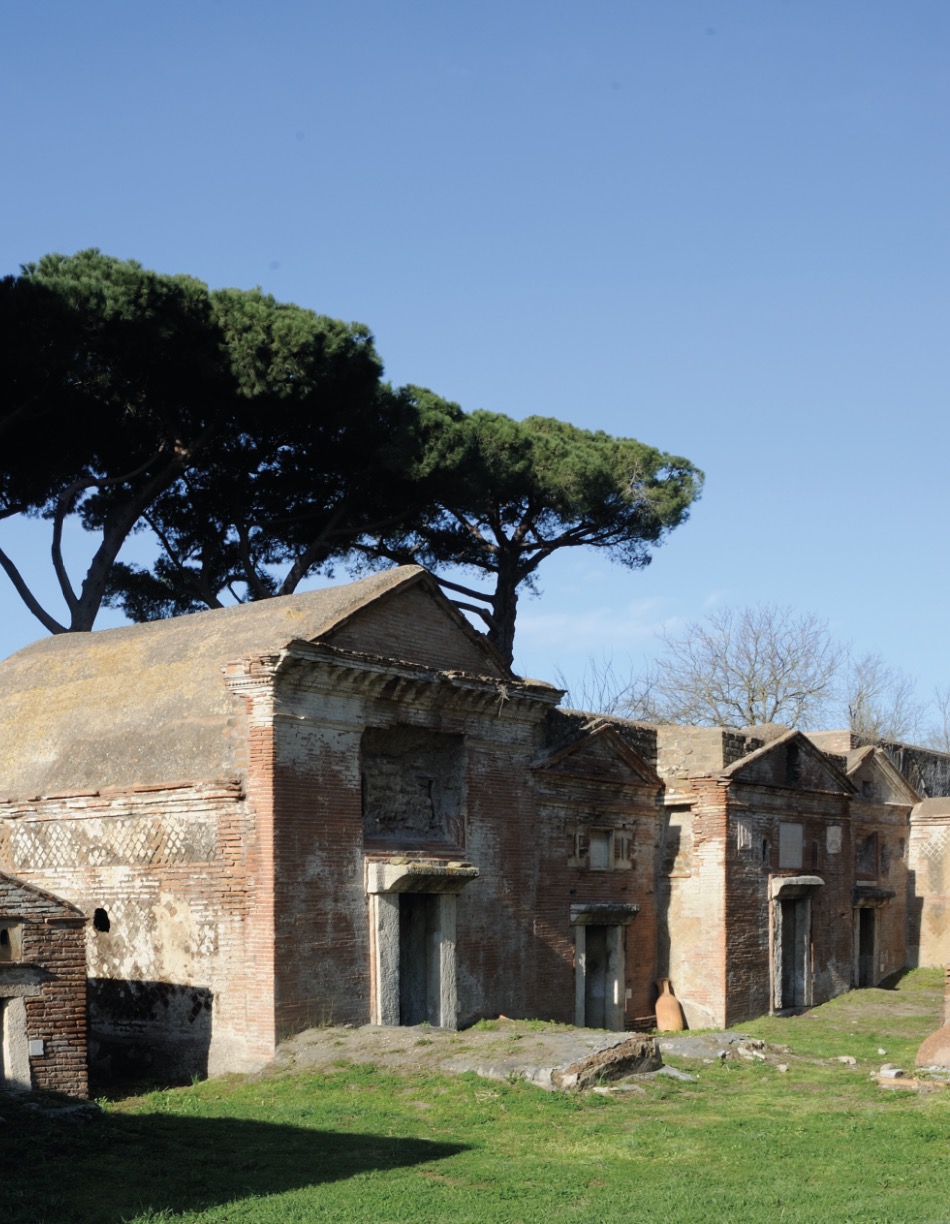
Tombs 77-81 with preparations for the funeral banquet
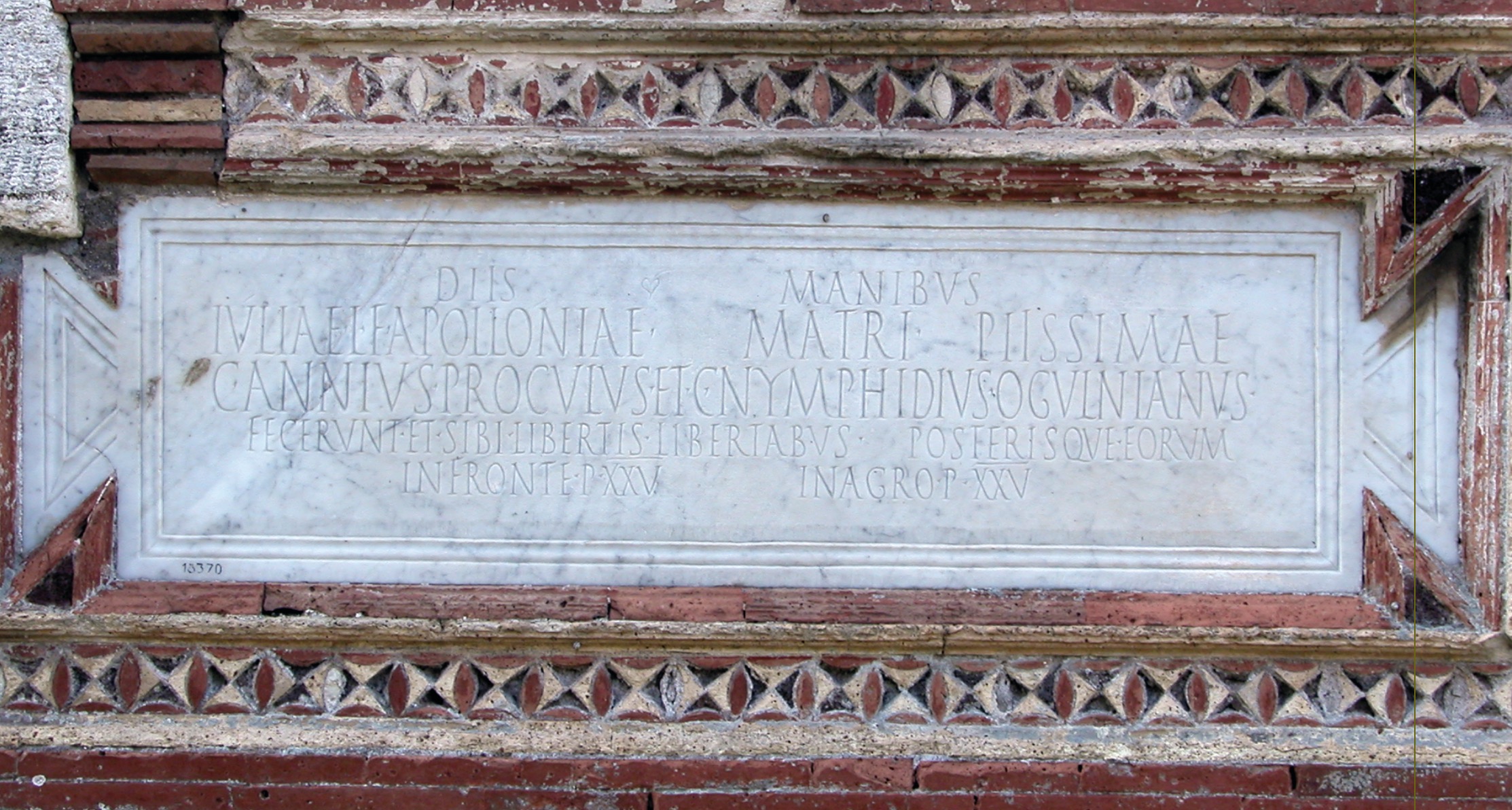
Tomb 97 inscription
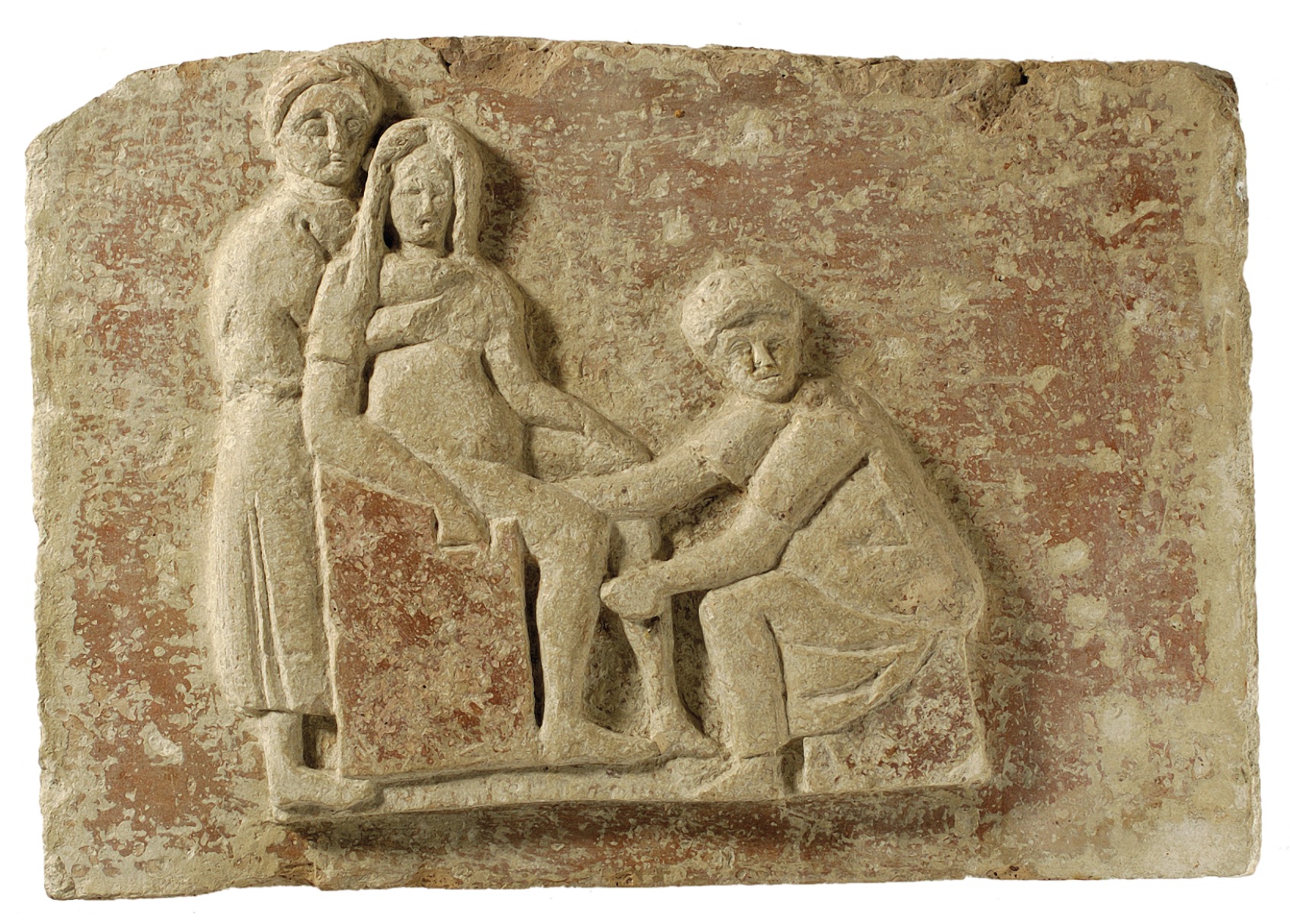
Clay relief from tomb 100 with a scene of a midwife assisting childbirth
(Museo Ostiense)
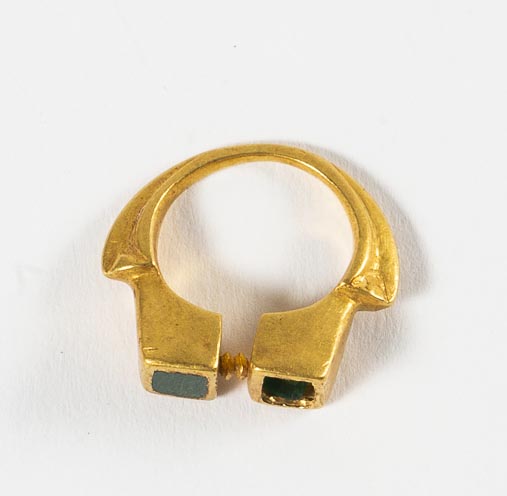
Ring with settings, from the grave goods of the sarcophagus of the Muses
(Museo Ostiense)
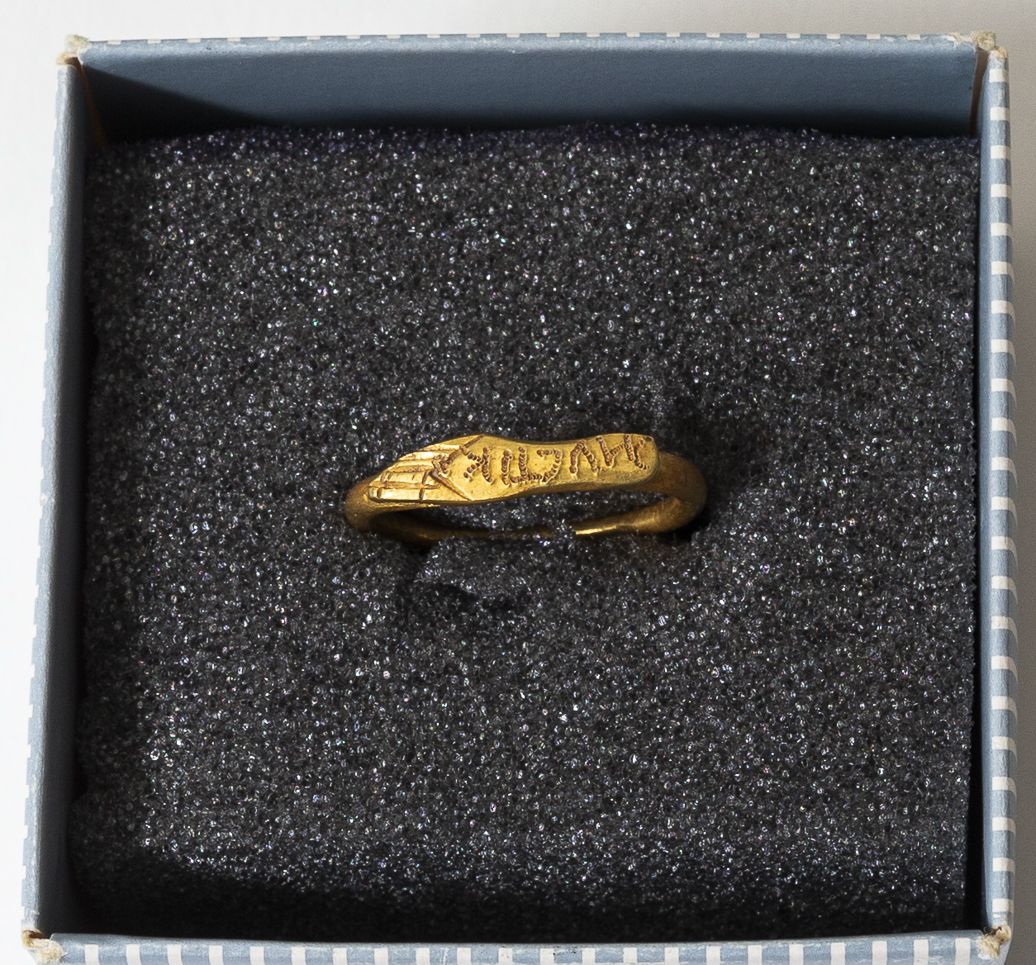
Ring with cartouche bearing the symbol of Isis, from the grave goods of the sarcophagus of the Muses
(Museo Ostiense)
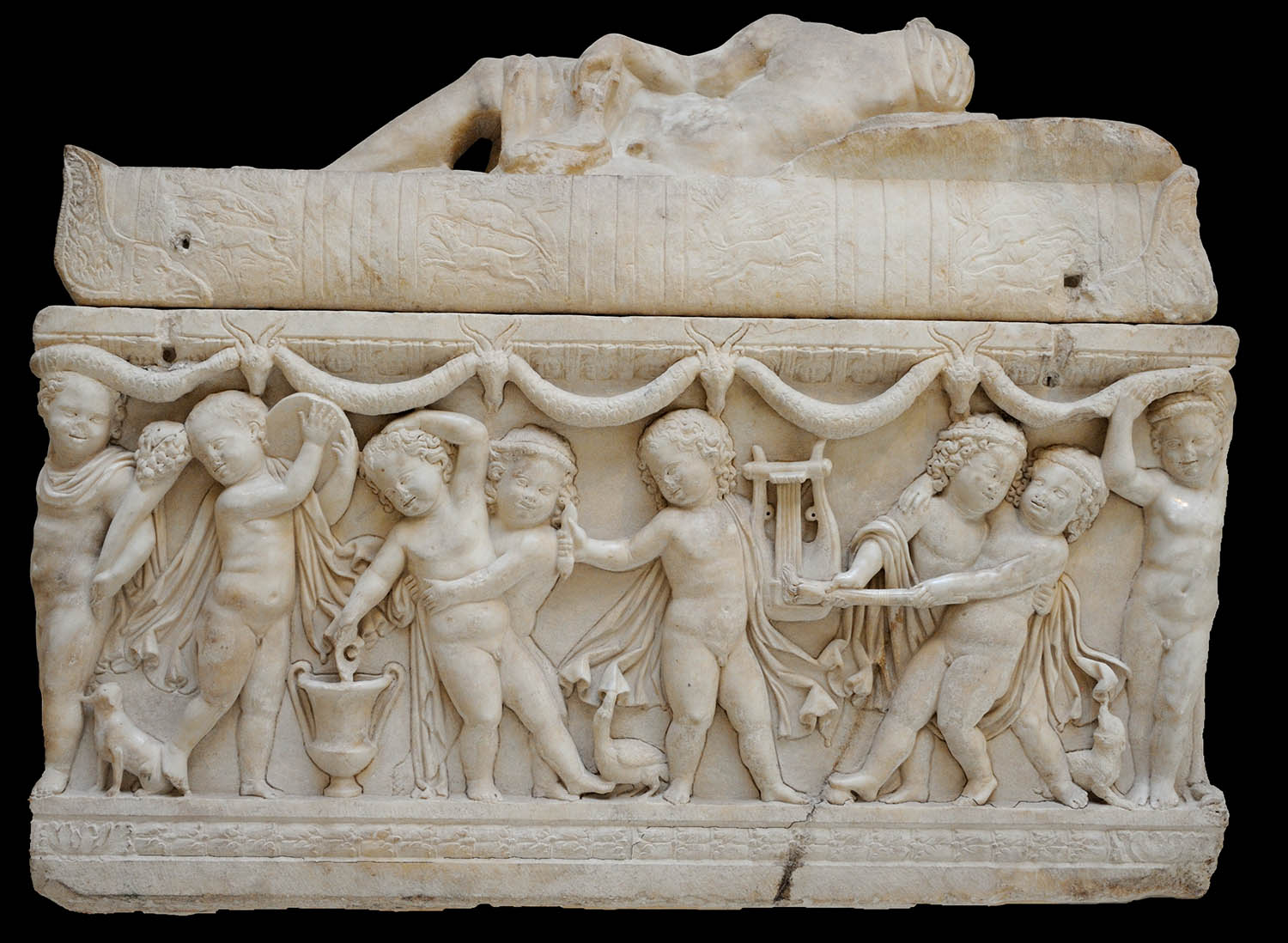
Attic sarcophagus with putti (Museo Ostiense)