

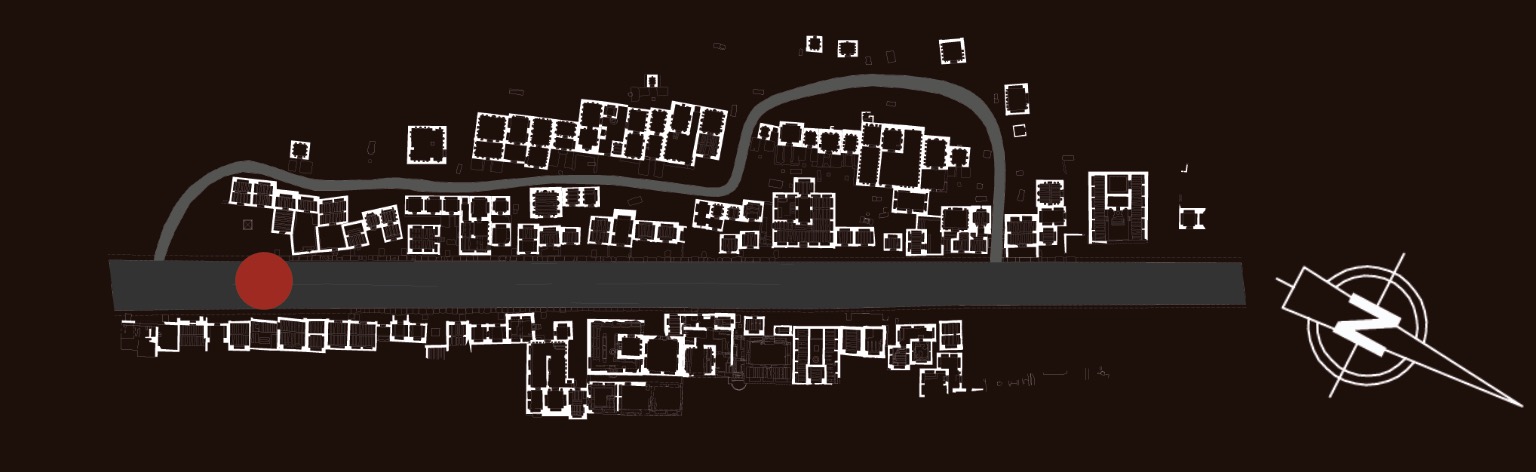
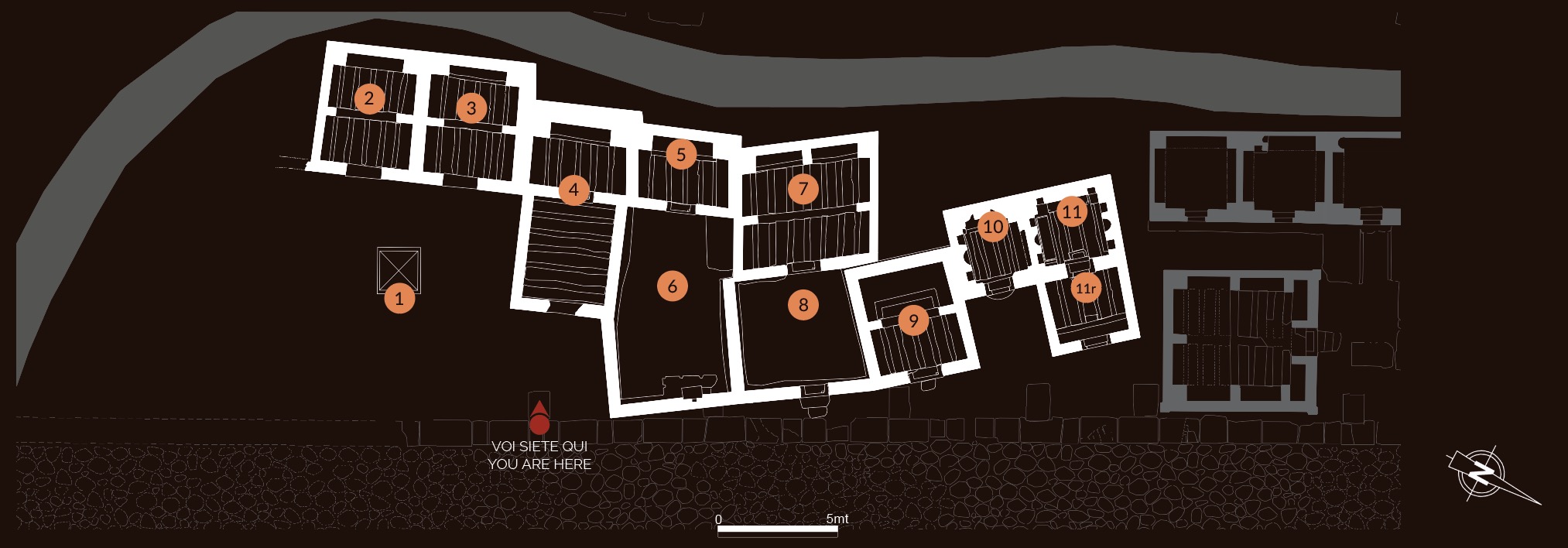
Tomb 1: cube with pyramid roof, dating to the Age of the Antonines (138-192 AD)
Tombs 2-9: cella-type tomb; their interiors present arcosolia in the walls and fossae delimited by low walls in the floors (formae), intended for the interred and dating to the first half of the 3rd century AD. The presence of “a cappuccina” or “hooded” and of caisson burials beneath Tombs 4, 5, 6, and 7 documents a phase of occupation of the previous road frontage. The excavation of Tomb 6 yielded the marble portrait of Volcacius Myropnous.
Tomb 10: dated to the second half of the 2nd century AD, its interior is articulated in arcosolia for the interred and niches with ollas for the cremated. On the entrance wall, the site of the inscription, with terracotta cornice, is framed by two slits, while the lateral recesses must have contained clay reliefs.
Tomb 11: cella-type tomb, with enclosure added later; its façade presents a Greek inscription with indications on the size of the tomb. Inside, the walls are organized for mixed rituals: arcosolia for interments in the lower register, niches containing ollas for the cremated in the upper one, formae for the interred beneath the pavement. The central niches were decorated with paintings depicting the Parcae, symbols of destiny.
This tomb’s initial phase dates to 135-140 AD.
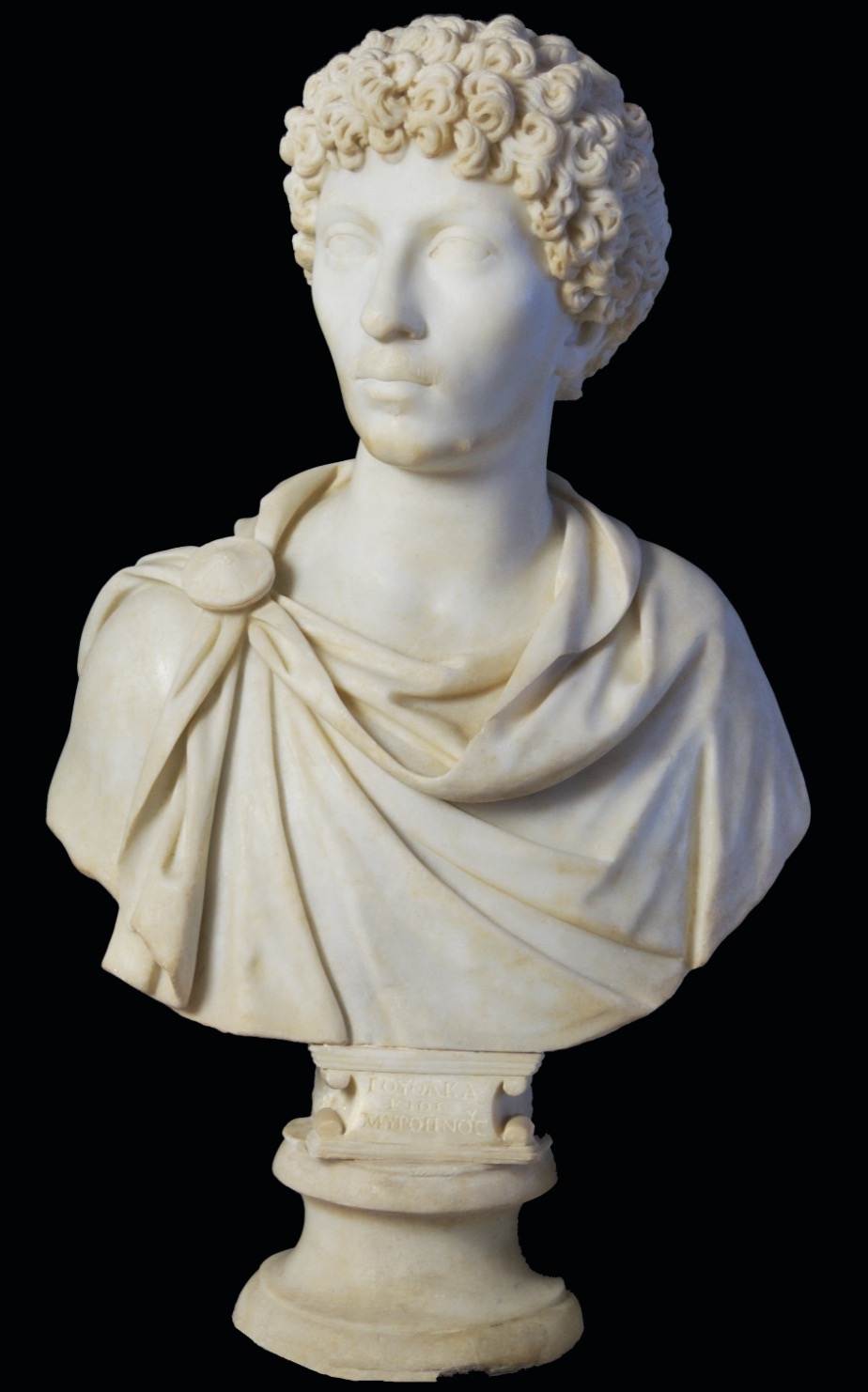
Portrait of di Volcacius Myropnous, discovered in tomb 6
(Museo Ostiense)
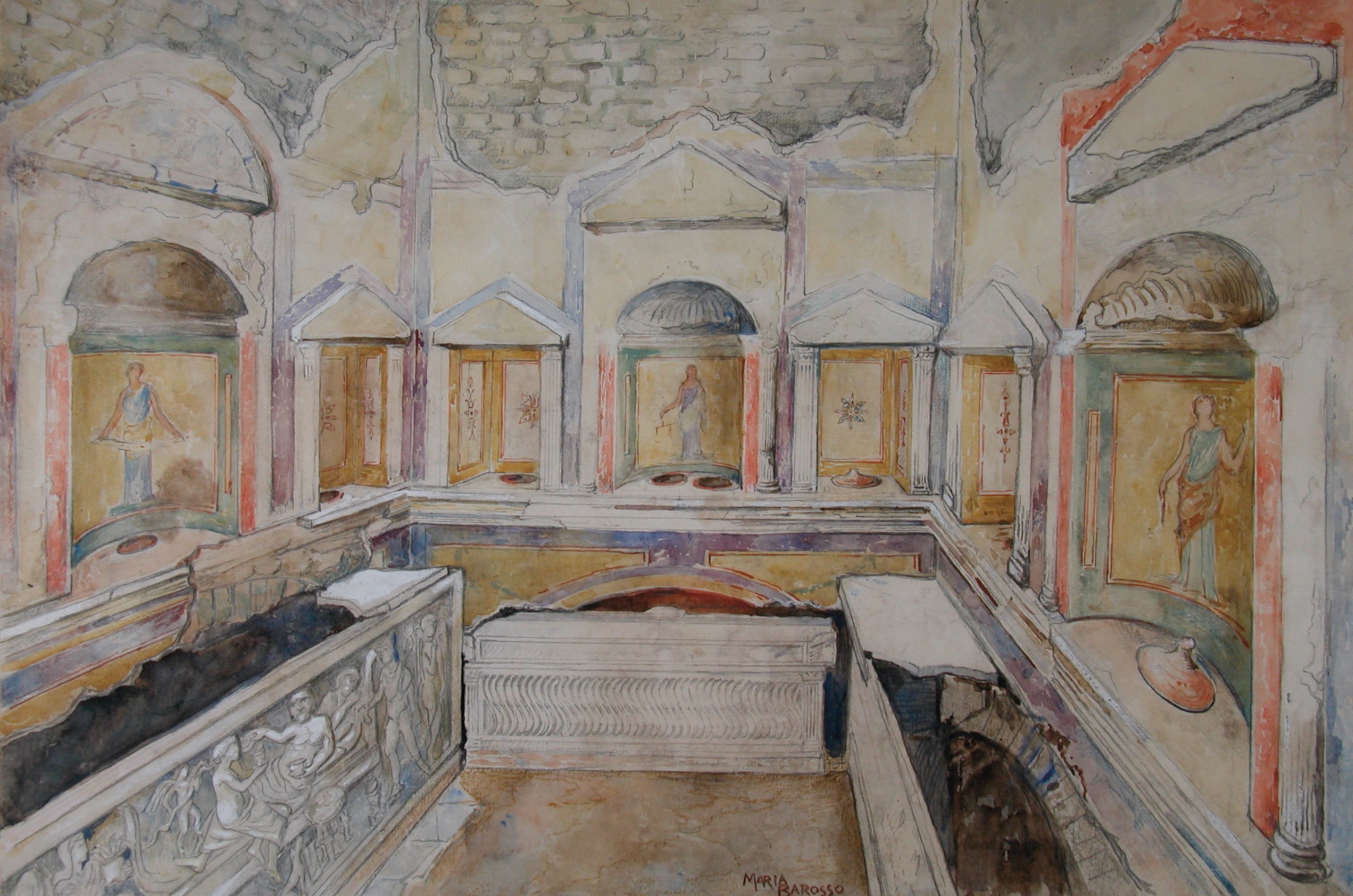
Watercolour depicting Tomb 11’s interior decoration
(M. Barosso)
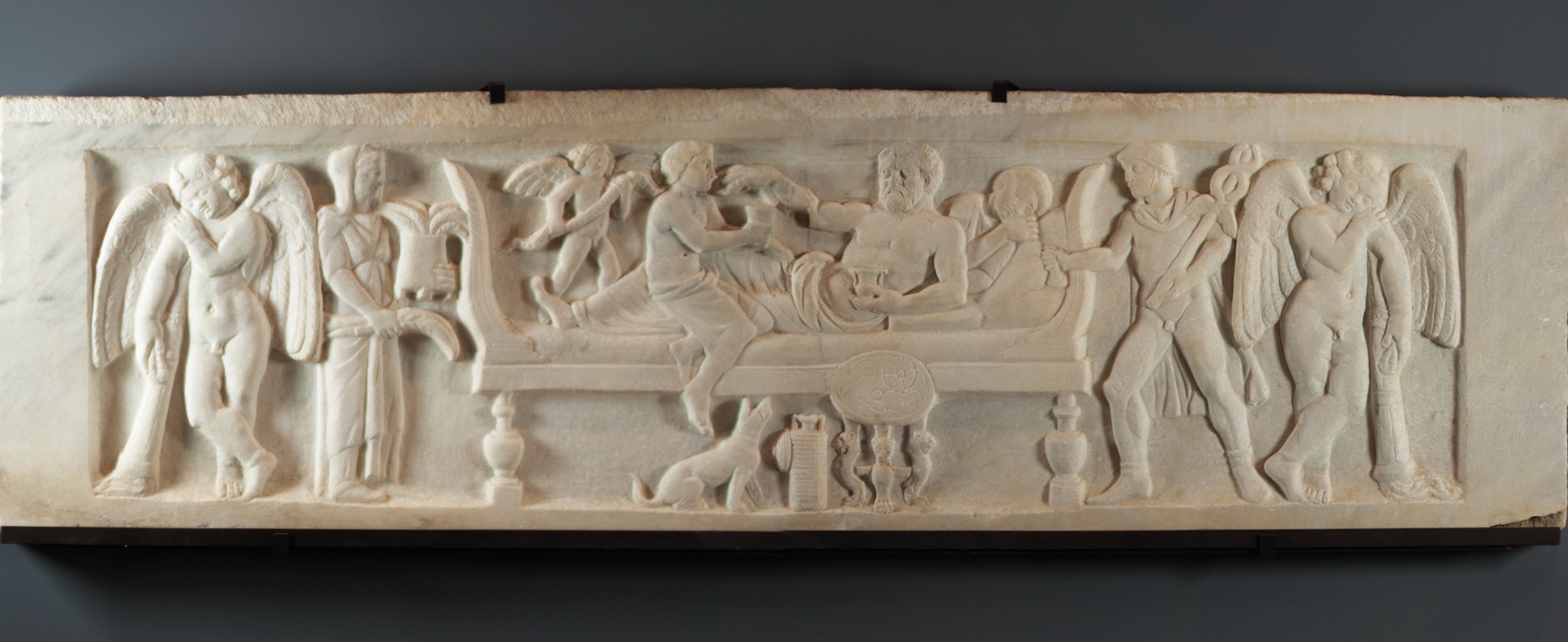
Loculus slab with the scene of a funeral banquet, discovered in Tomb 11
(Museo Ostiense)
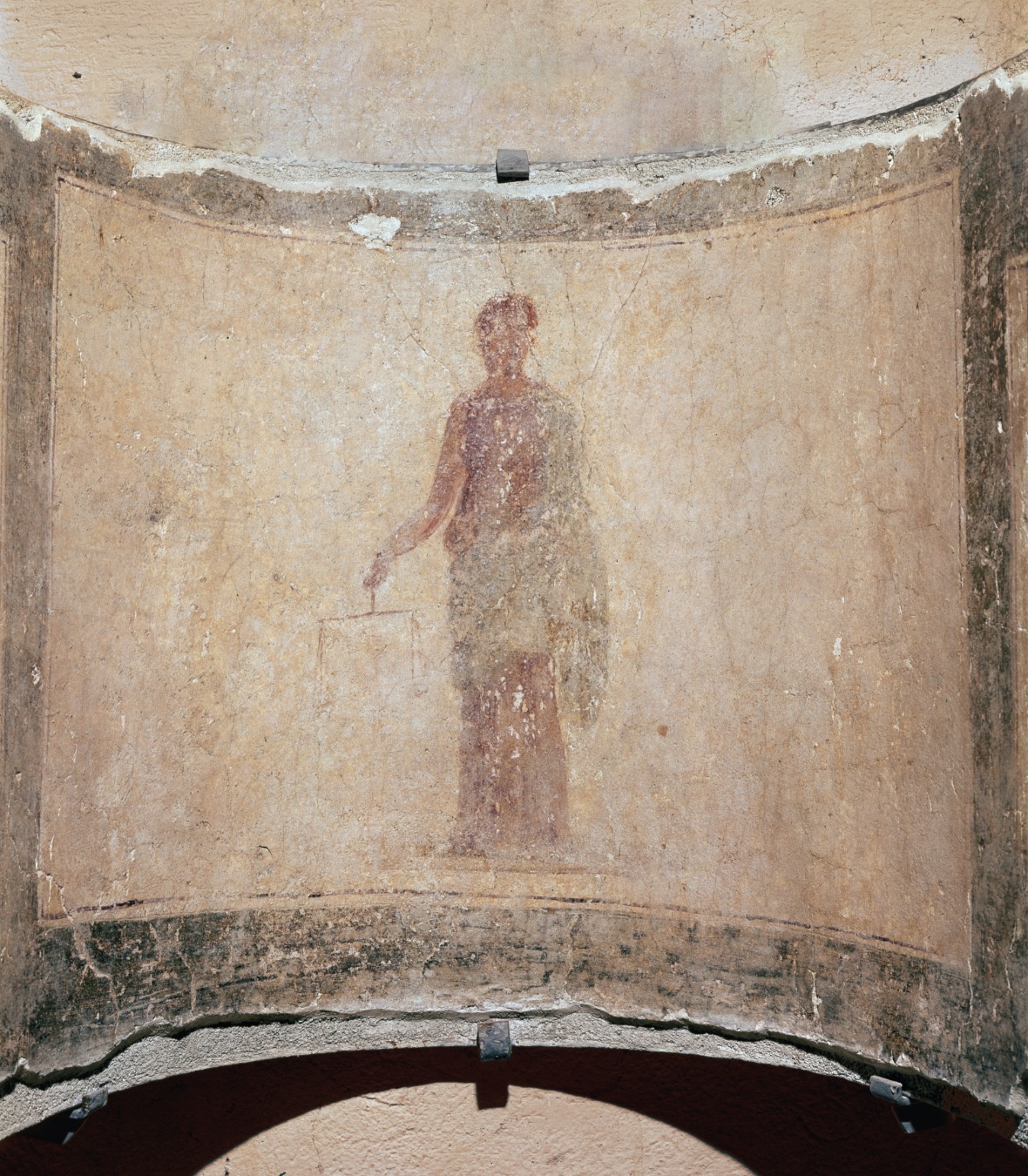
Painting depicting one of the Parcae (Lachesis), discovered in Tomb 11
(Depositi Ostiensi)
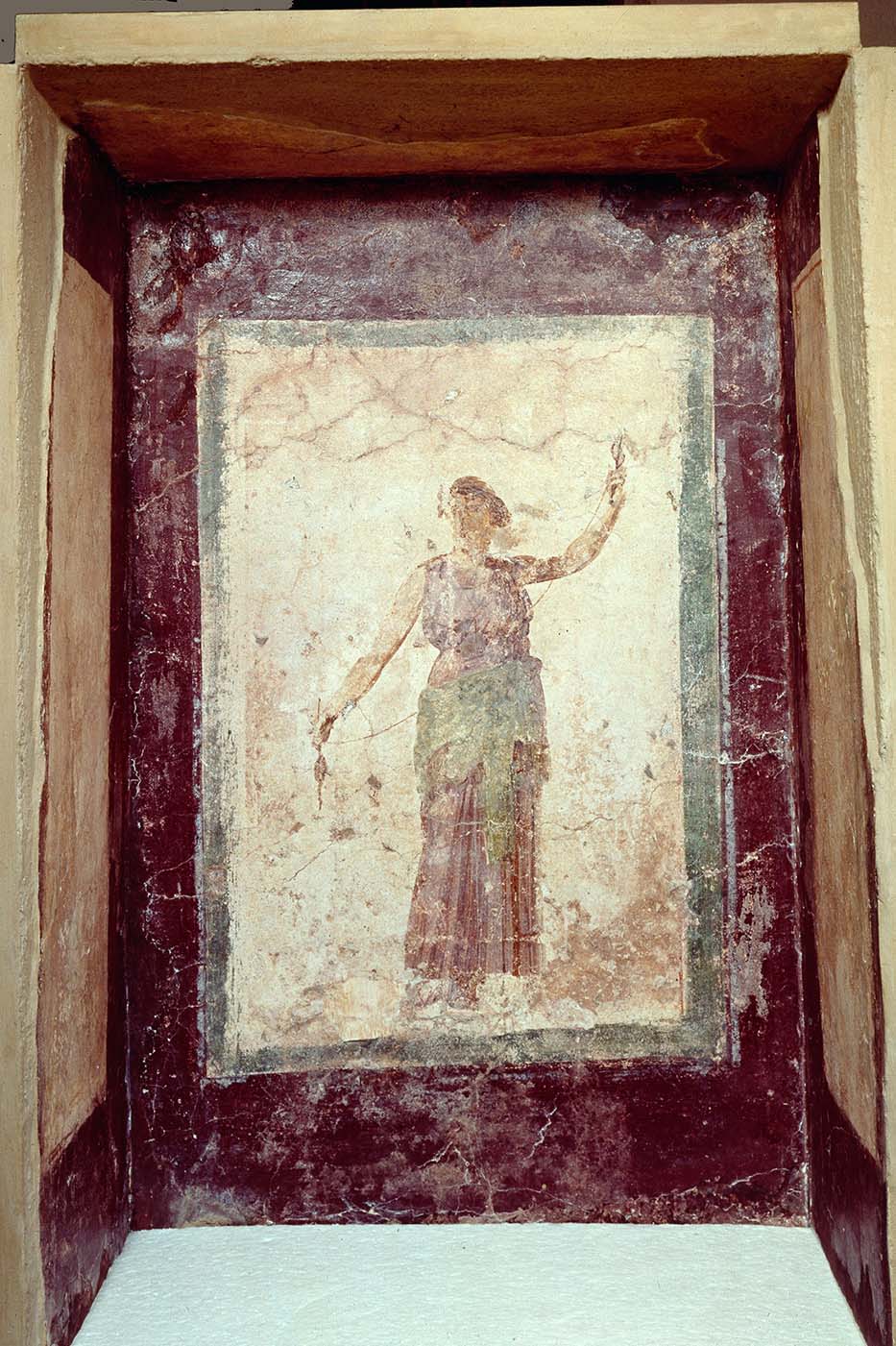
Tomb 4, axonometric drawing of the enclosure with the caisson tombs 4a and 4b, upon which the low walls of the formae are placed
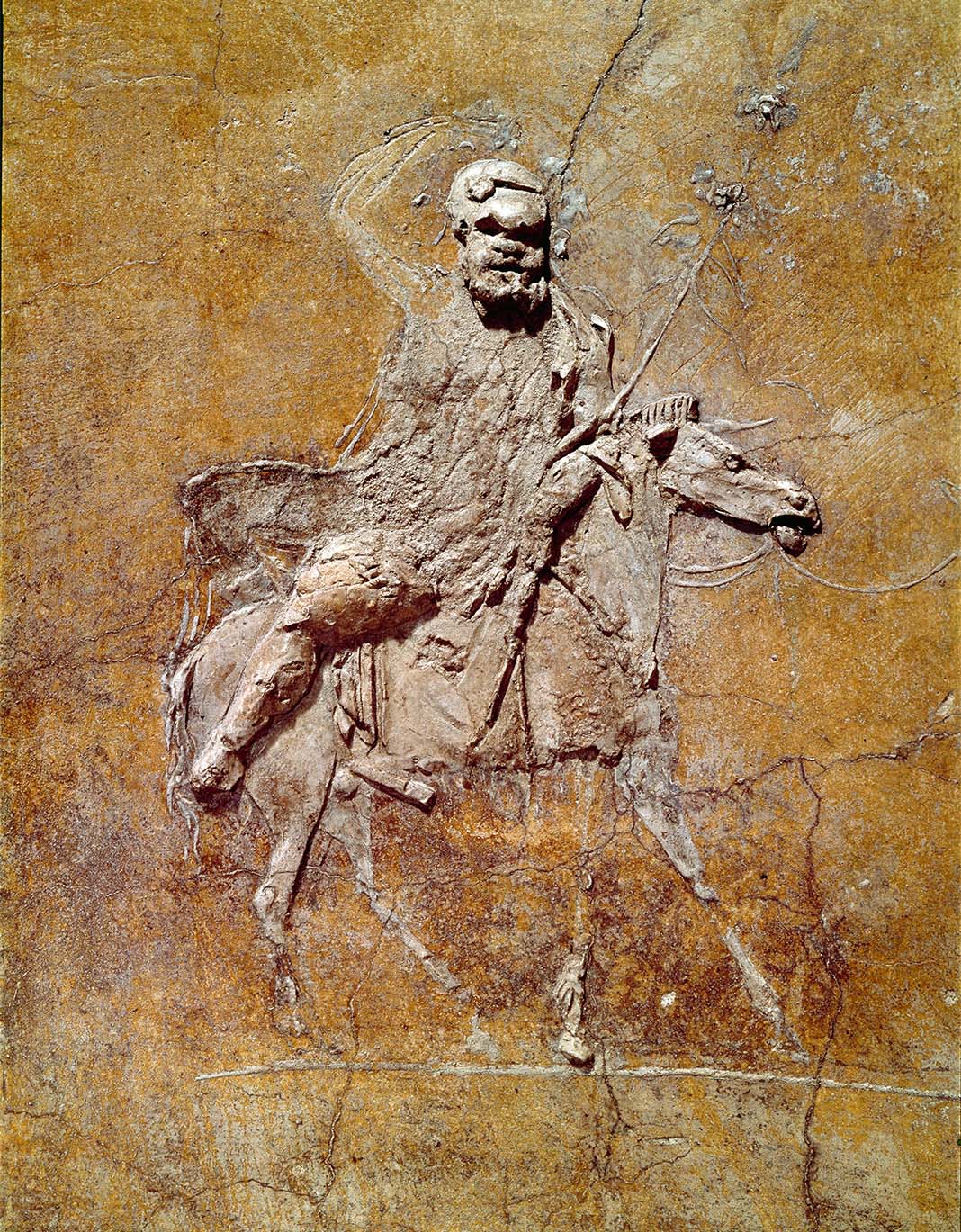
Painting with stylized floral motifs from Tomb 11