

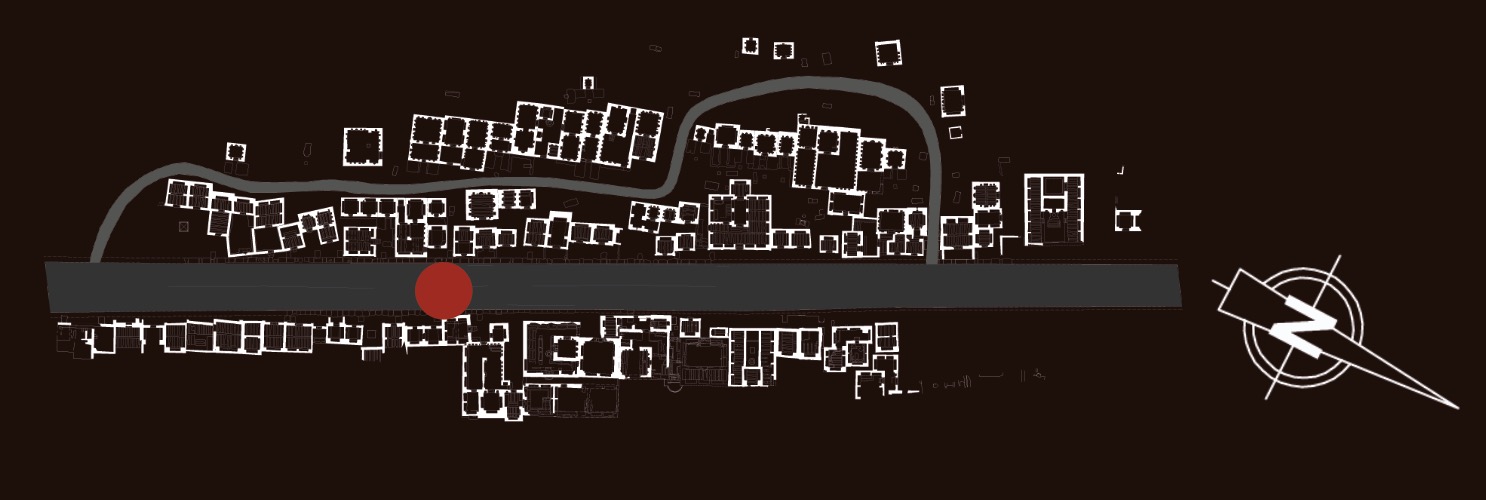
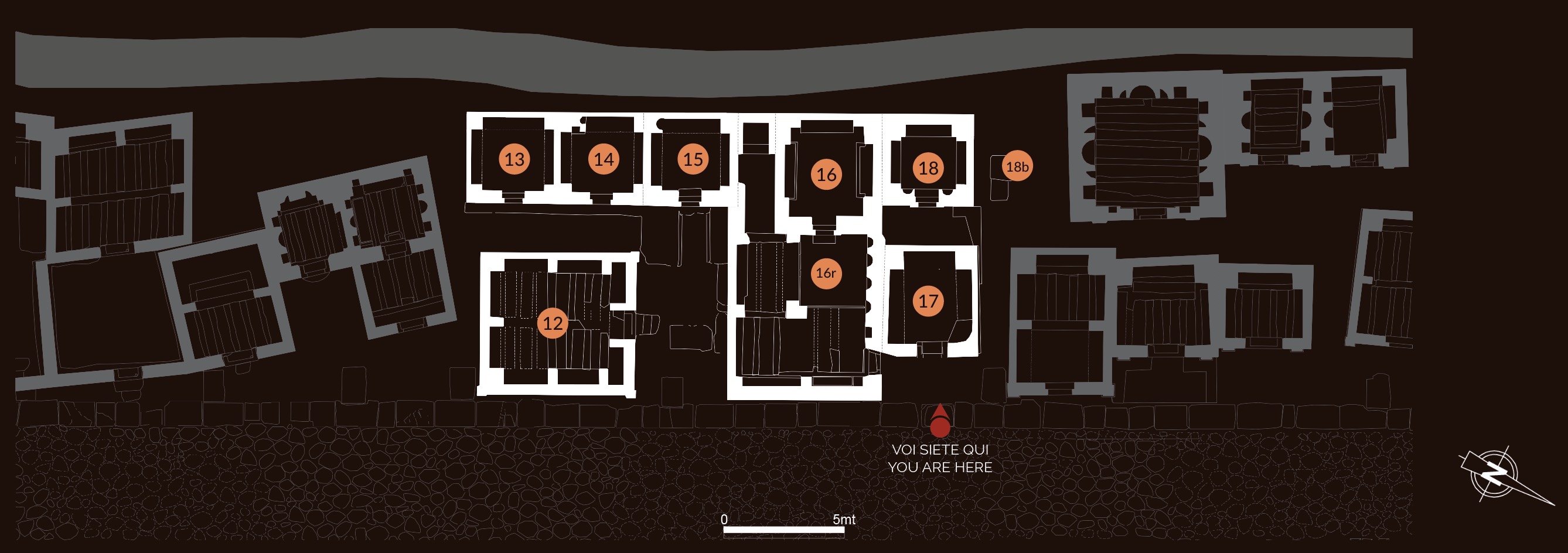
Tomb 12: cella-type tomb; its interior is organized for the interment ritual in two orders of arcosolia in the walls, and in formae beneath the floor level (formae). Dating: first decades of the 3rd century AD.
Tombs 13, 14, and 15: cella-type tomb; a masonry ledge at the base of the façade was used as a seat during funeral banquets. Above the doors, inscriptions were placed with information relating to the size of the tomb and the owner. The interior is arranged for mixed-ritual. Tomb 15 displays a scene of Venus and cupids decorated in painting and stucco. Dating: mid-2nd century AD.
Tomb 16: cella-type tomb; at the sides of the door are two reliefs in tuff, originally in the form of dolphins. The ritual is mixed. The walls are decorated with paintings of various themes and stucco. The enclosure, also for the mixed-rite, in the area in front of the cella, where there is a pit, is paved with a mosaic with a Nilotic landscape. The inscription mentioning the road called ‘bia Flabia’ comes from here. The cella can be dated to the middle of the 2nd century A.D., the enclosure dates to shortly afterwards.
Tombs 17 and 18: cella-type tombs; the first contains interments in a double order of arcosolia in the walls and formae beneath the floor level; in the second, the rite is mixed. Dating: second half of the 2nd century AD.
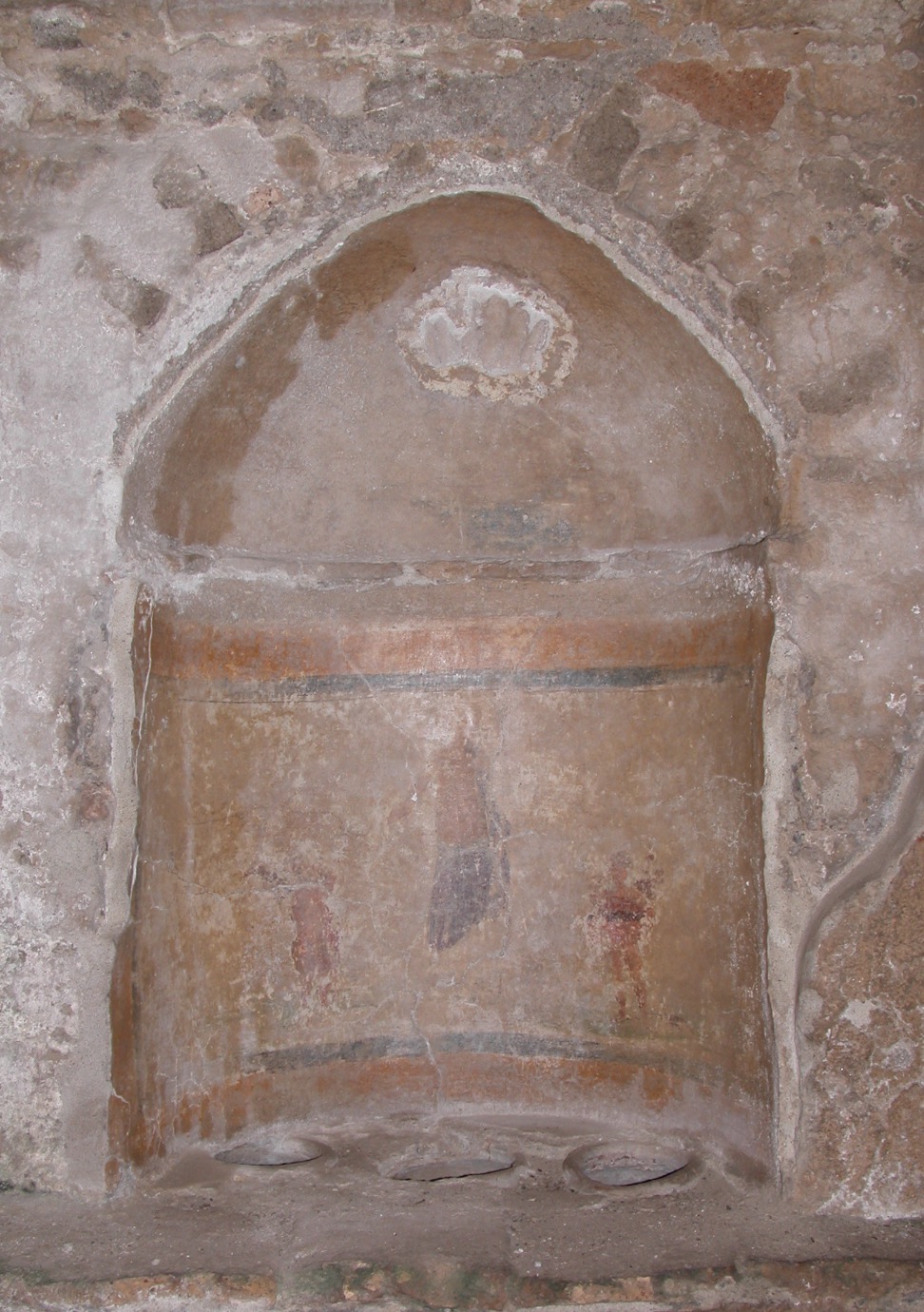
Decorated niche with Venus between two cherubs inside Tomb 15
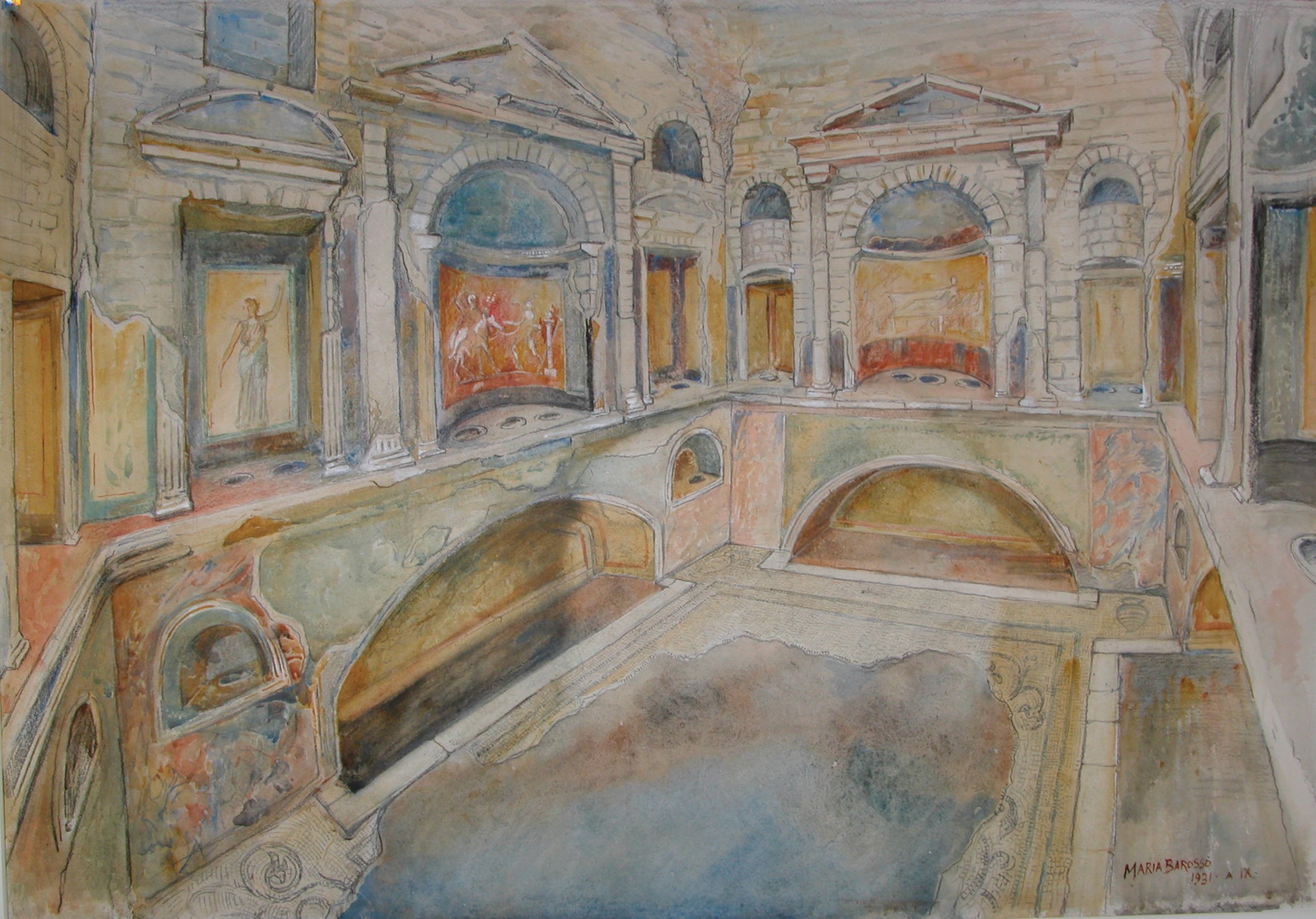
Watercolour depicting Tomb 16’s interior decoration
(M. Barosso)
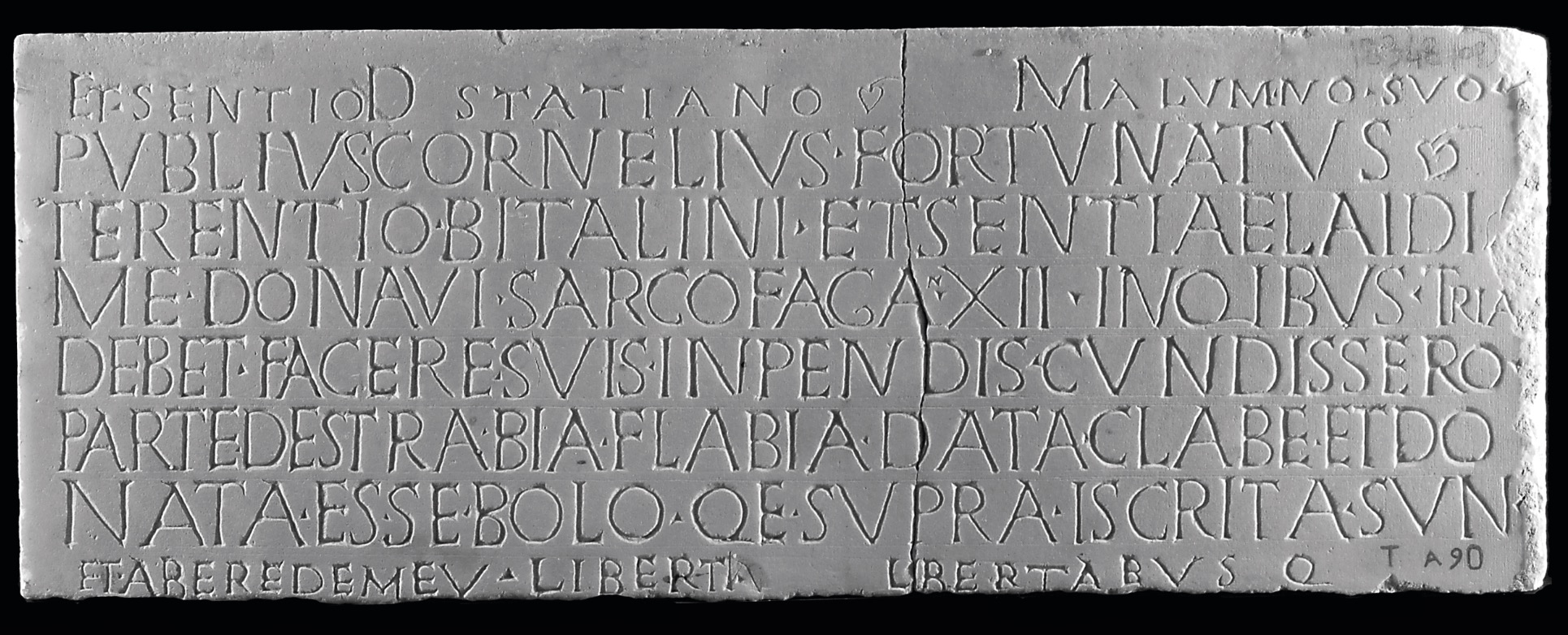
Inscription originally placed on the façade of Tomb 16, mentioning the “bia Flabia”
(Depositi Ostiensi)
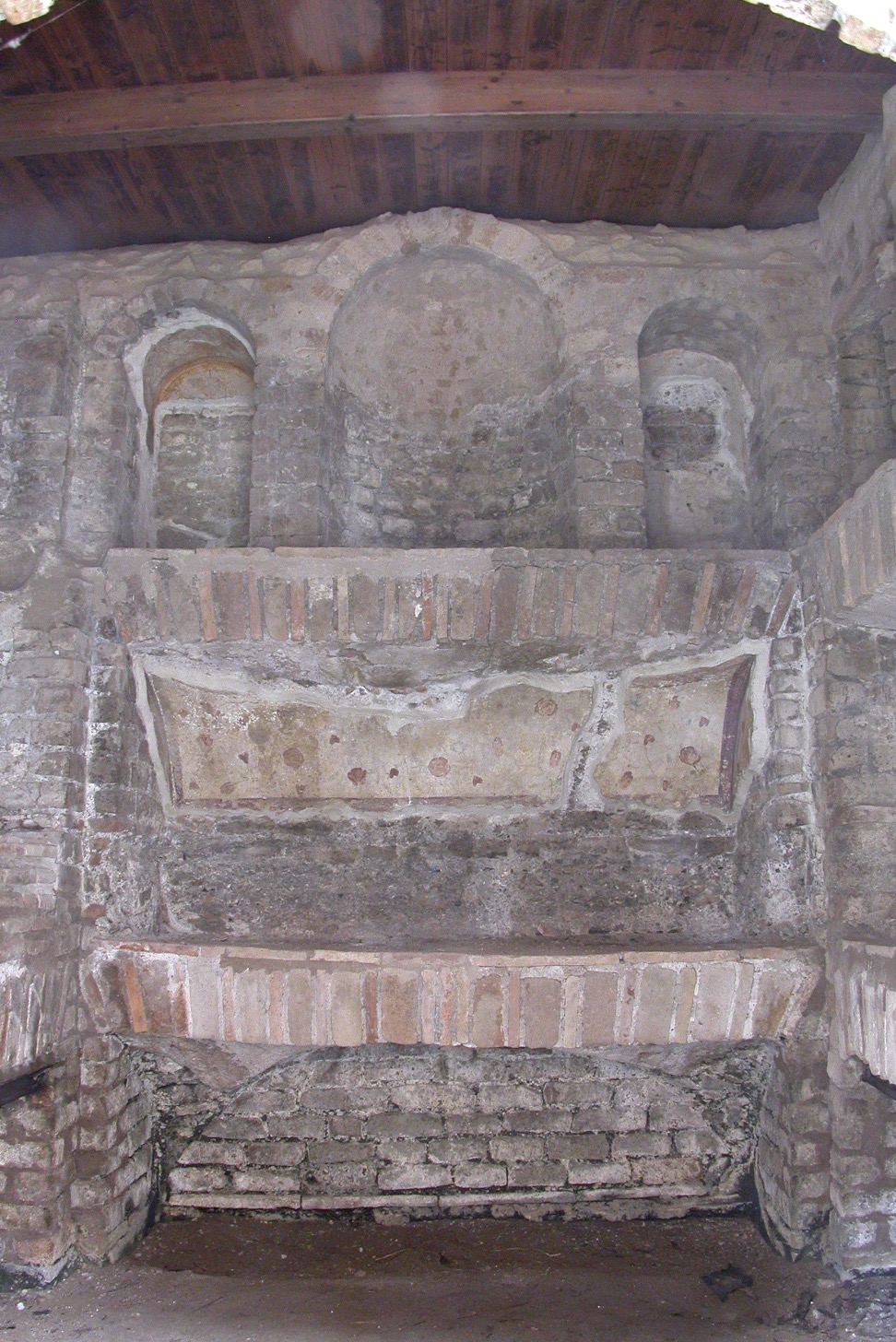
Upper arcosolium of the rear wall of Tomb 18
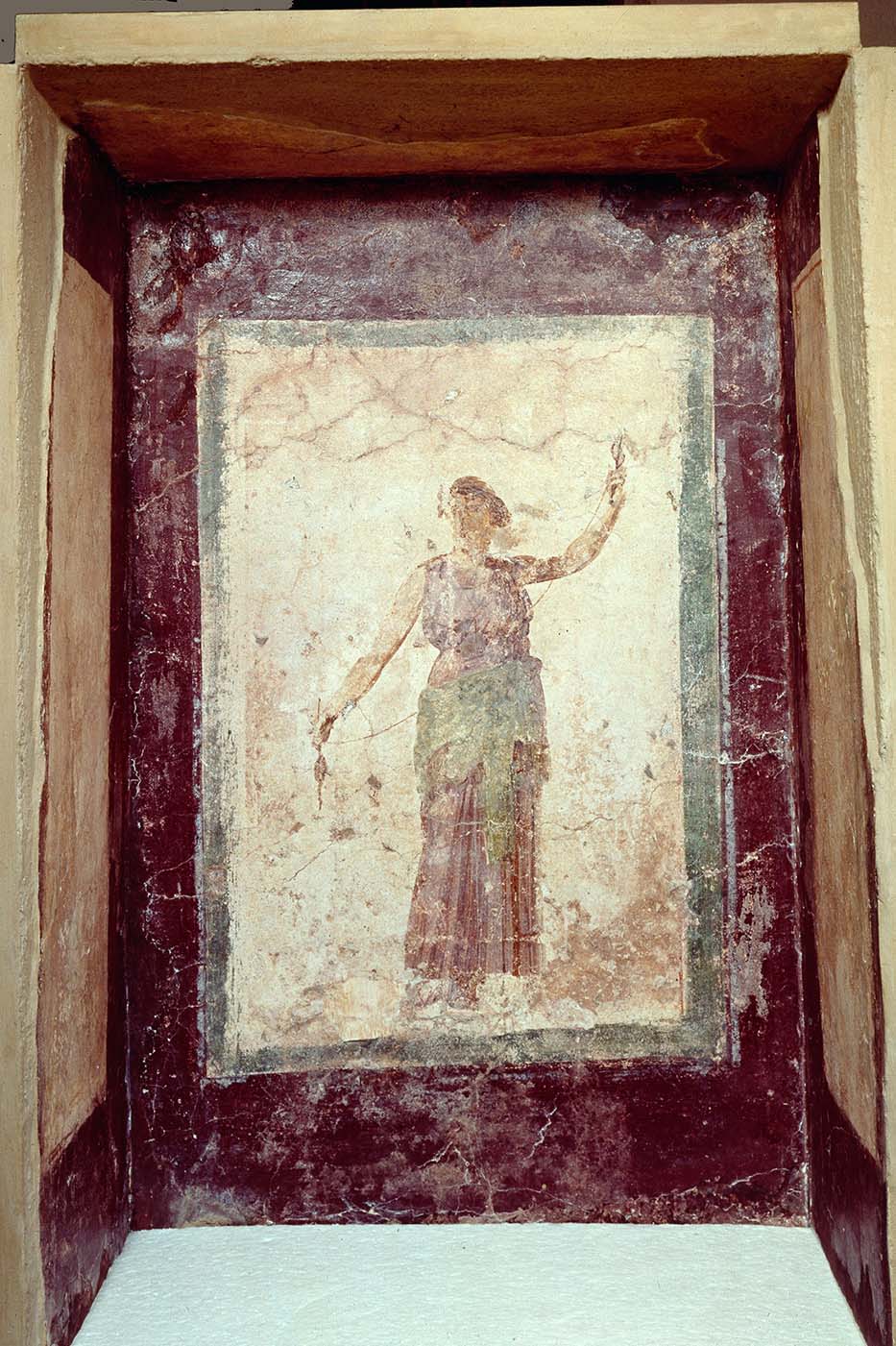
Painting depicting one of the Parcae (Clotho), discovered in Tomb 16
(Depositi Ostiensi)
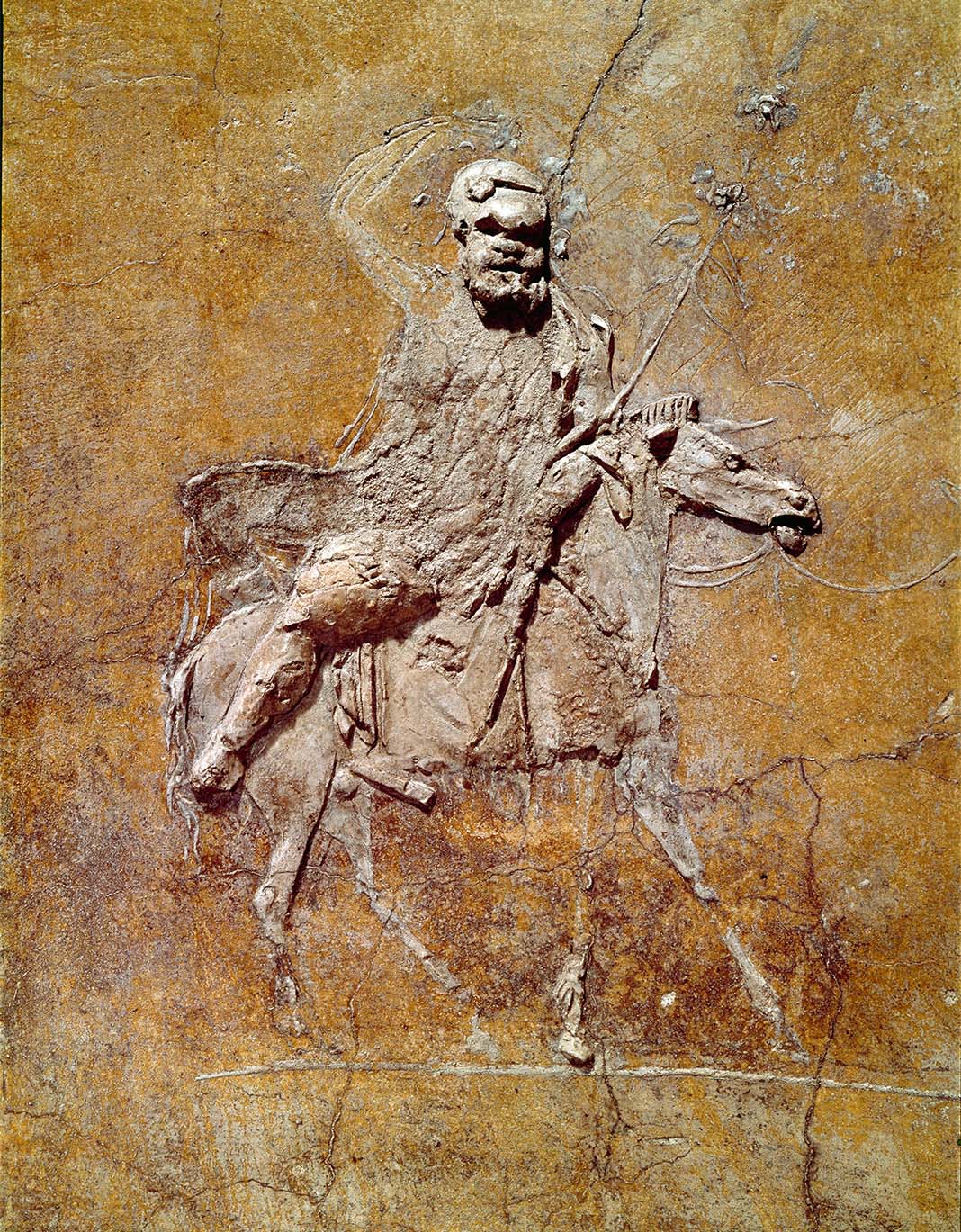
Detail of the niche with stucco decoration depicting a Silenus on a donkey in Tomb 16
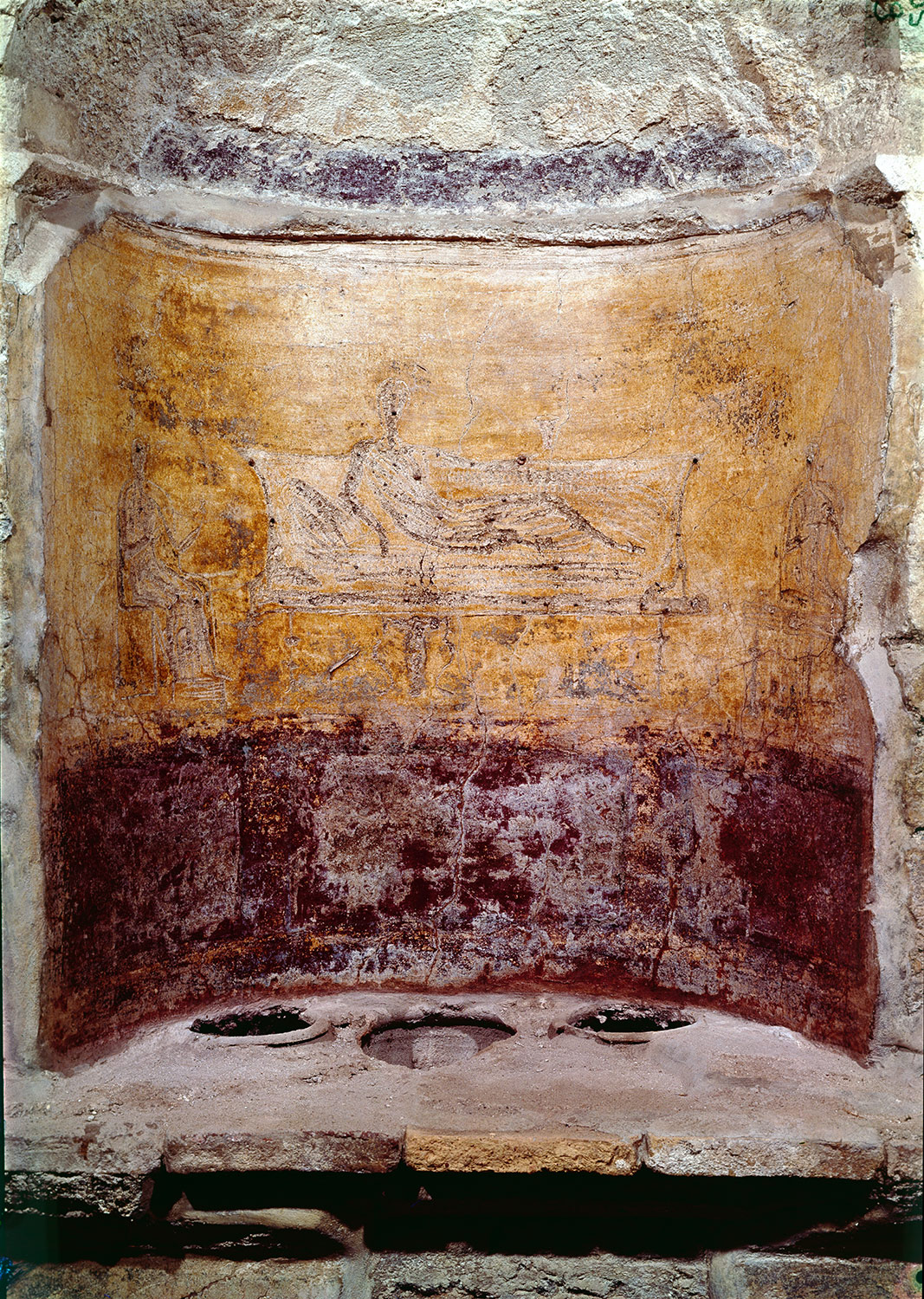
Detail of the niche with stucco decoration depicting a funeral banquet in Tomb 16