

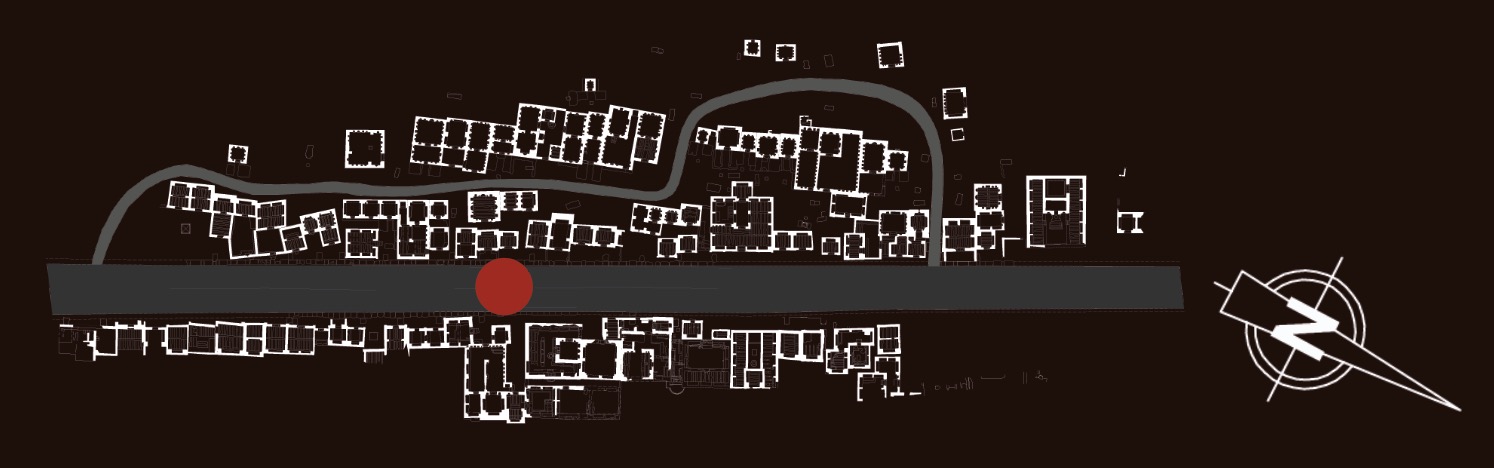
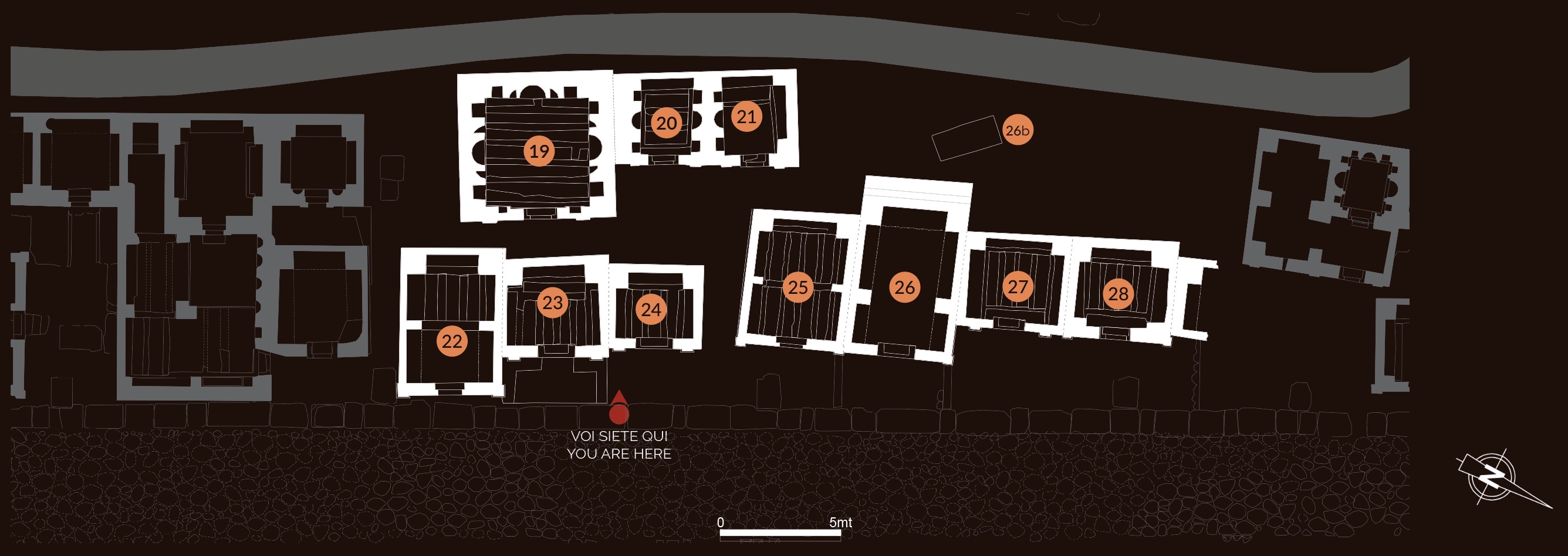
Tomb 19: cella-type tomb; the interior was carefully plastered with a rich painted decoration. Dating: mid-2nd century AD. Tombs 20 and 21: cella-type tomb; their façades have slits, terracotta cornices and recesses for the epigraphs framed by marble semi-capitals. The interior articulation was dictated by the presence of the mixed-ritual. Dating: 160-170 AD.
Tomb 22, 23, and 24: subdivided by masonry partitions. Preparations for the funeral banquet (chair and table support) were placed against Tomb 23’s façade at a time after construction. Inside are interments with arcosolia and formae.. Dating: 200-210 AD.
Tomb 25: only interment was provided for here. From the rear wall, two peacocks emerge, in heraldic pose, placed to the sides of a vase. Dating: first decades of the 3rd century AD.
Tomb 26: the interior conserves arcosolia for the interred and, on the right wall, steps for the upper level. A small portico was added to the façade at a later time. The paintings in the arcosolia depicted scenes of different genre. The geometric motifs, rendered in false marble crustae (lining), were done in the Age of Constantine (306-363 AD). Dating: late 2nd-early 4th century AD.
Tombs 27 and 28: used only for interment, with arcosolia and formae on two levels.
Dating: late 2nd- century AD.
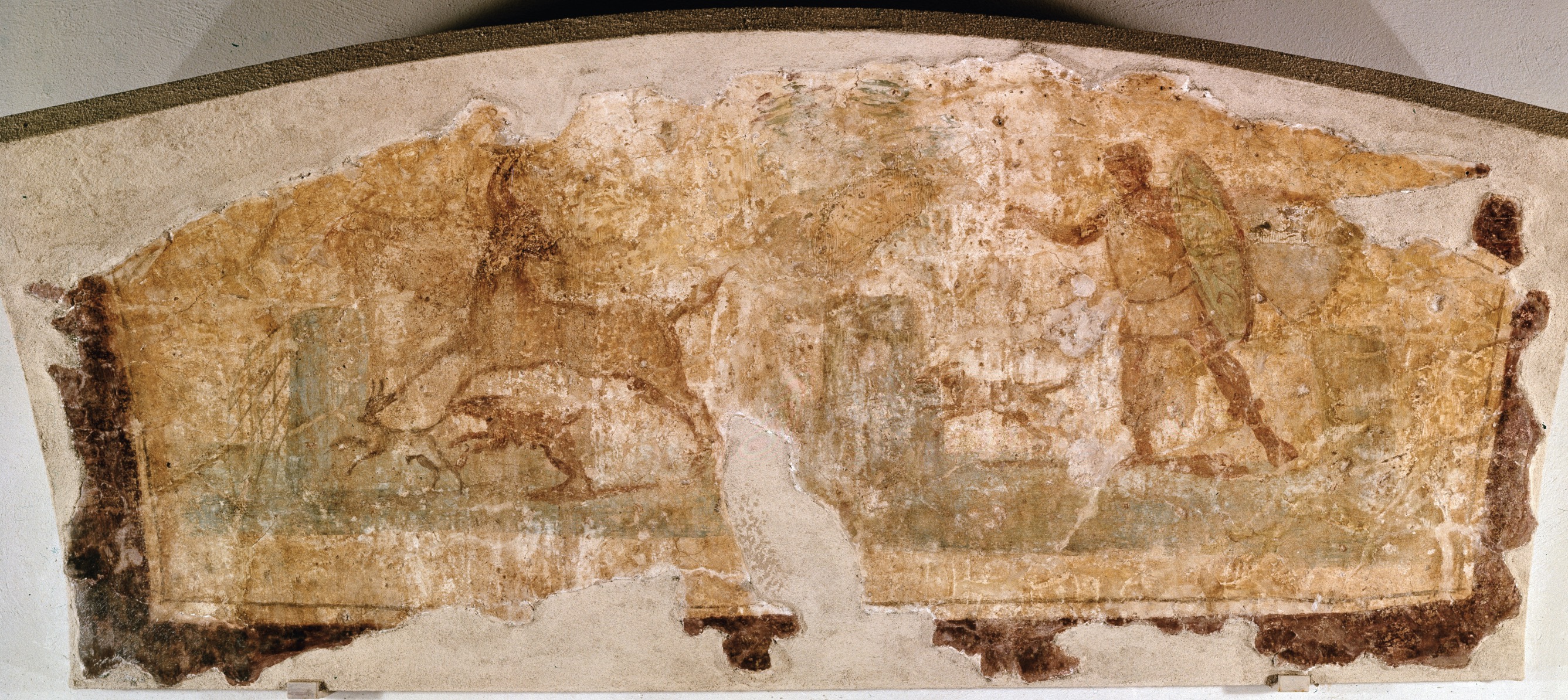
Tomb 24 arcosolium with hunting scene
(Depositi Ostiensi)
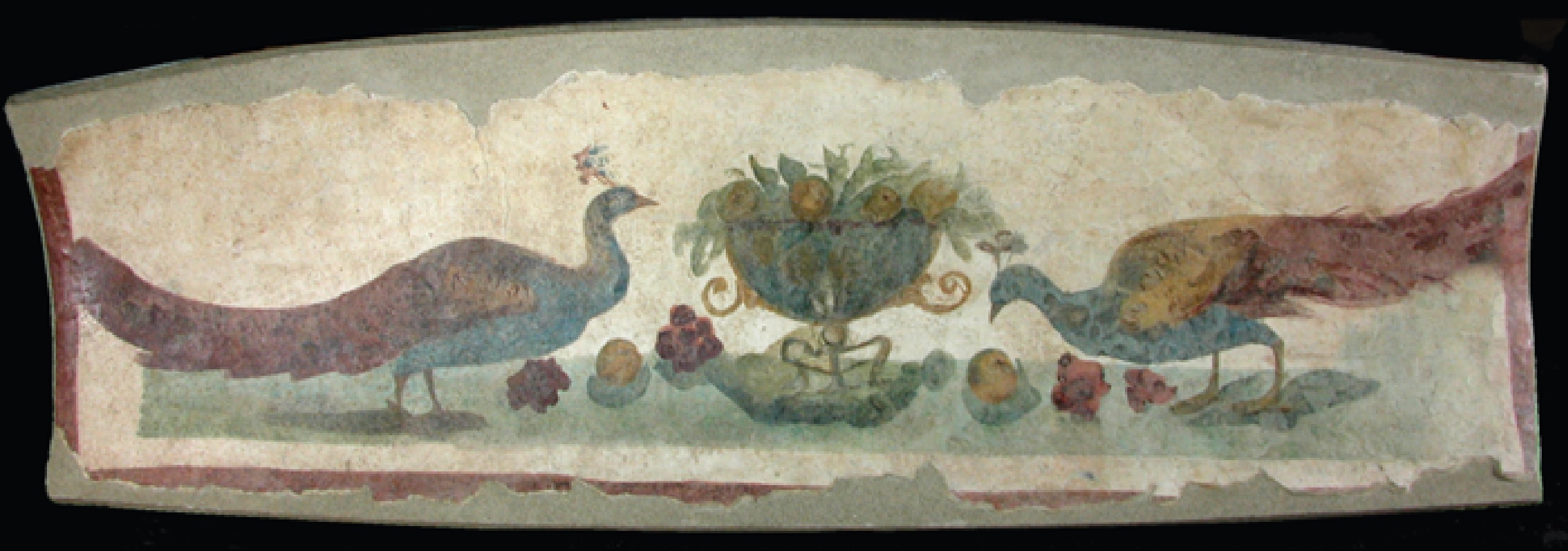
Tomb 25 arcosolium with peacocks
(Depositi Ostiensi)
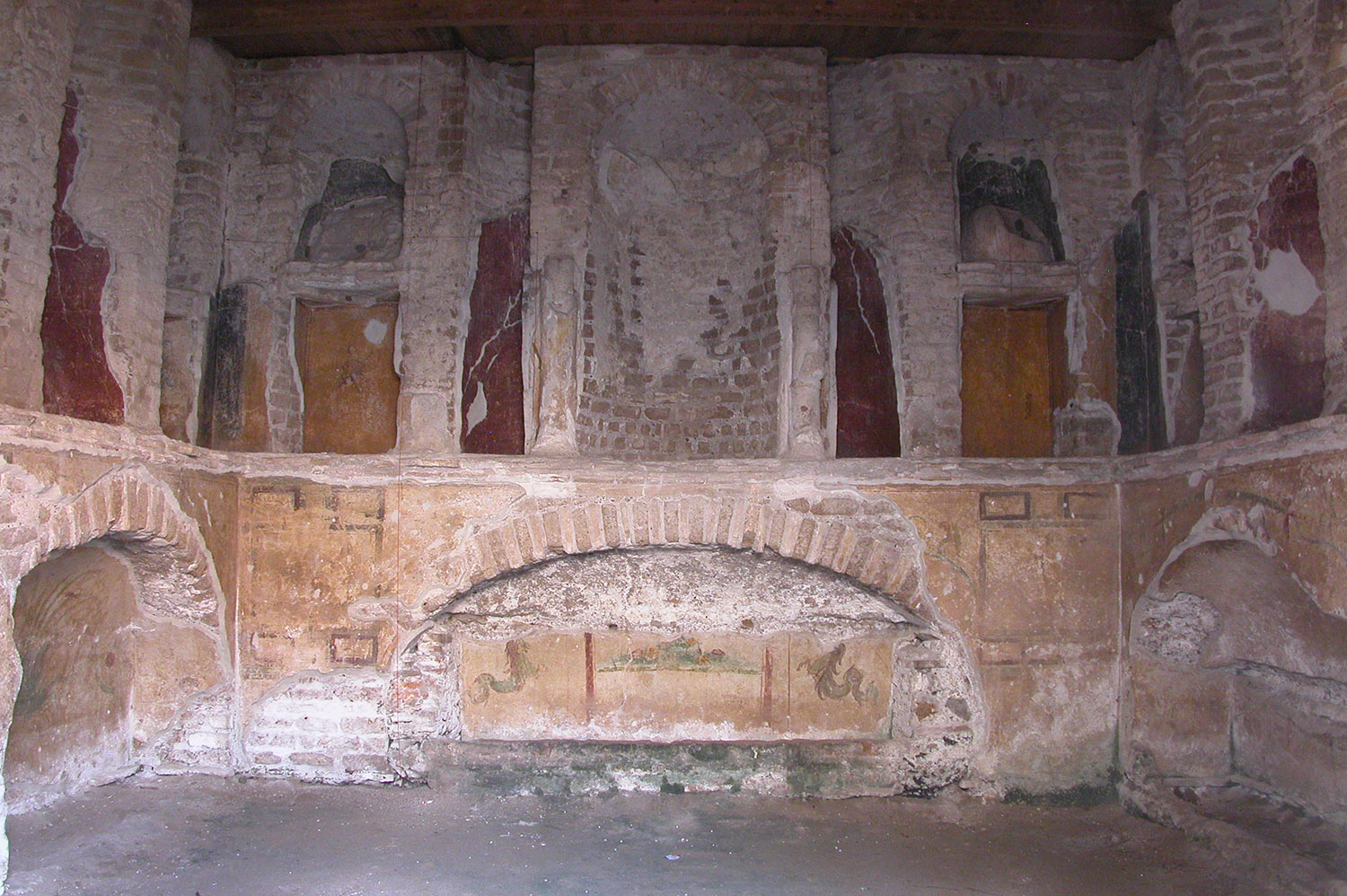
Interior view of Tomb 19
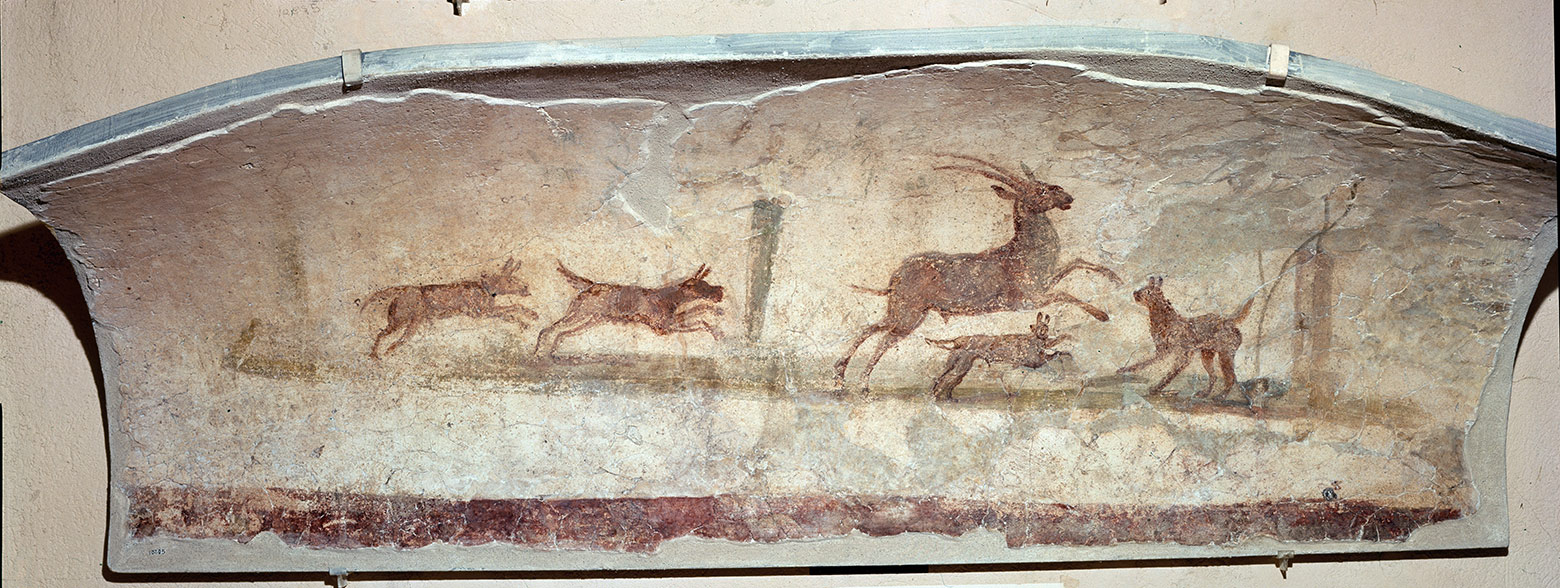
Tomb 26 arcosolium with hunting scene
(Depositi Ostiensi)