

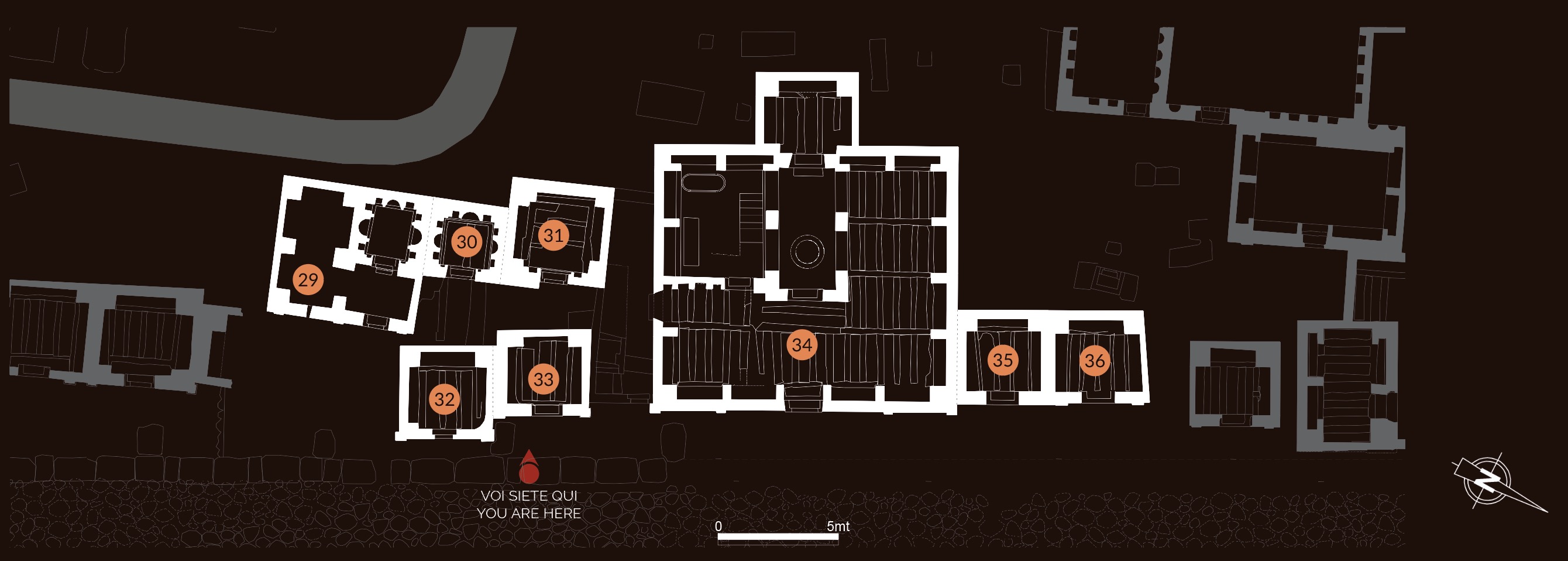
Tomb 29: a cella-type tomb with an L-shaped enclosure and upper level built at a later time. On the façade are copies of fictile reliefs with scenes related to activities connected to the production and sale of iron utensils, alluding to the profession practised by the deceased during life. The inscription gives the name of the owners, the instructions on the tomb’s use and the size of the cella, intended for the mixed ritual. Dating: AD 140-180.
Tombs 30 and 31: cella-type tombs, they conserve the masonry klinai (beds) set against the two façades; infixed into Tomb 30’s façade were amphorae in travertine to the sides of the inscription, and a fictile relief with a water carrier. The interior was organized for the mixed ritual. The depiction of Serapis is conserved in situ. Dating: 160-170 AD.
Tomb 31: the interment ritual prevails with arcosolia decorated by paintings. Dating: late 2nd century AD.
Tombs 32 and 33: they are on a level higher than the road. Intended for the interment ritual, they are dated to between the late 2nd and the early 3rd century AD.
Tomb 34: destined for burial rite, presents a large enclosure at the back of which the cella is placed. From the tomb comes a sarcophagus with a scene of lions mauling deer, now placed along the road. The arcosolia were variously decorated. Dating: late 2nd – early 3rd century AD.
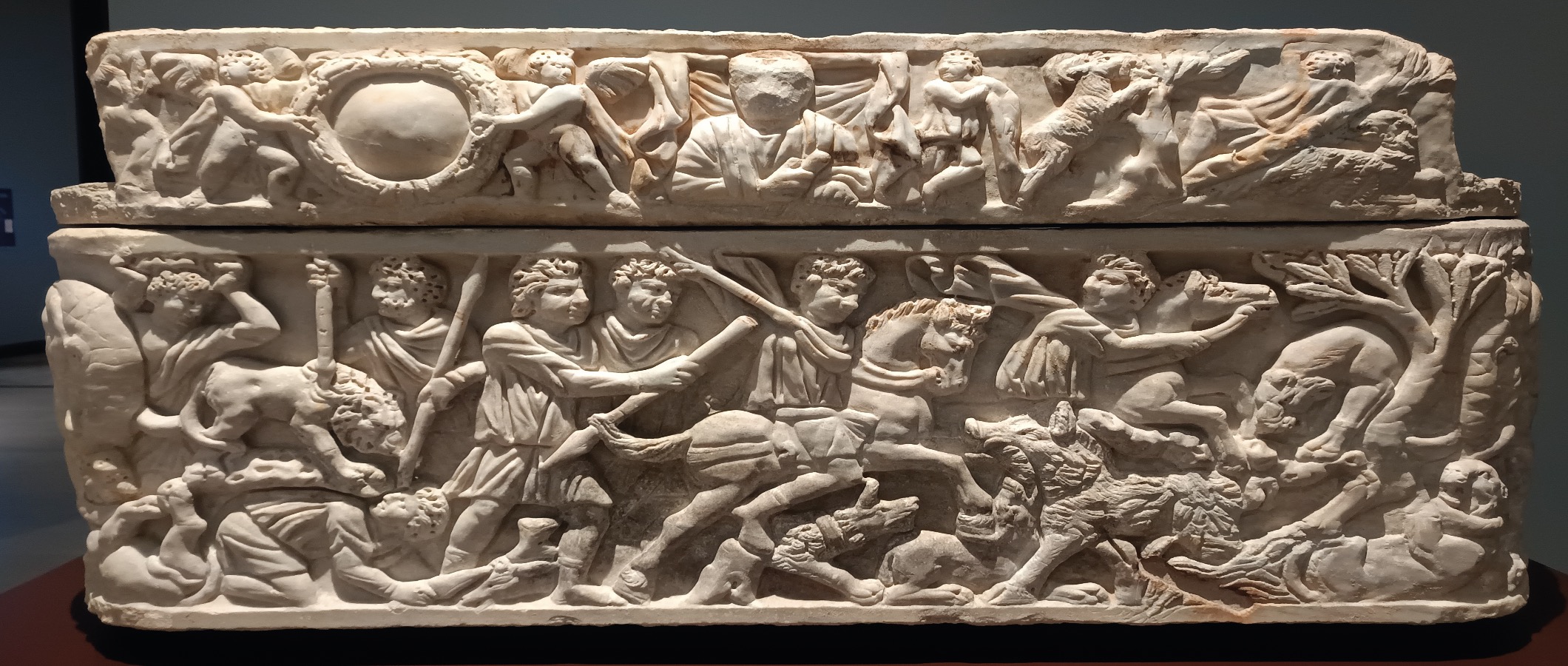
Sarcophagus with hunting scene from Tomb 34
(Museo Ostiense)
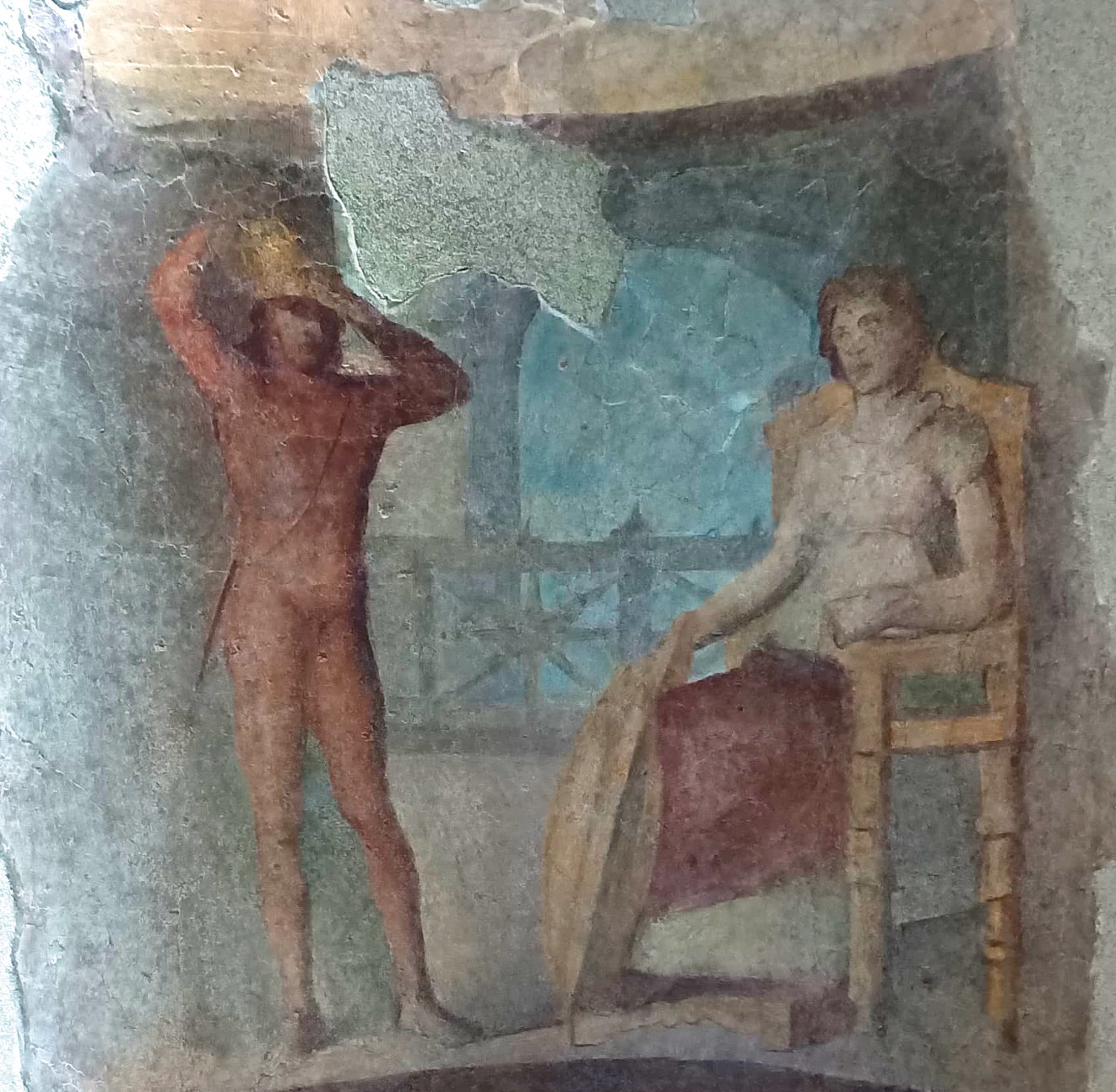
Niche painted with Mars and Venus from Tomb 30
(Depositi Ostiensi)
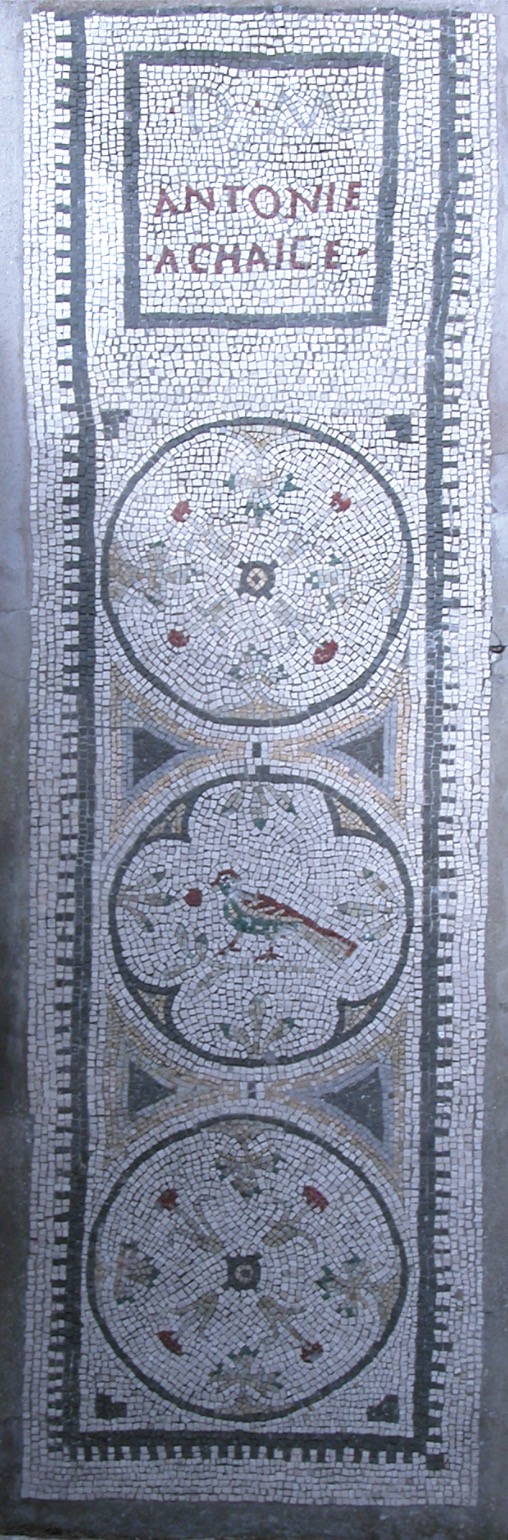
Polychrome mosaic with dedication to Antonia Achaice, presumably belonging to tomb 30
(Depositi Ostiensi)
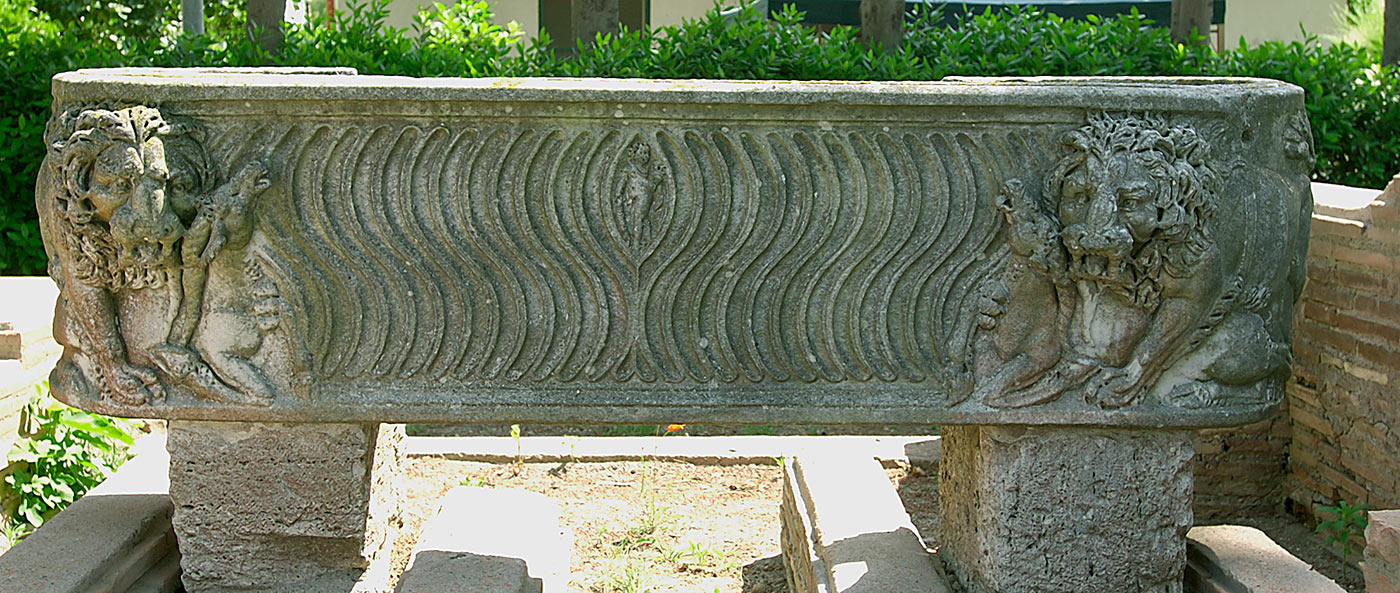
Sarcophagus with depiction of lion mauling a deer, now placed at the entrance of the Necropolis
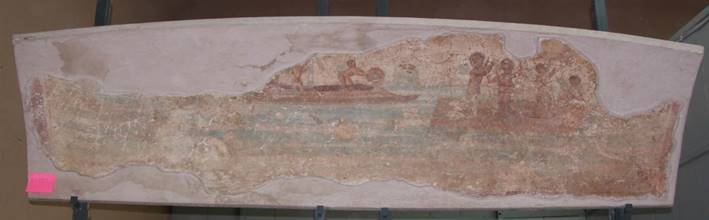
Arcosolium with depiction of cherubs in a marsh environment, from Tomb 34
(Depositi Ostiensi)
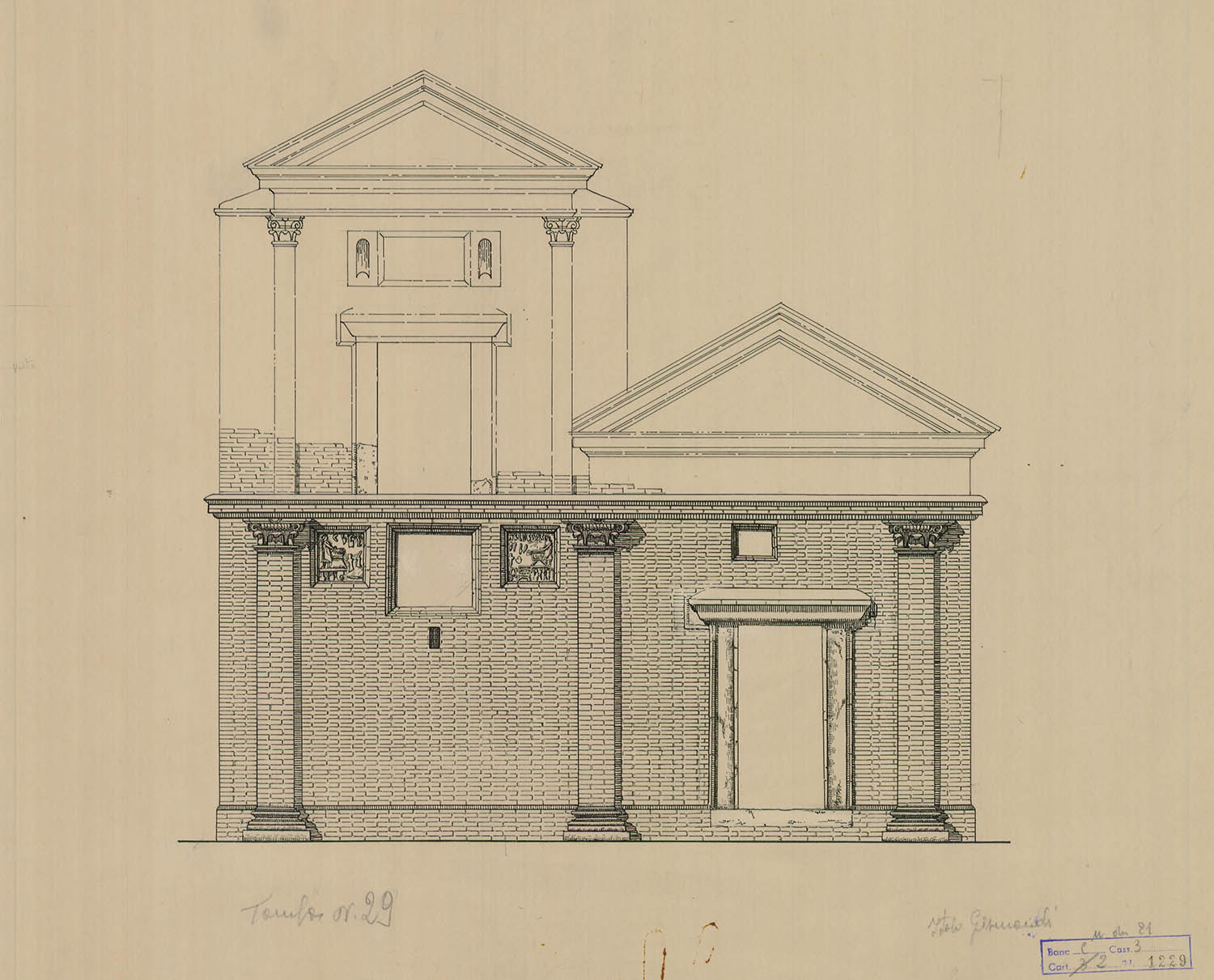
Reconstruction of the prospect of Tomb 29
(I. Gismondi)