

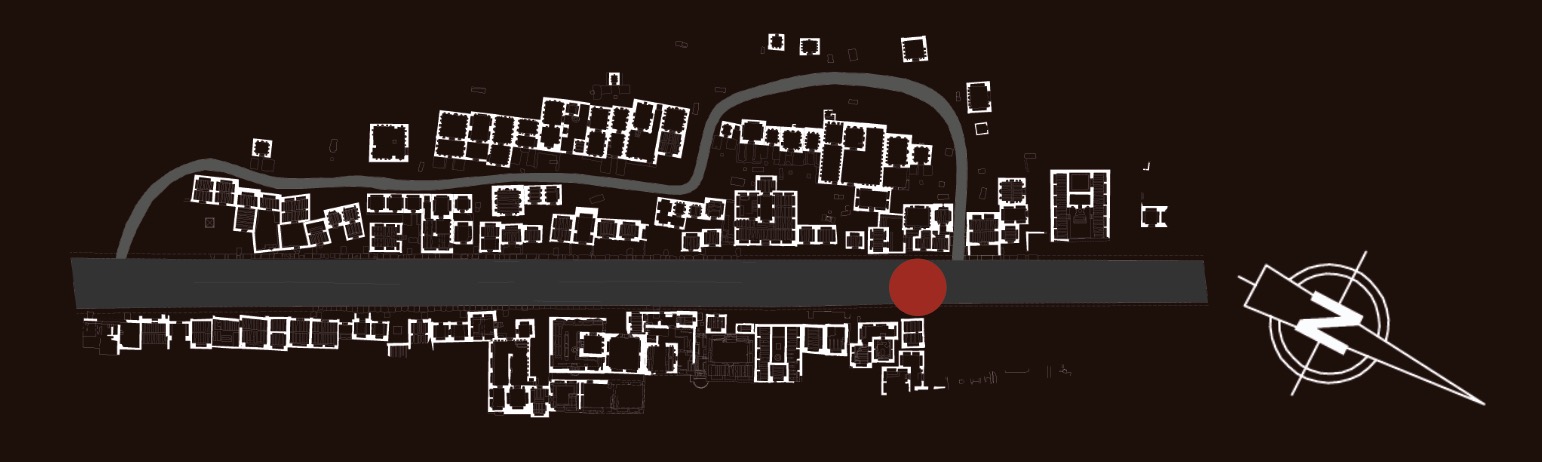
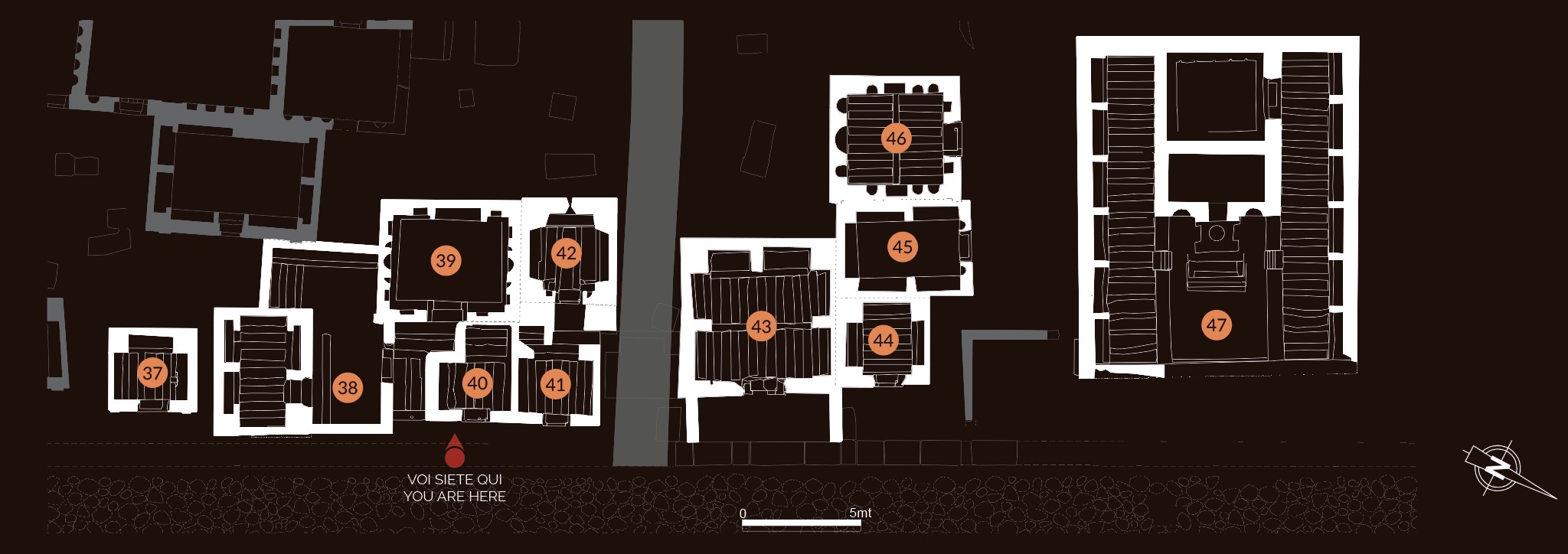
Tomb 37: cella-type tomb; was intended for the interment ritual with arcosolia and formae. Dating: 2nd – 3rd century AD.
Tomb 38: cella-type tomb, with enclosure and probable upper level; had a side entrance. It is placed over previous burials and is organized for the interment ritual. A Christian funerary inscription was reused in a later period as a floor slab. Dating: 2nd – 3rd century AD.
Tombs 39-42: the last three are the result of later elements added to the older Tomb 39, a cella-type tomb set up for the mixed ritual. Dating: ca. 160 AD.
Tomb 41: intended for interment, it conserves part of the arcosolia’s still-life painted decoration. Dating: 190-220 AD.
Tomb 42: cella-type tomb; the lower level, with rich pictorial decoration, is organized for the mixed ritual. A stairway provided access to the upper level where the cella, set up for interment, conserves a mosaic floor into which has been inserted an emblema (mosaic picture) with a wicker basket, at the sides of which two doves are facing each other. Dating: late 2nd century AD
Tombs 43-46: the last one is the oldest (early 2nd century AD), oriented following a side path. Tomb 45, oriented like Tomb 46, is organized for the mixed ritual. Dating: second half of the 2nd century AD. The mosaic of the atrium of Tomb 43, whose inscription in Greek ‘ode pausylipos’ (this is the place that frees from sorrows) would reveal the allegorical meaning of the scene (the vessel arrives in port just as life reaches its end).
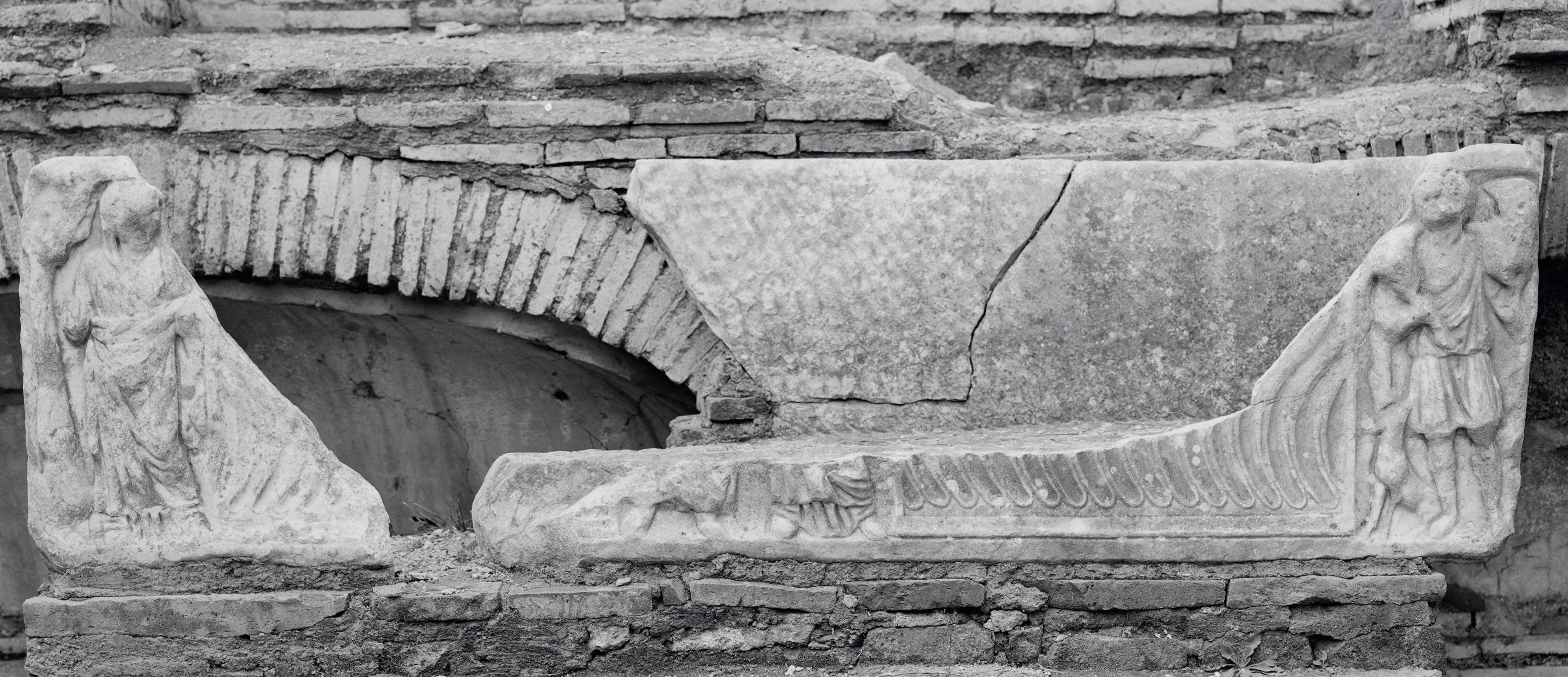
Strigilated sarcophagus from Tomb 39
(Depositi Ostiensi)
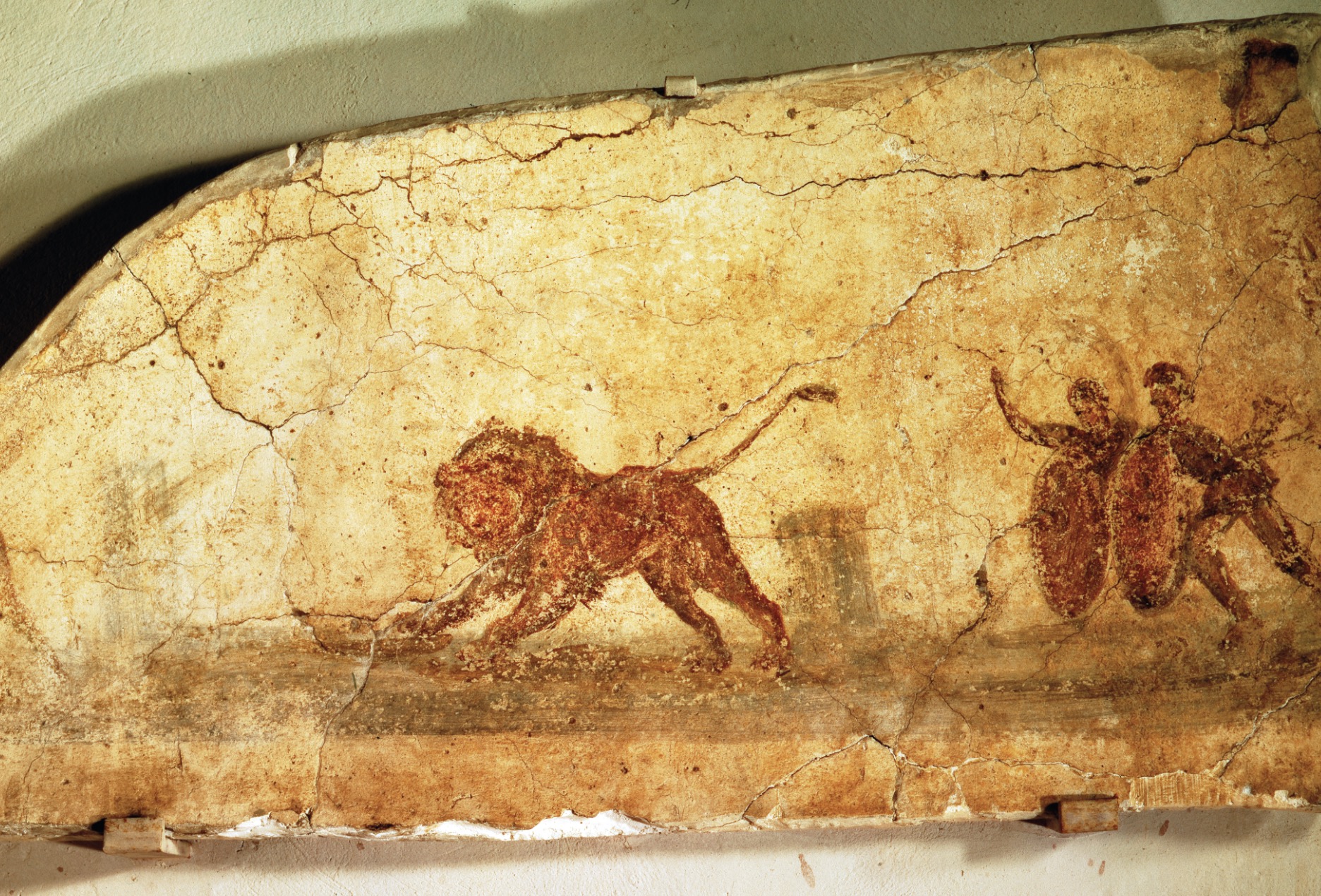
Arcosolium with a lion hunting scene from Tomb 43
(Depositi Ostiensi)
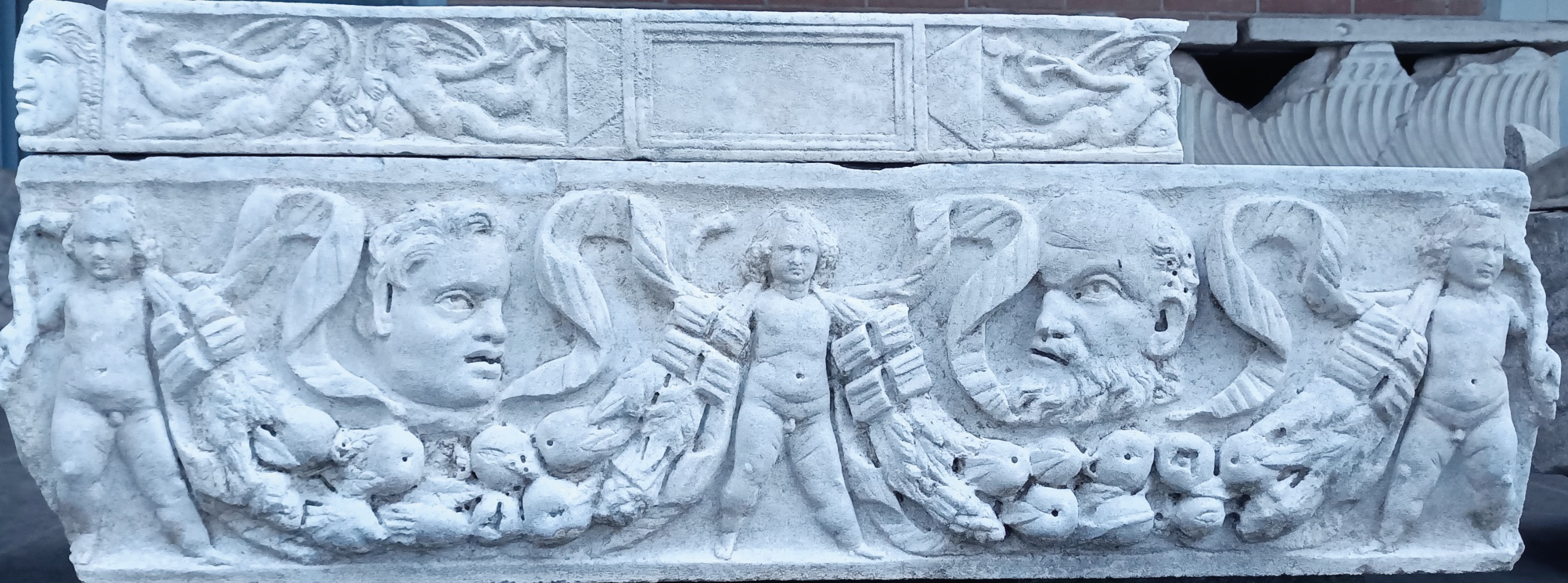
Sarcophagus with putti holding up wreaths, from Tomb 42
(Depositi Ostiensi)
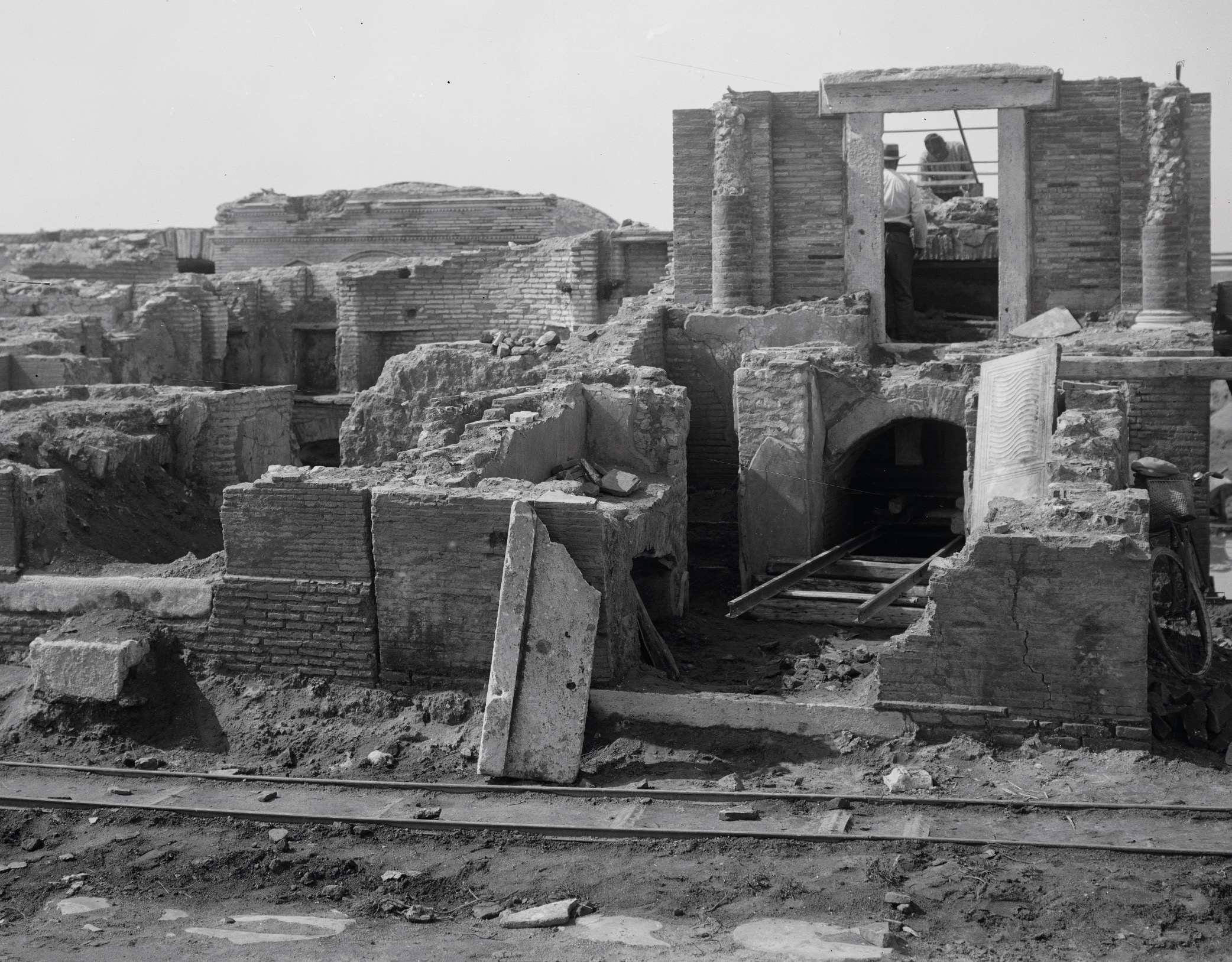
Historical photo of the western sector of the Necropolis during excavation (1939)
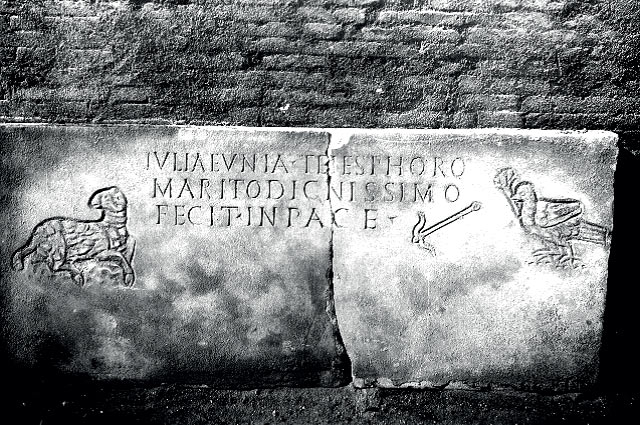
Christian funerary inscription, Tomb 38
(formerly at Depositi Ostiensi)