

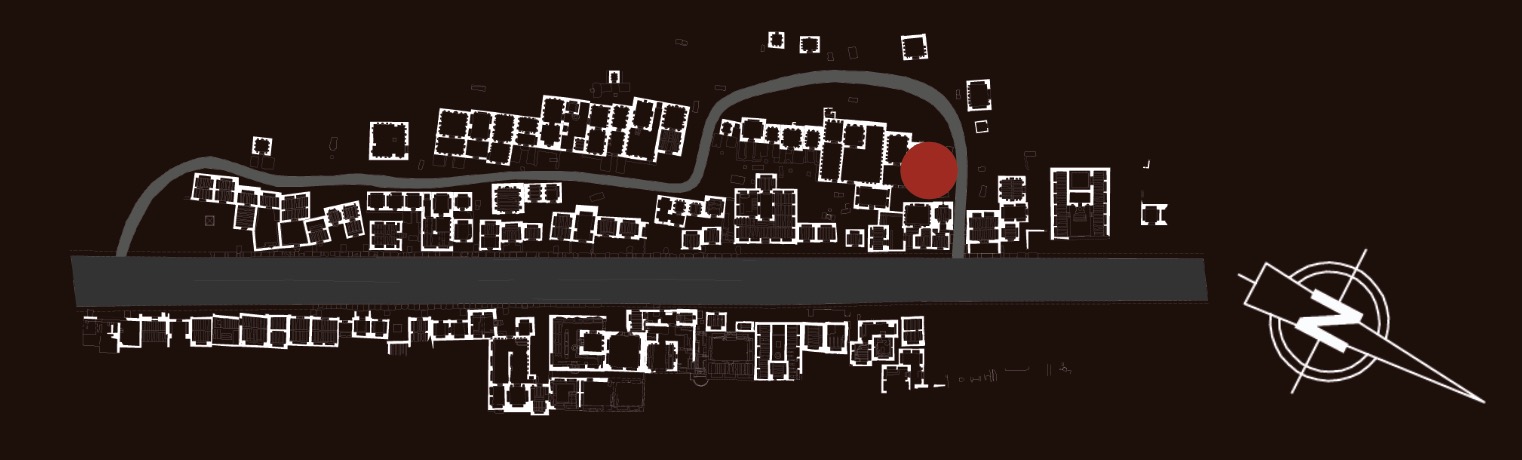
This area features various types of funerary buildings and so-called ‘poor’ simple tombs (over 600), mostly individual.
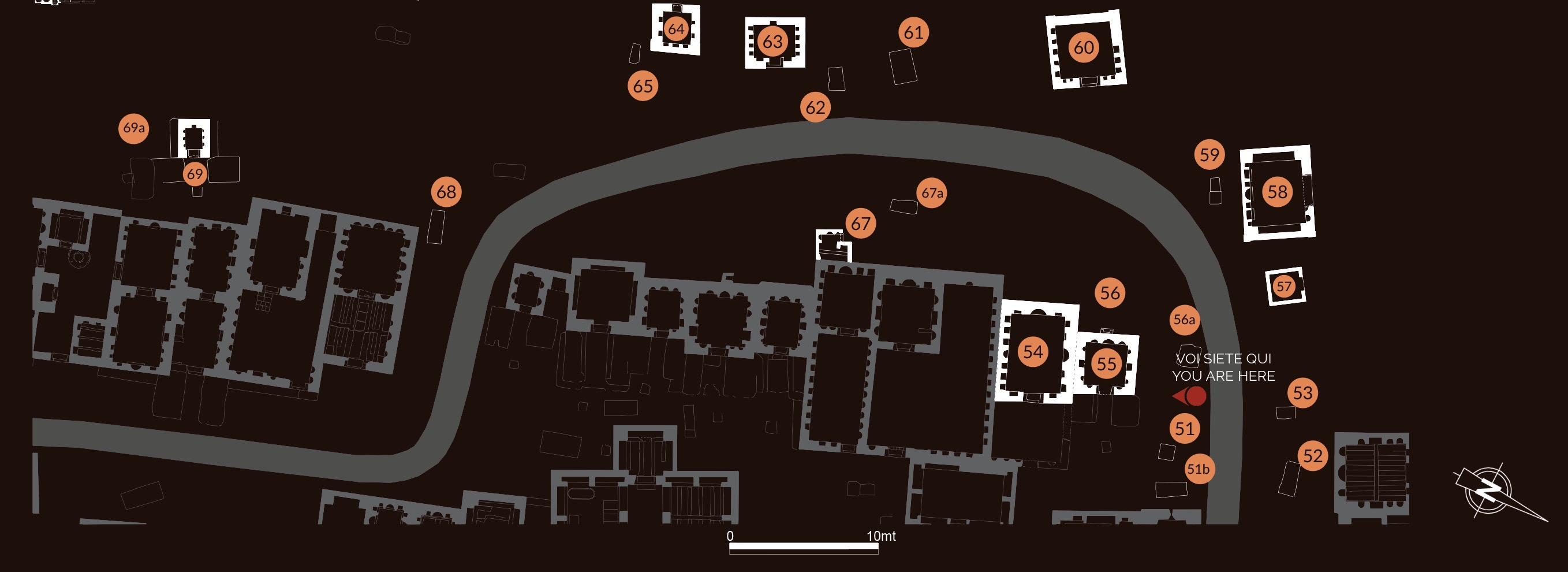
Tombs 54 and 55: cella-type tombs with preparations for banquets placed against the façades and interiors set up for the mixed ritual. In Tomb 54, dated to approximately 130 AD, the floor mosaic bears the name of the deceased (Titus Iulius Argius). Tomb 55 (138-192 AD), bore rich painted decoration, much of which detached.
Tomb 56: an aedicule tomb, it was reassembled at the back of Tomb 55, while it was originally placed against the northern wall. Alluding to the moment of death is the figure of the deceased framed by a half-opened door. Dating: mid-2nd century AD.
Tombs 57 and 58: cella-type tombs, the façades show a smaller diverticulum. The painted decoration of the first one was also done on the building’s exterior, while in the second one an arcosolium conserves the mosaic decoration. Dating: mid-2nd century AD.
Tombs 60, 63, 64, and 69: cella-type tombs intended for the cremation ritual. Beneath the niches of Tomb 63 are marble tablets upon which the names of the deceased were perhaps painted. As a unique case, Tomb 64 is oriented towards the sea, even though the inscription is affixed to the wall facing the road. Dating: first half of the 2nd century AD.
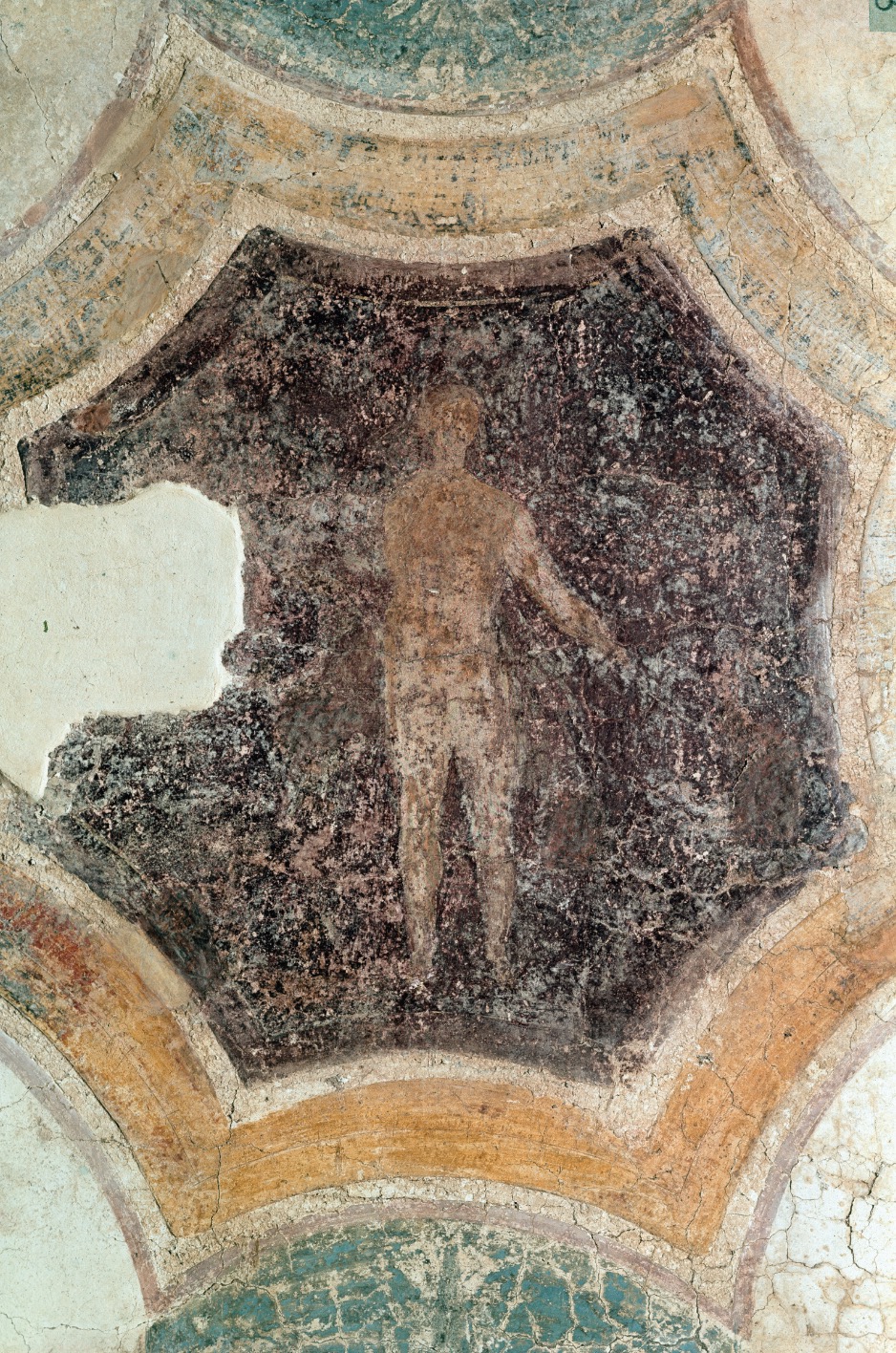
Painting with Maenad from tomb 55
(Depositi Ostiensi)
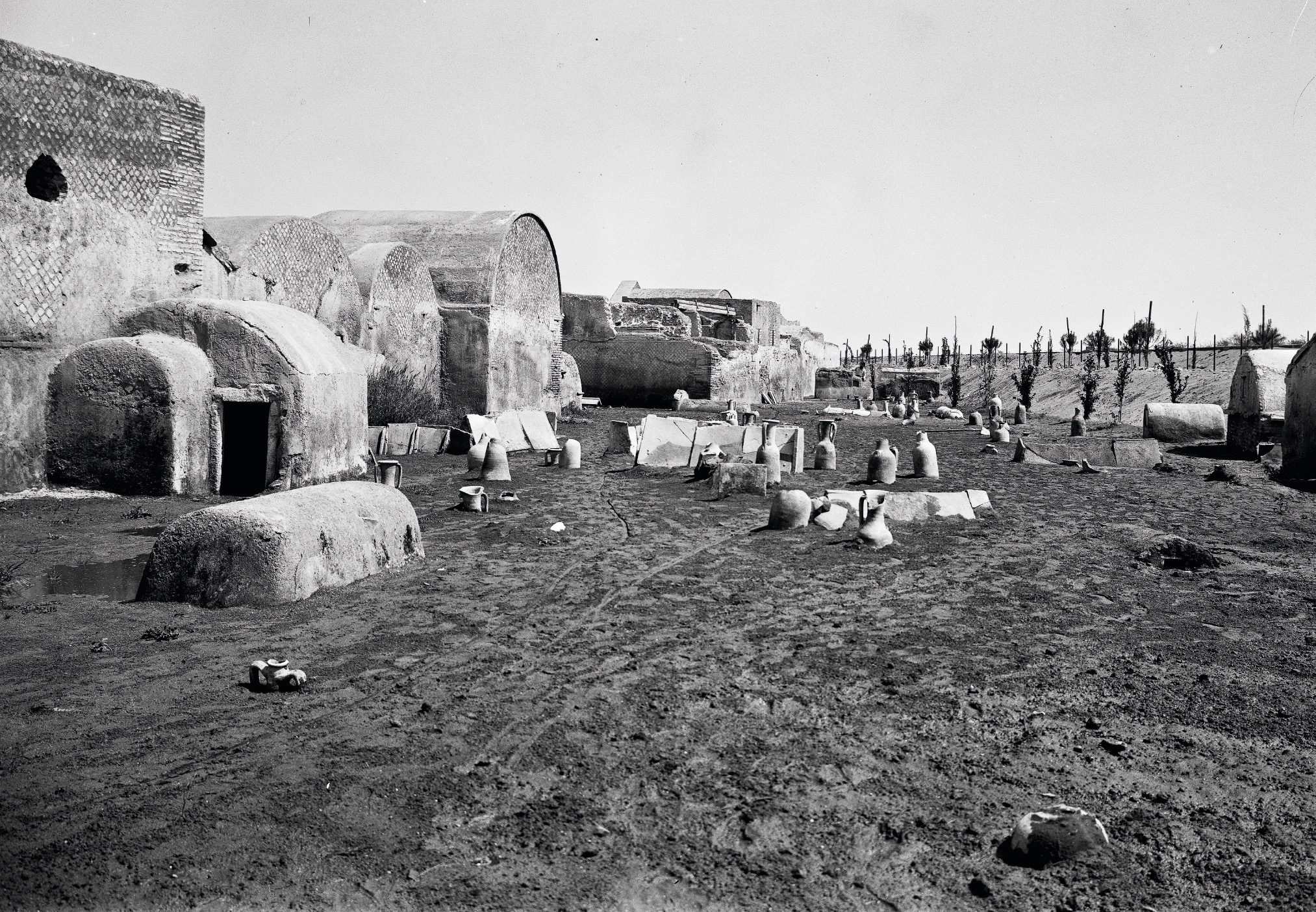
Historical photograph of the area called “campo dei poveri” (1939)
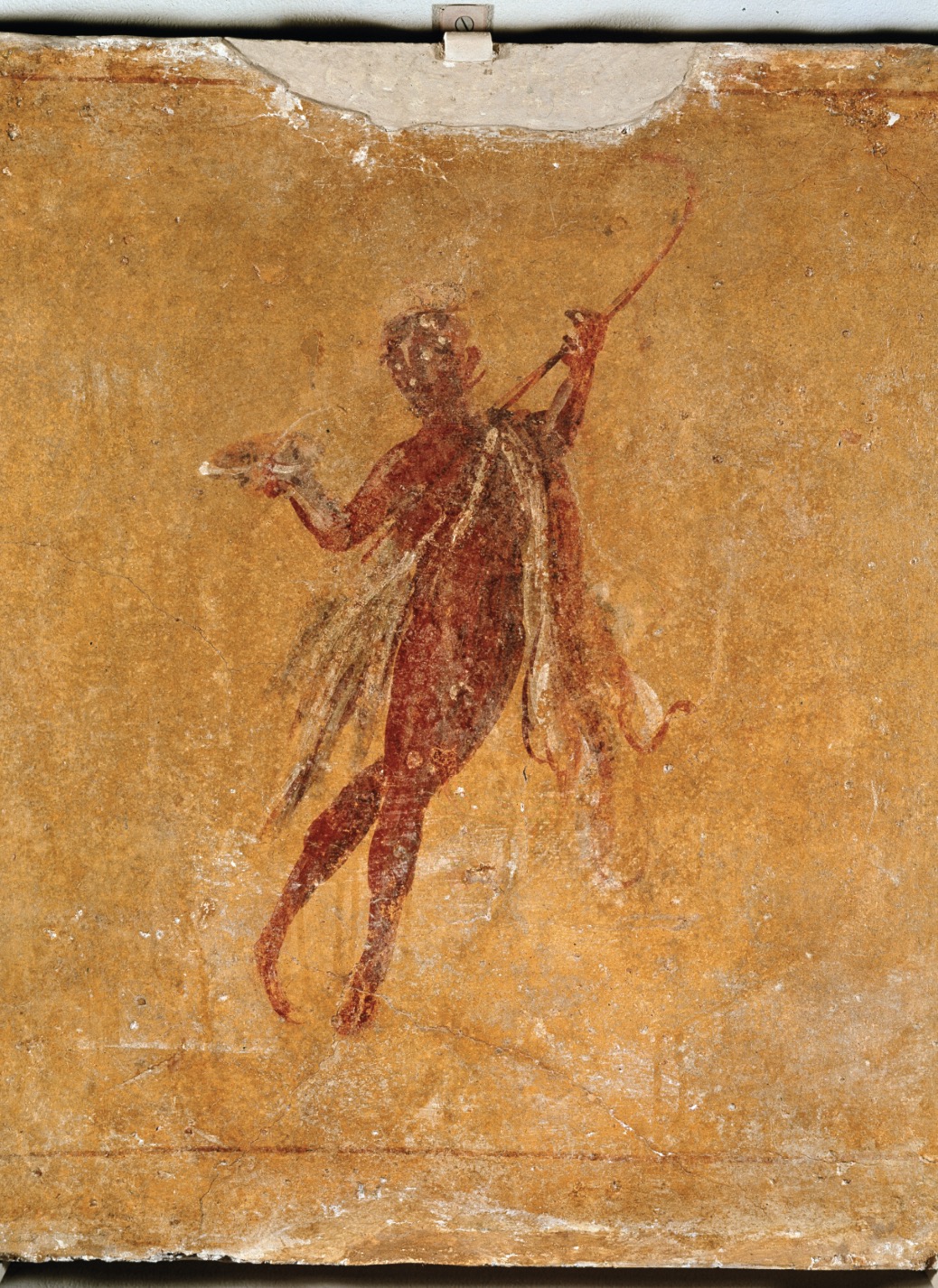
Painting with dancing satyr from Tomb 55
(Depositi Ostiensi)
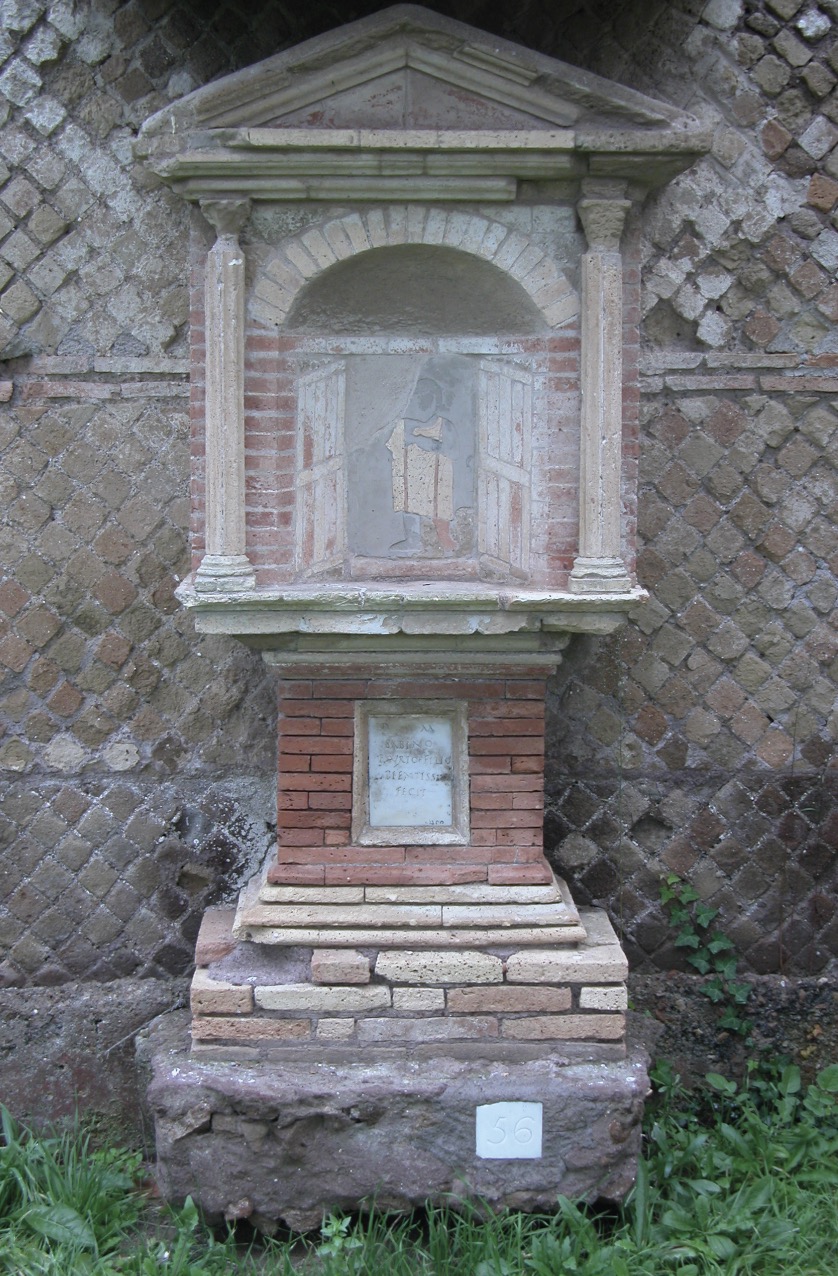
Tomb 56 niche with figure of a deceased man framed by a half-open door
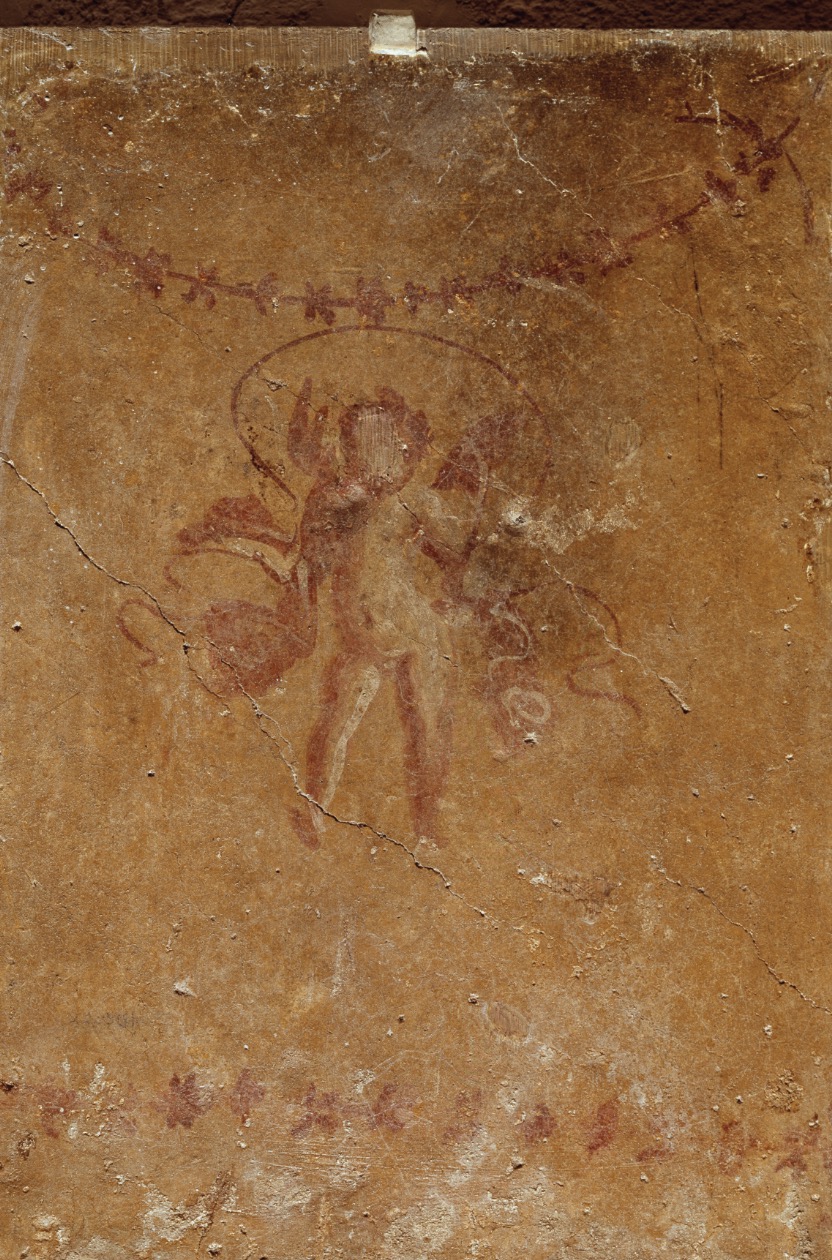
Niche with an erotin from Tomb 55
(Depositi Ostiensi)
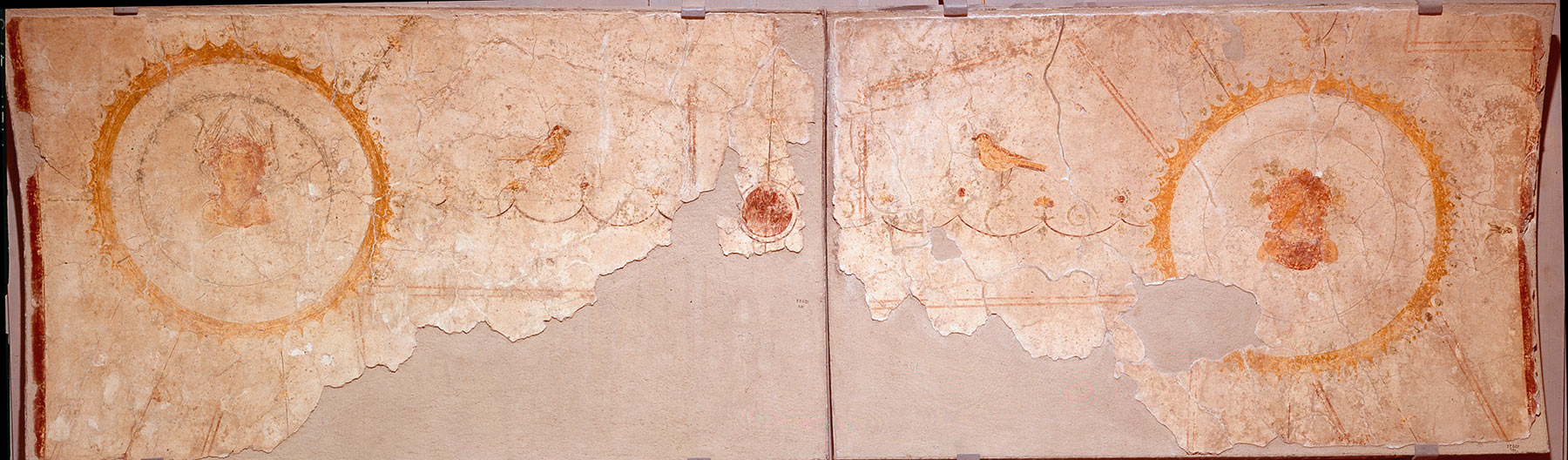
Painting of the Tomb 55 barrel vault with busts of seasons inside medallions
(Depositi Ostiensi)
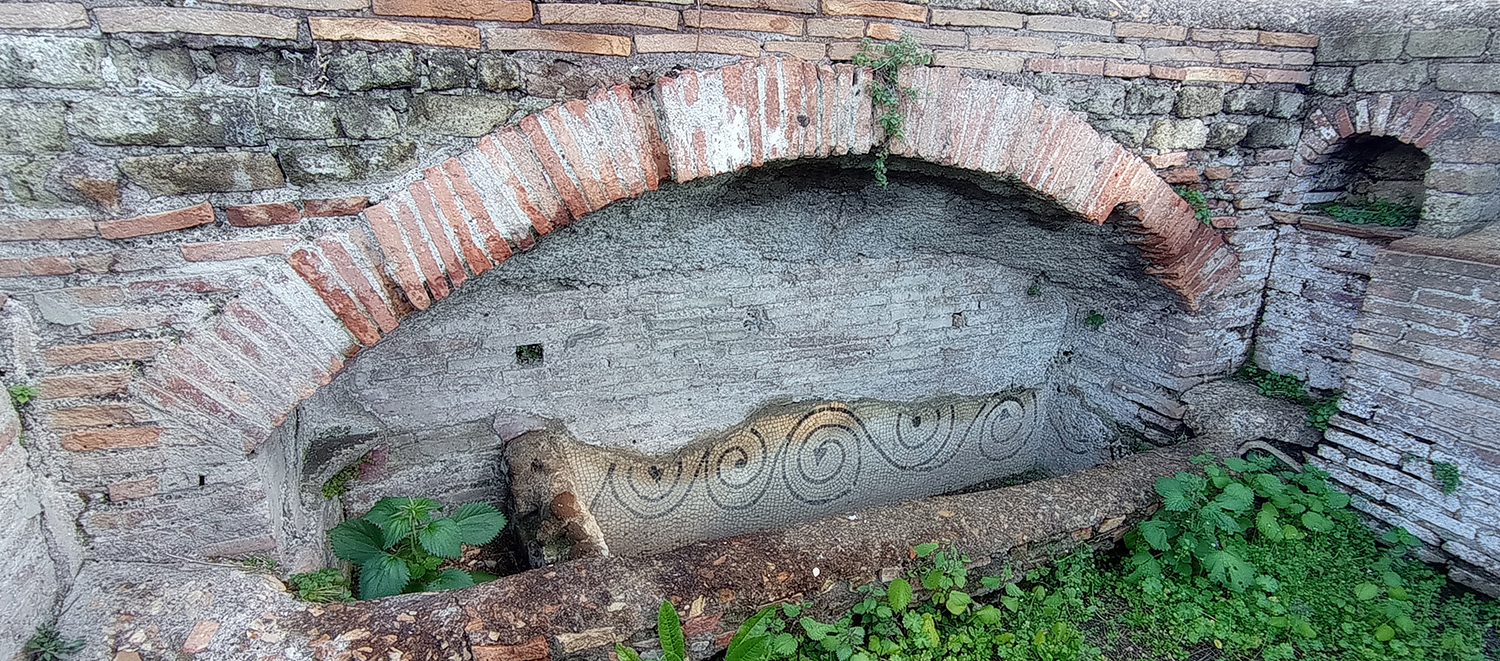
Tomb 58 arcosolium with mosaic decoration