

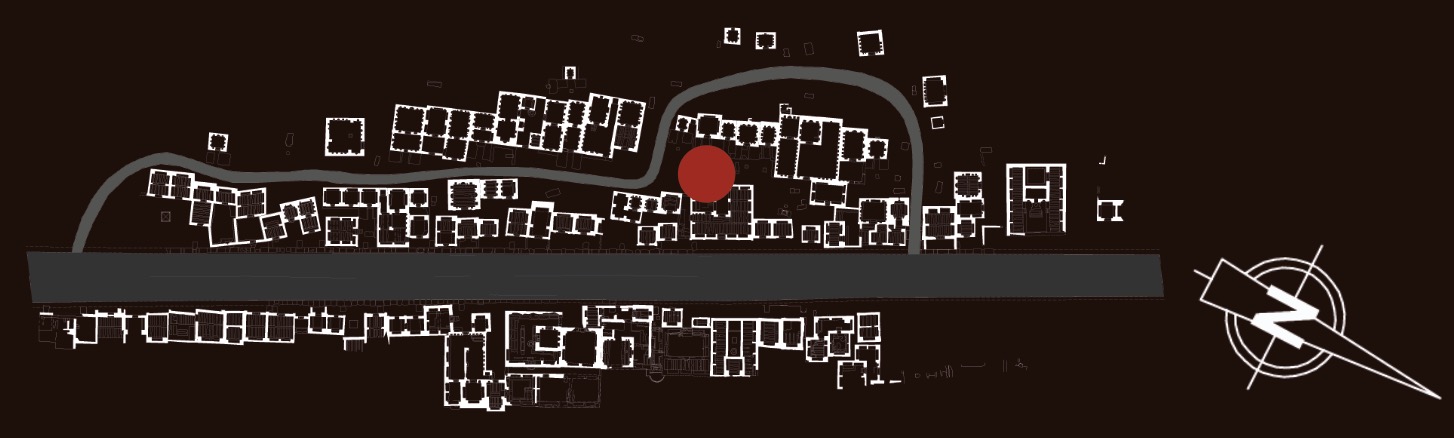
This sector’s current appearance is the result of later elements placed upon the older buildings and is characterized by the presence on the façade of masonry preparations for banquets.
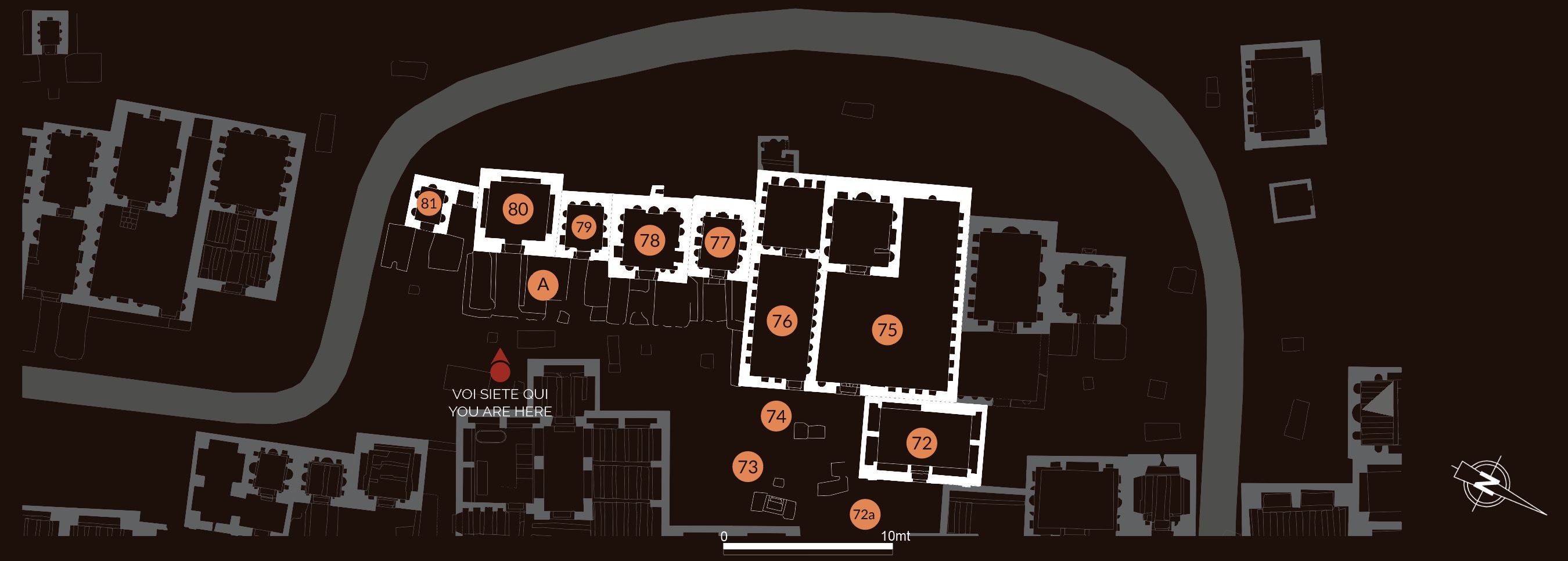
Tomb 72: the cella-type tomb, organized for the mixed ritual, has niches with ollas and arcosolia. Dating: 170-180 AD.
Tombs 72a and 73: these are included in the caisson tomb type, with red plaster lining and inscriptions on the main front.
Tomb 74: cube with pyramid roof.
Tombs 75 and 76: dated to between 110 and 140 AD, they were initially a single building, with cella placed in a large enclosure with central pit and roofed at the back. The walls are punctuated by niches containing ollas. The cremation ritual is attested in Tomb 75, and the mixed ritual in Tomb 76.
Tomb 77: cella-type tomb, intended for mixed ritual. Dating: 130-140 AD.
Tomb 78: cella-type tomb; the façade has clay reliefs with scenes of milling and transporting grain. The interior is organized for cremation. Dating: first half of 2nd century AD.
Tomb 79: cella-type tomb, initially intended for cremation. Paintings adorned the interior with depictions alluding to the passage of time. Dating: circa 130 AD.
Tomb 80: cella-type tomb, intended for the mixed ritual. Decorations, in mosaic and painting, with mythological themes are attested. Dating: circa 140 AD.
Tomb 81: small, cella-type tomb, originally used for cremation. On the right side, an entrance hall with oven may be seen. Dating: circa 120 AD.
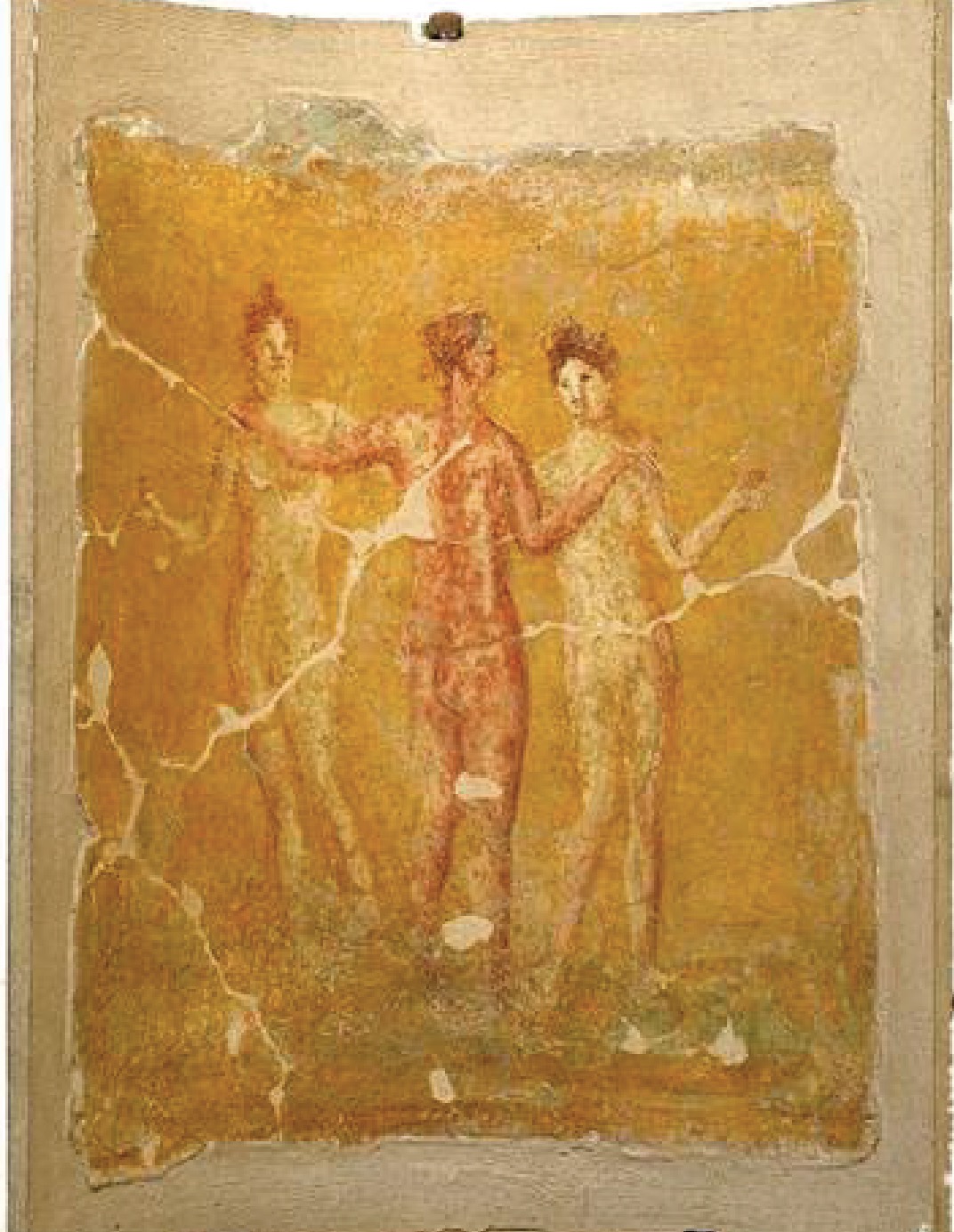
Tomb 77 niche the three Graces
(Depositi Ostiensi)
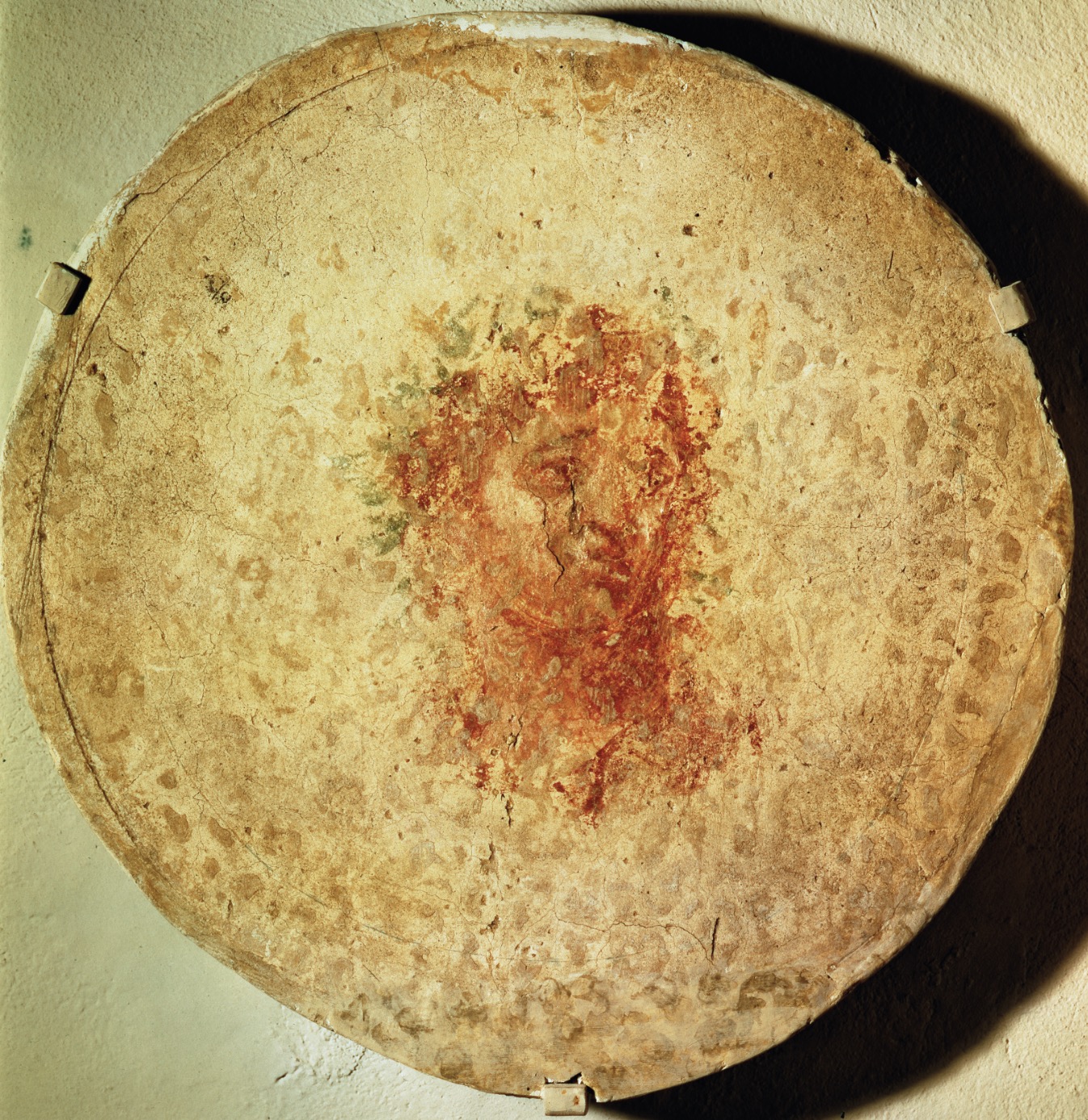
Tomb 79 ceiling tondo with personification of Spring
(Depositi Ostiensi)
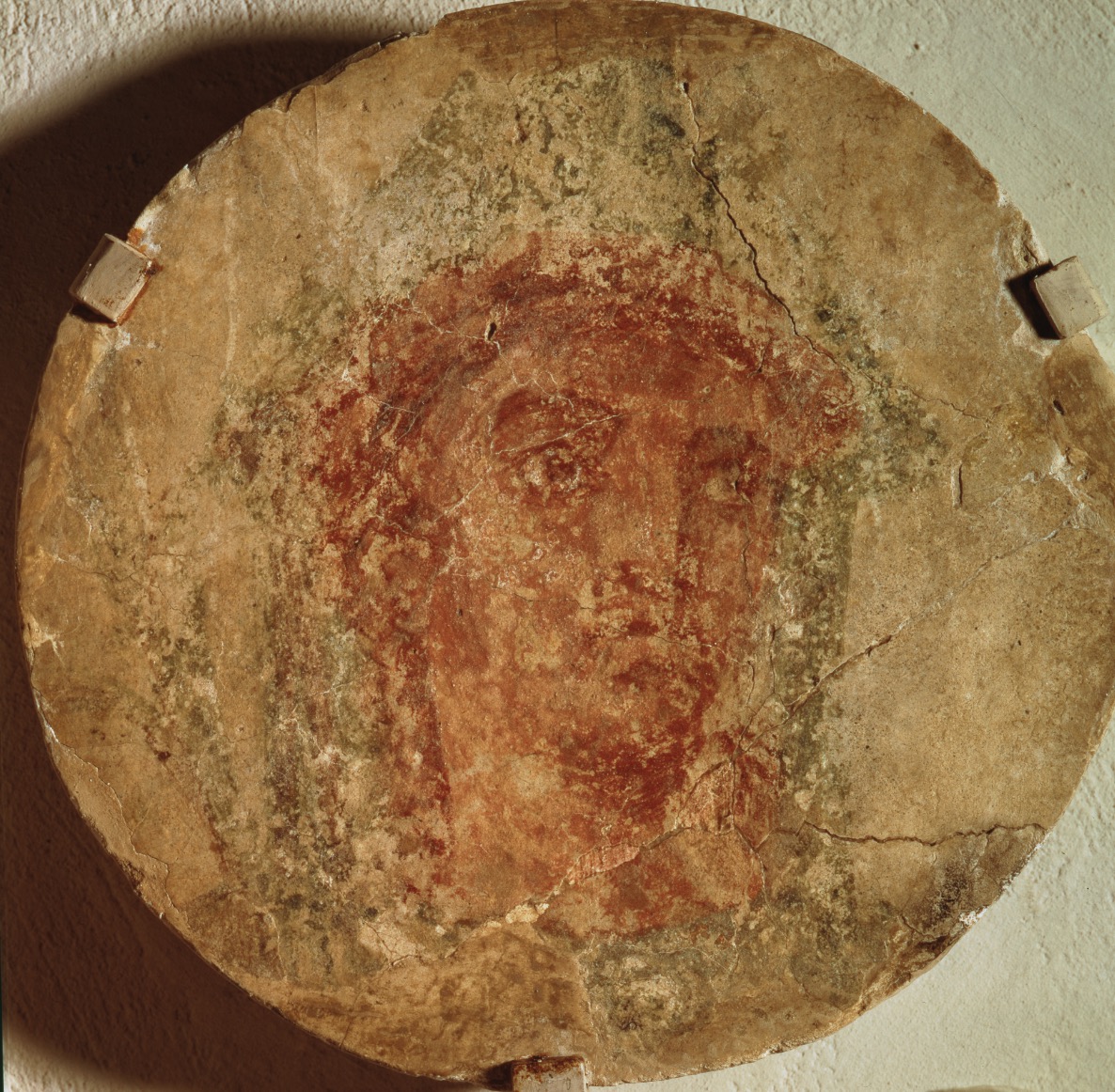
Tomb 79 ceiling tondo with personification of Winter
(Depositi Ostiensi)
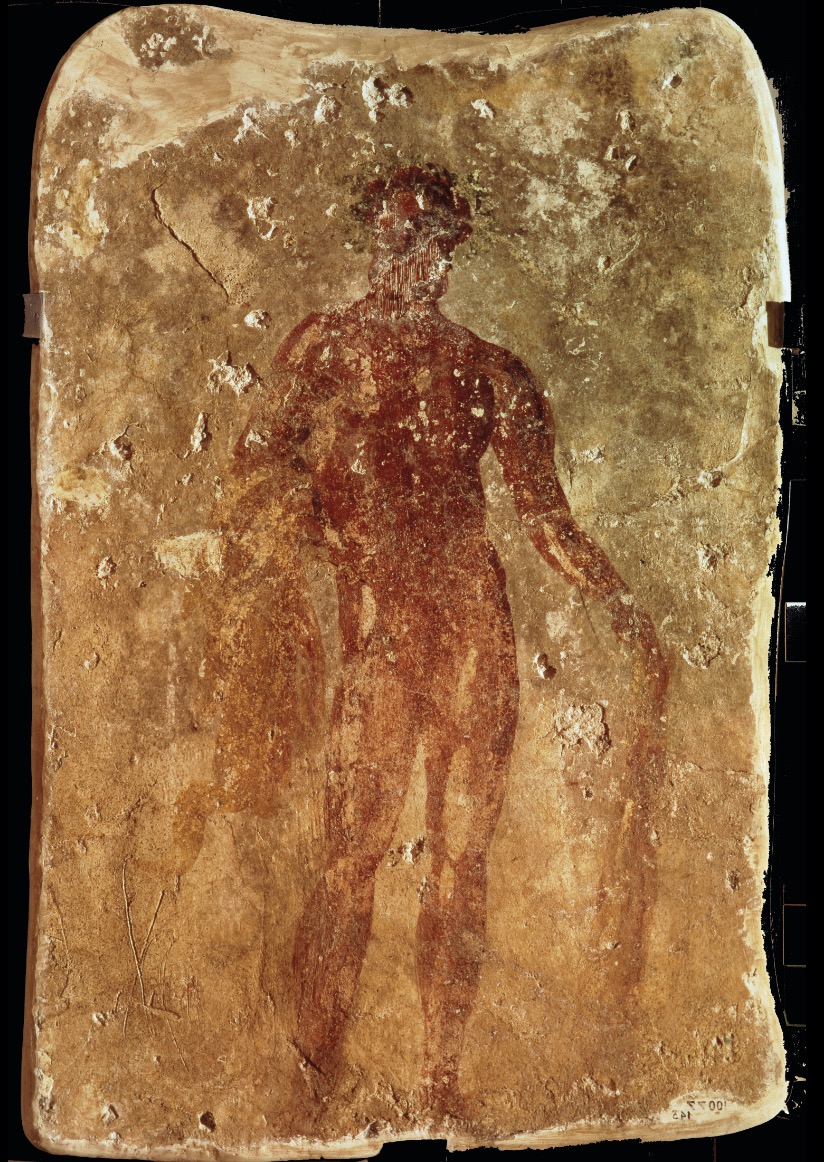
Tomb 79 niche decorated with Hercules
(Depositi Ostiensi)
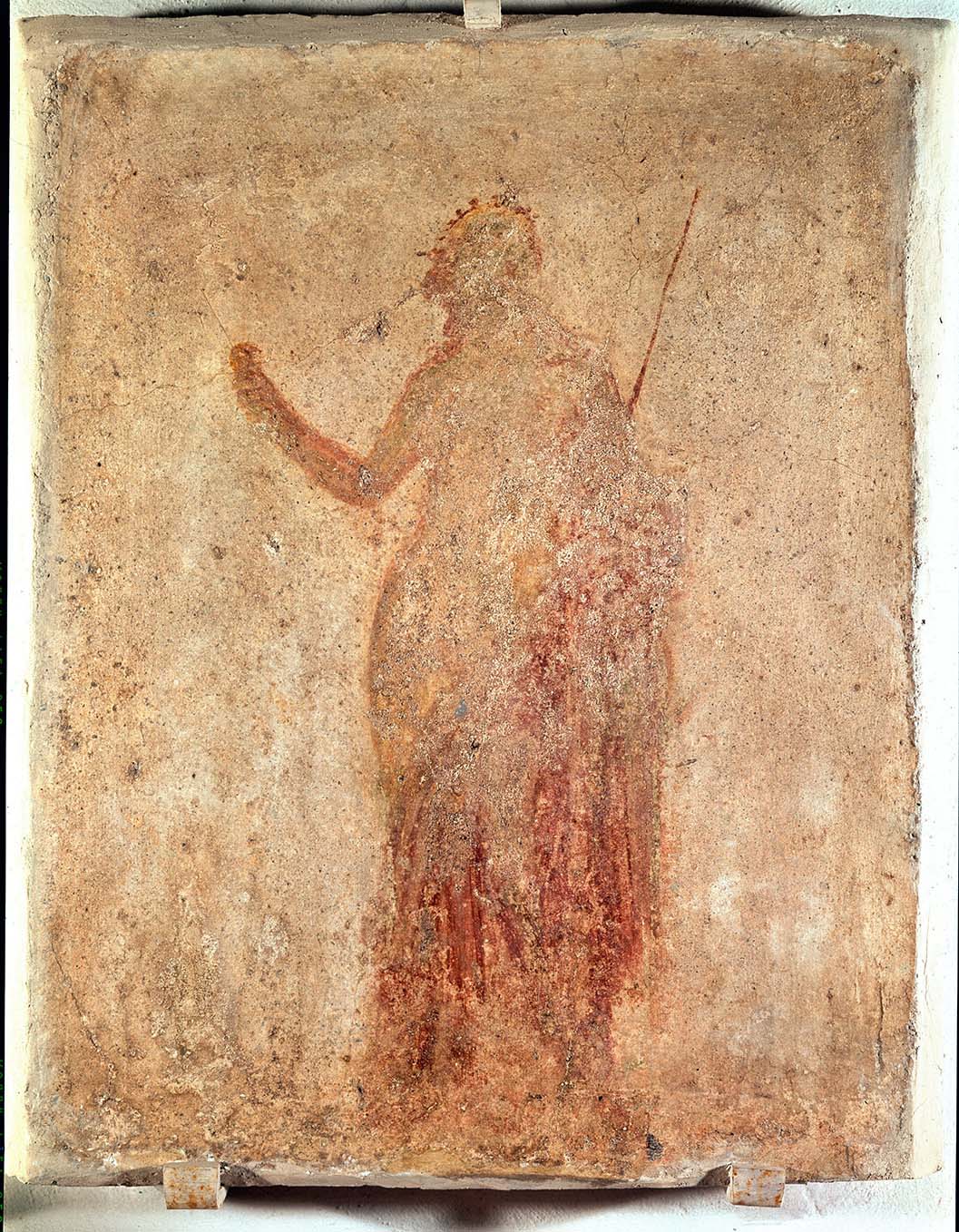
Depiction of Venus on Tomb 80 niche
(Depositi Ostiensi)
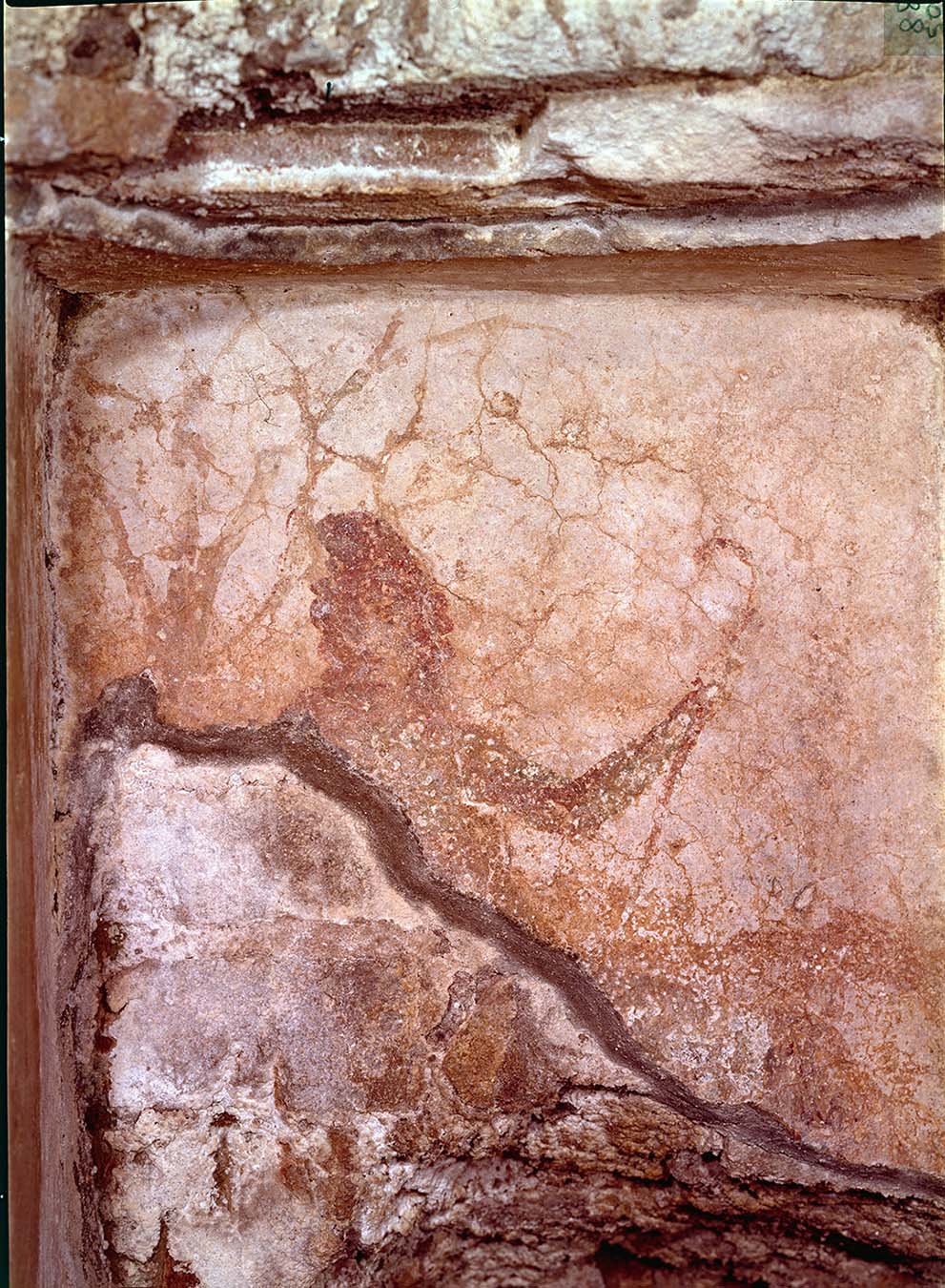
Depiction of Artemis on Tomb 80 niche
(Depositi Ostiensi)