

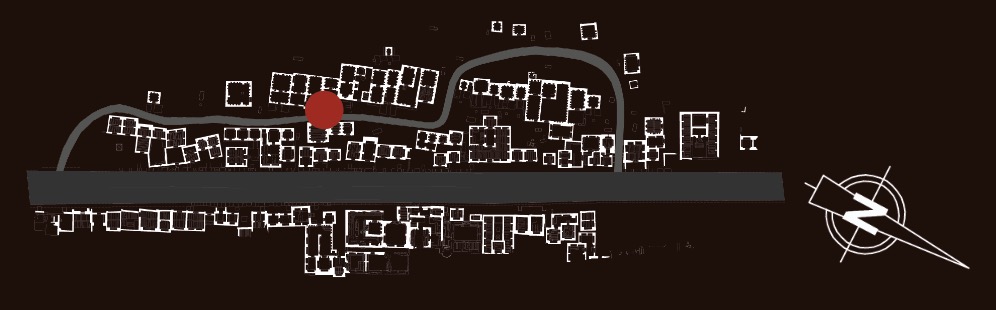
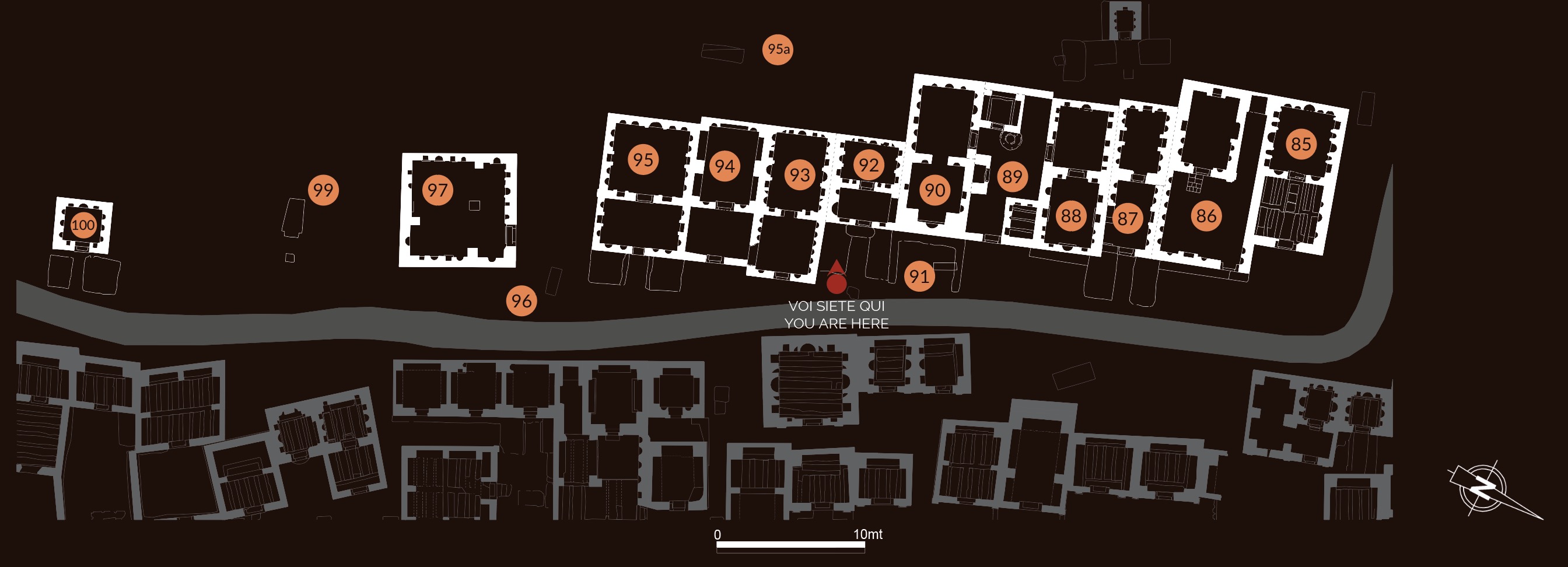
The continuity of the front of Tombs 87-95 is the result of later elements placed upon the older Tombs 85 and 86.
Tomb 85: cella-type tomb, intended for the cremation ritual. Dating: 120-150 AD.
Tomb 87: cella-type tomb with contemporary enclosure. An inscription states the prohibition against introducing interments. Rich with stucco, painting, and mosaic decoration with mythological and symbolic themes. Dating: circa 140 AD.
Tomb 88: cella-type tomb with enclosure and side entrance for the mixed ritual. The mosaic of an arcosolium depicts the banquet on kline of the heroized dead. Dating: 125-130 AD.
Tomb 90: cella-type tomb with side entrance and enclosure at back, intended for the cremation ritual. Rich decoration in stucco and in painting the initial installation dates to 125-130 AD. From here comes the sarcophagus with a scene of returning to the harbour, indicated by a lighthouse, and a tavern scene.
Tombs 92 and 93: cella-type tombs with rear enclosure, they were originally organized for cremation alone. Tomb 93 was richly decorated with stucco and painting. Dating: 117-138 AD.
Tomb 95: cella-type tomb, organized for cremation alone. The interior bore a stucco decoration depicting the Labours of Hercules. Dating: 120-140 AD.
Tomb 97: cella-type tomb, with enclosure organized for cremation alone. Dating: early mid-2nd century AD.
Tomb 100: cella-type tomb, organized for the mixed ritual. On the façade, are the copies of the clay reliefs representing the professions of deceased married couples: she, a midwife, while he, a surgeon, is medicating a wound. Dating: circa 140 AD.
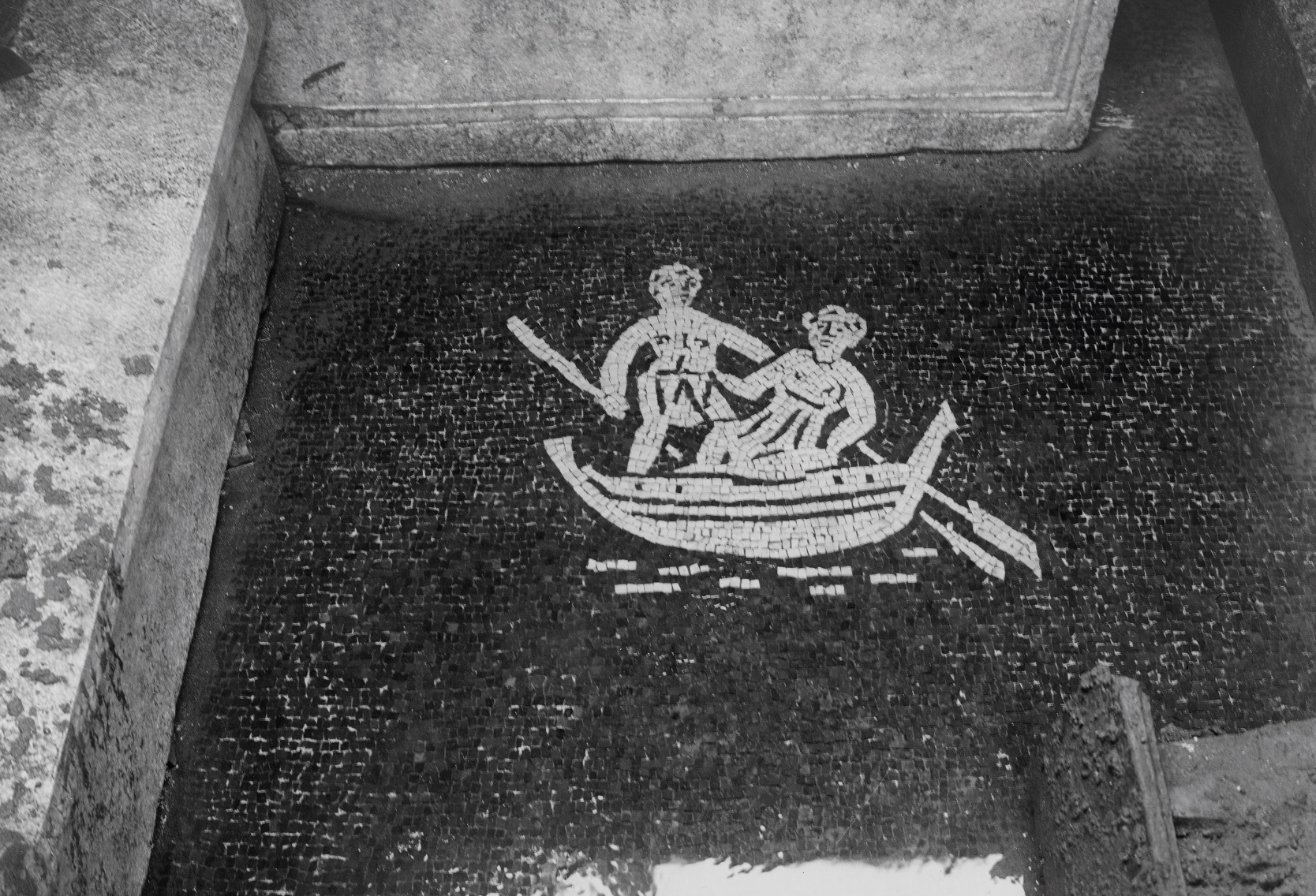
Floor mosaic of underground chamber with the deceased woman on Charon’s ferry in Tomb 86, now buried
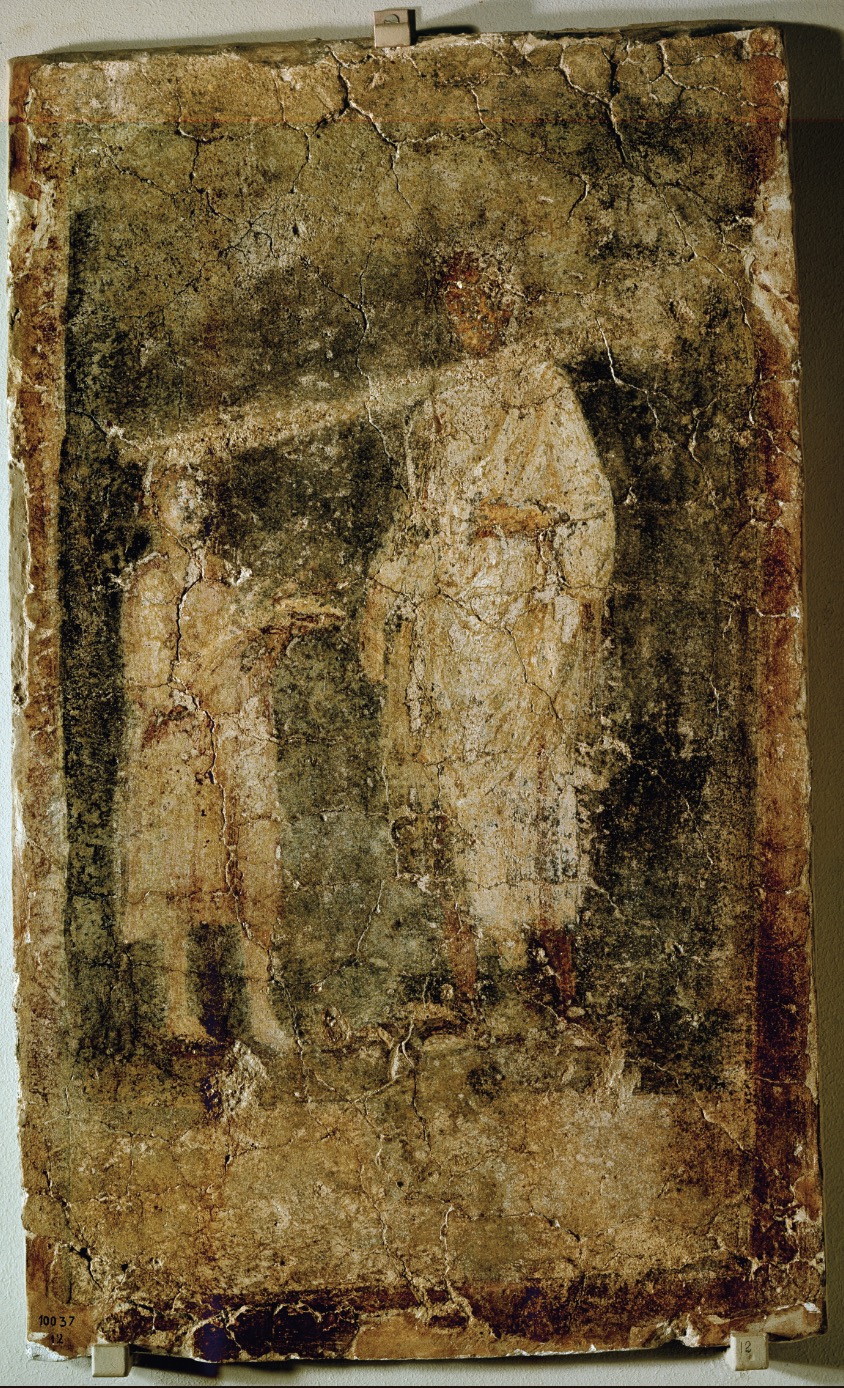
Painted decoration from Tomb 87 depicting a priest or magistrate flanked by a camillus (assistant in religious ritual)
(Depositi Ostiensi)
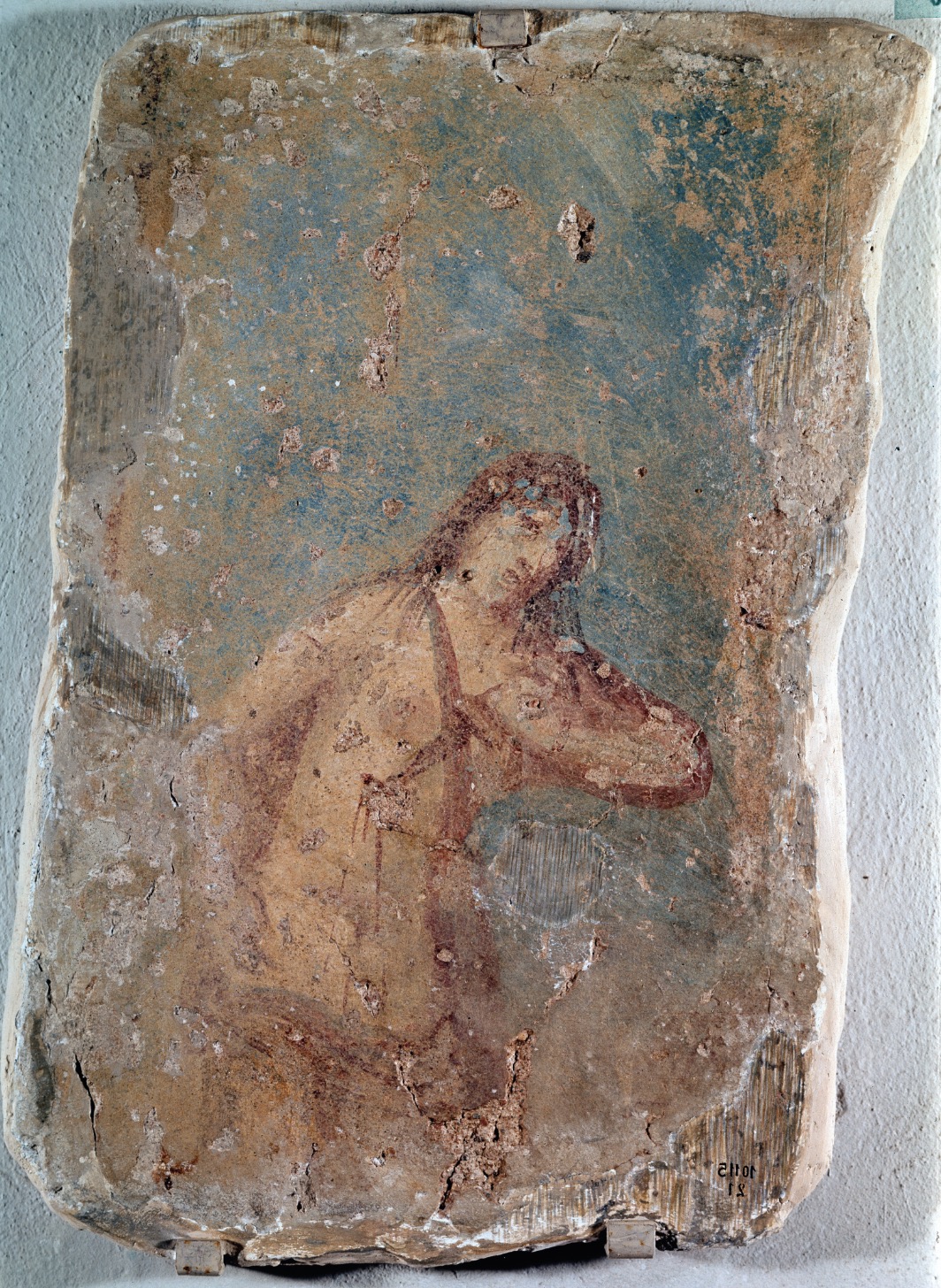
Painted decoration from Tomb 87, with Thisbe
(Depositi Ostiensi)
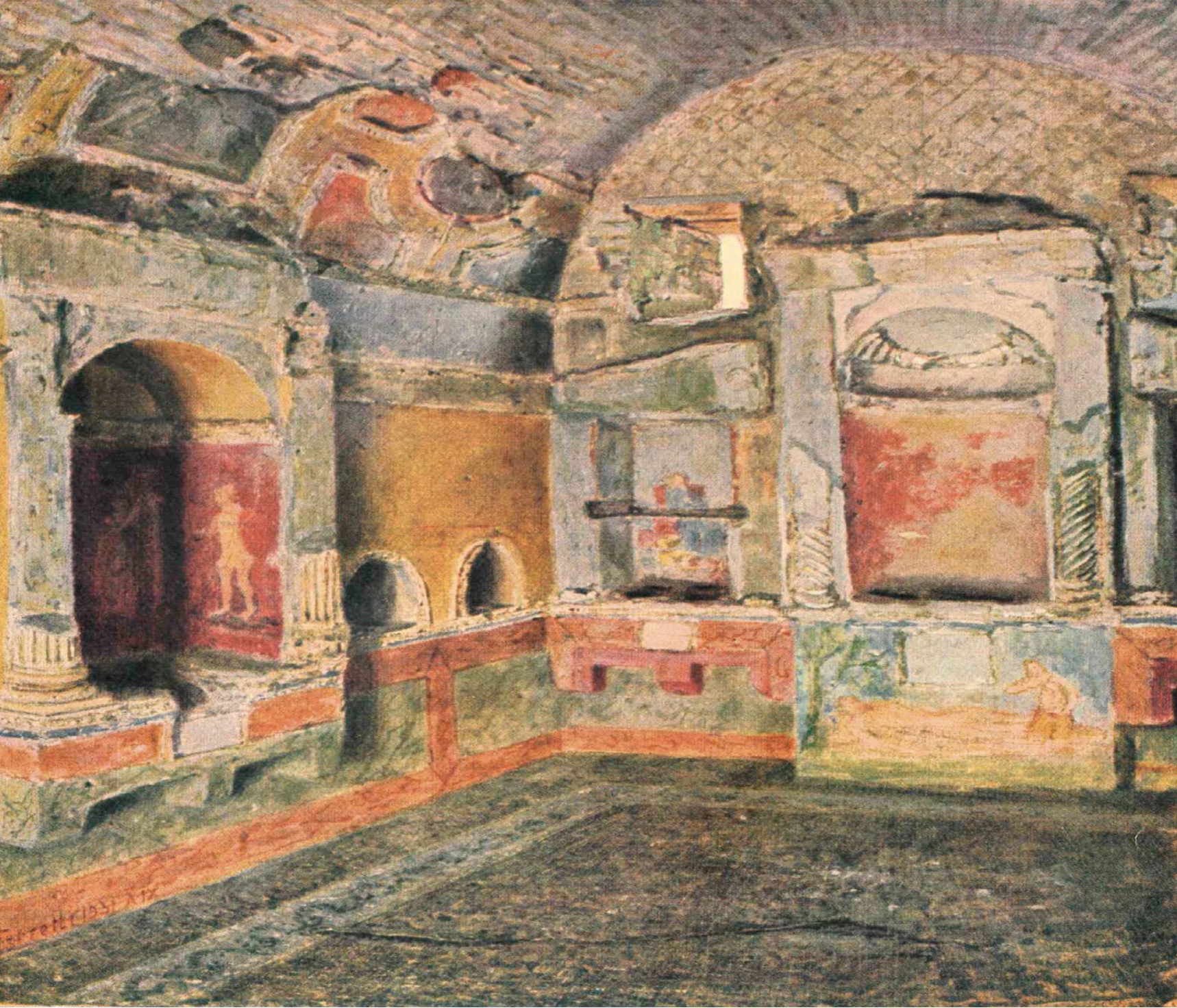
Oil reproduction of Tomba 87’s painted and stucco decoration
(O. Ferretti, 1940)
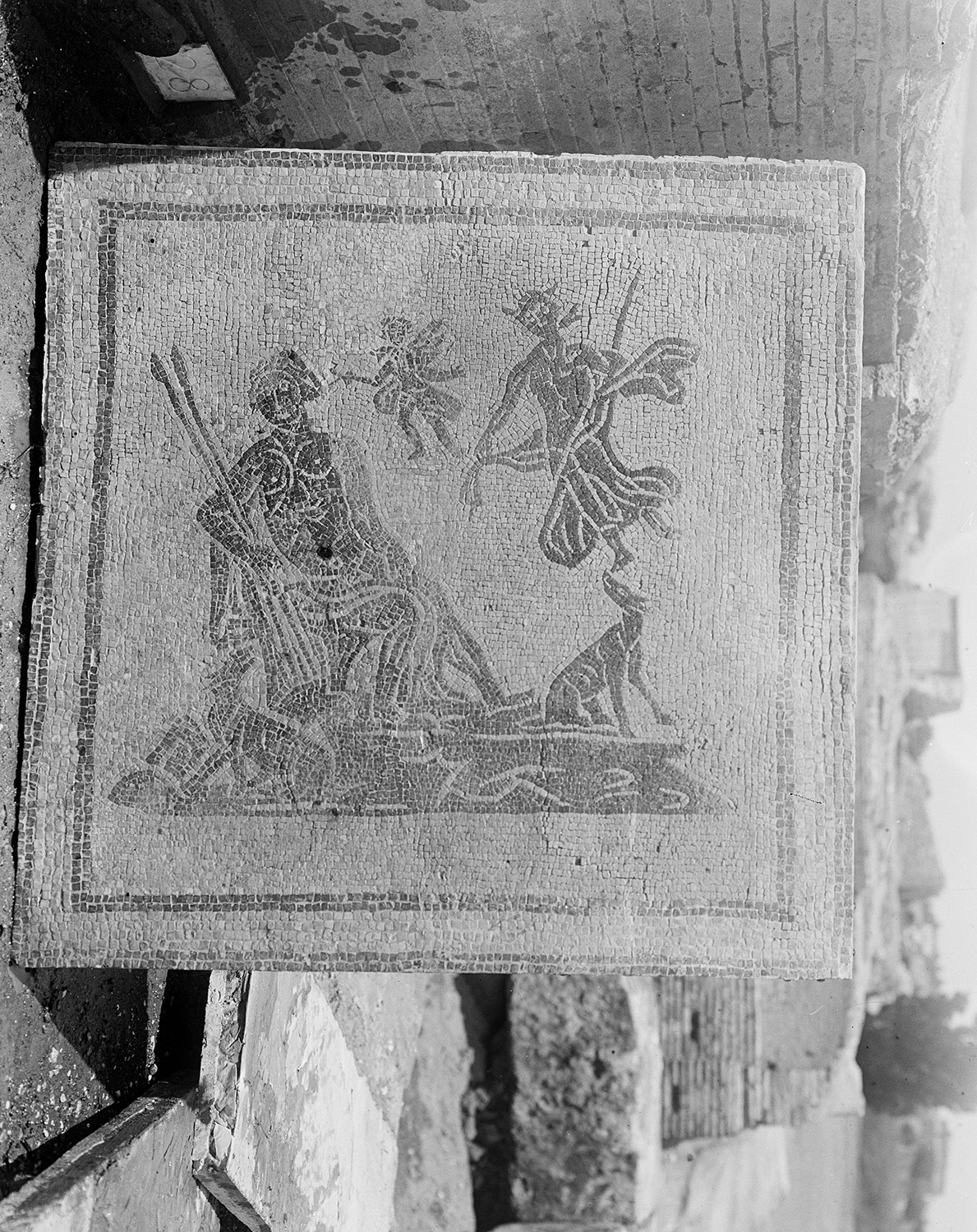
Historical photograph of the mosaic with depictions of Selene and Endymion from Tomb 87
(Depositi Ostiensi)
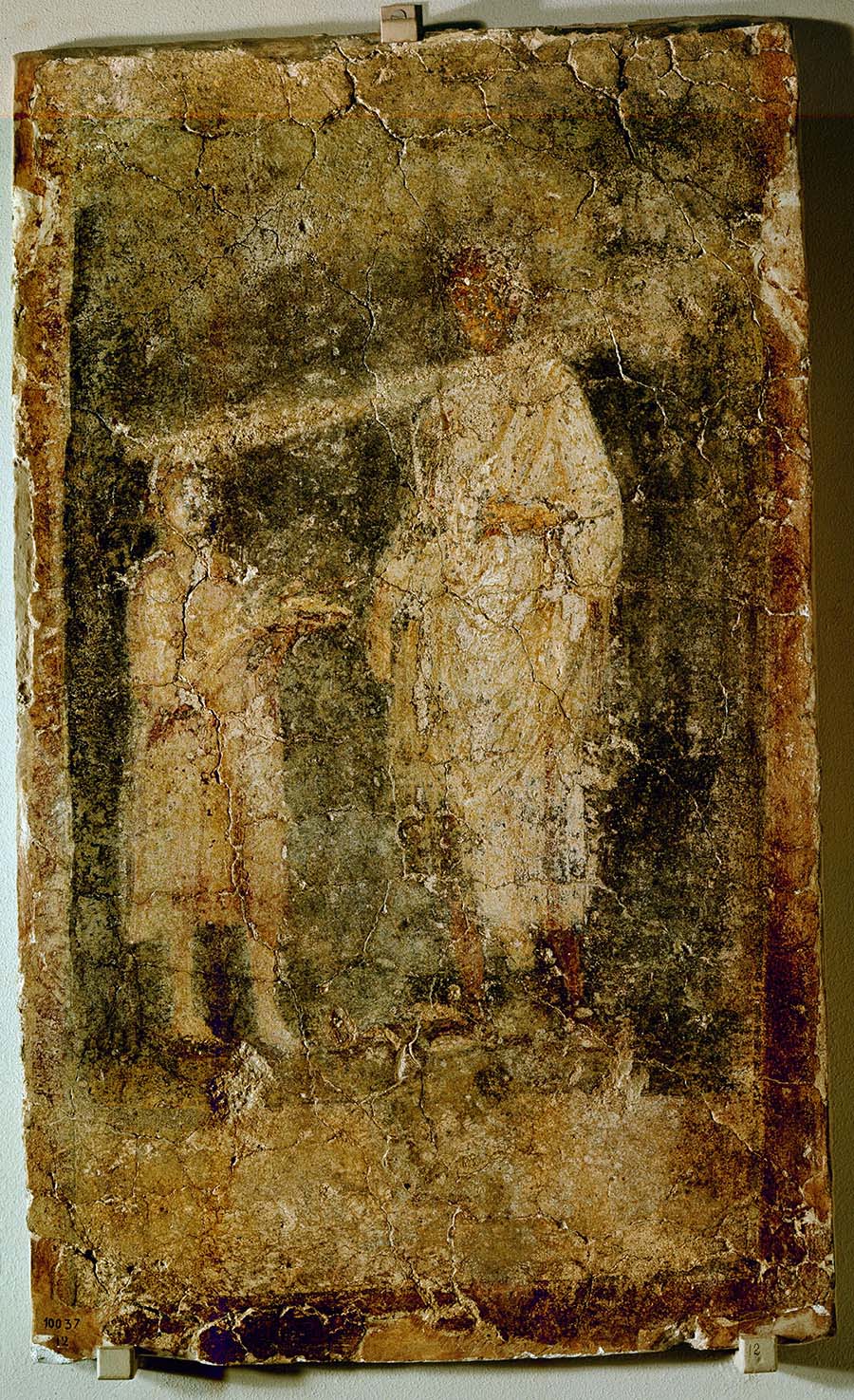
Painted decoration from Tomb 87 depicting a priest or magistrate flanked by a camillus (assistant in religious ritual) bearing a tray in his hands
(Depositi Ostiensi)
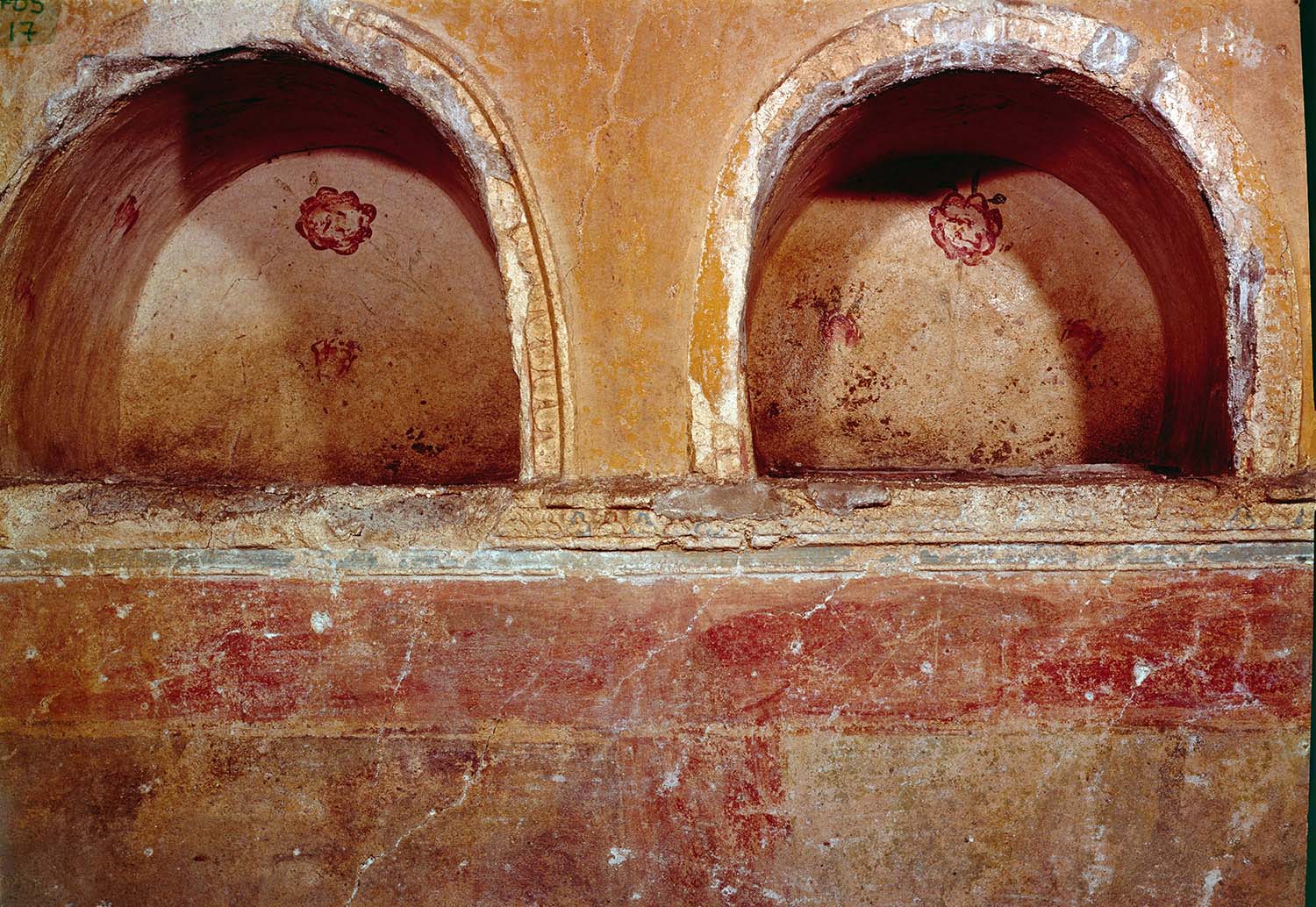
Detail of painted decoration with floral motifs, Tomb 87
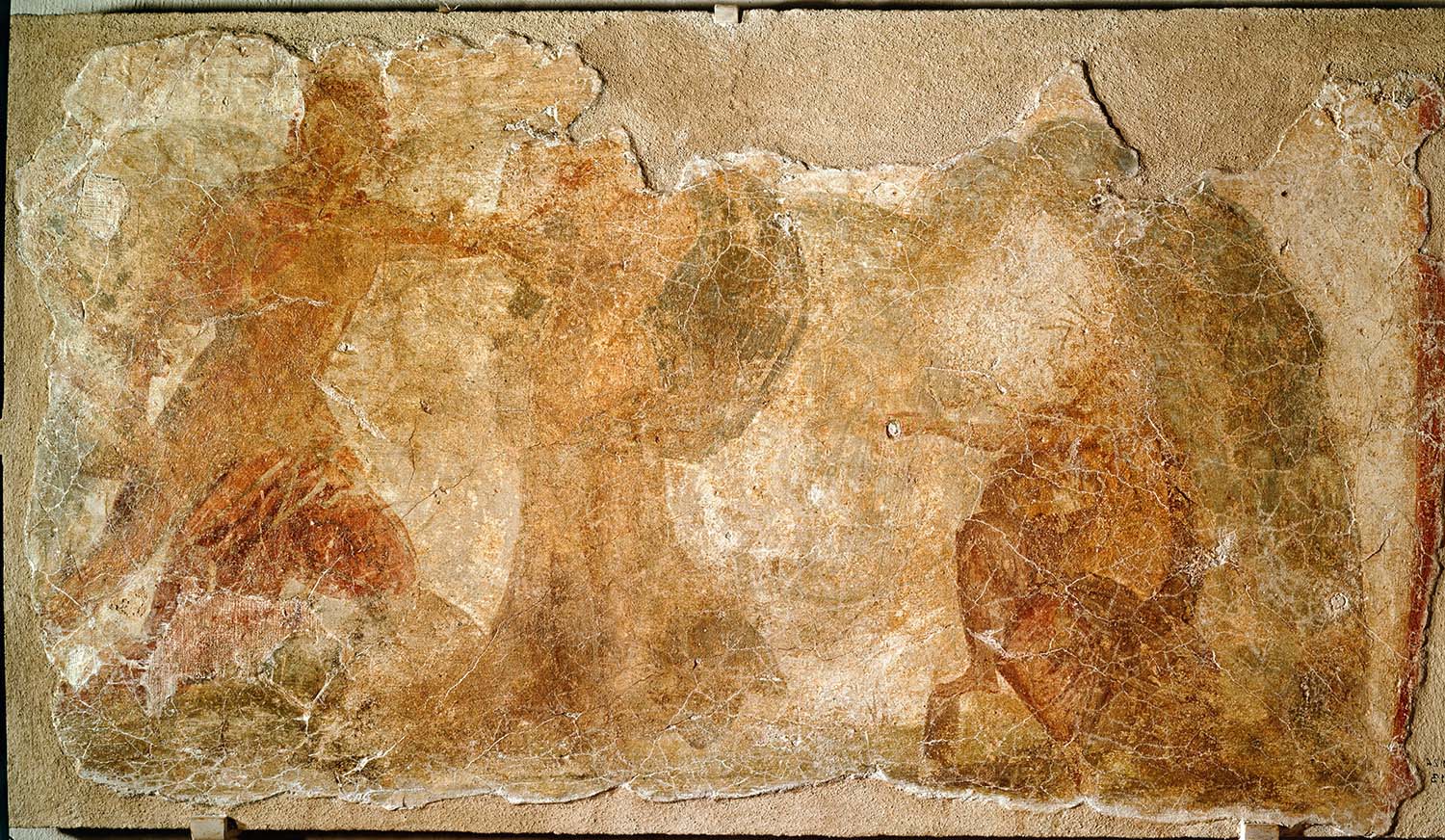
Painted decoration depicting the abduction of Hylas by the Nymphs, from Tomb 90
(Depositi Ostiensi)