

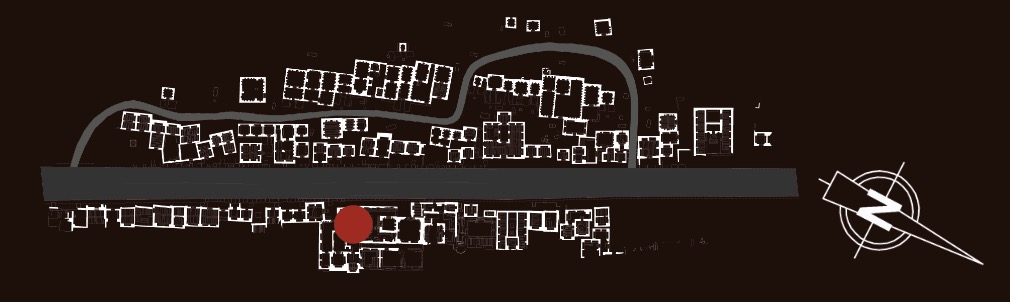
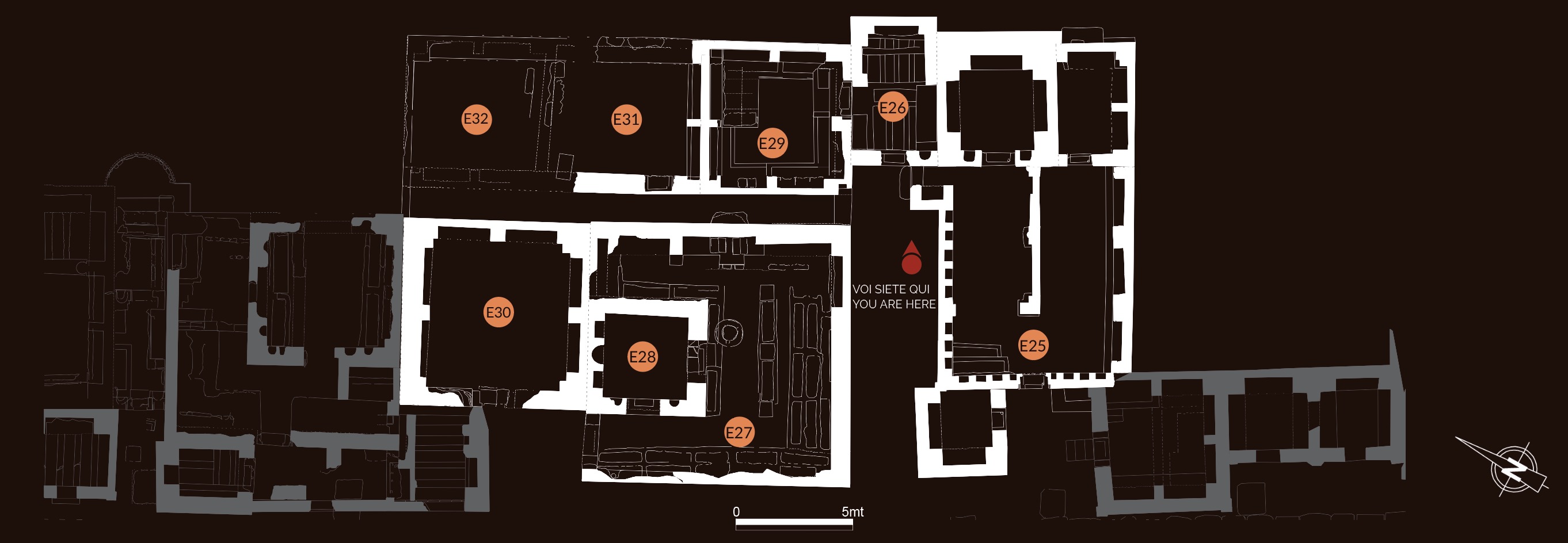
The excavation campaigns conducted from 1989-1990 onwards have allowed the size and volumetry of the eastern side of the Necropolis to be recovered. The group of buildings from the Antonine Age brought to light developed around Tomb E30, with successive additions and transformations lasting throughout the 3rd century AD.
Tomb E30: cella-type tomb, differentiated from the others for the use of flint cubilia (truncated pyramid-shaped blocks). The ritual is mixed.
Tombs E27-E28: this complex, intended for the mixed ritual, consists of a cella and a roofed enclosure on the southern side, with a terrace held up by three pillars. Access to the terrace was provided by a stairway placed at the centre of the enclosure’s eastern wall; a pit is situated near the cella’s entrance. A painted decoration depicting two male figures to the sides of a table is conserved on the interior wall of the eastern arcosolium in cella E28.
Tombs E29-E31-E32: constitute a unitary building complex, divided into three rooms served by a corridor that forms a second front to the road. Well preserved is the original mosaic floor of Tomb E29 with a fanciful floral motif.
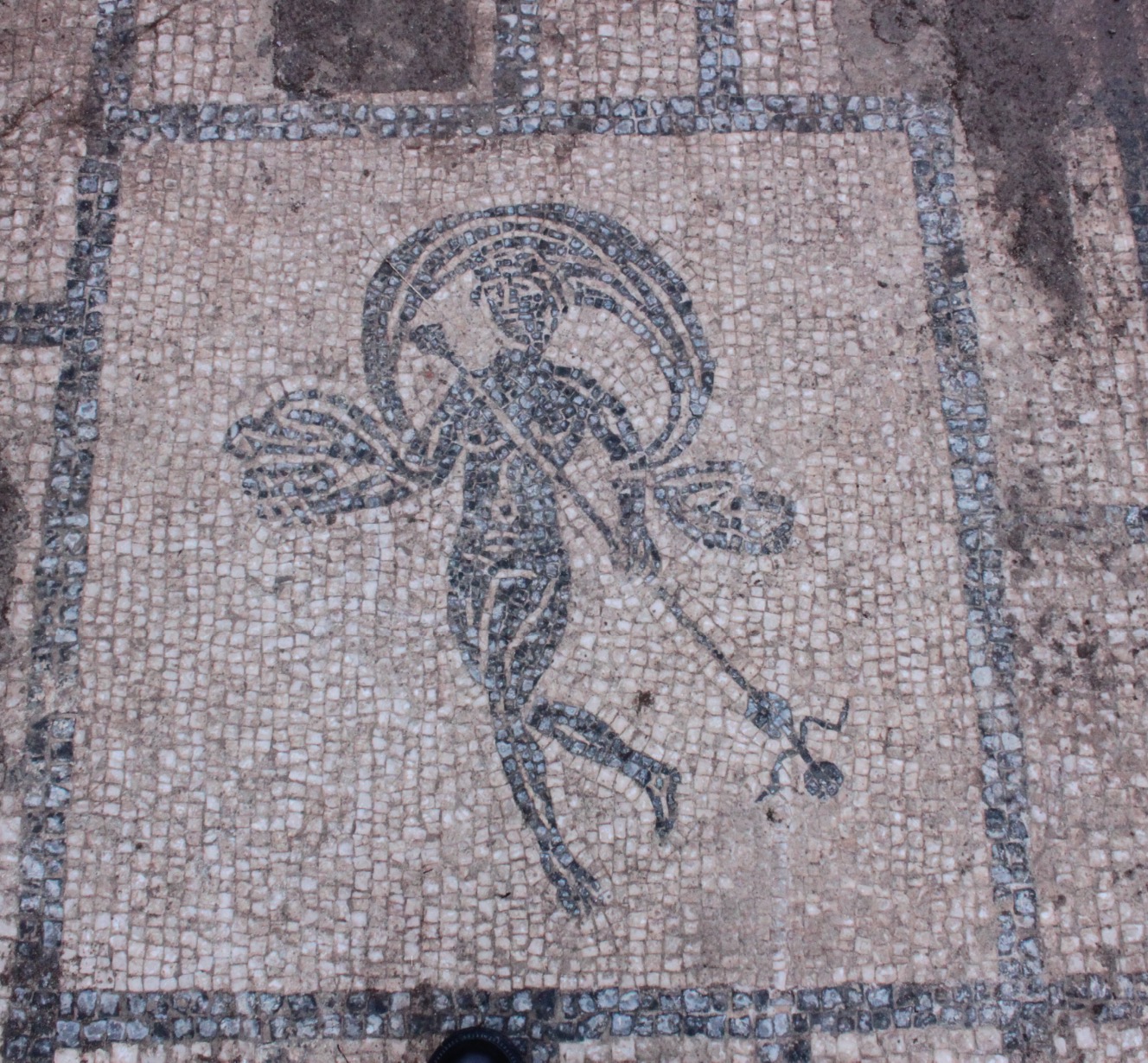
Detail of the mosaic in the Tomb E27 enclosure with female figure is inserted
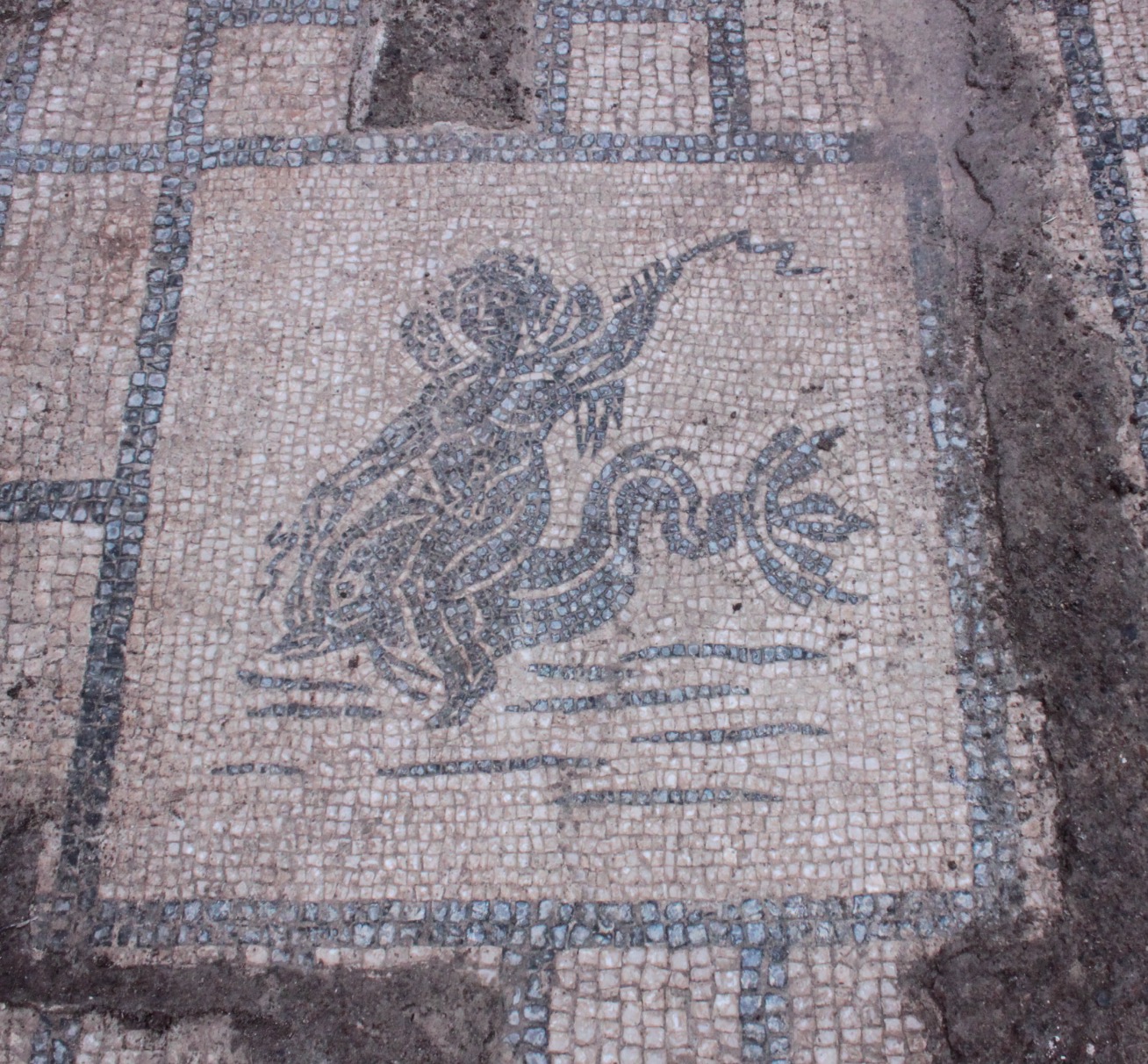
Detail of the mosaic in the Tomb E27 enclosure with a figure of erotes riding a dolphin is inserted
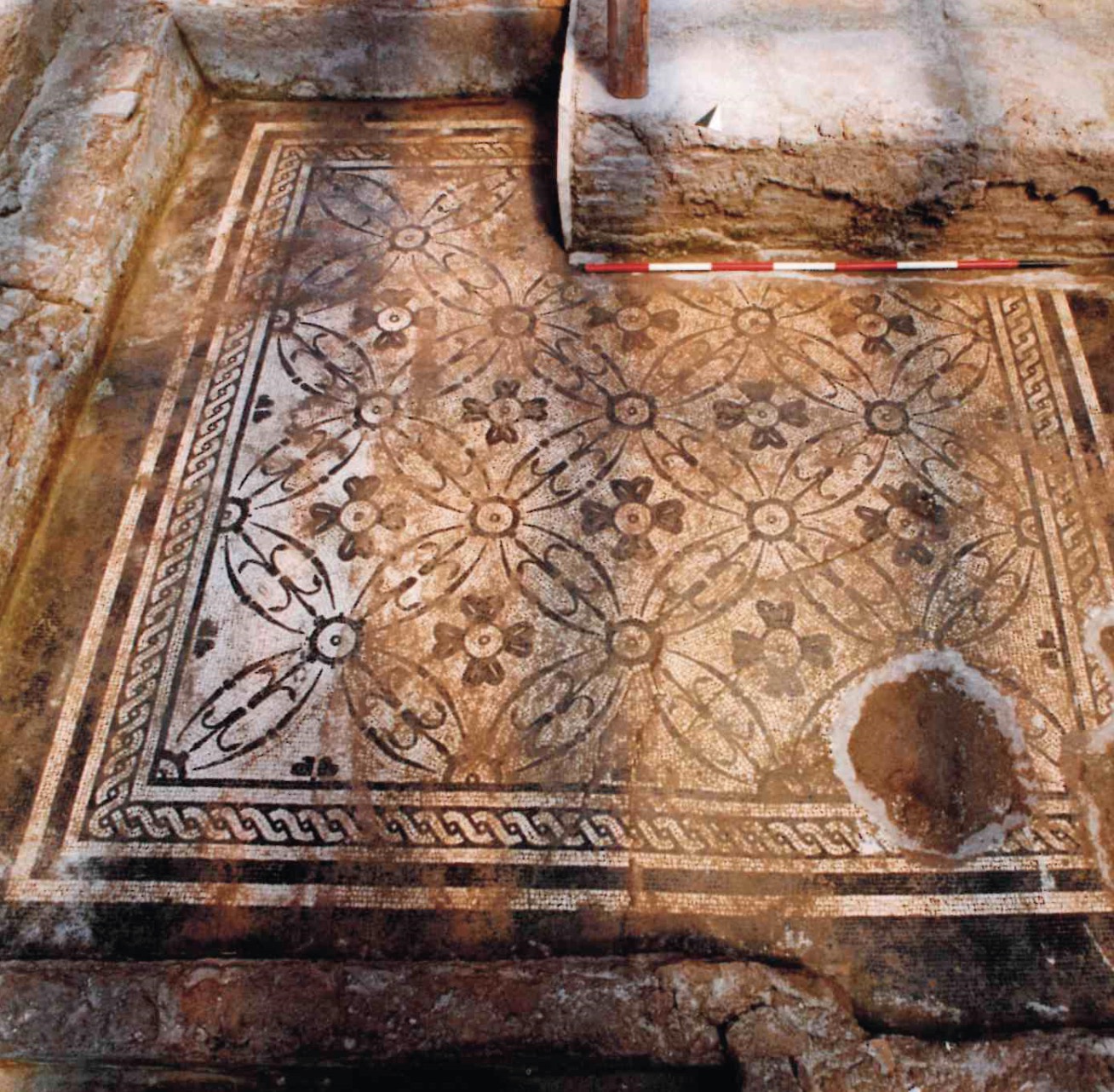
Mosaic with floral motifs, Tomb E29
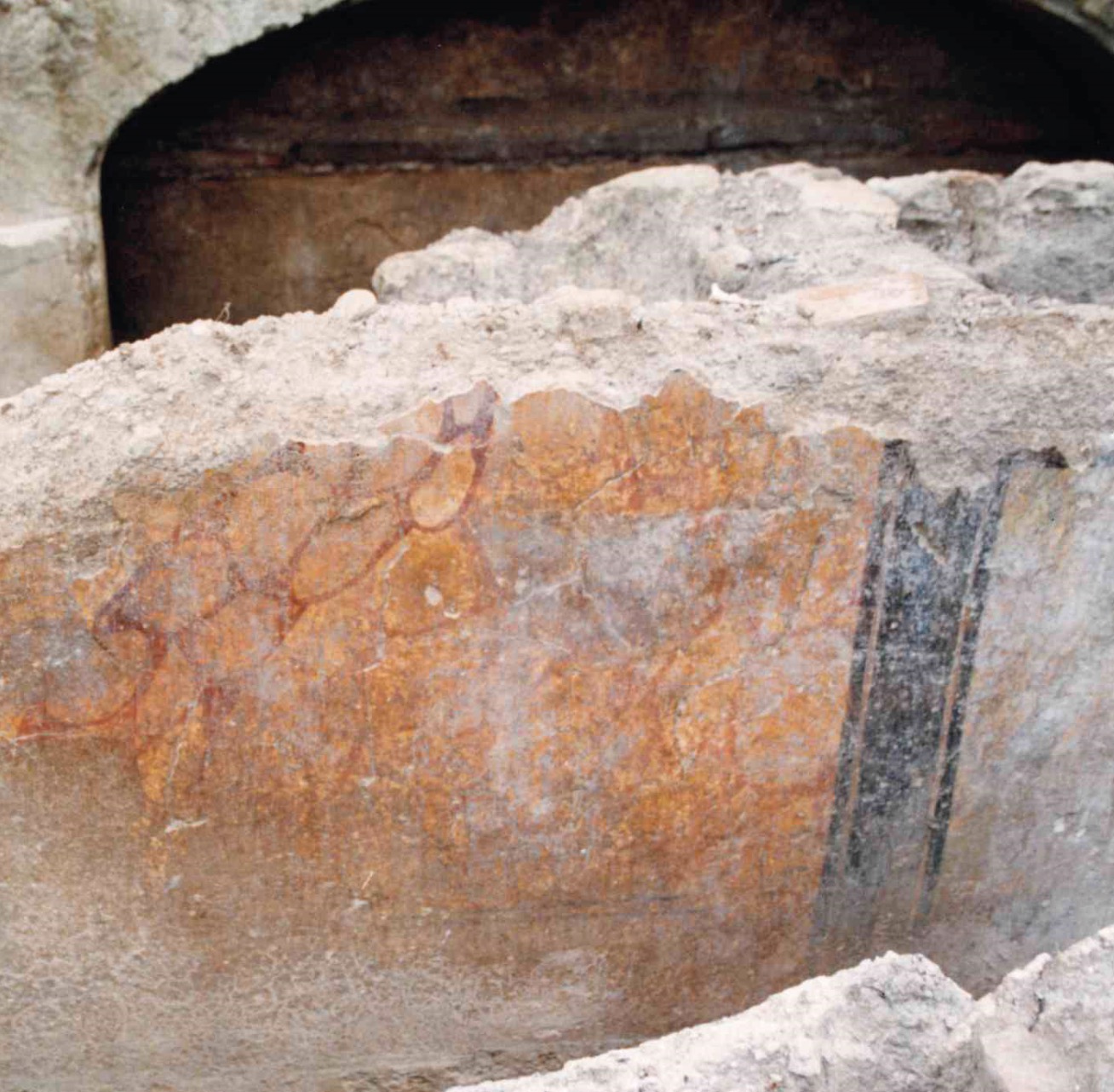
Painted decoration from E27 enclosure, imitating marble lining