

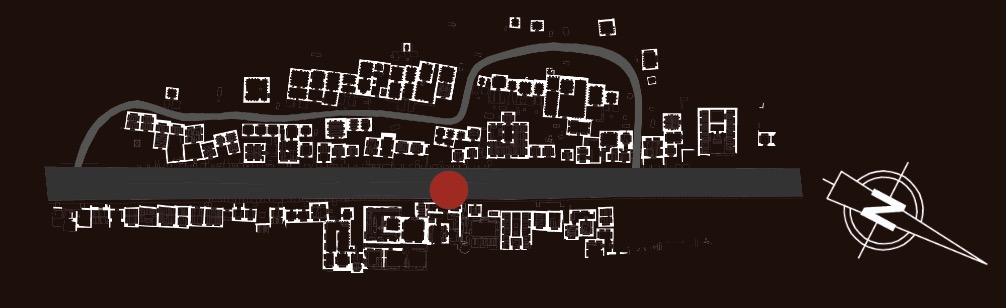

The main nuclei of this group of buildings from the Age of the Antonines (138-192 AD) are Tomb E35 with its enclosure (E34), cella E40, and the E43 cella-enclosure complex; the remaining structures document the gradual occupation of the leftover space (Tomb E36 and E38) and of the road front (Tombs E33, E33a, E39 and E42).
Tomb E35: a cella set up for the mixed ritual. Placed against the tomb is an L-shaped enclosure (E34), with niches along the walls upon which are placed the masonry klinai (beds), initially intended for holding banquets and subsequently used for interments.
Tomb E40: the interior space was bipartite with two partially preserved brick columns and a third central one, removed in ancient times, supporting an arched roof. The rite is that of inhumation.
Enclosure E43: placed upon the previous tomb, incorporating at the rear a cella, in front of which a central courtyard is placed, with a pit, a square fountain, and a cistern. The cella and enclosure are intended for the interment ritual. The area’s gradual silting up can be easily seen from the higher level of Tombs E44 and E44a, both cella-type. The second frontage on the road, comprised between Tombs E32 and E50, is not built, and was probably to house simple burials.
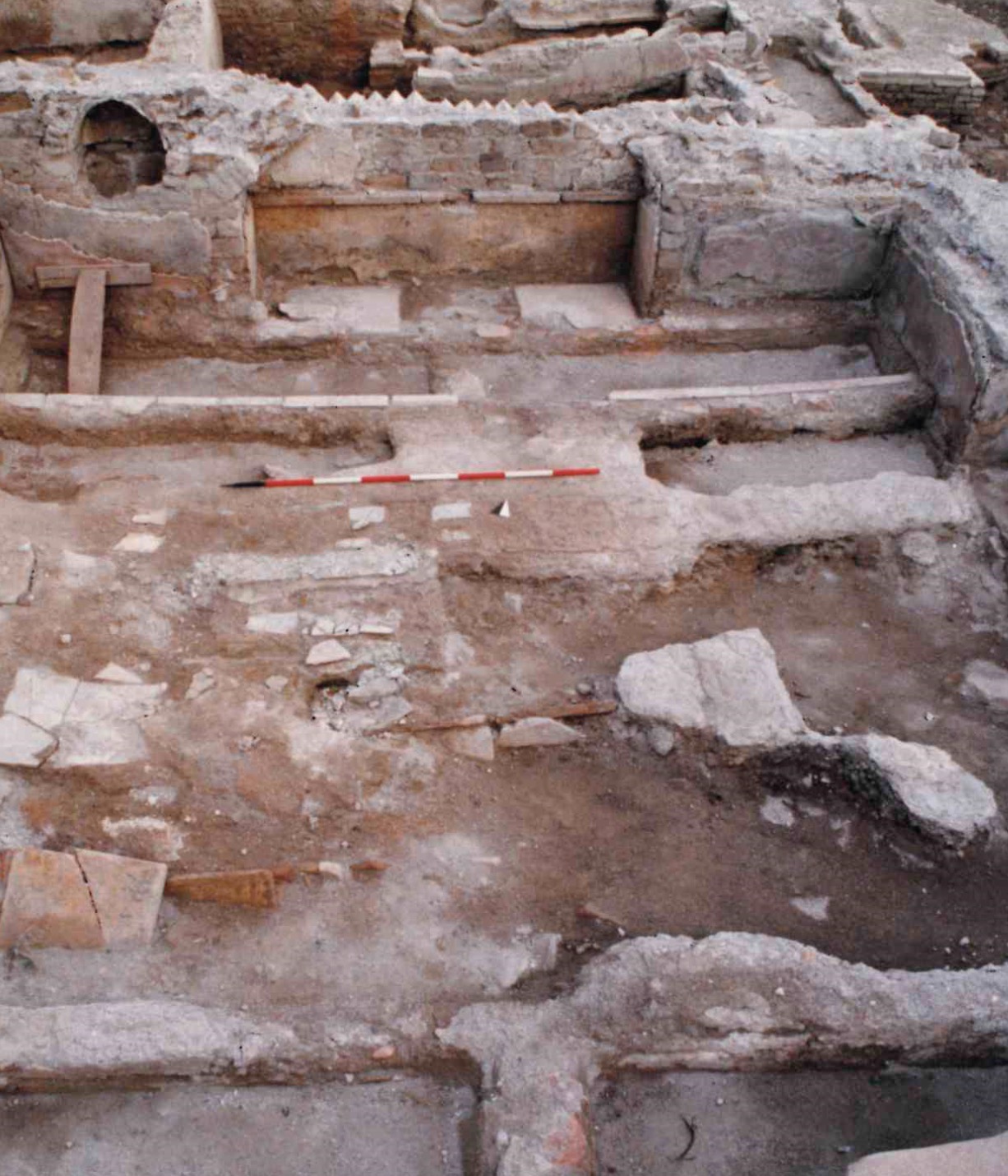
Tomb E35’s floor decorated with marble slabs (opus sectile)
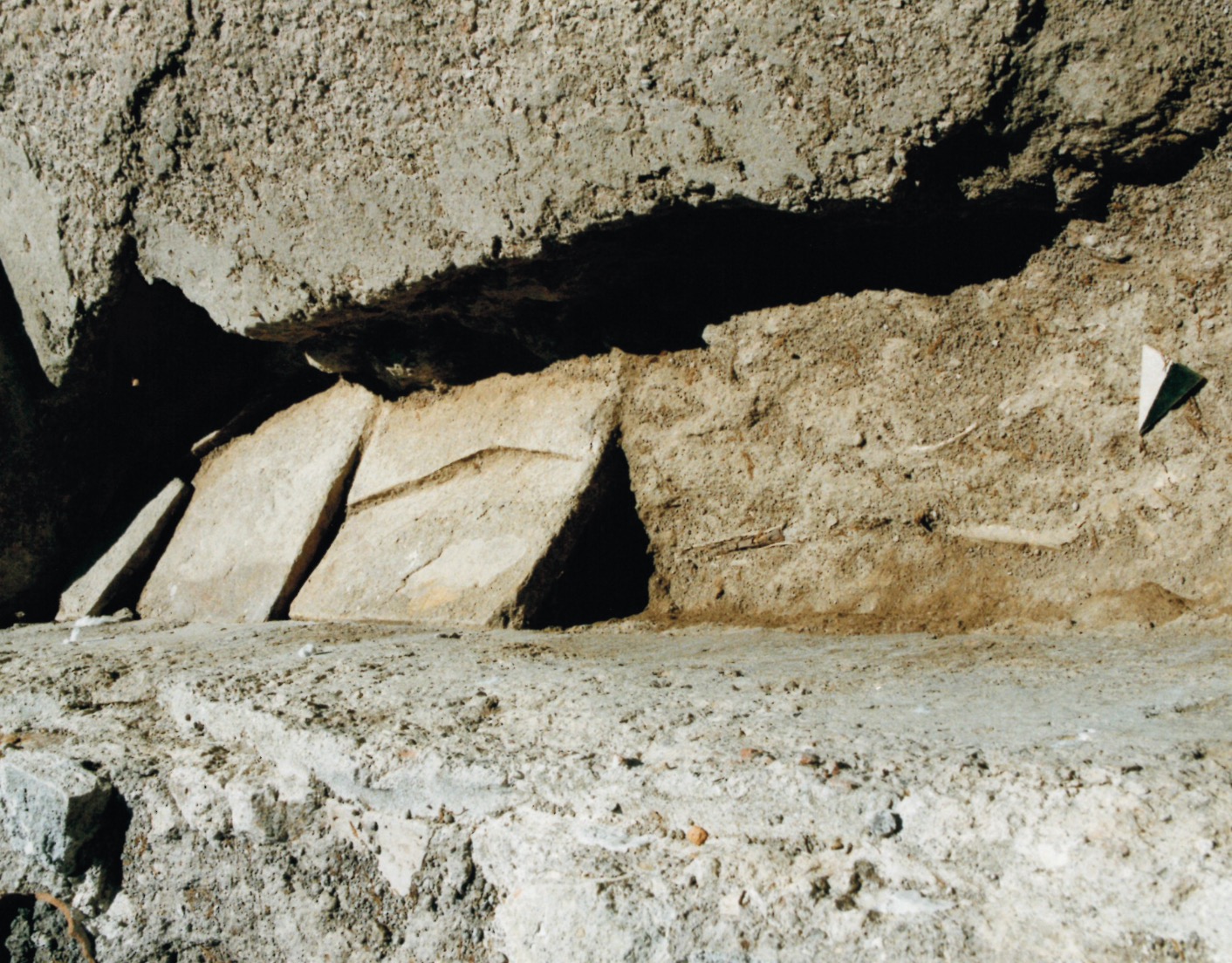
Masonry bed (kline) placed inside the enclosure E34
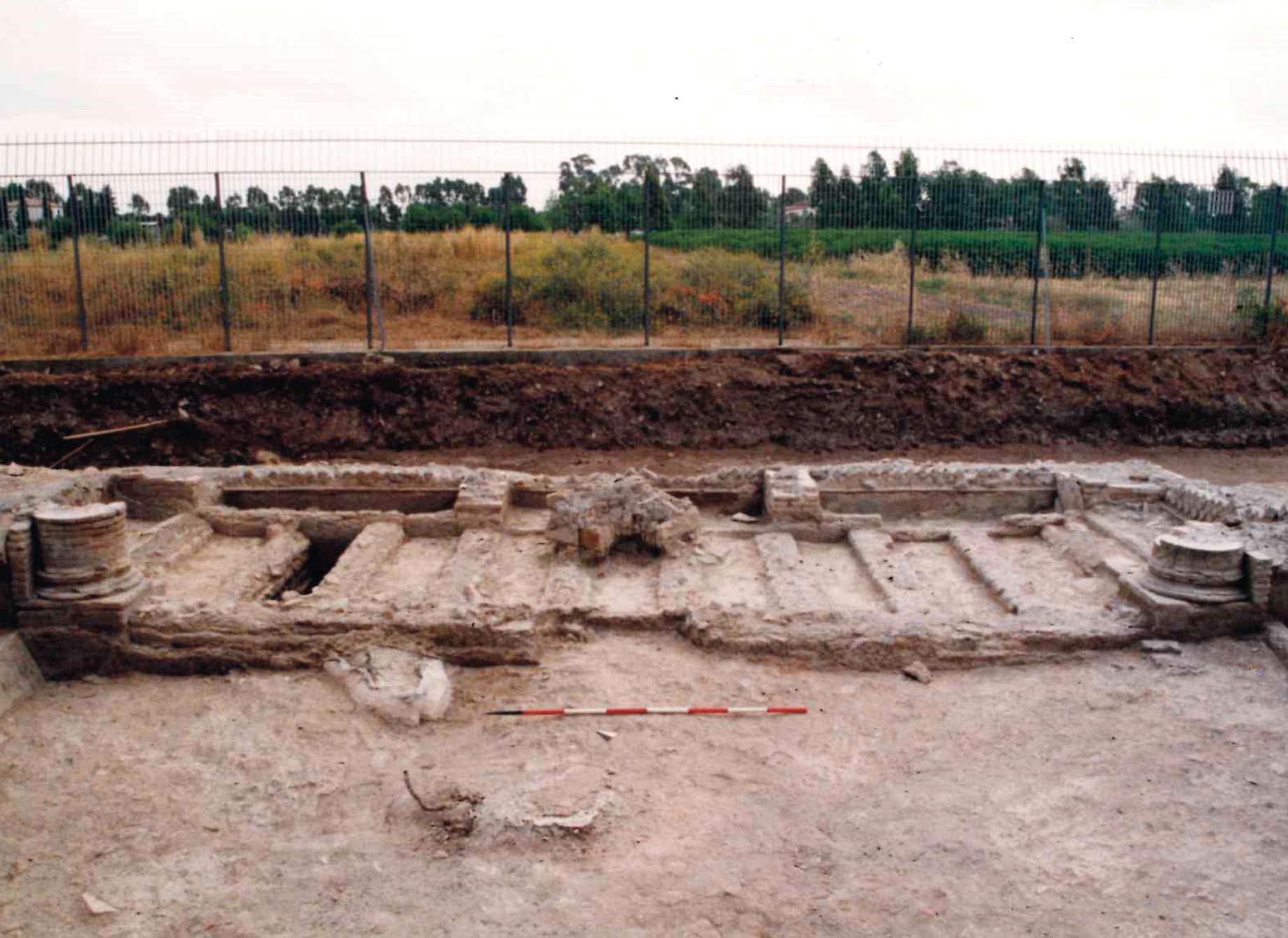
Remains of two brick columns and of access stairway, Tomb E40
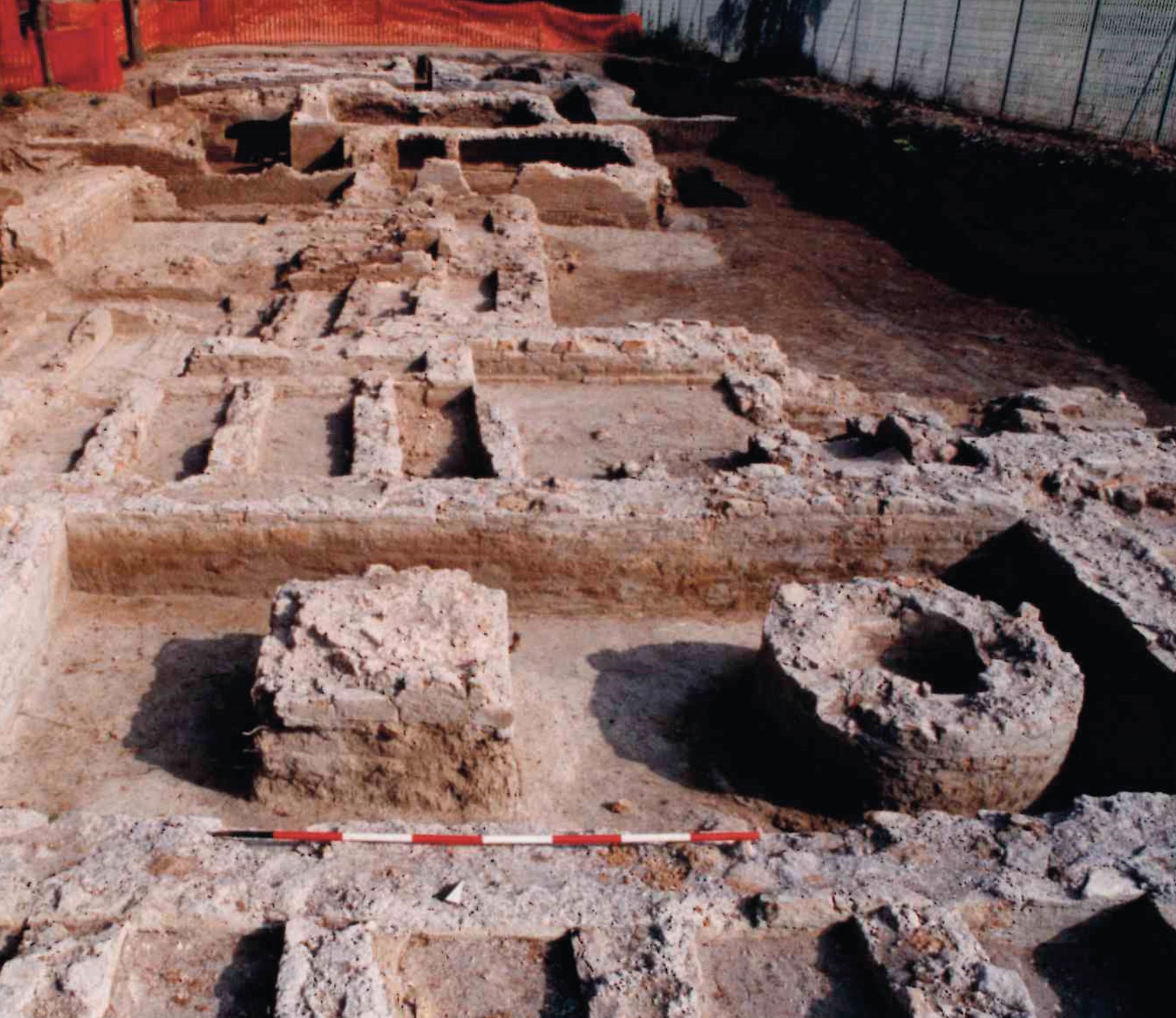
Central courtyard and enclosure with formae, Tomb E43