

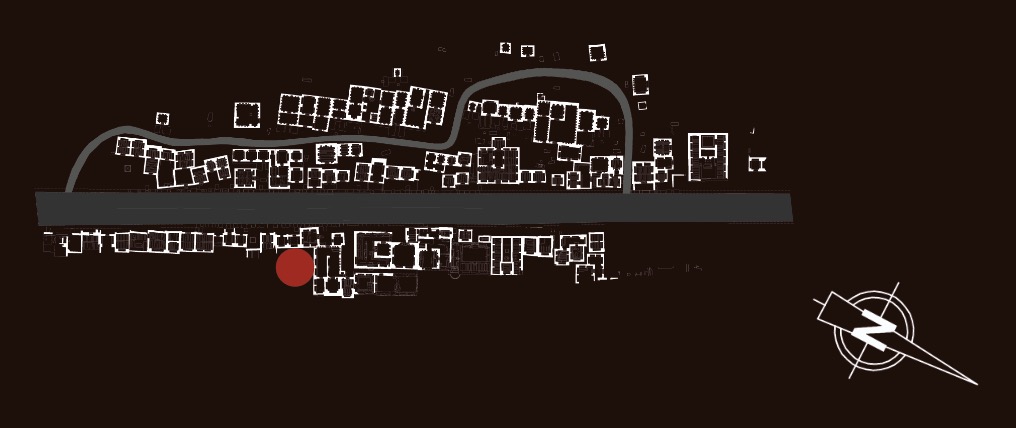
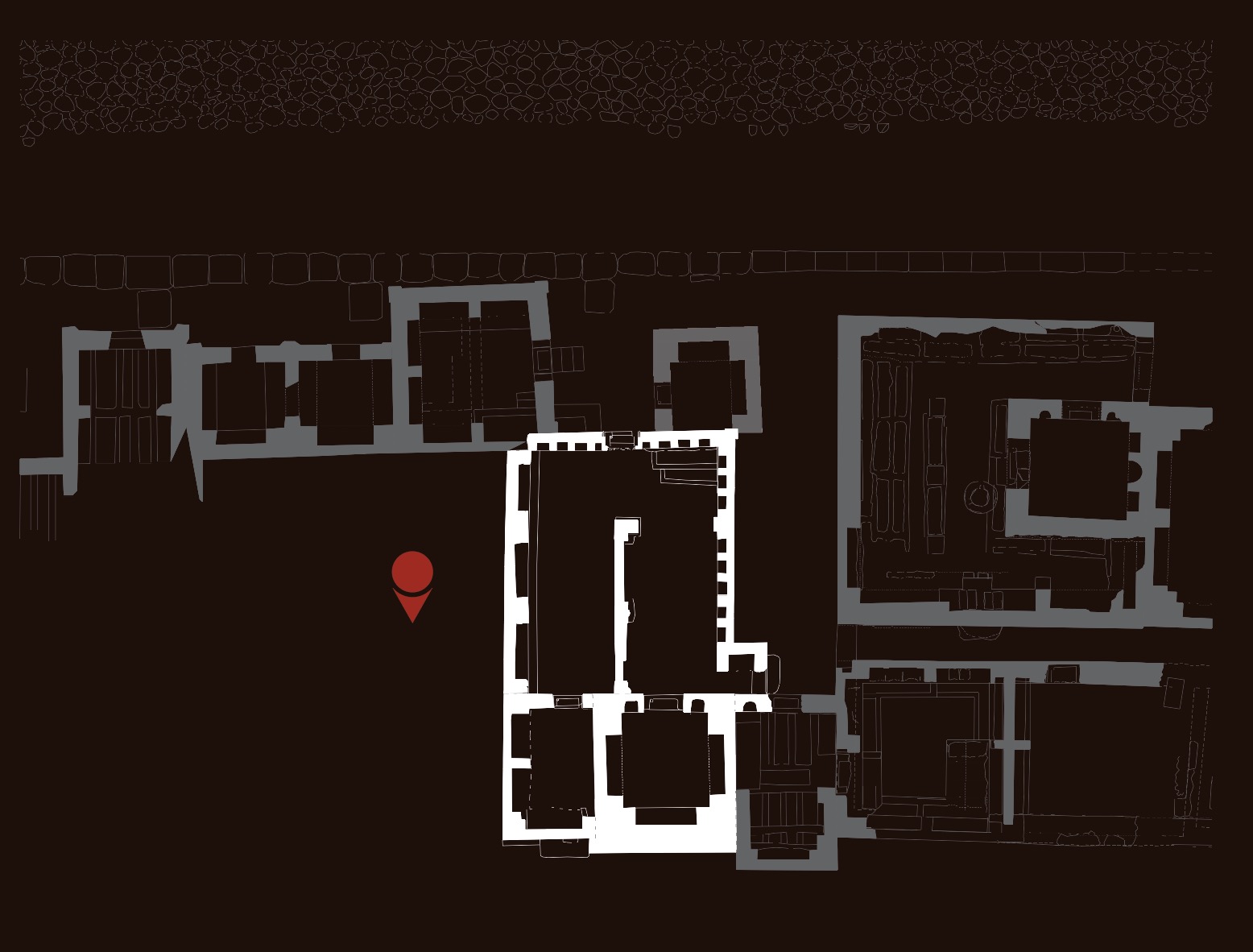
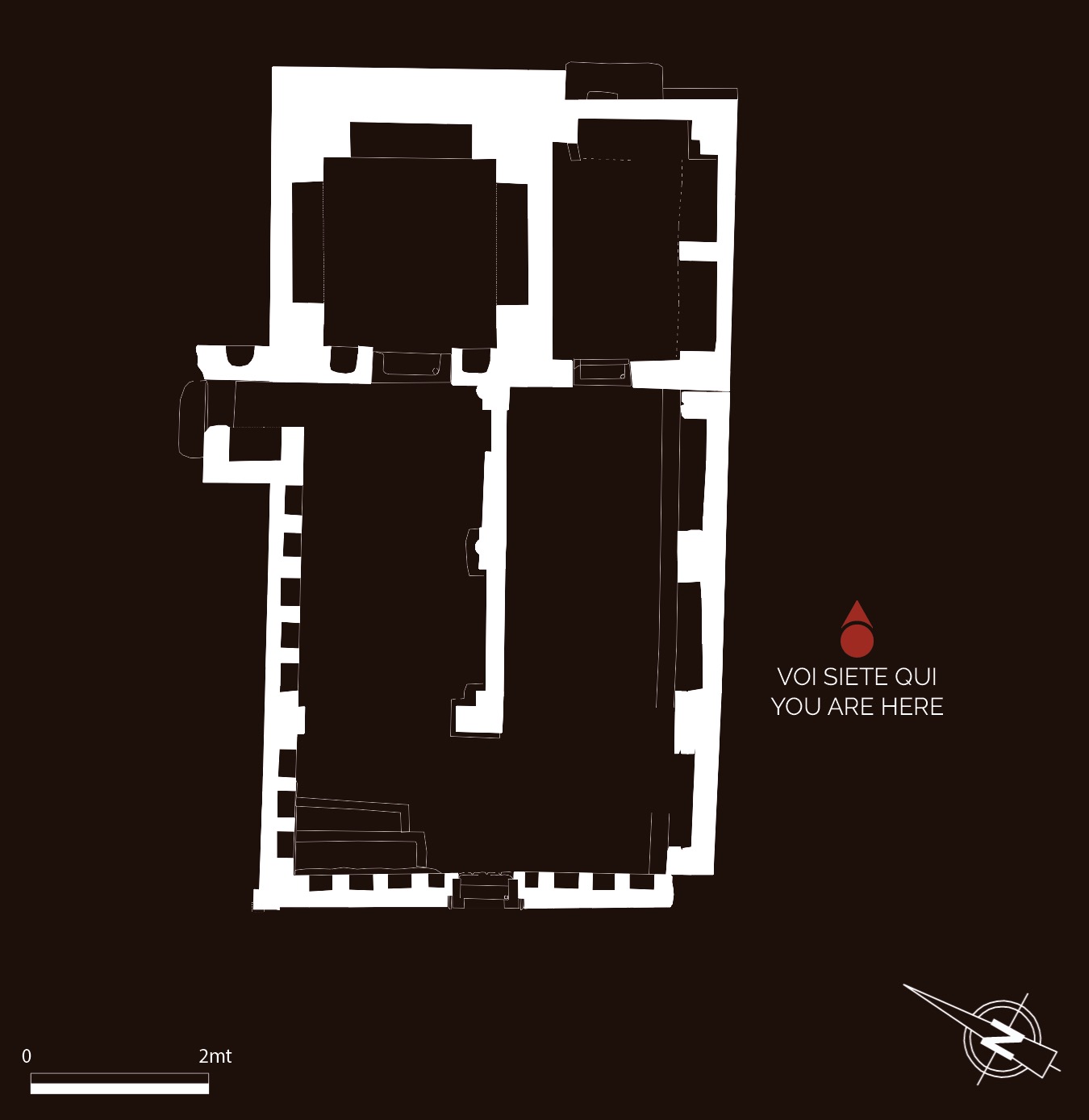
The tomb consists of two adjacent cellae intended for the interment ritual, with independent entrance and linked by a large enclosure in front, in its turn articulated in an L-shaped portico. Of particular interest is the masonry of the opus spicatum façade (in the form of wheat ears) and the mosaic decoration. In the L-shaped portico, which was roofed, the mosaic has a sequence of squares with illustrations of the phases of cultivating, harvesting and threshing grain, probably alluding to the working activity of the tomb’s owner, a pistor (baker) or a mercator (grain merchant). The remaining courtyard is instead decorated with the myth of Alcestis exiting from Hades’s door. An initial building phase consisting of a the single northern cella was followed in the Age of the Antonines (138-192 AD) by the construction of the remaining building with the mosaic decoration.
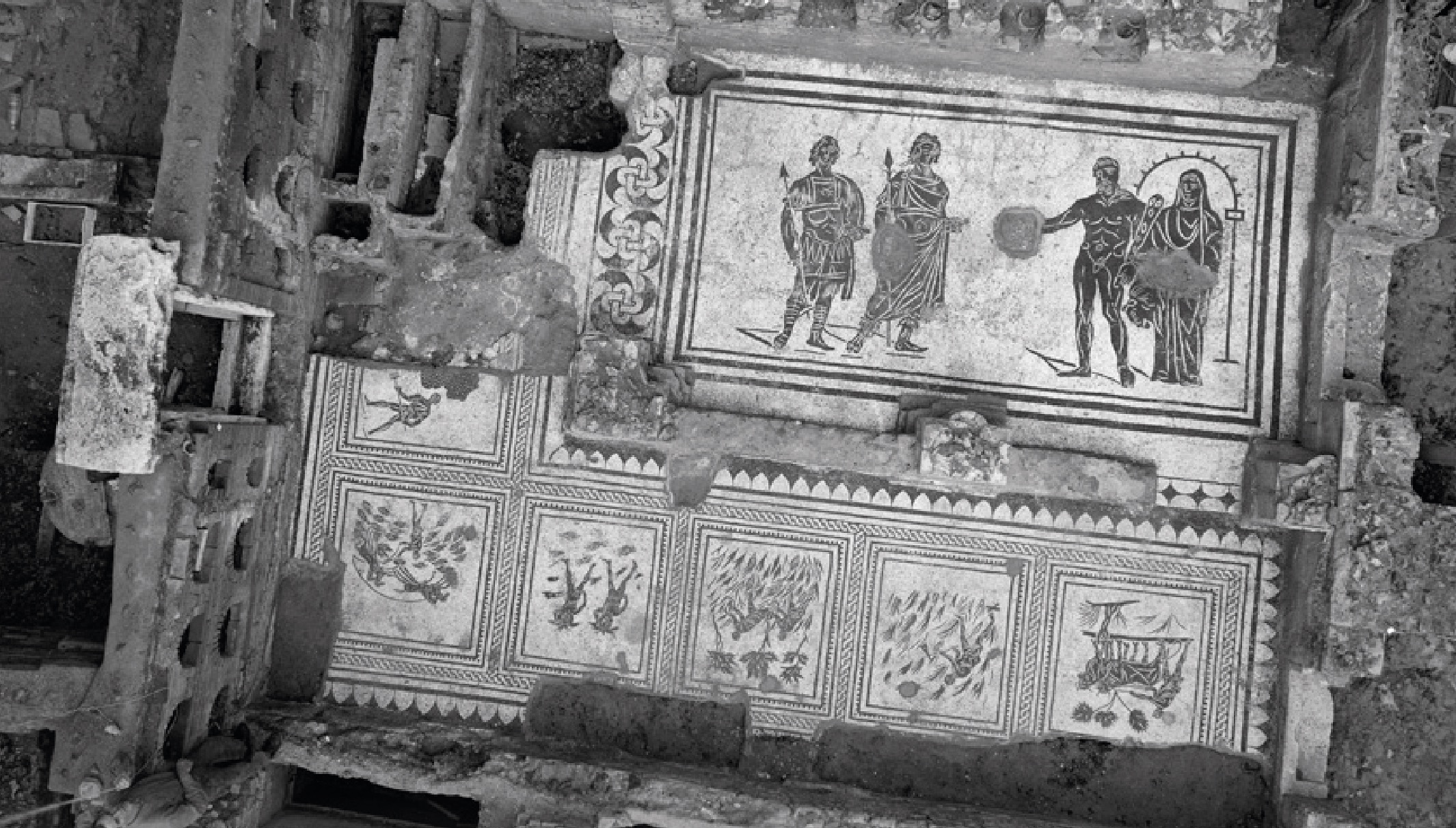
View of the mosaic floor from above
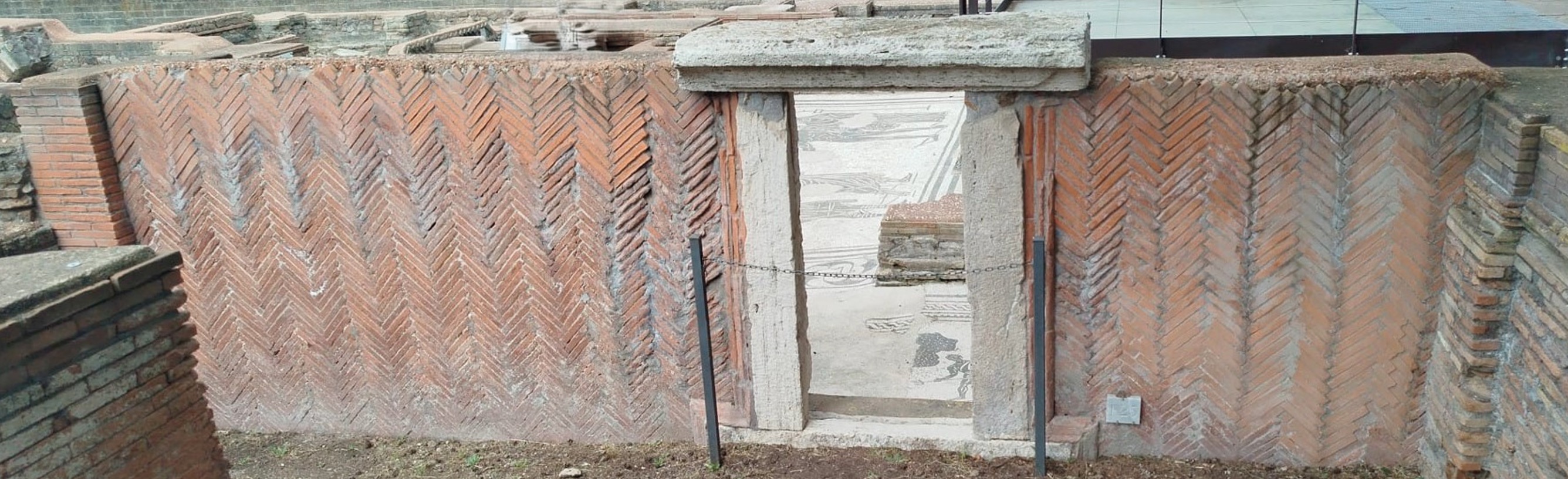
Façade of the tomb in opus spicatum
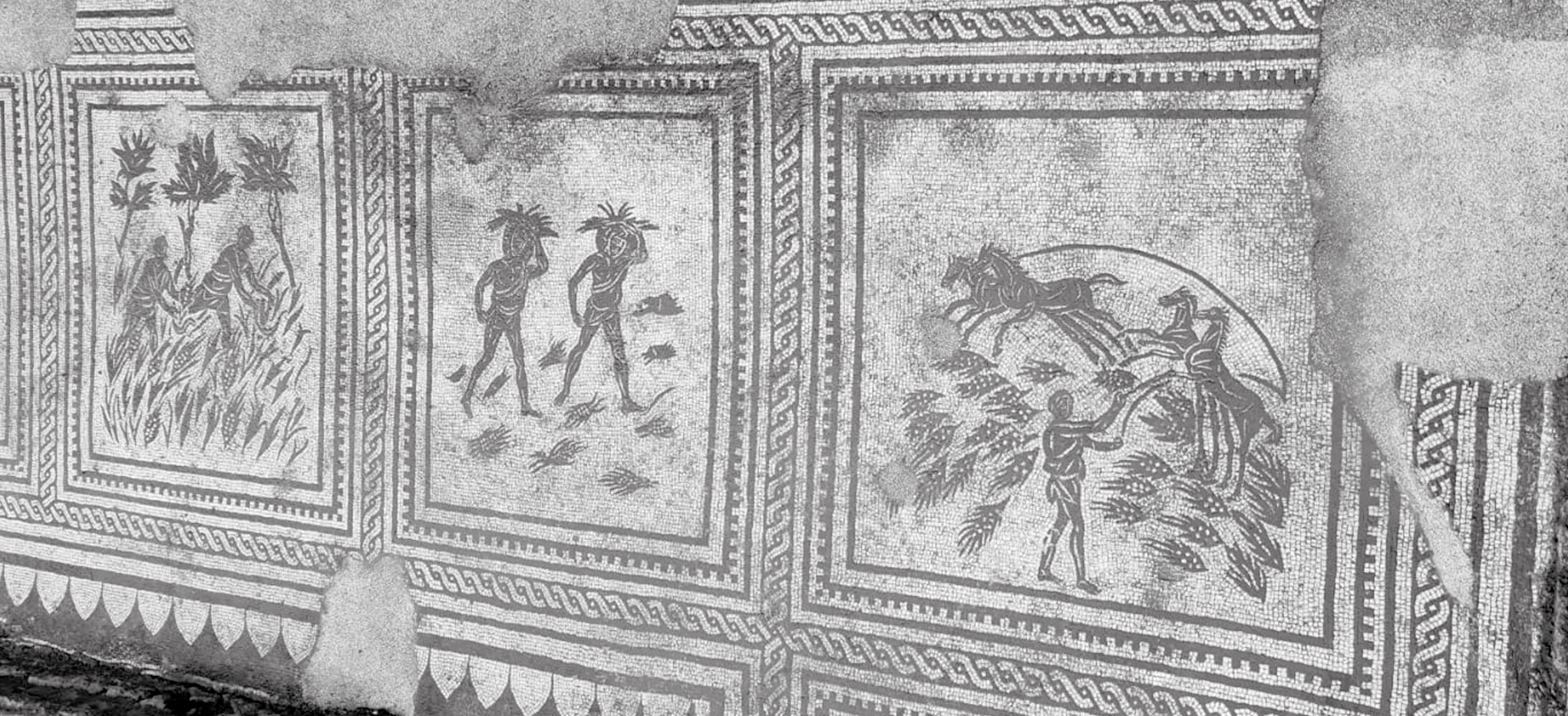
Portion of mosaic illustrating the phases of cultivating, harvesting and threshing grain