

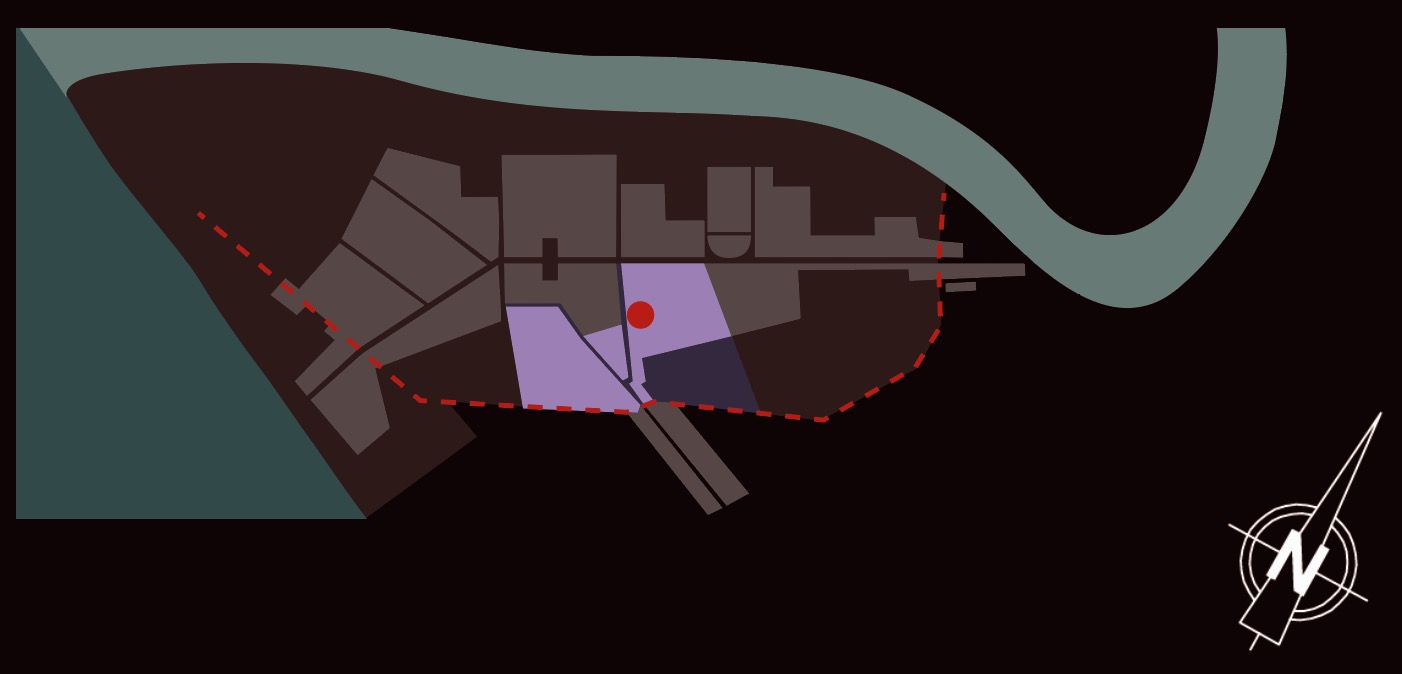
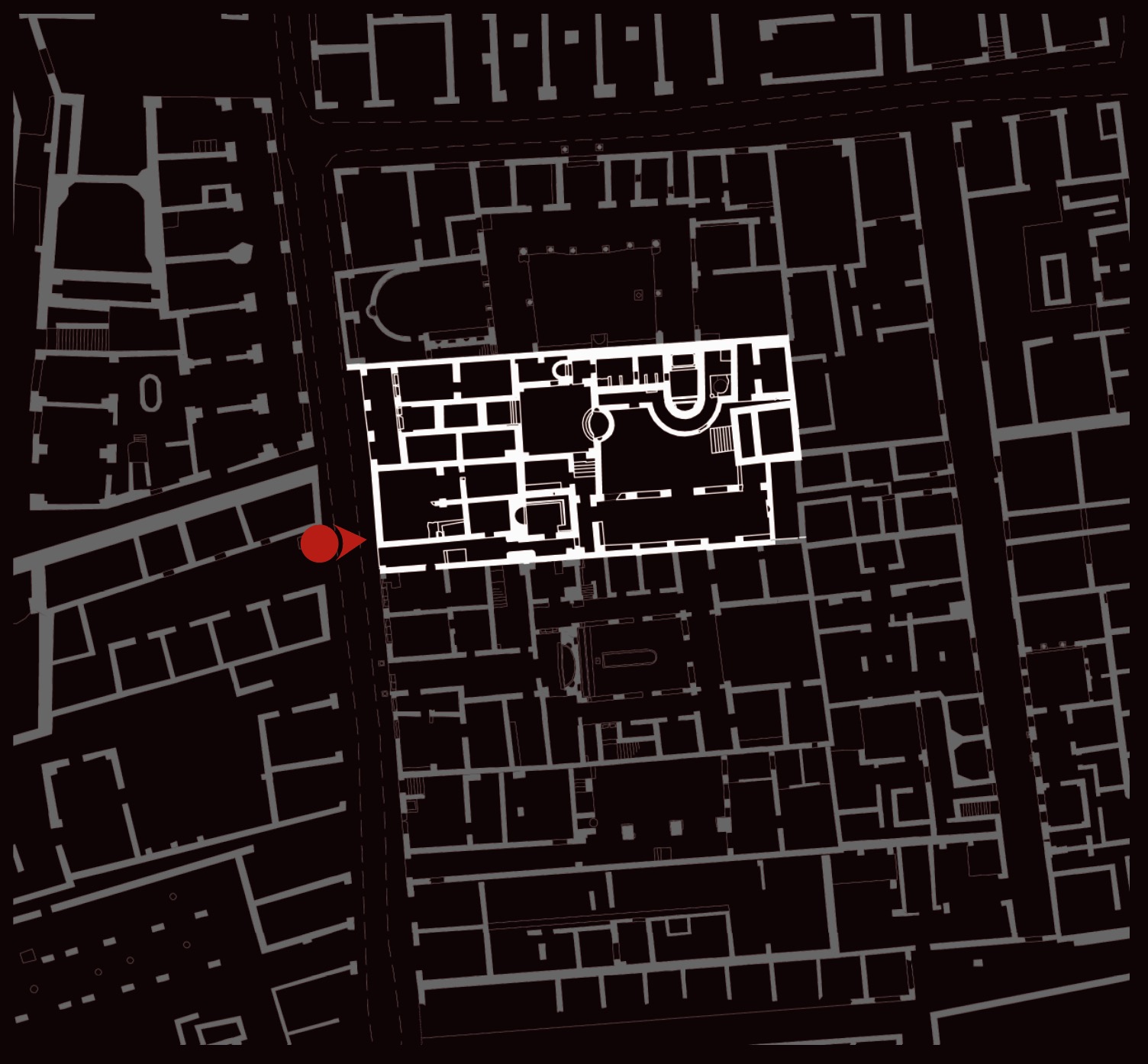
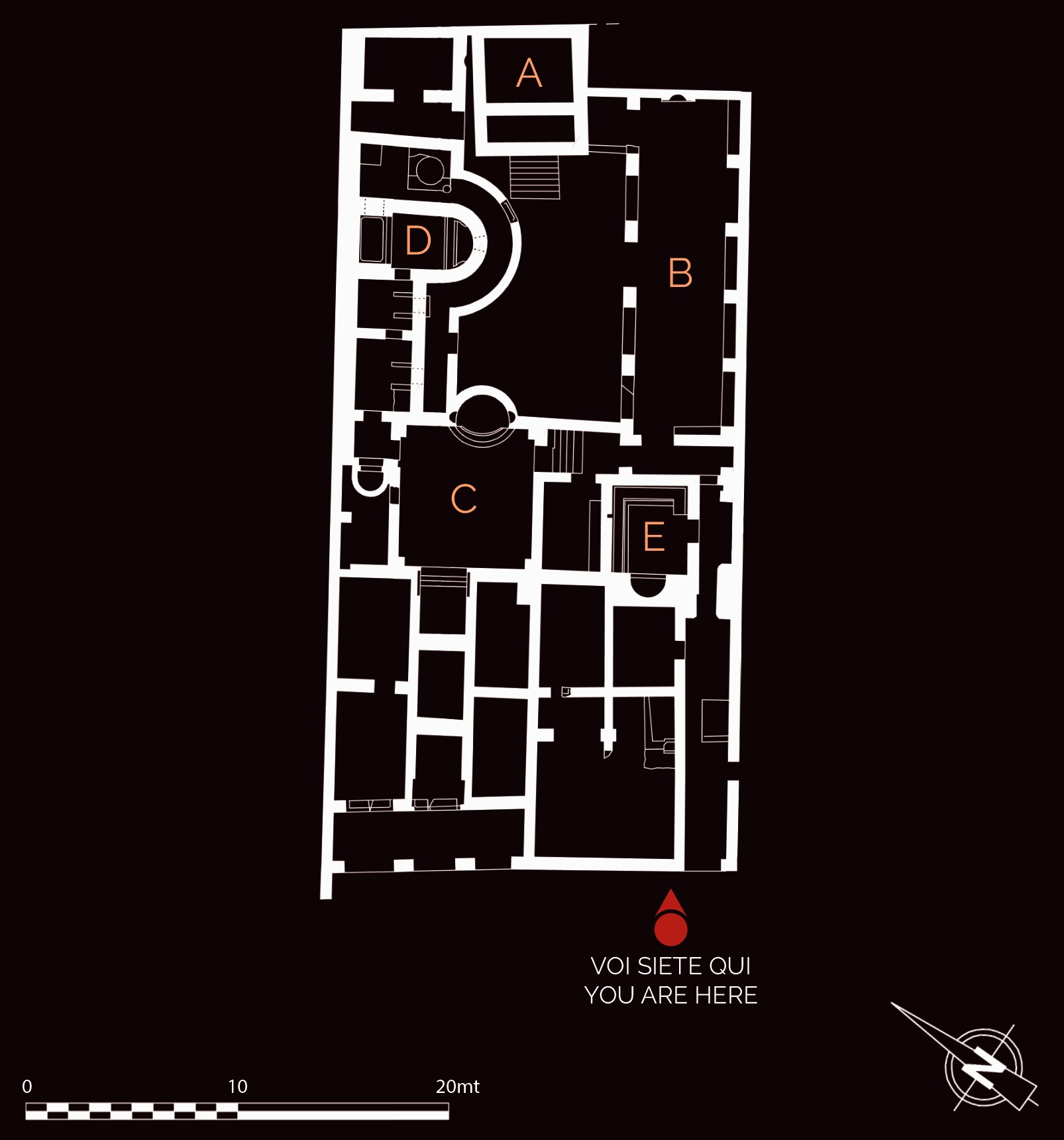
In the early 2nd century AD, the complex consisted of a series of shops with an open space behind them in which a small temple (A) dedicated to an unknown god was built in around AD 200. In the second half of the 3rd century AD, the building became the headquarters of a Neoplatonic philosophical college, as we know from the discovery inside of two portraits identified as the philosopher Plotinus (203/205-270 AD). The building had a meeting room (B) with benches and a niche at the back, and a small bath complex with a frigidarium (room for cold baths), paved with a mosaic made of large tesserae in green marble (C). The heated rooms, also marble-panelled, were located in the north sector of the building (D).
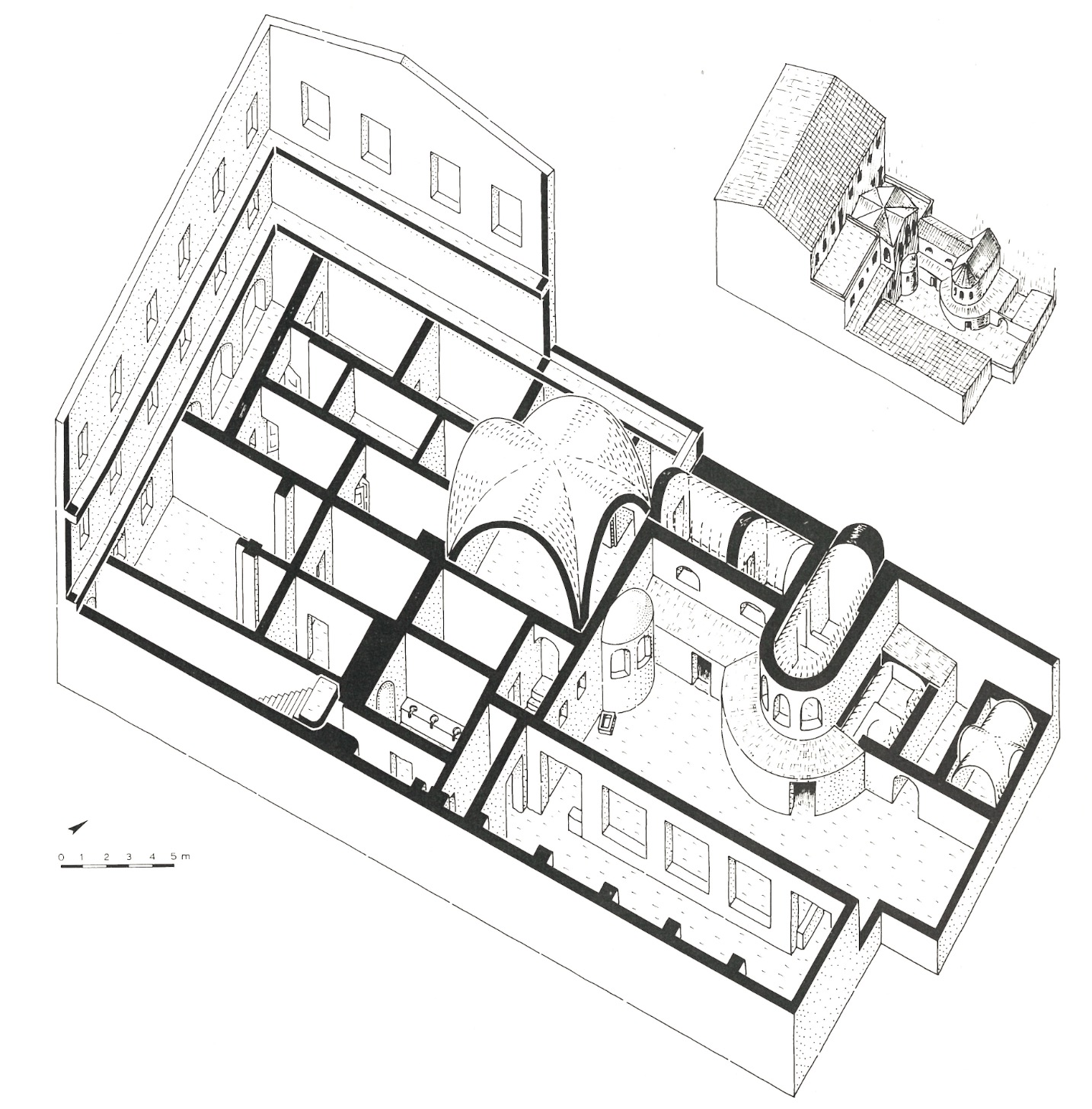
Axonometric reconstruction of the final phase of the building
(J.S. Boersma)
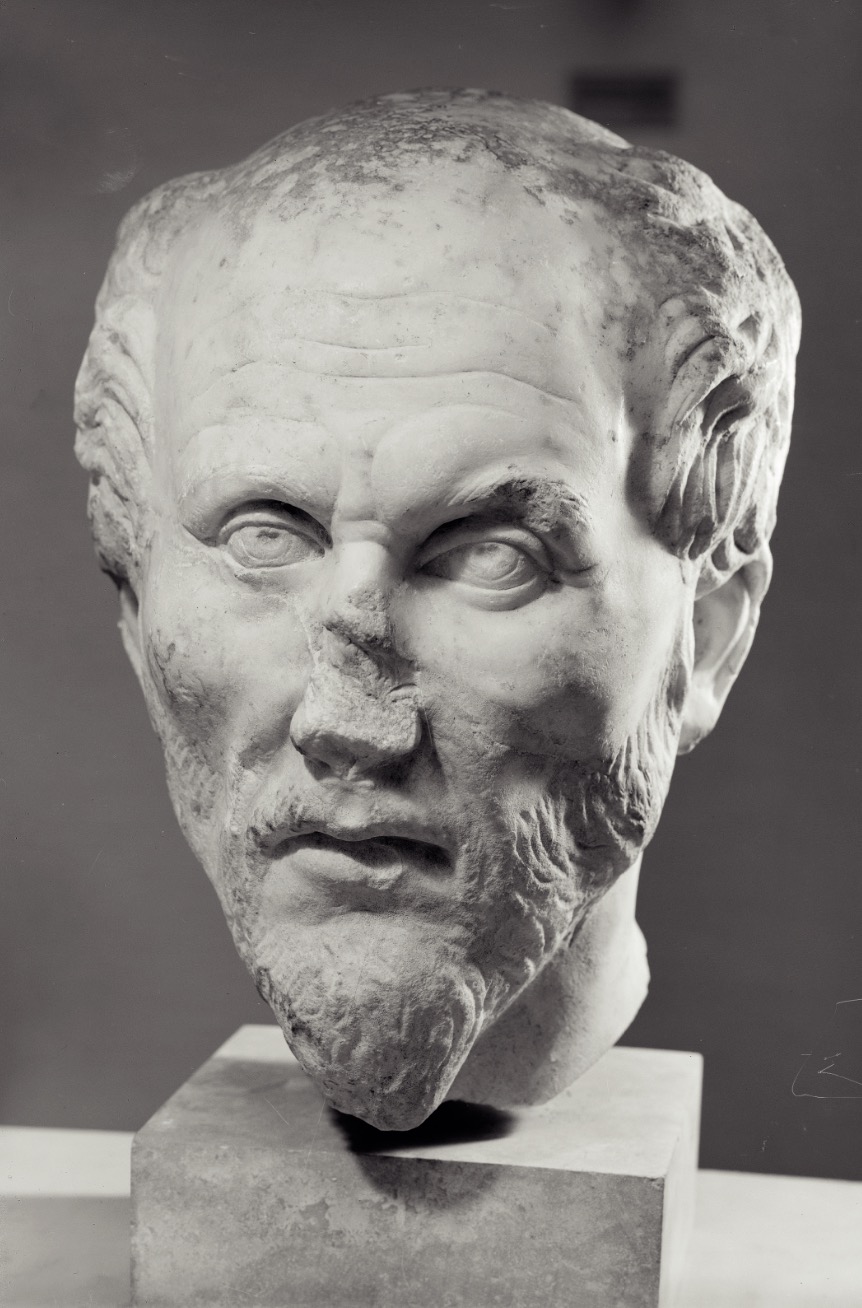
Marble portrait, identified as the philosopher Plotinus, now in the Museo Ostiense
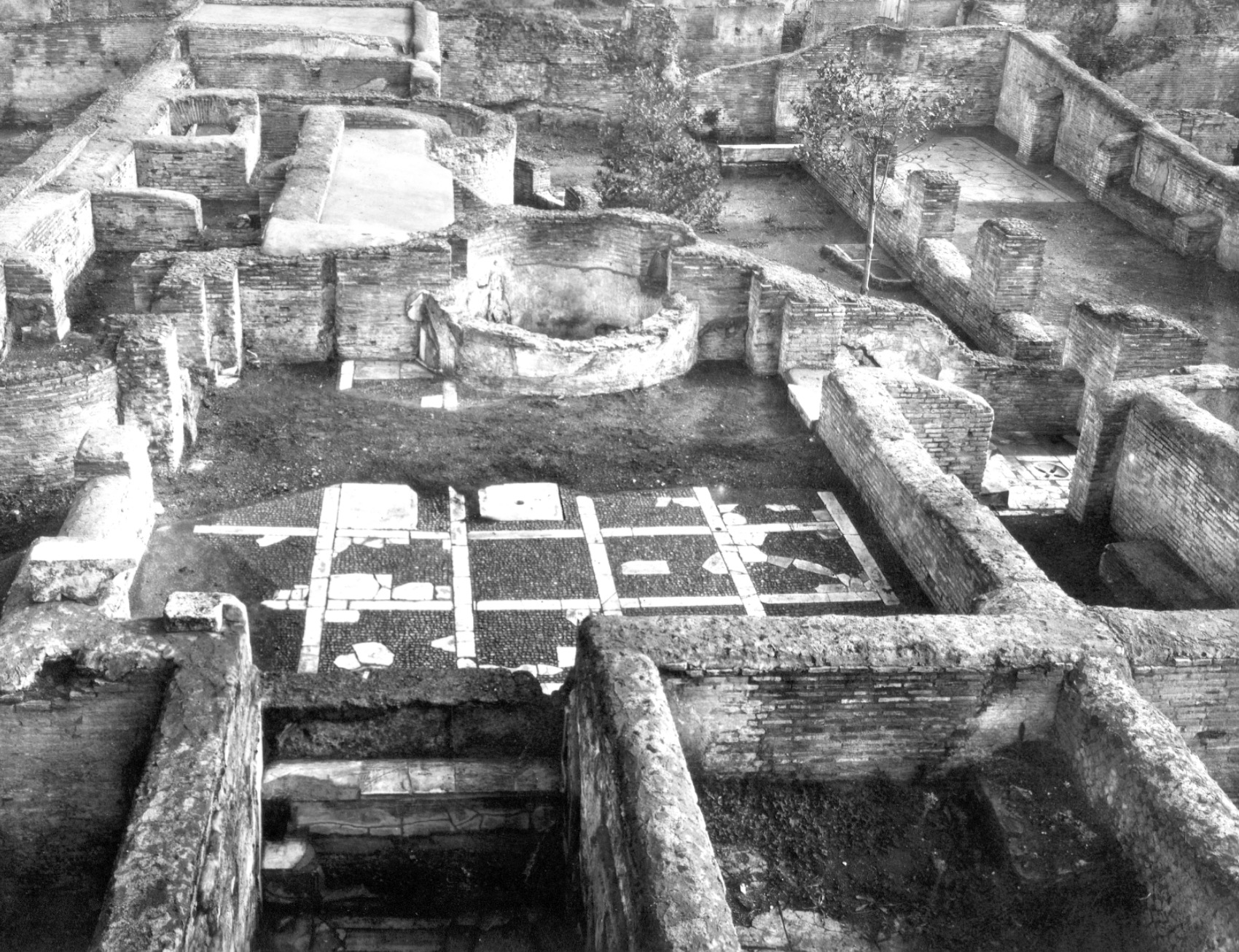
General view of the complex
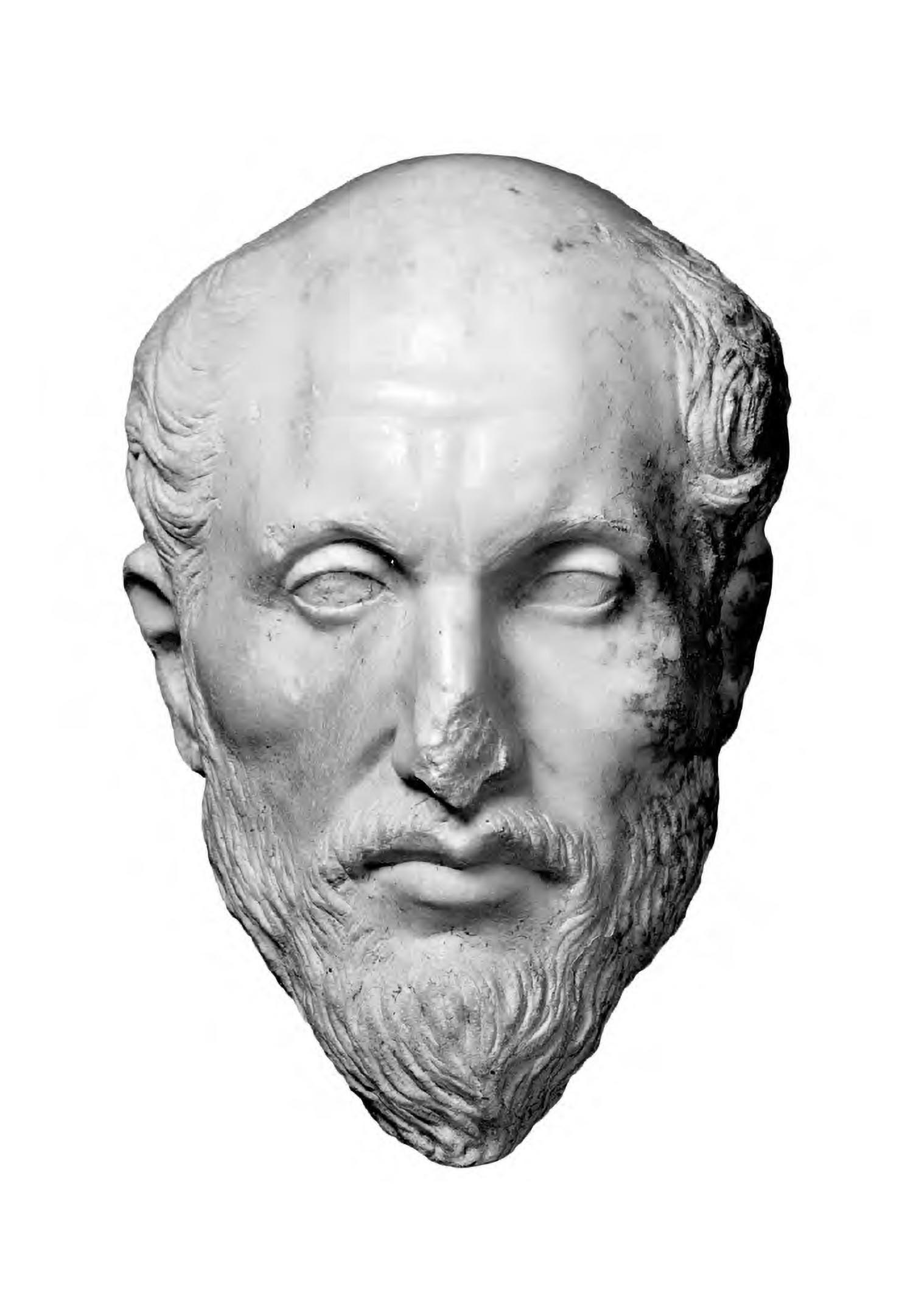
Portrait of a philosopher discovered inside the baths