


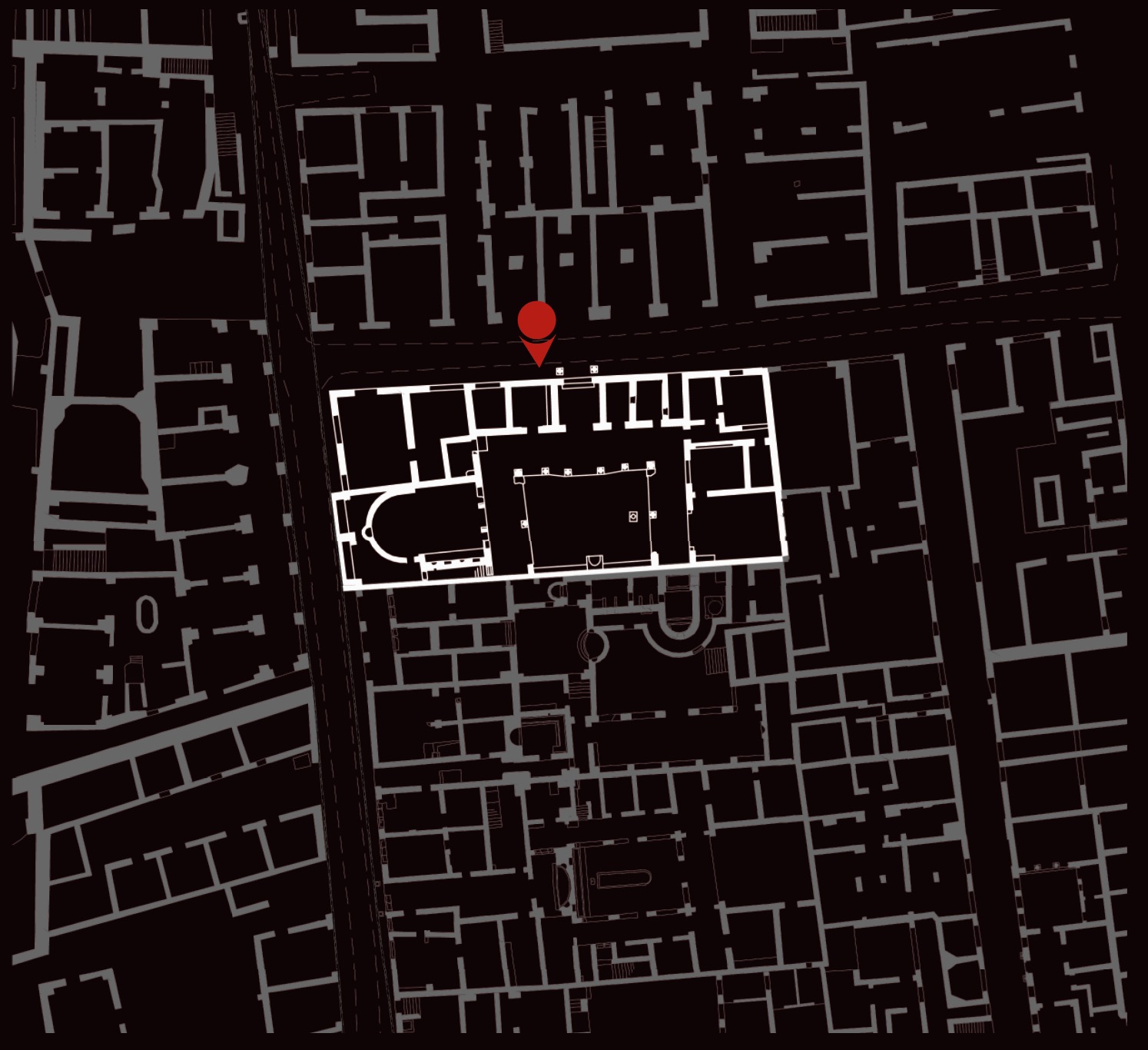
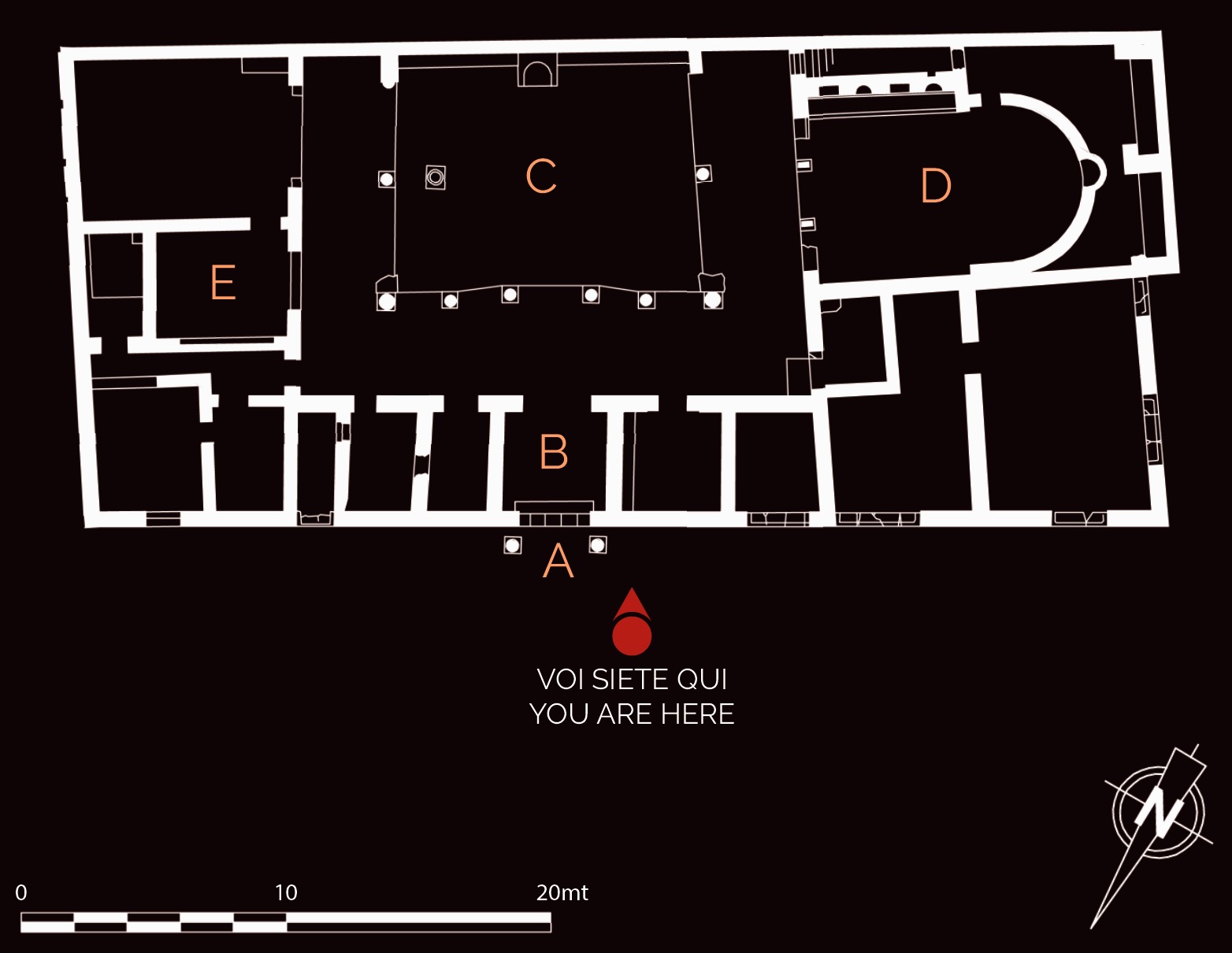
A Monumental entrance
B Vestibule
C Peristyle courtyard
D Banqueting hall
E Heated room
The aristocratic domusth (house), whose current appearance dates to the 4 century AD, was installed inside a house of the mid-2nd century AD of which it preserved the peristyle in the central courtyard. The entrance was monumentalized with a prothyrum (colonnaded entrance) (A) that led into a vestibule (B). This in turn gave access to the large courtyard (C), against the back wall of which is a cast of the statue of a goddess identified as Fortuna Annonaria (the goddess of food supplies) or as a personification of Ostia. The main room (D) was adorned with marbles, a fountain and probably statues; the apse must have hosted the stibadium, the semi-circular triclinium couch on which meals were eaten. A private room of the house (E) was converted into a heated room and paved with a mosaic depicting mythological scenes.
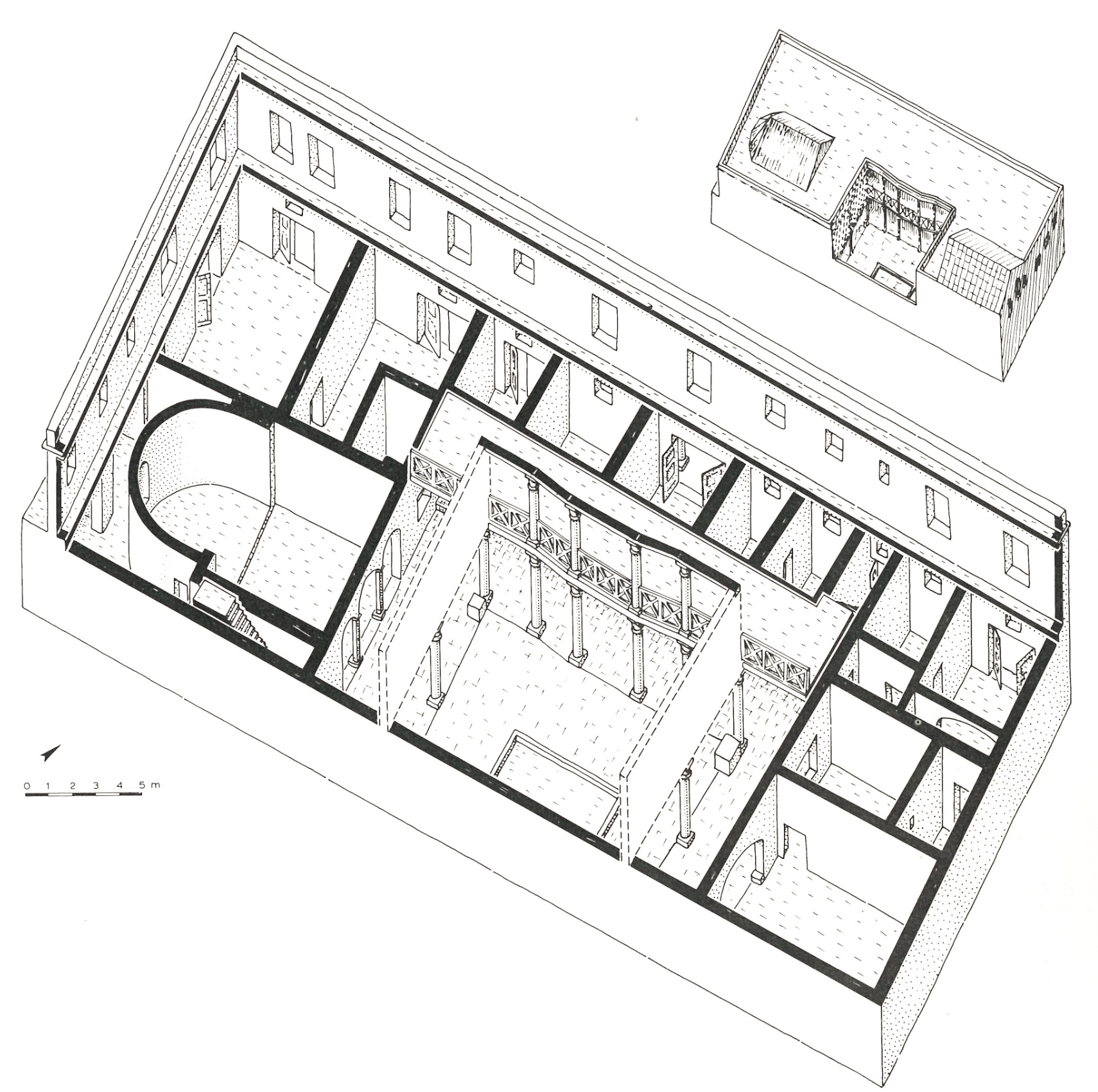
Axonometric reconstruction of the final phase of the building
(J.S. Boersma)
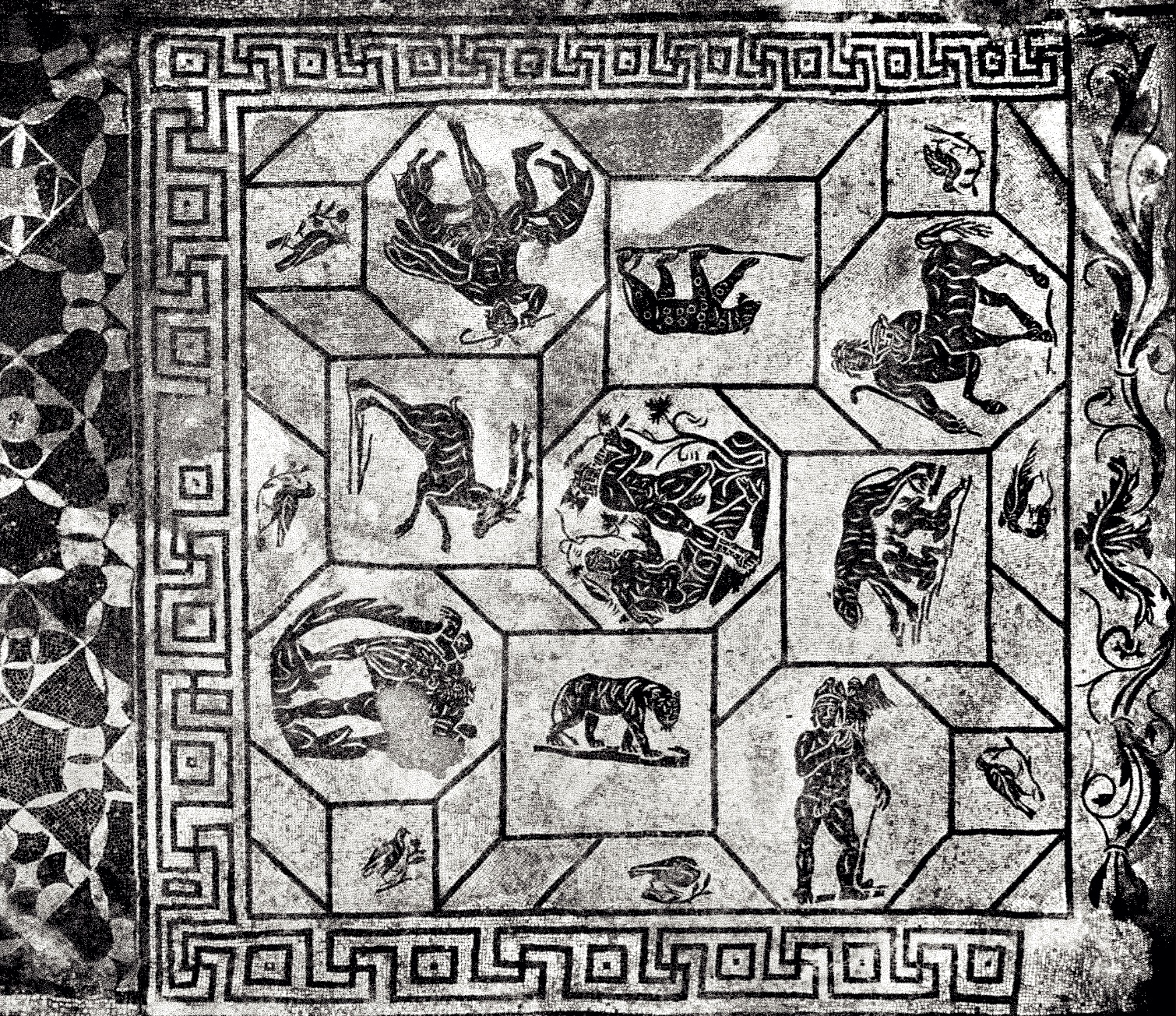
Mosaic floor of the heated room (E)
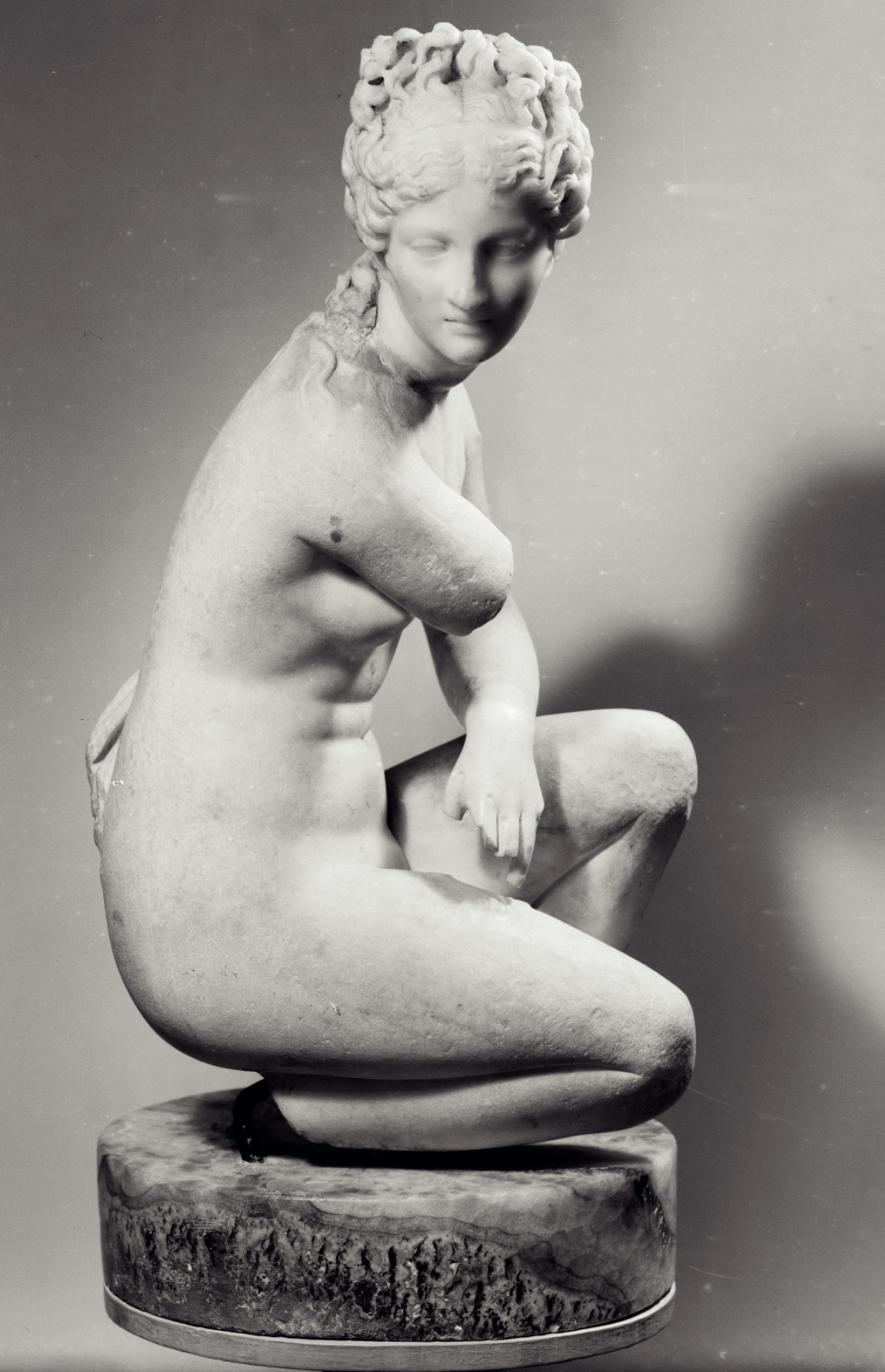
Statue of Venus found inside the domus
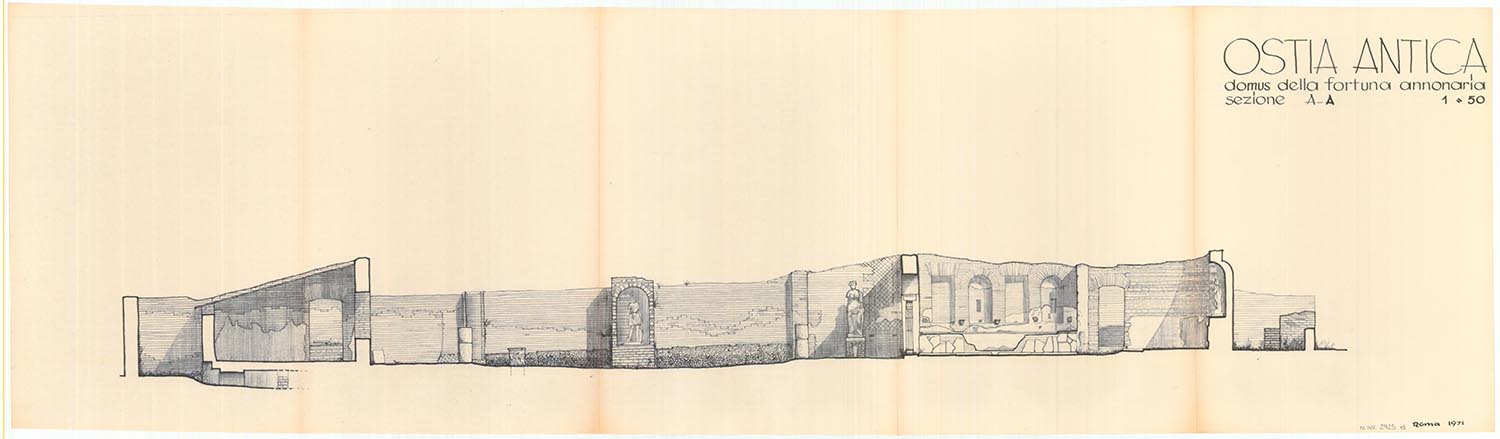
Section/prospect of the domus (Dall’Osteria, De Feo, Iokilehto, Zepeda)
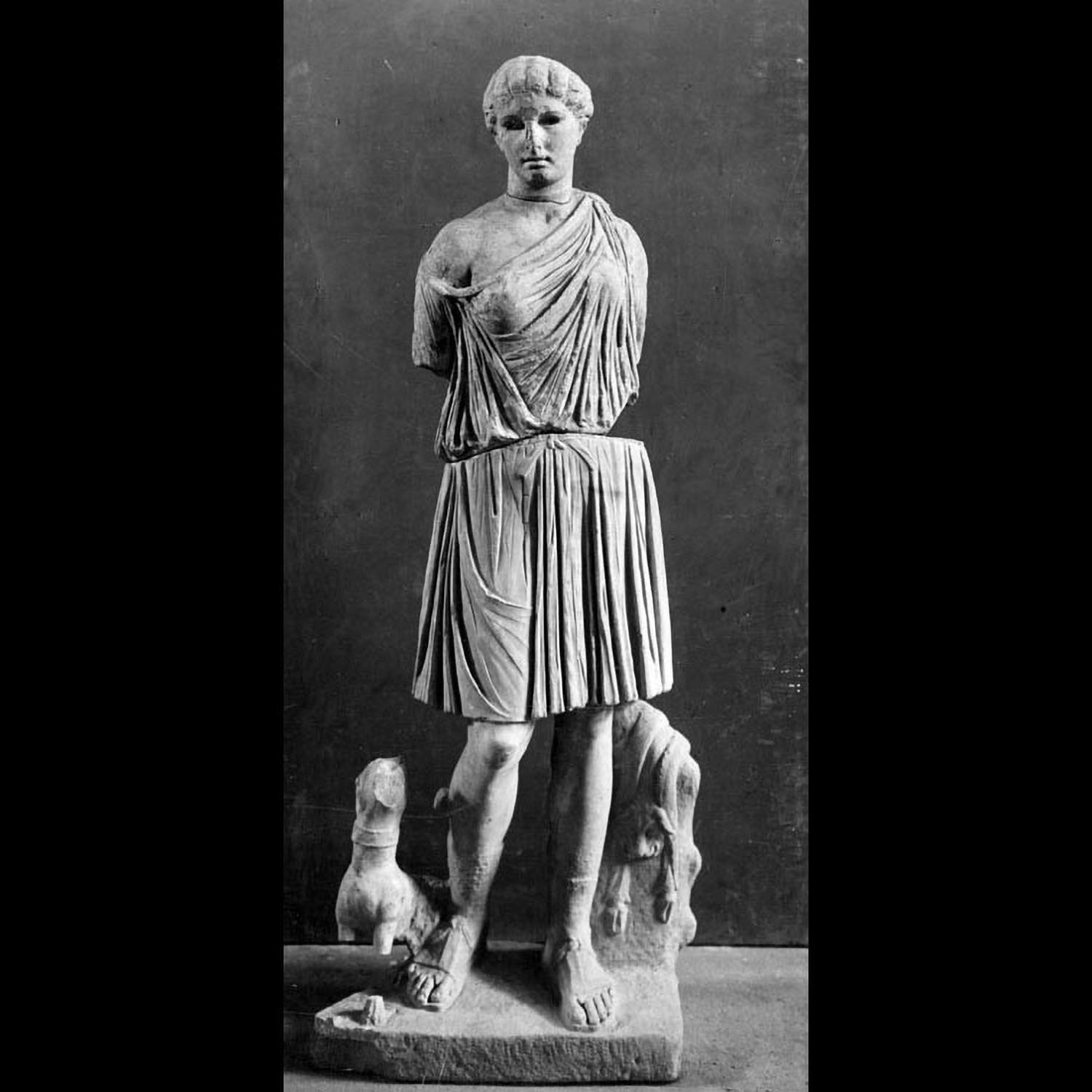
Statue of Diana discovered in the domus
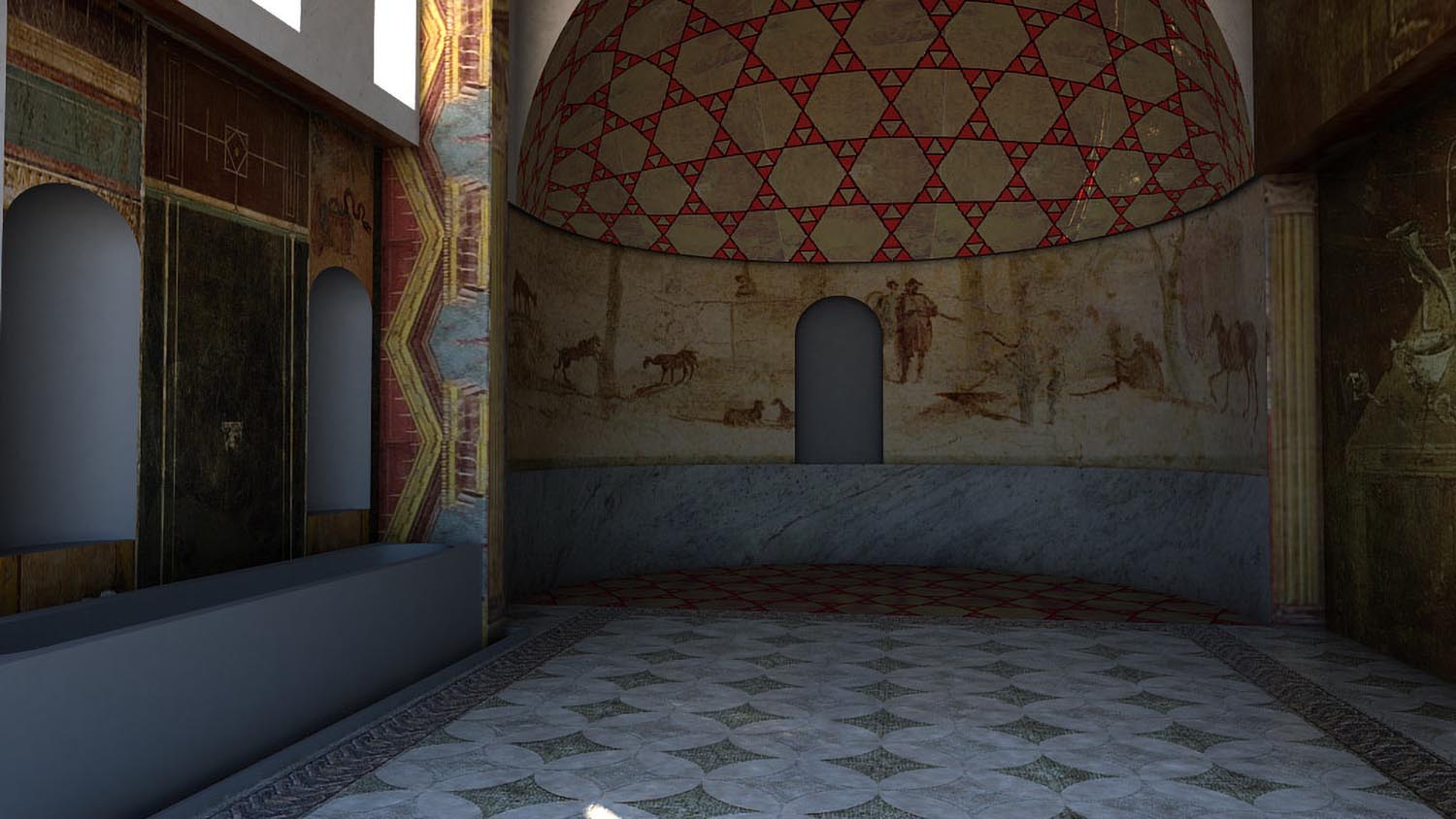
Free reconstruction of the domus’s stibadium
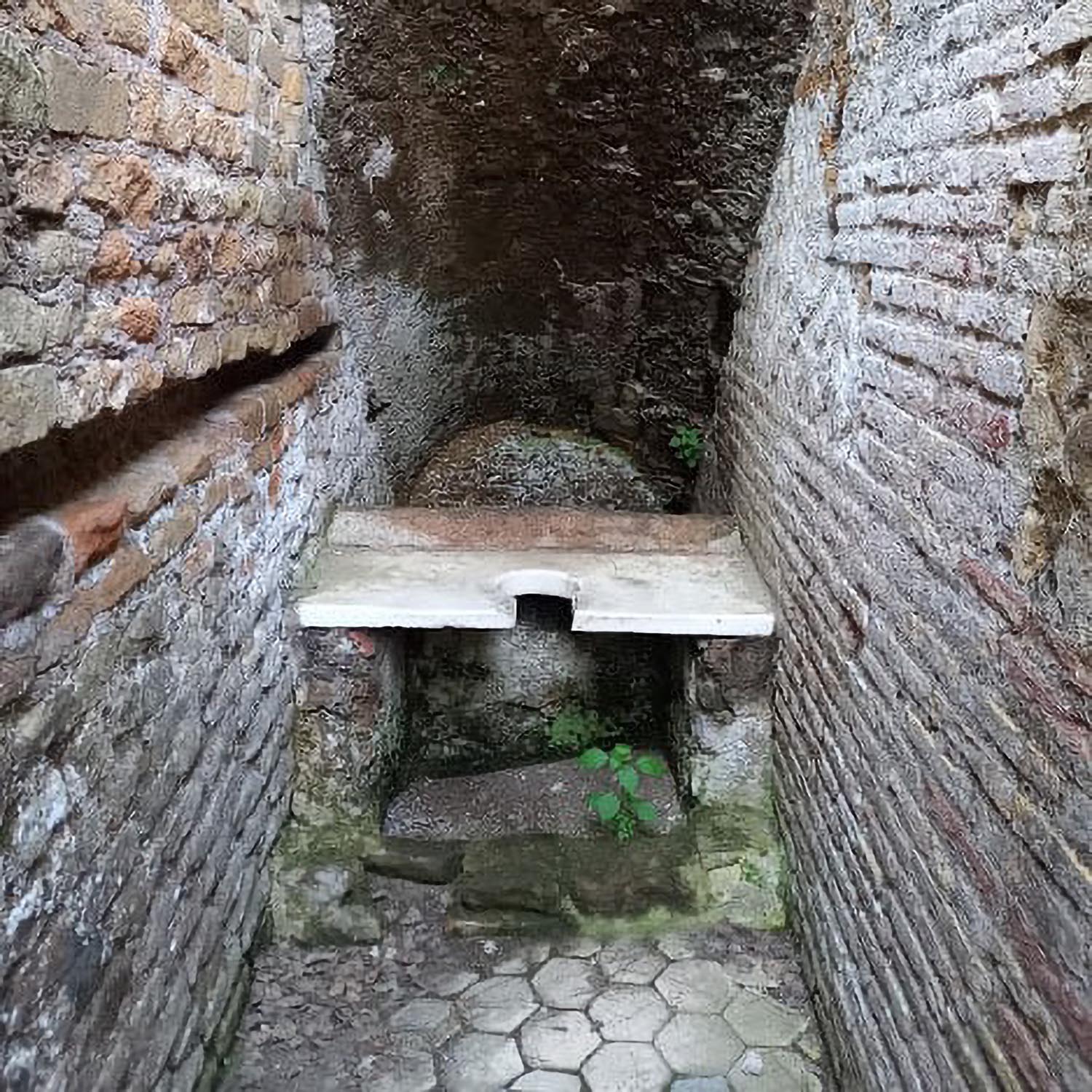
View of the domus’s latrine