

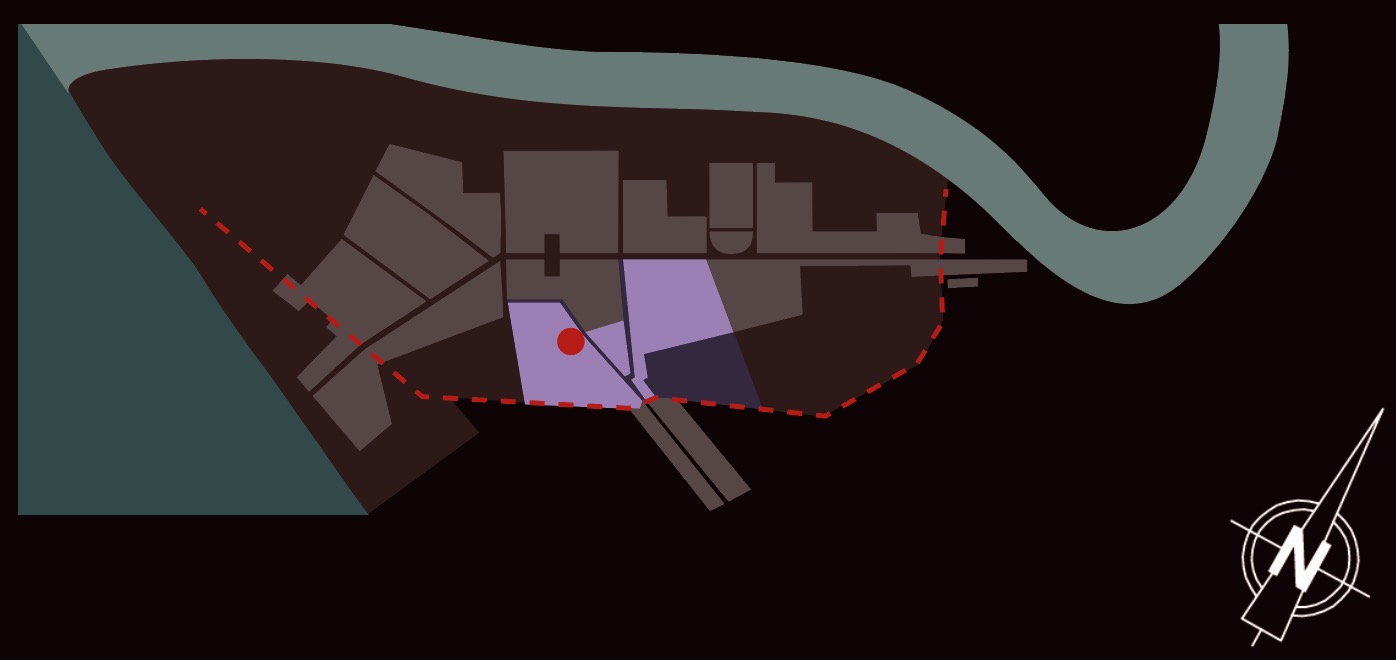
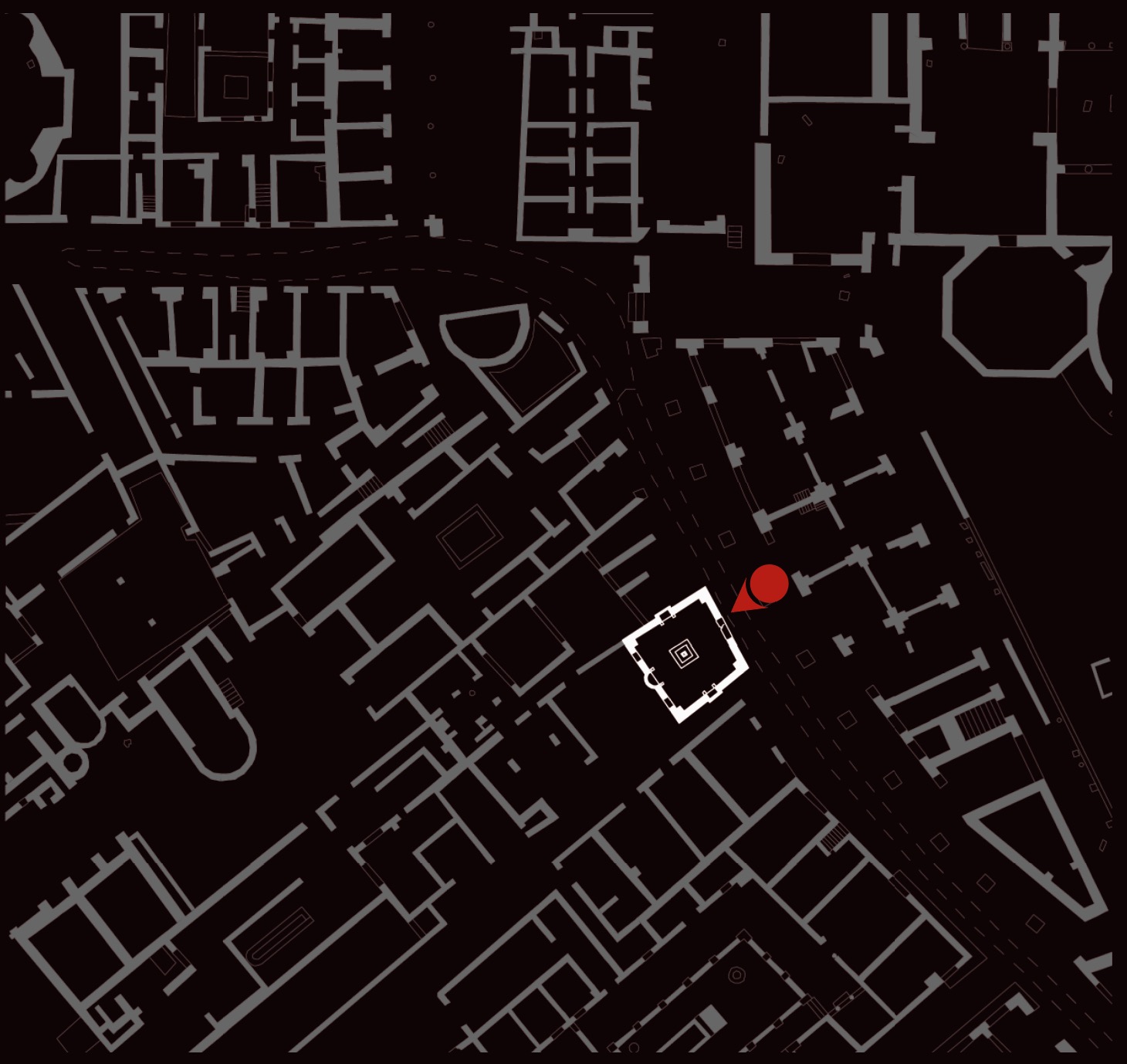
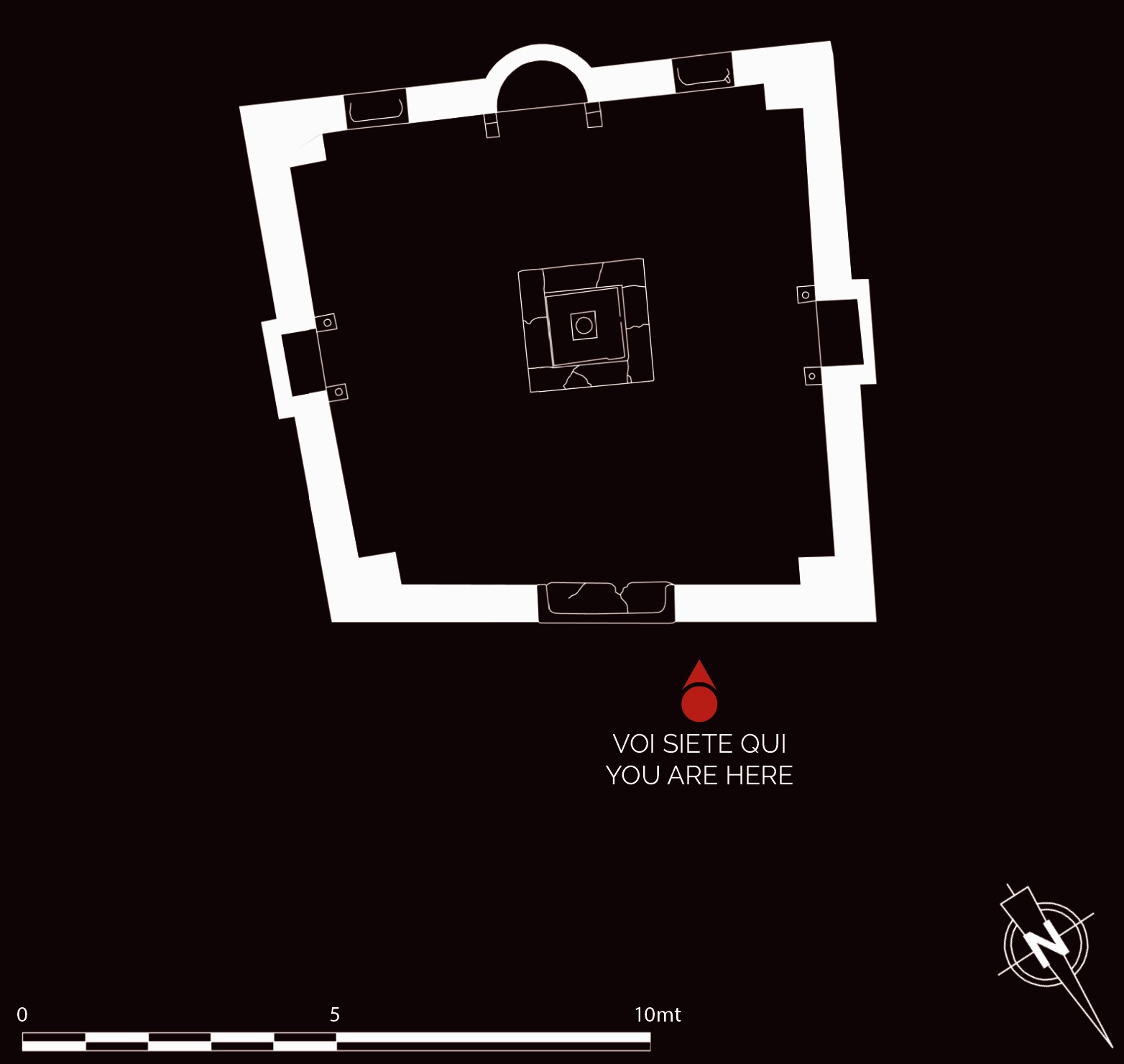
The monumental nymphaeum, built in the 4th century AD, takes the form of a single square room, closed and completely covered in marble panels, which provided a backdrop for the jets of water that gushed from a labrum (basin) set inside a central square pool. The side walls of the nymphaeum had two rectangular niches, each with a marble statue placed inside it. These were Roman copies of a type attributed to the Greek sculptor Lysippus depicting Eros stringing his bow and are now in the Museo Ostiense. In the back wall was a semi-circular niche, perhaps adorned with a statue of Venus.
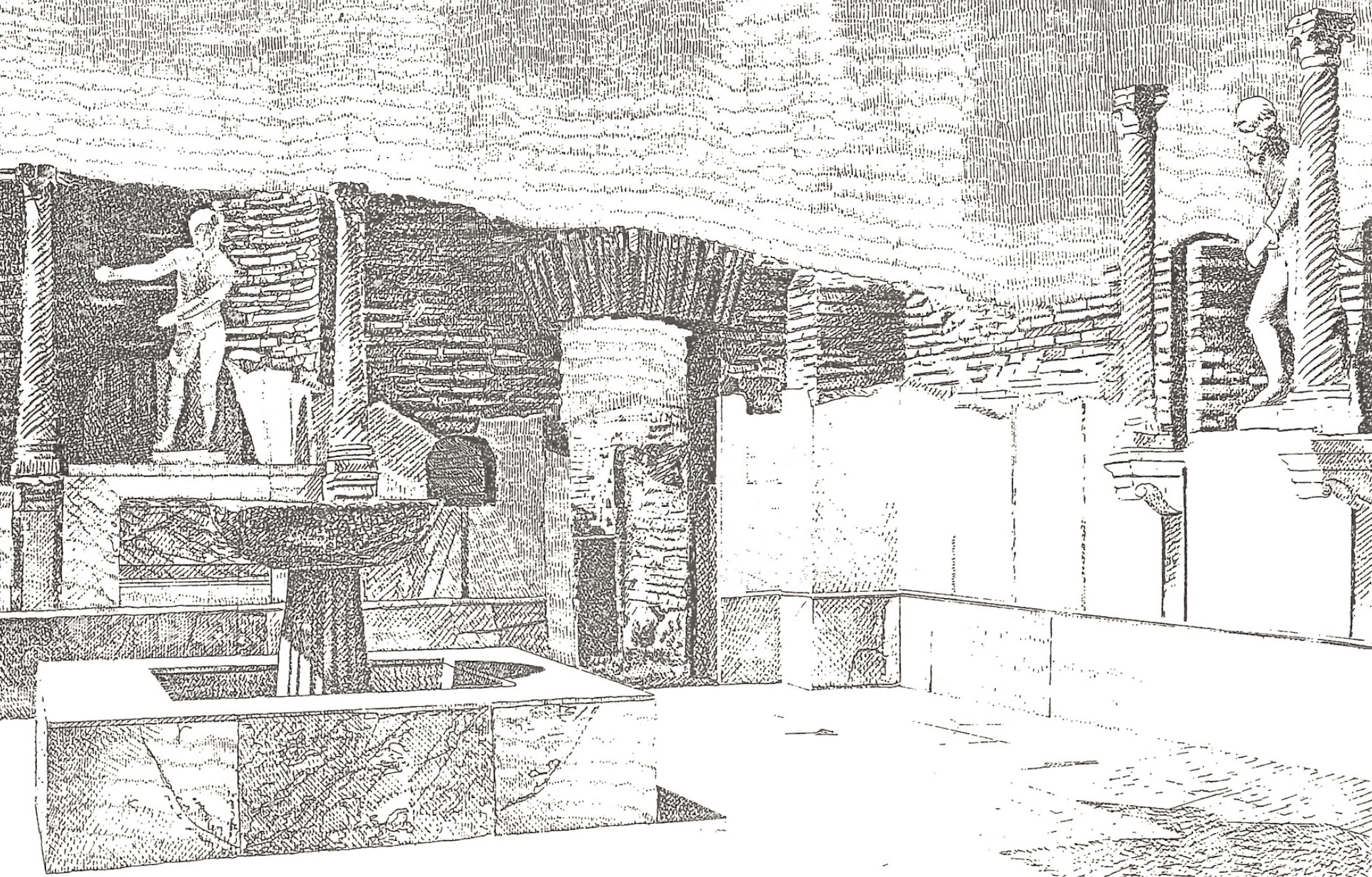
Reconstruction drawing of the nymphaeum
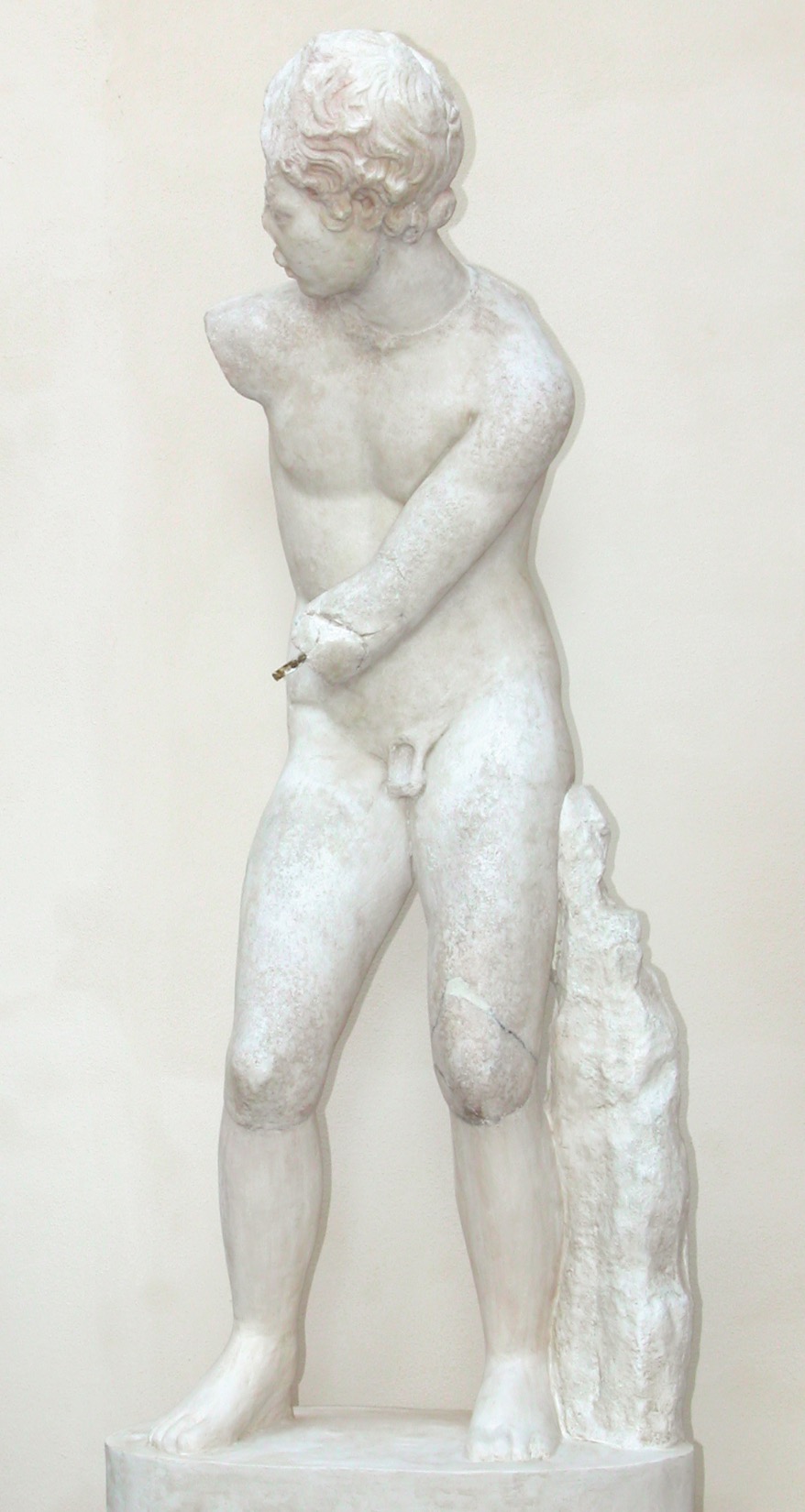
Statues of Eros stringing his bow, held in the Museo Ostiense
(Coen, A. Eula, P. Petrucci, M.C. Santorelli)
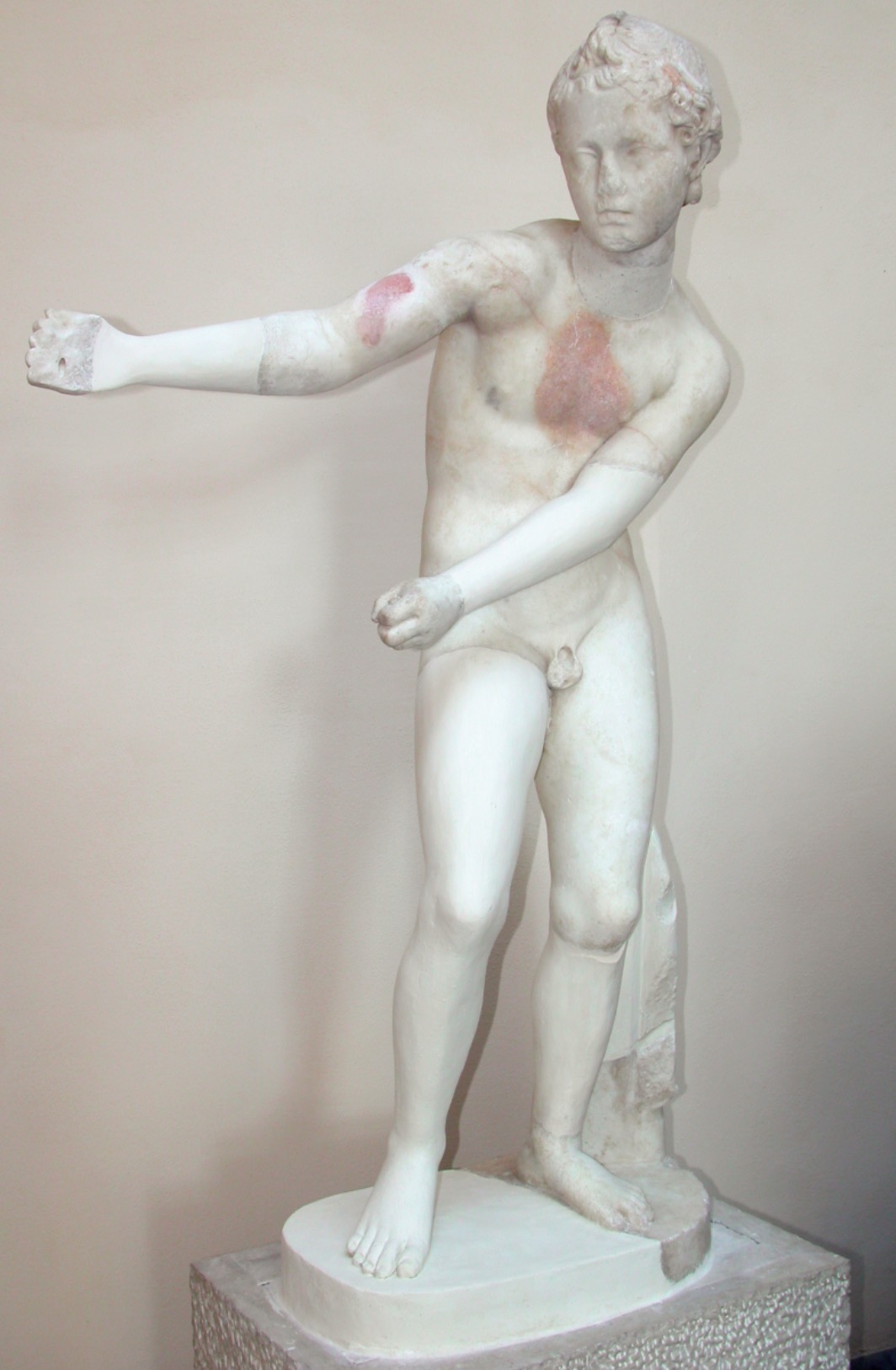
Statues of Eros stringing his bow, held in the Museo Ostiense
(Coen, A. Eula, P. Petrucci, M.C. Santorelli)
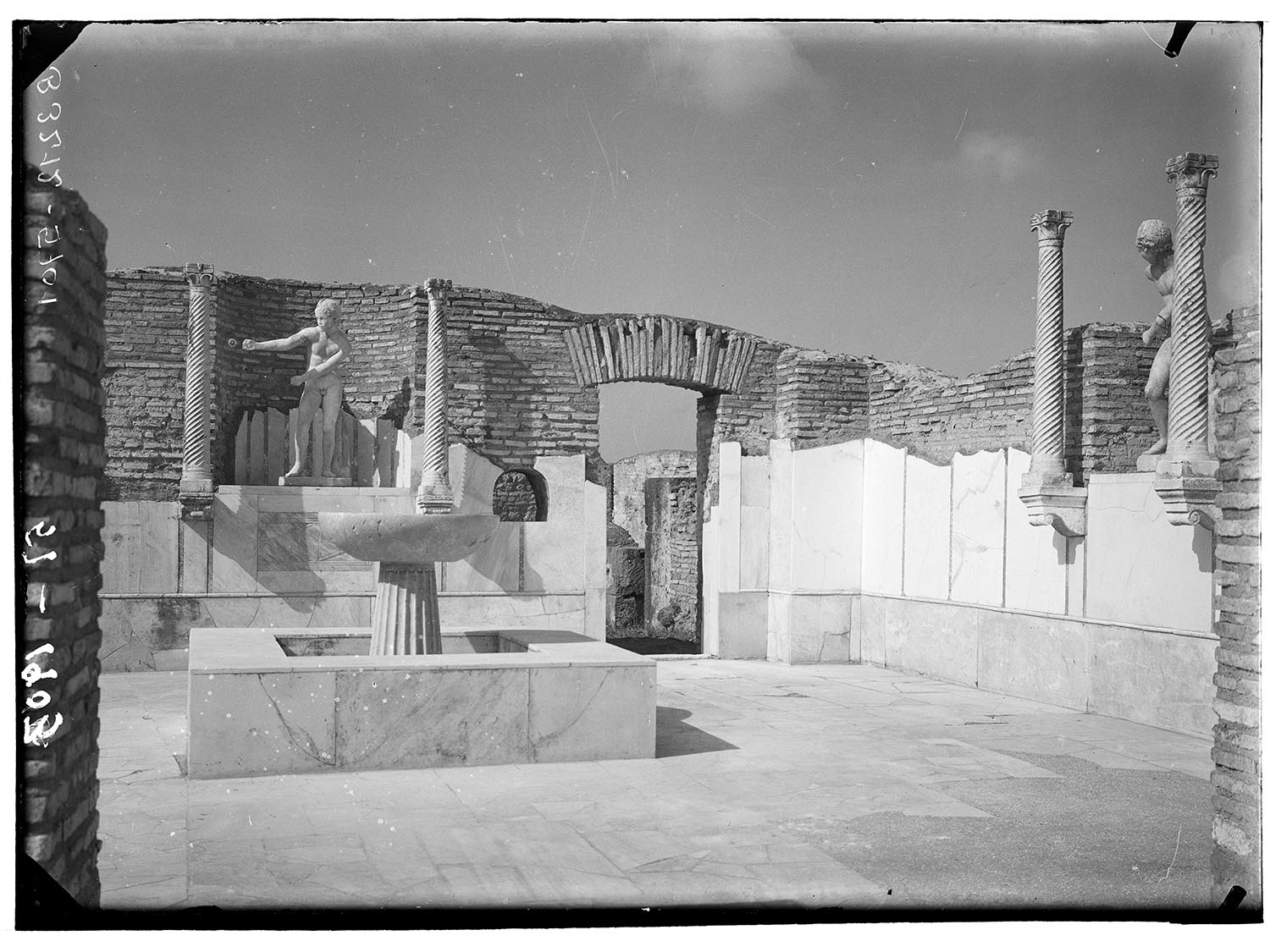
General view of the nymphaeum
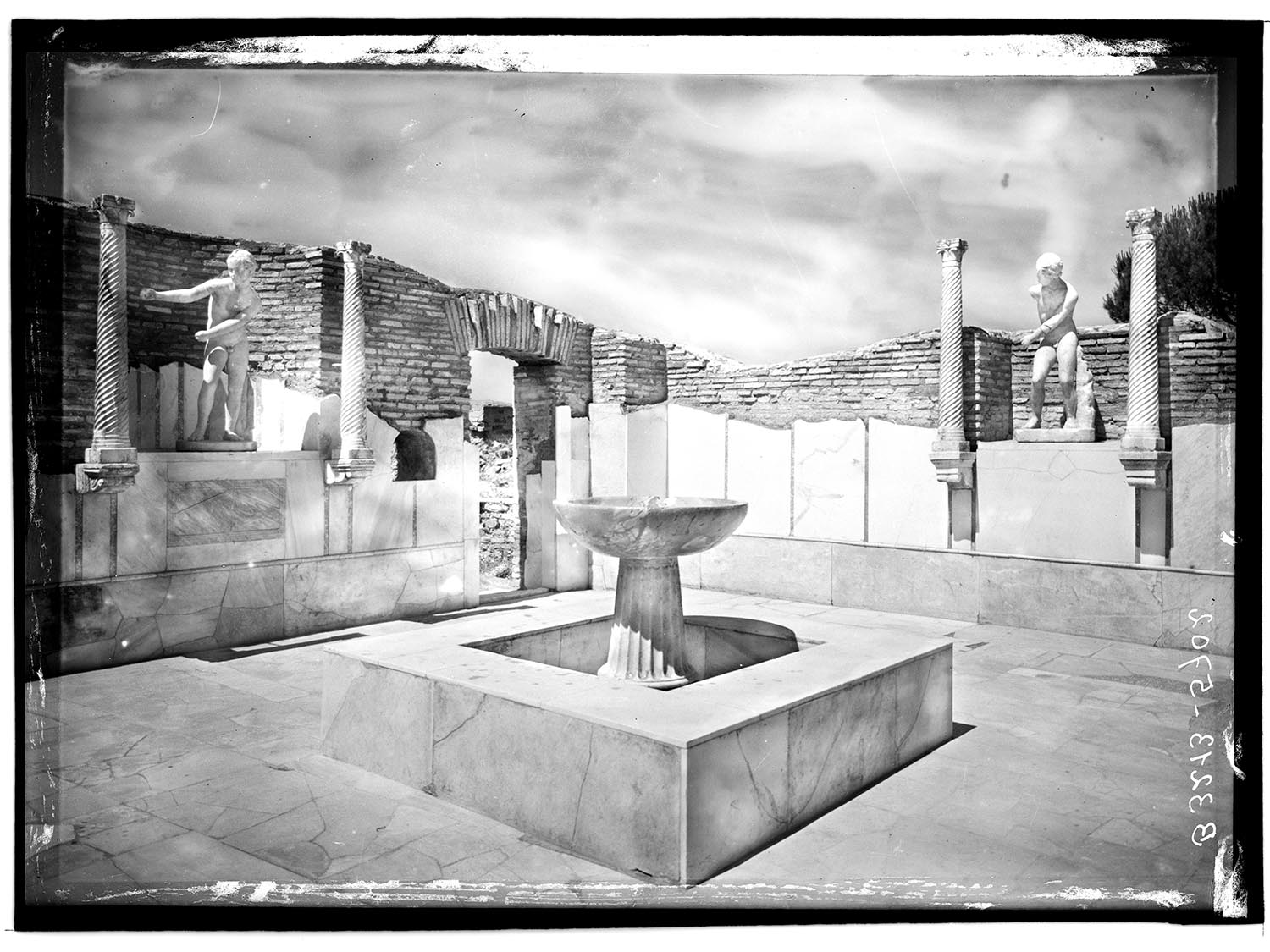
General view of the nymphaeum