

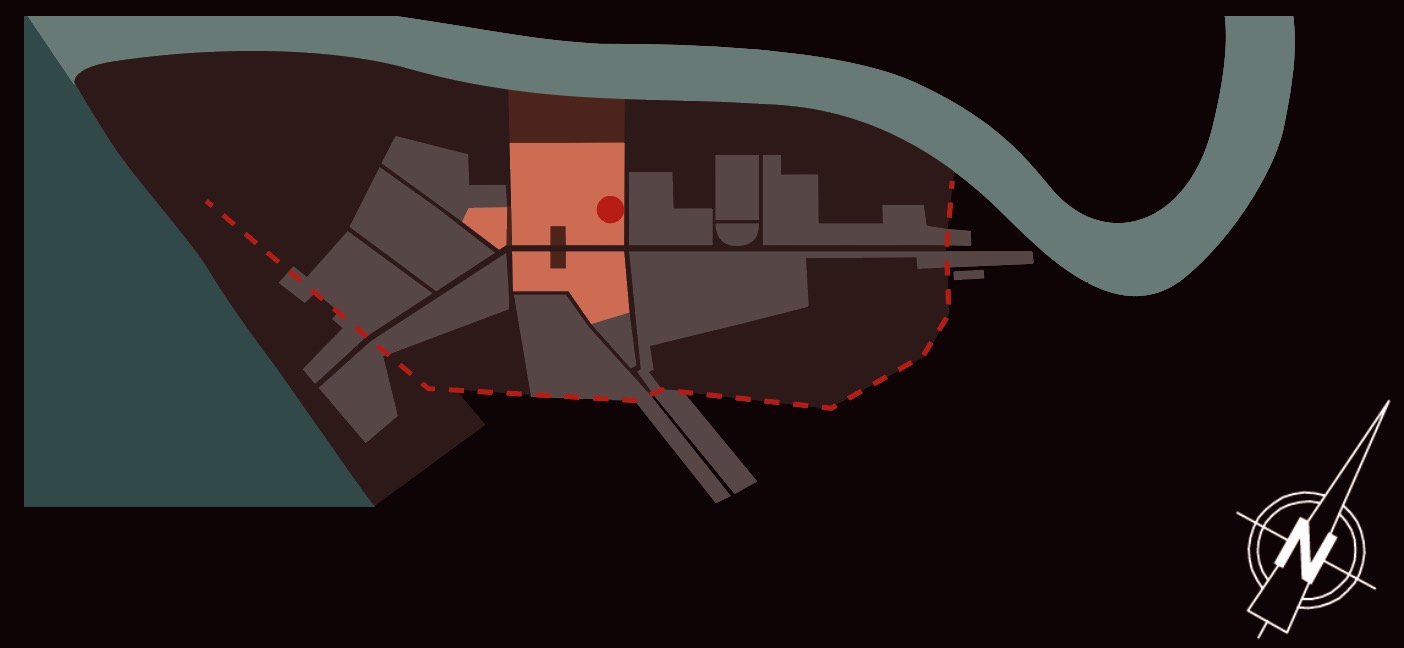
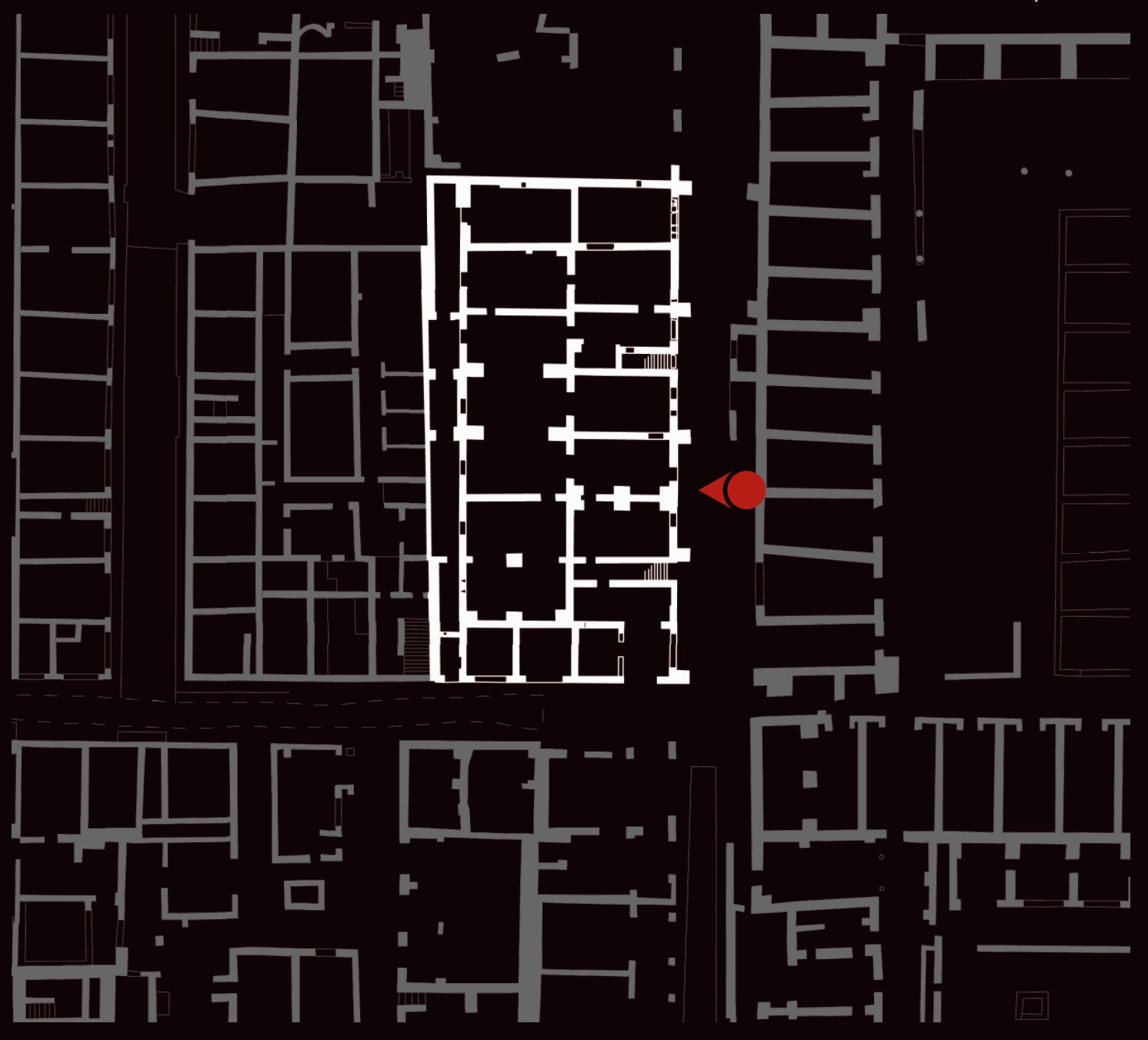
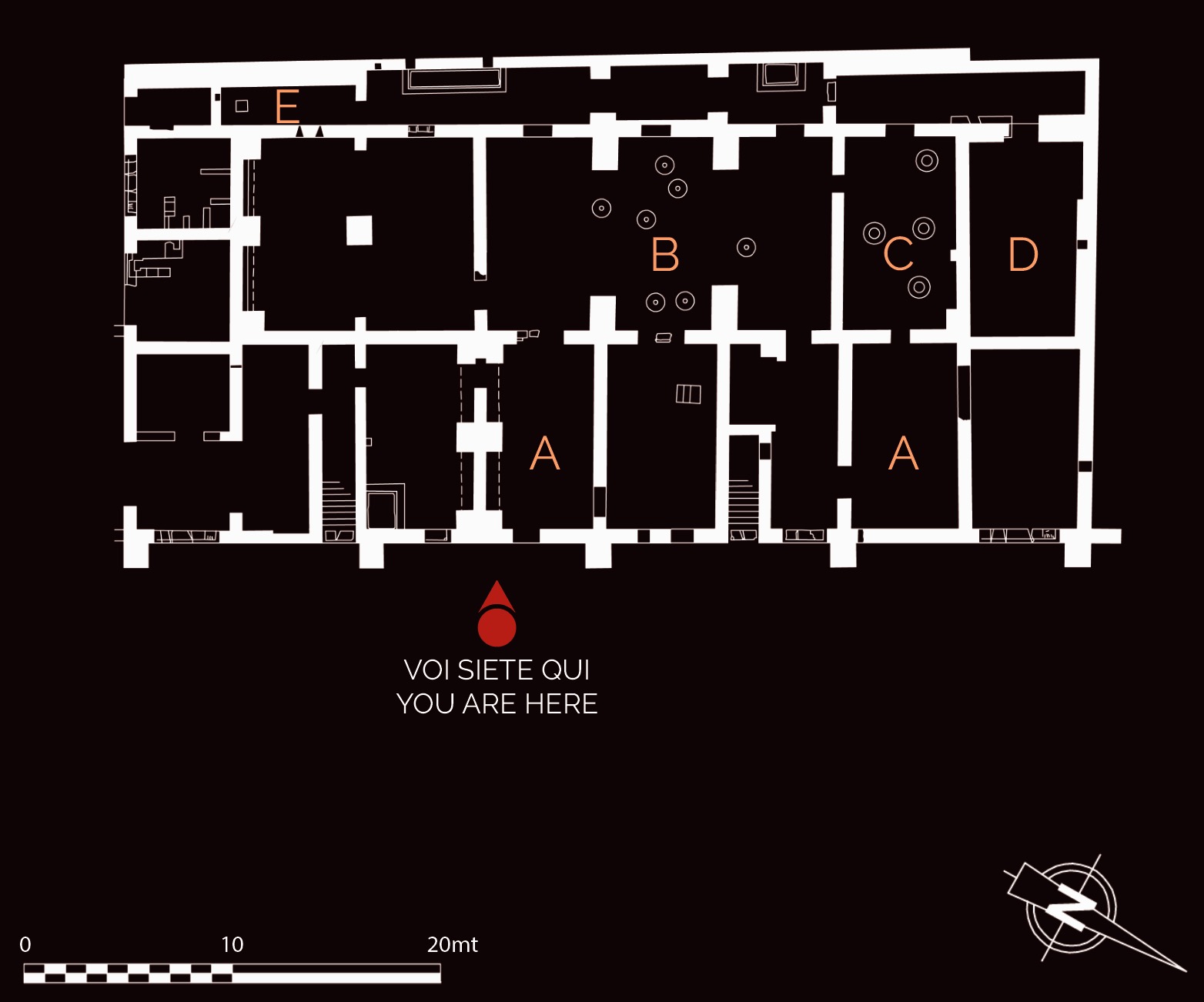
The building, used for the production and sale of bread, was built in around AD 120 and was destroyed by a fire in the late 3rd century AD. It had six tabernae (shops) (A) at the front, whilst the inner rooms, floored with road paving stones, served to mill the flour (B) and make the dough (C), as we know from the presence of millstones and basins made of lava stone; the bread was baked in the corner room, which has a large oven (D). The bakery was connected directly to the Grandi Horrea on the opposite side of the street, where grain was stored. In the 3rd century, an uncovered passageway behind the bakery was turned into a cult space for Silvanus (E), the popular god of fields and woods.
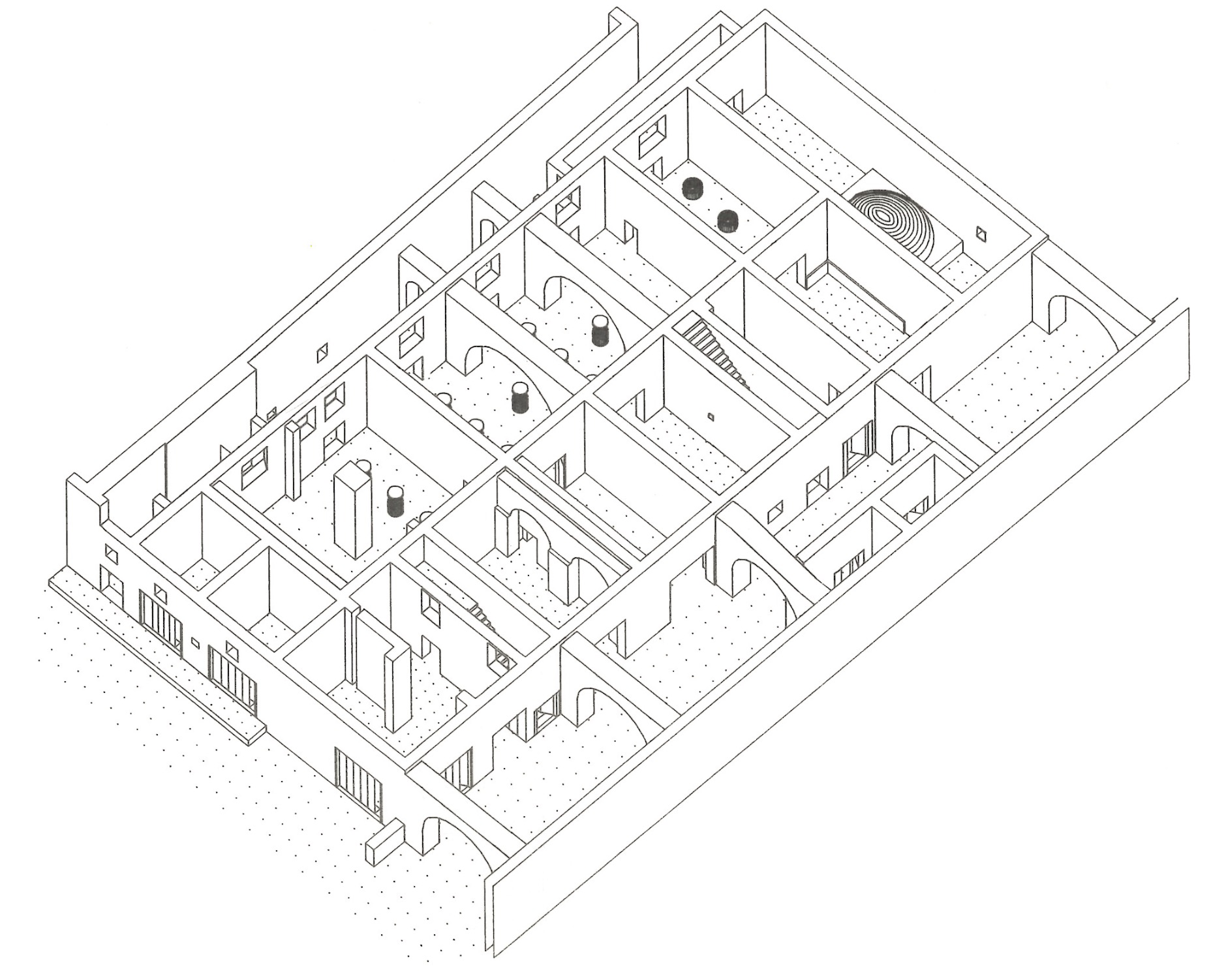
Axonometric reconstruction of the building
(T. Bakker)
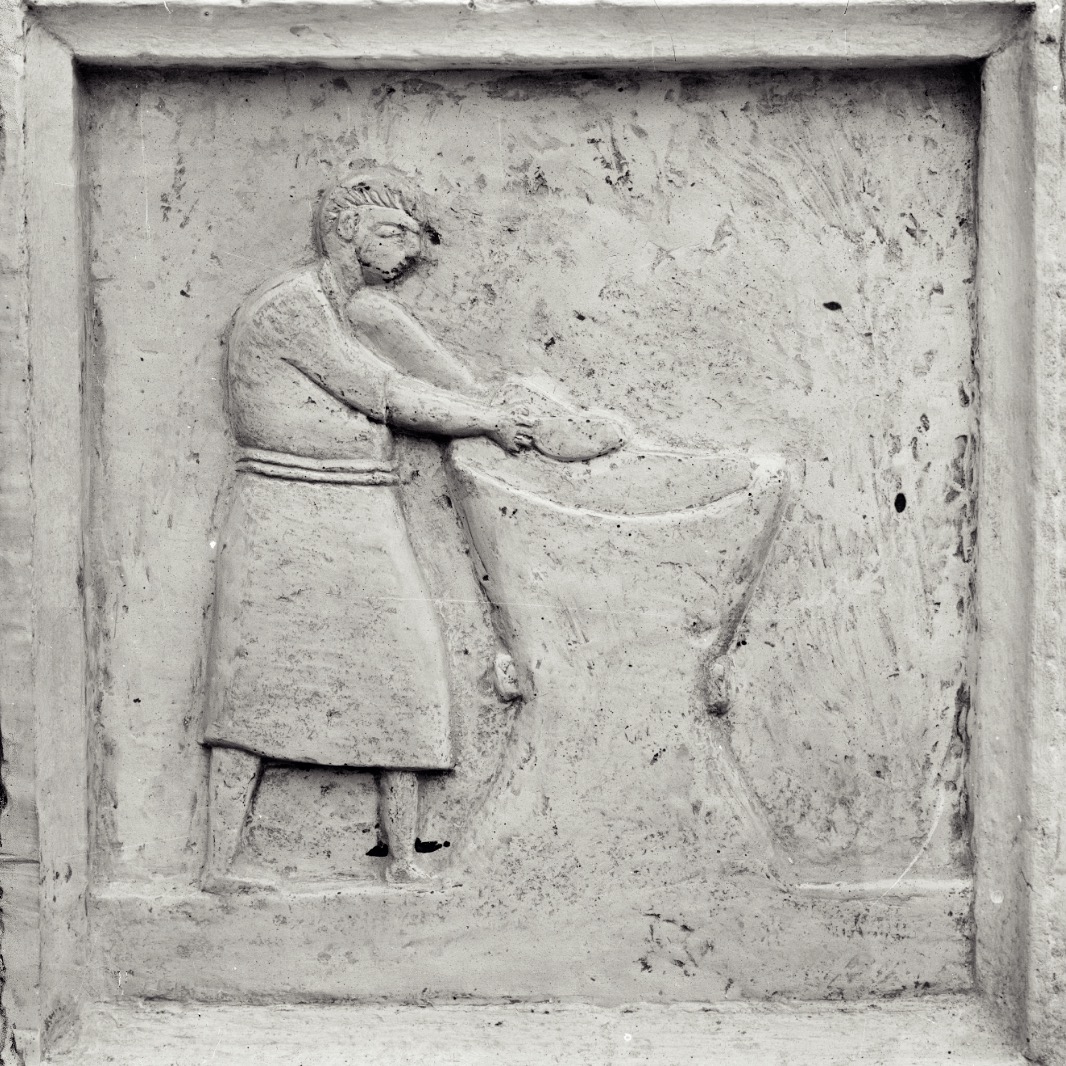
Depiction of a miller from the Isola Sacra Necropolis
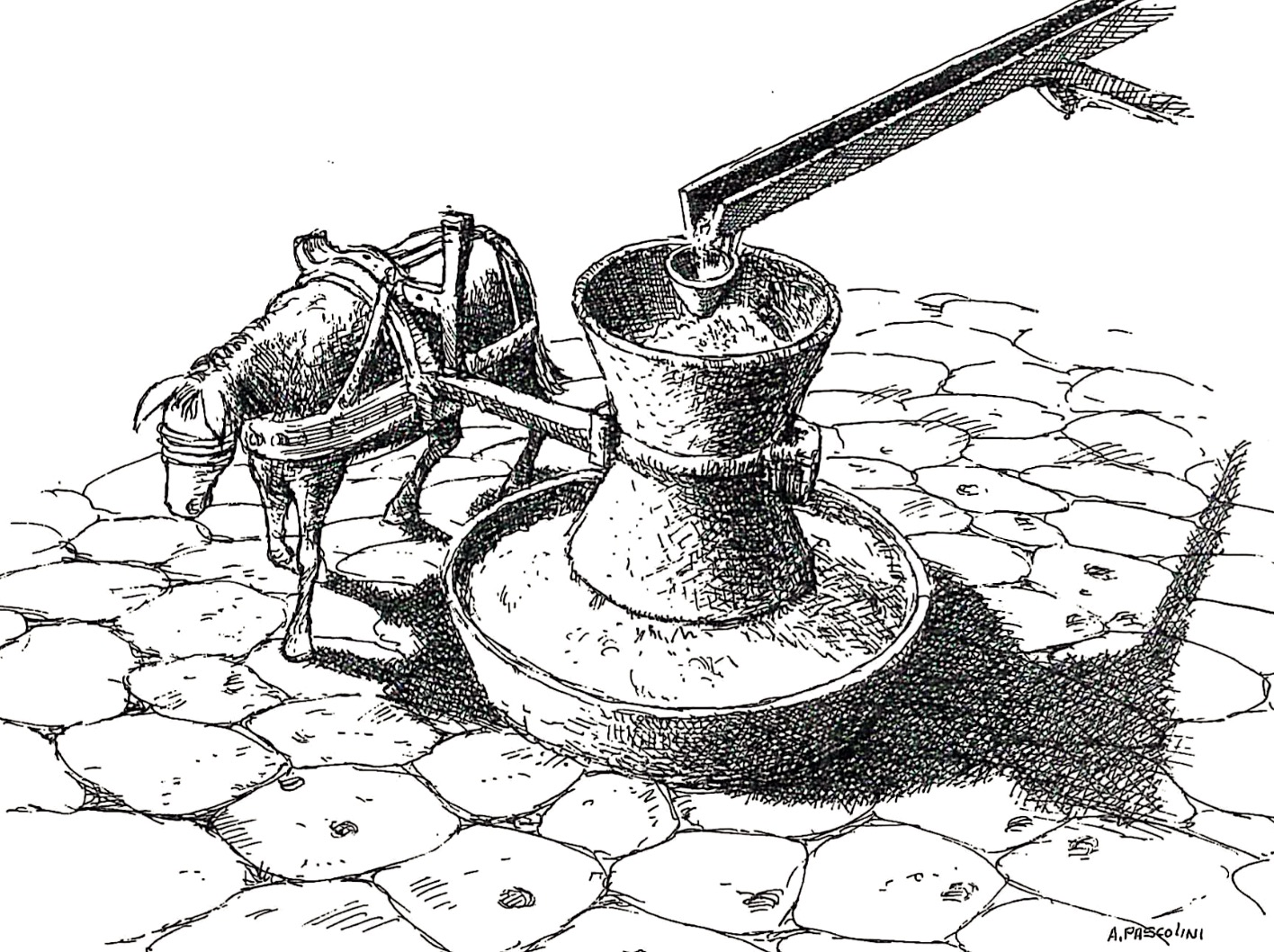
Reconstruction showing how a mill worked
(A. Pascolini)
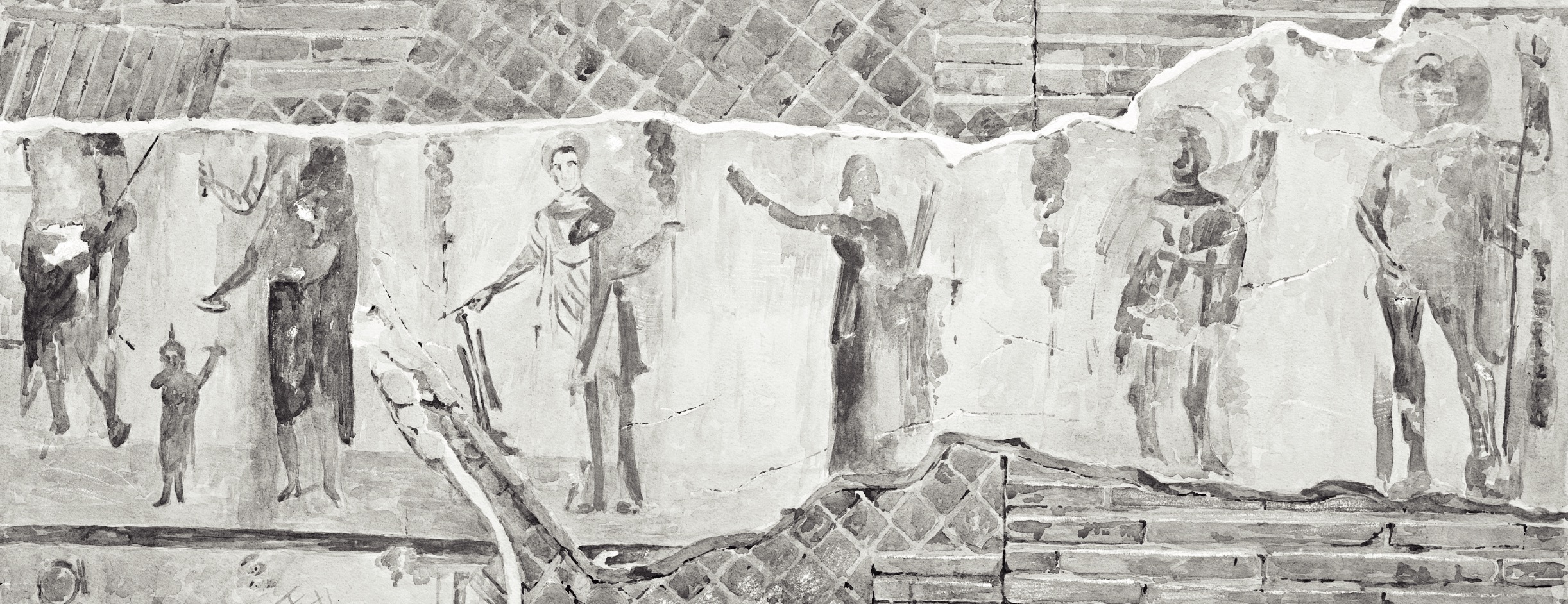
Watercolour showing the frescoes from the shrine
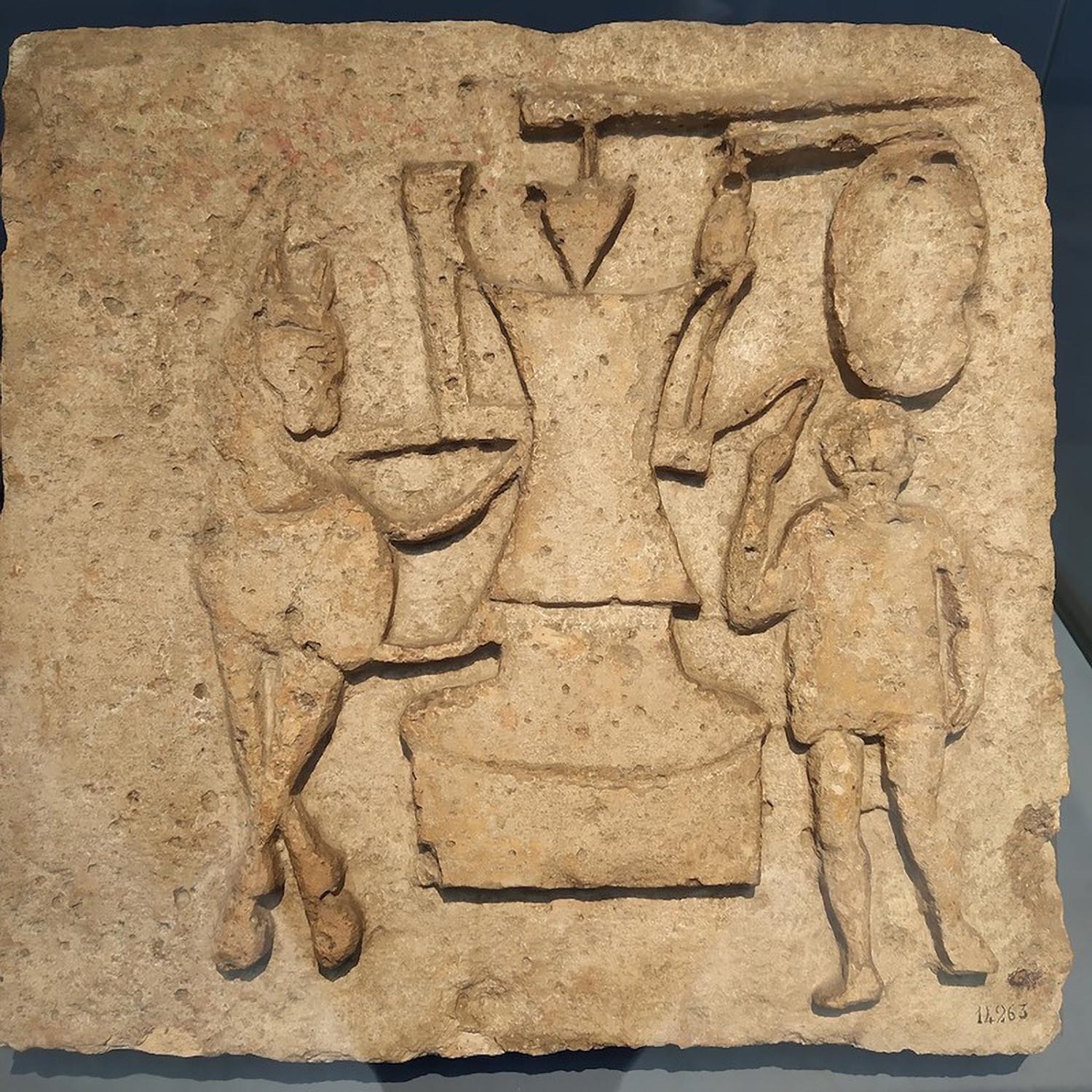
Terracotta relief with scene of work in a mill, from Tomb 78 of the Isola Sacra Necropolis
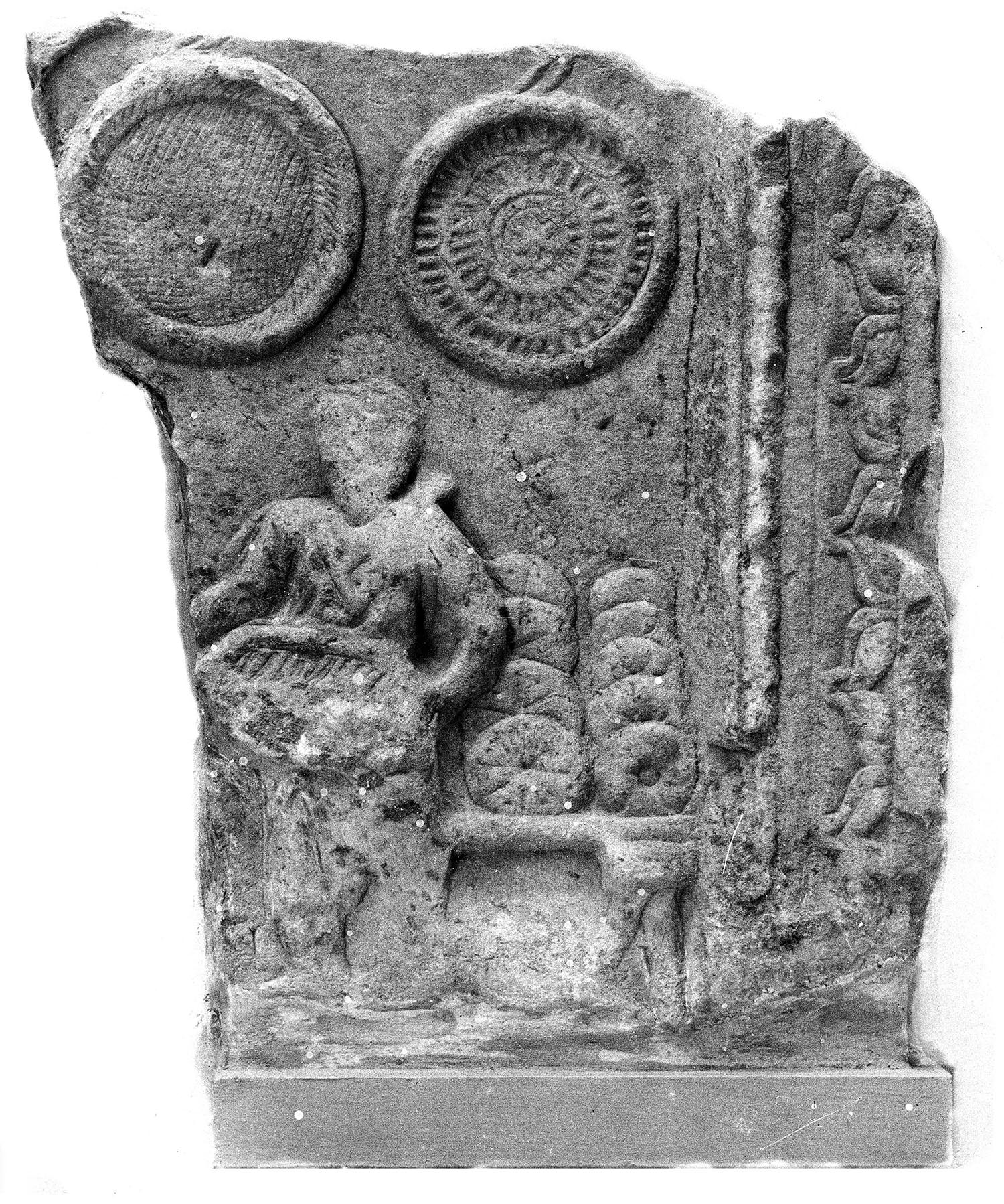
Relief with scene of bread selling, from the Ostia Bishop’s Palace
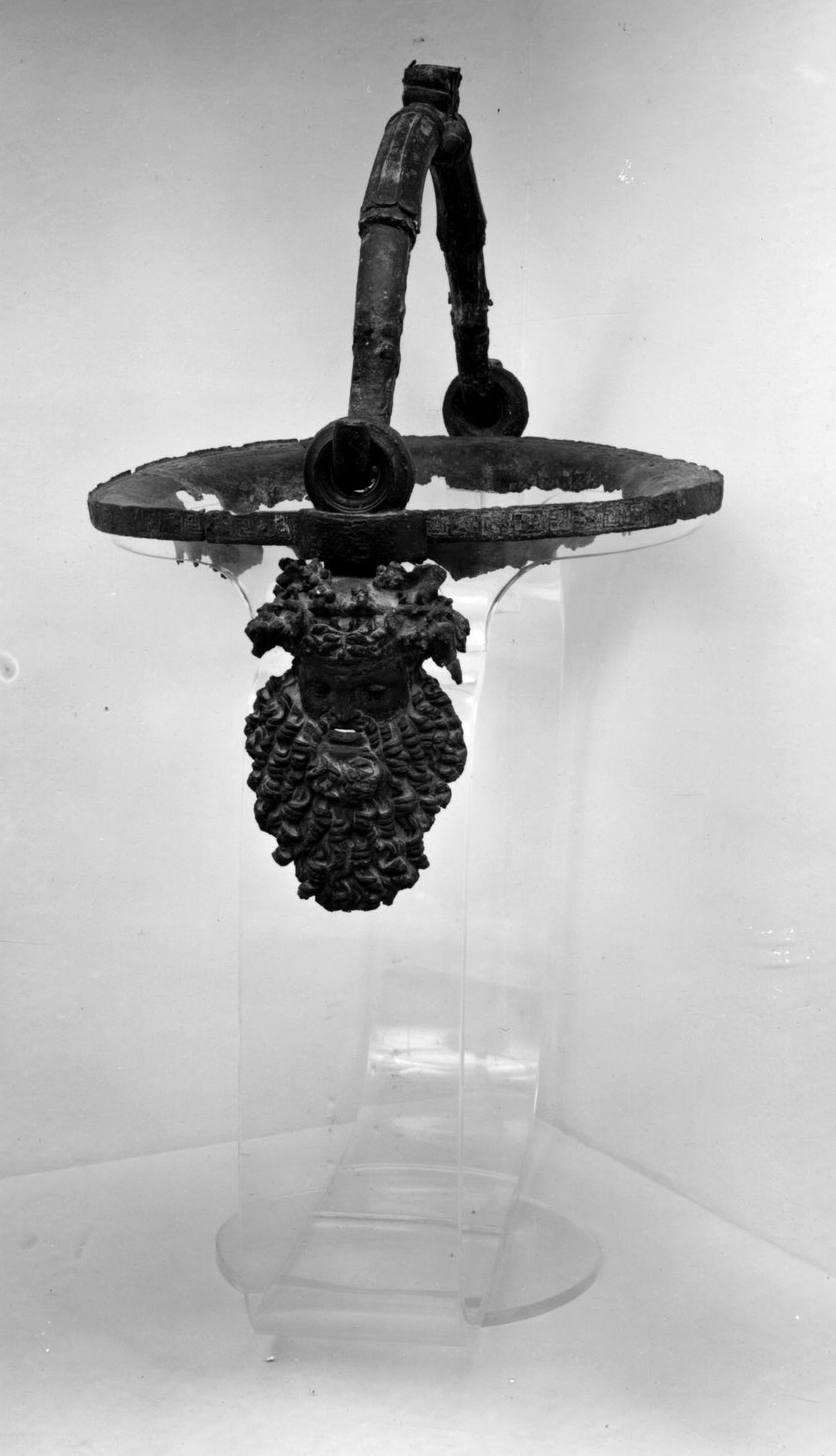
Situla with Silenus discovered in the building
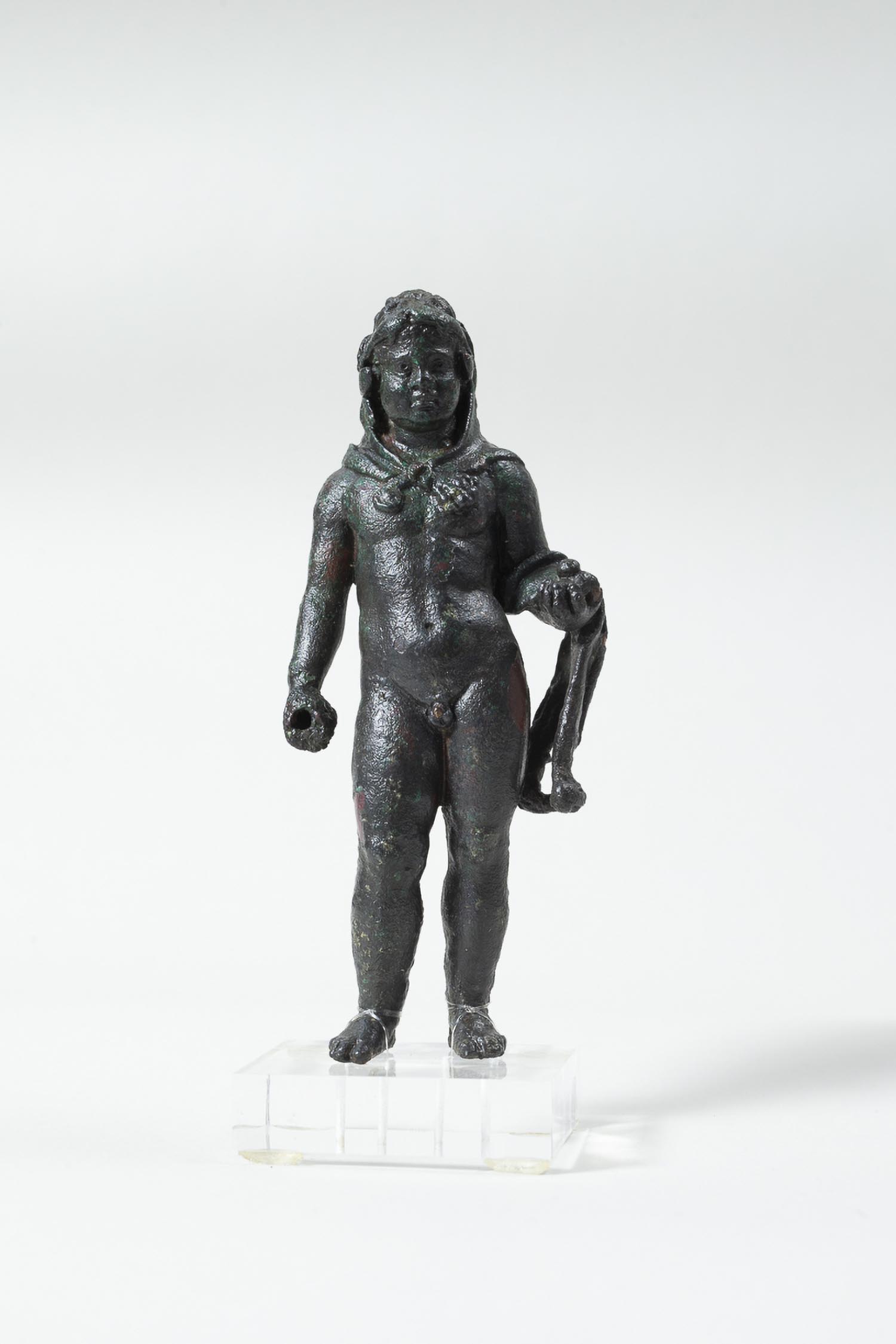
Statuette of an infant Hercules discovered in the building
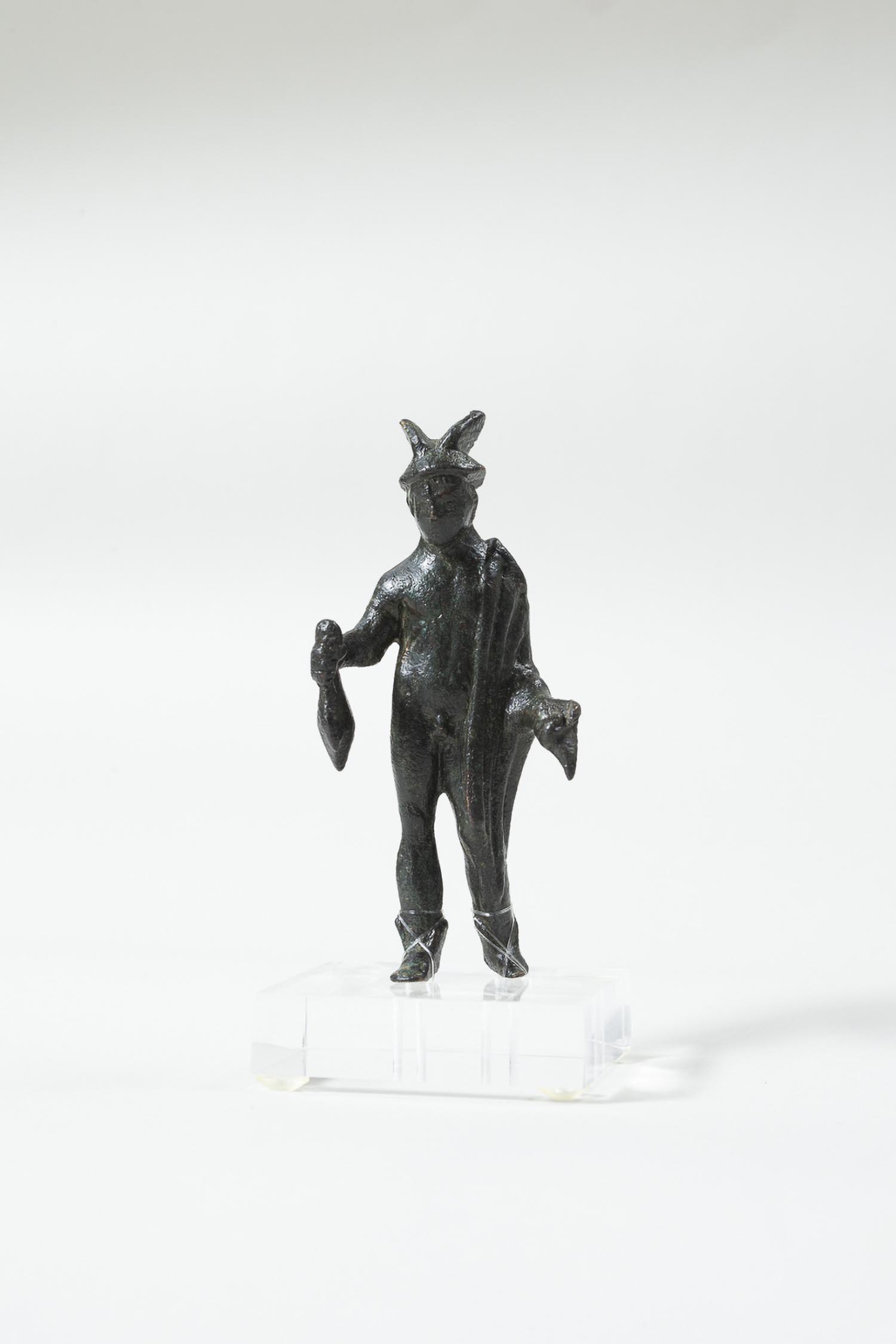
Statuette of Mercury discovered in the building