

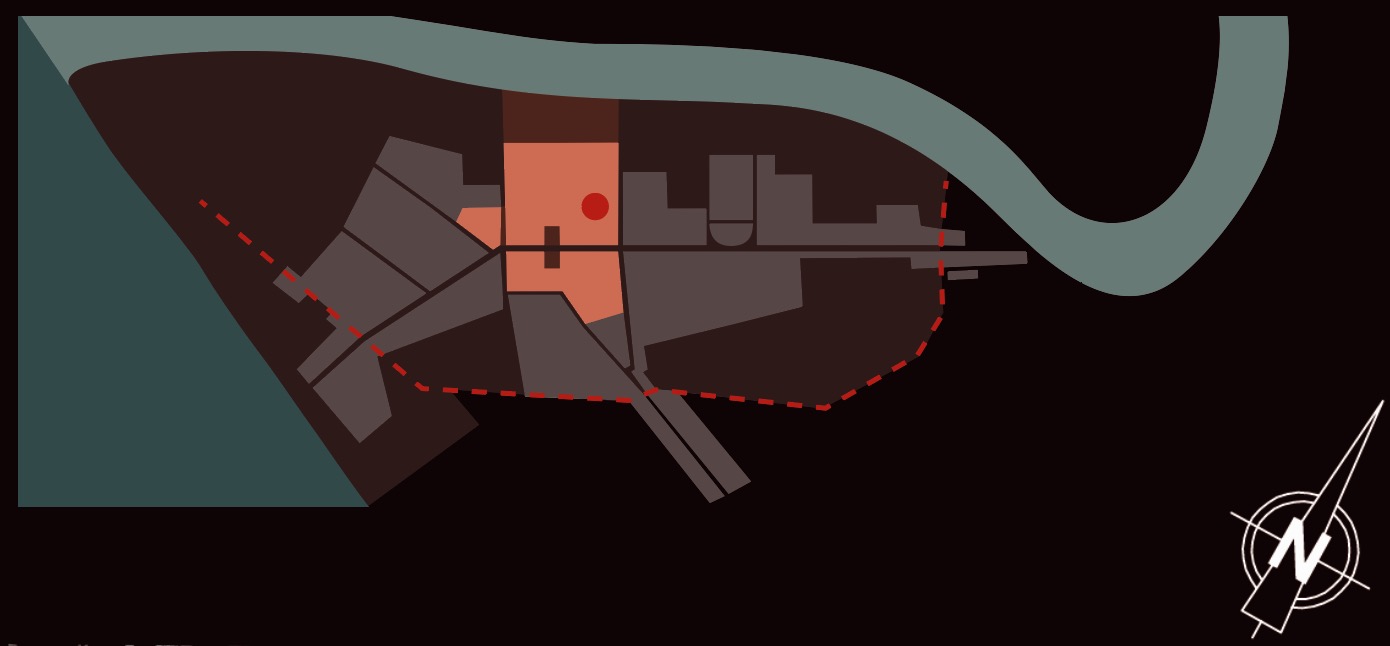
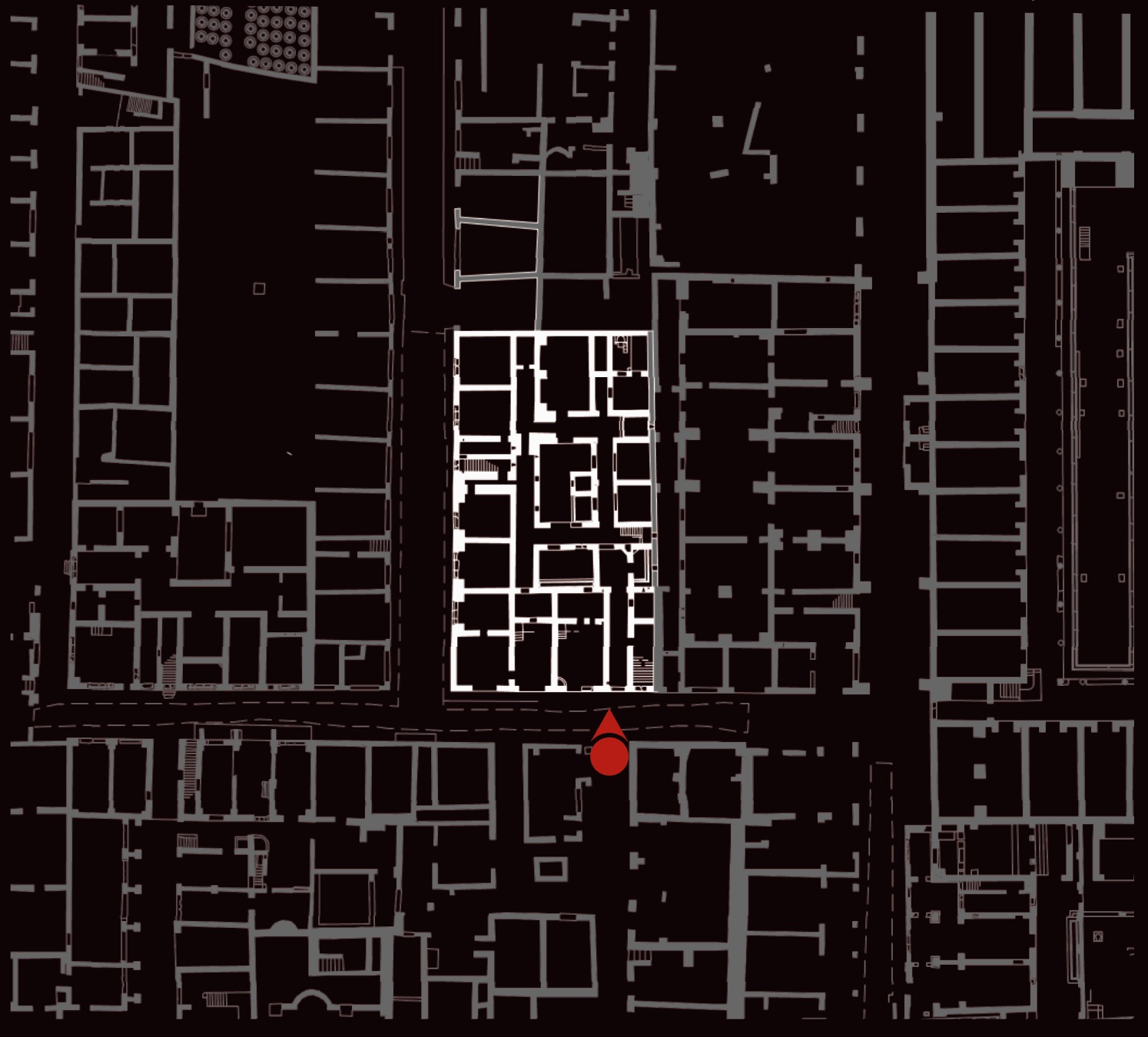
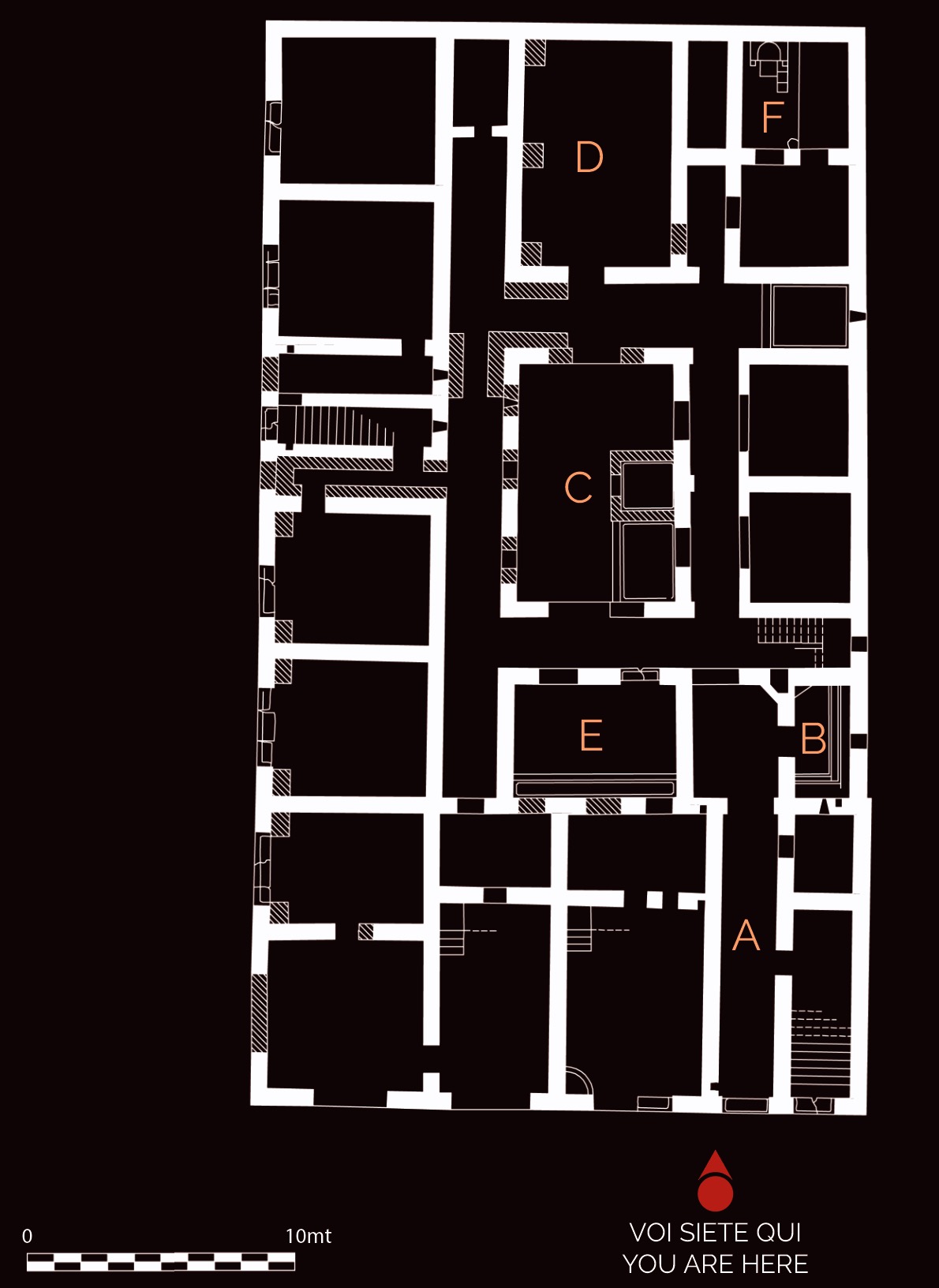
The complex, perhaps originally four storeys tall with shops facing onto the street, was built in the Hadrianic period (first half of the 2nd century AD). It has a central porticoed courtyard (C) and over time underwent significant alterations to both the internal walls and the floors. The black and white geometrical mosaics in some rooms, the polychrome mosaic on one side of the portico and the inlaid marble floor of the triclinium (D) belong to the original phase. In the second half of the 2nd century AD, the courtyard was embellished with a fine marble nymphaeum whilst the surviving paintings were made at the end of this century. During the 3rd century AD, the floors were raised and new mosaics were laid. Finally, a mithraeum (F) was installed in the innermost rooms at a late period: it had a shrine, a (reused) marble altar and podia (benches) made of brick.
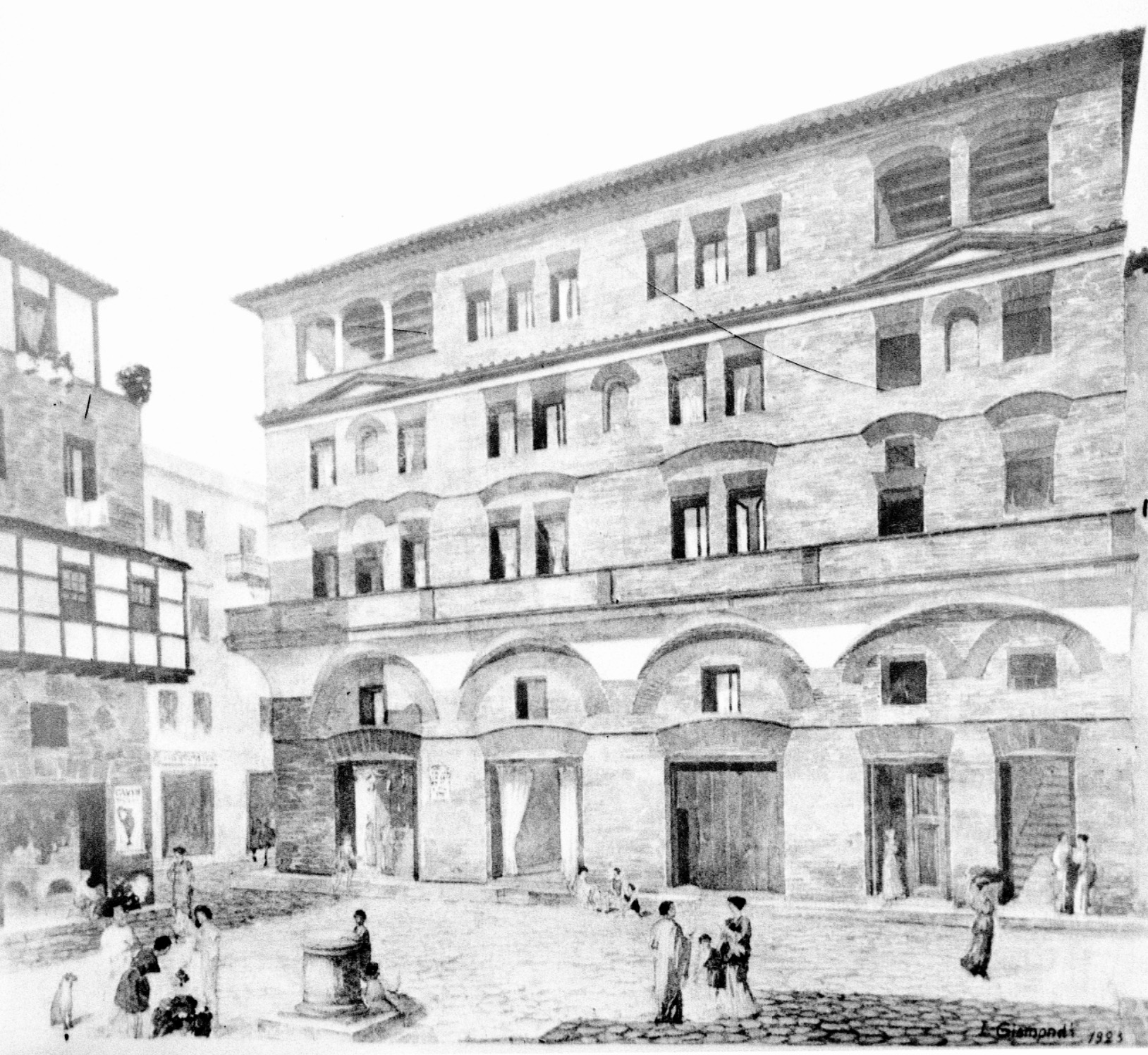
Reconstruction of the complex
(I. Gismondi)
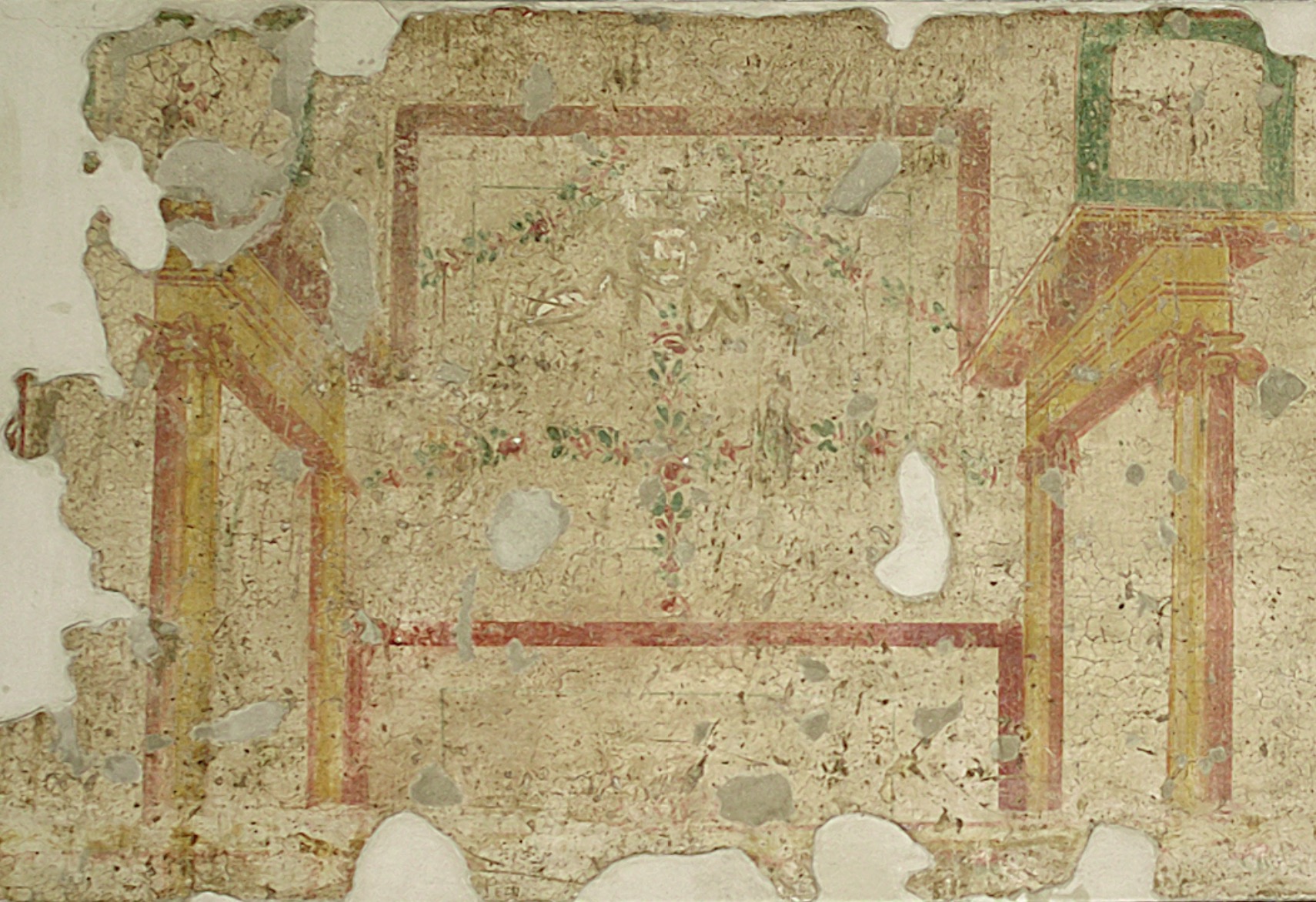
Detail of the paintings in the tablinum (E)
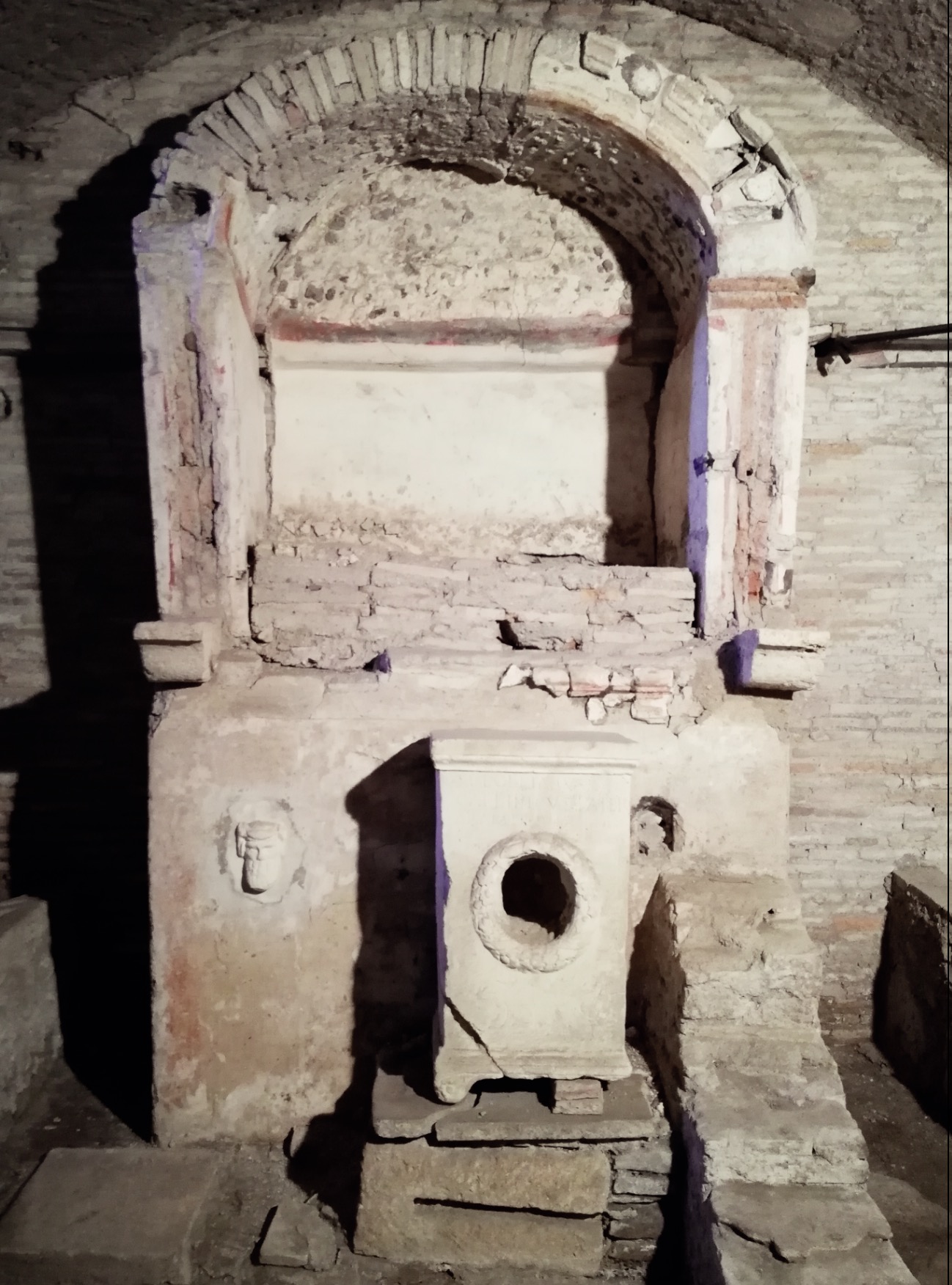
View of the mithraeum (F)
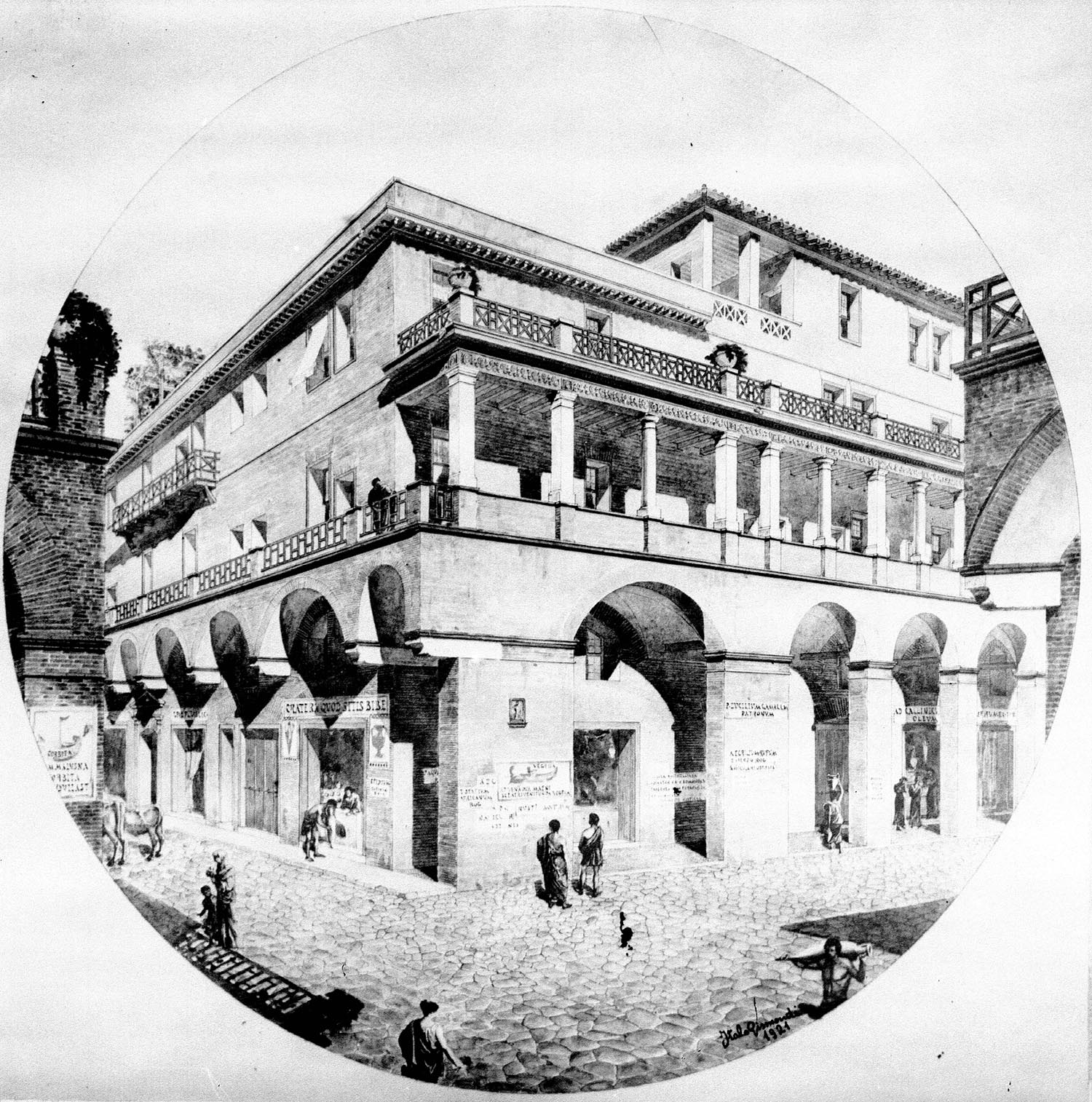
Reconstruction of the exterior of the (I. Gismondi)
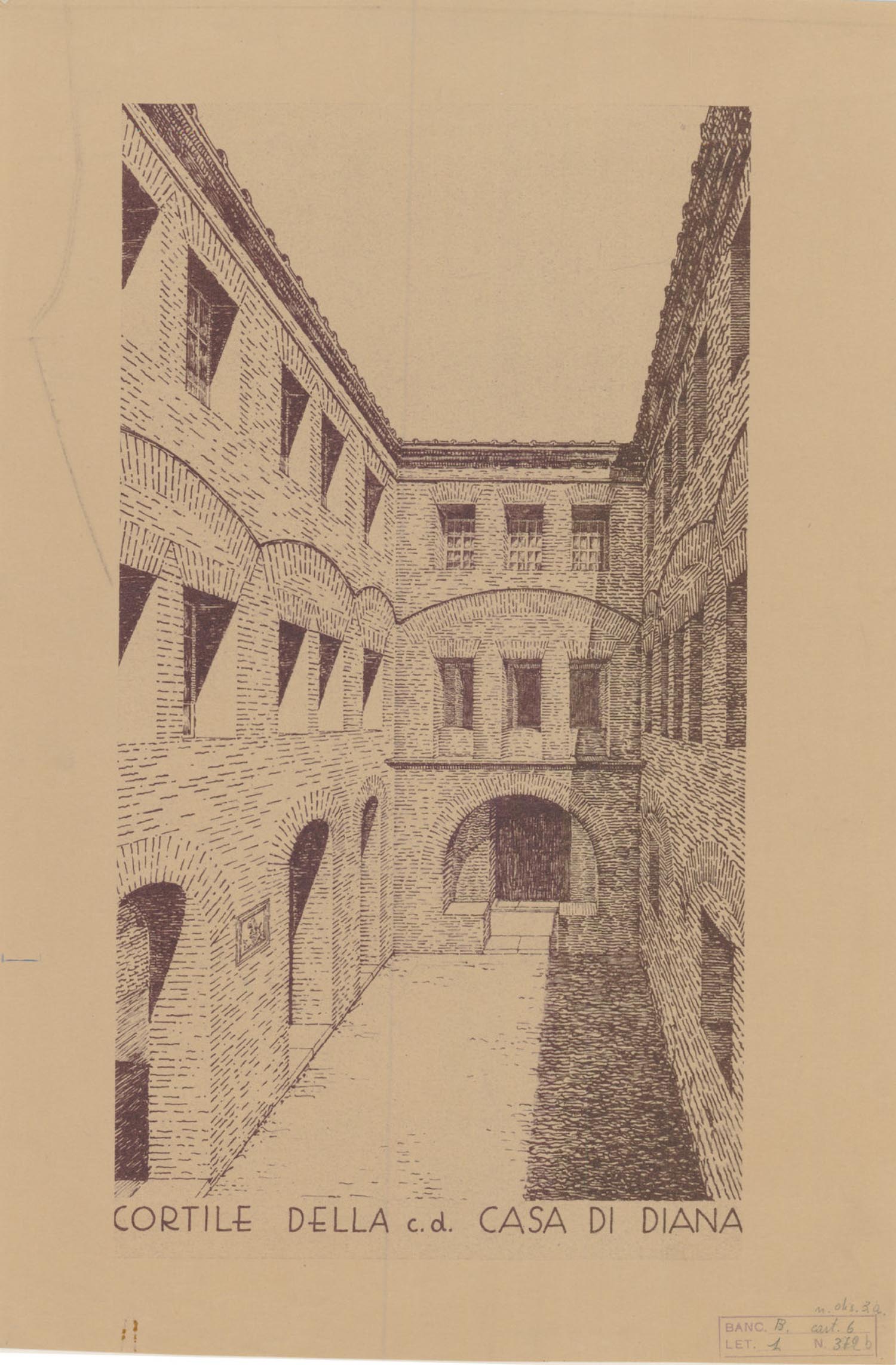
Reconstruction of the courtyard of the House of Diana (I. Gismondi)
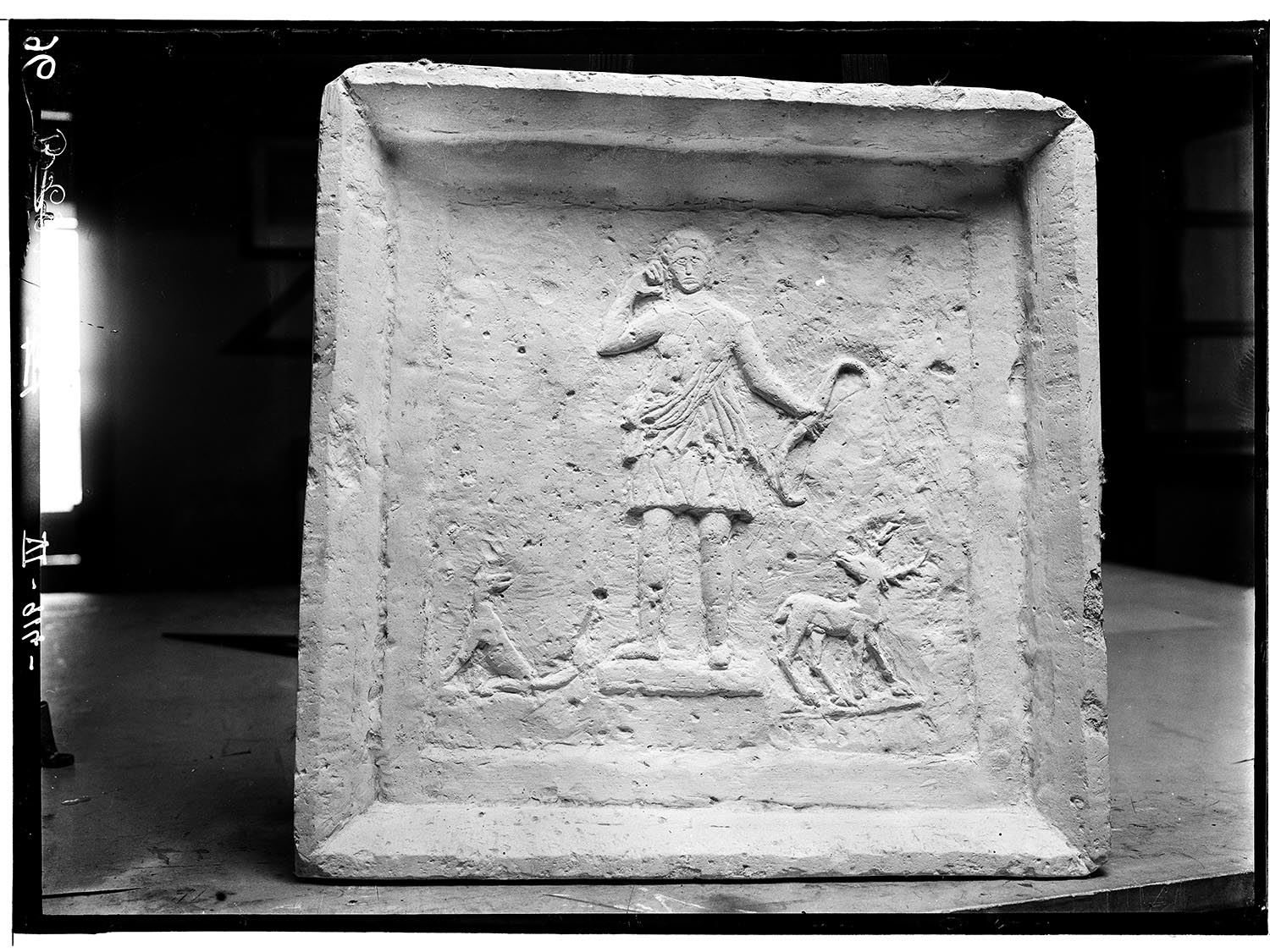
Relief with Diana the Huntress from the courtyard of the House of Diana
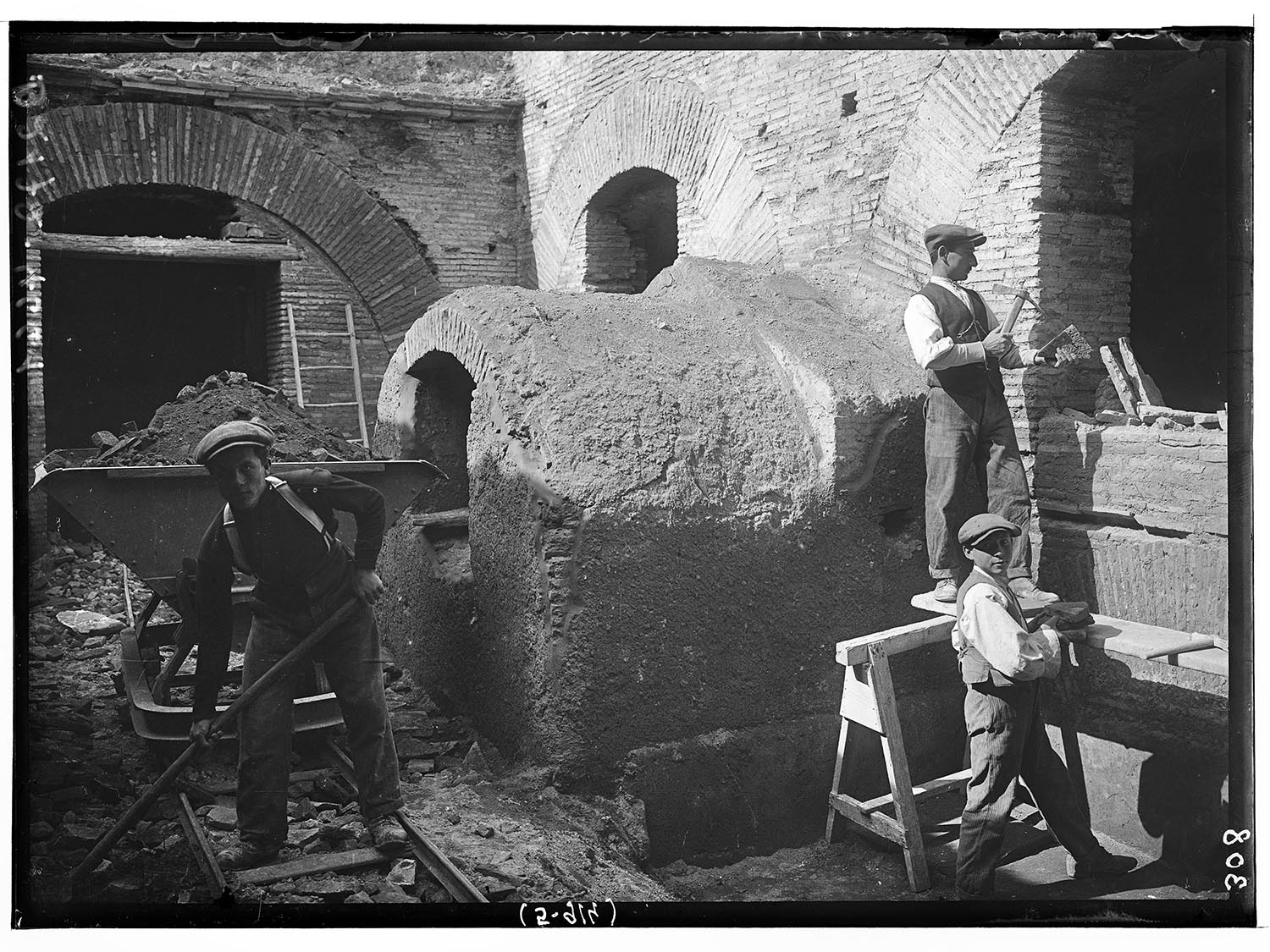
Restoration in the courtyard of the House of Diana
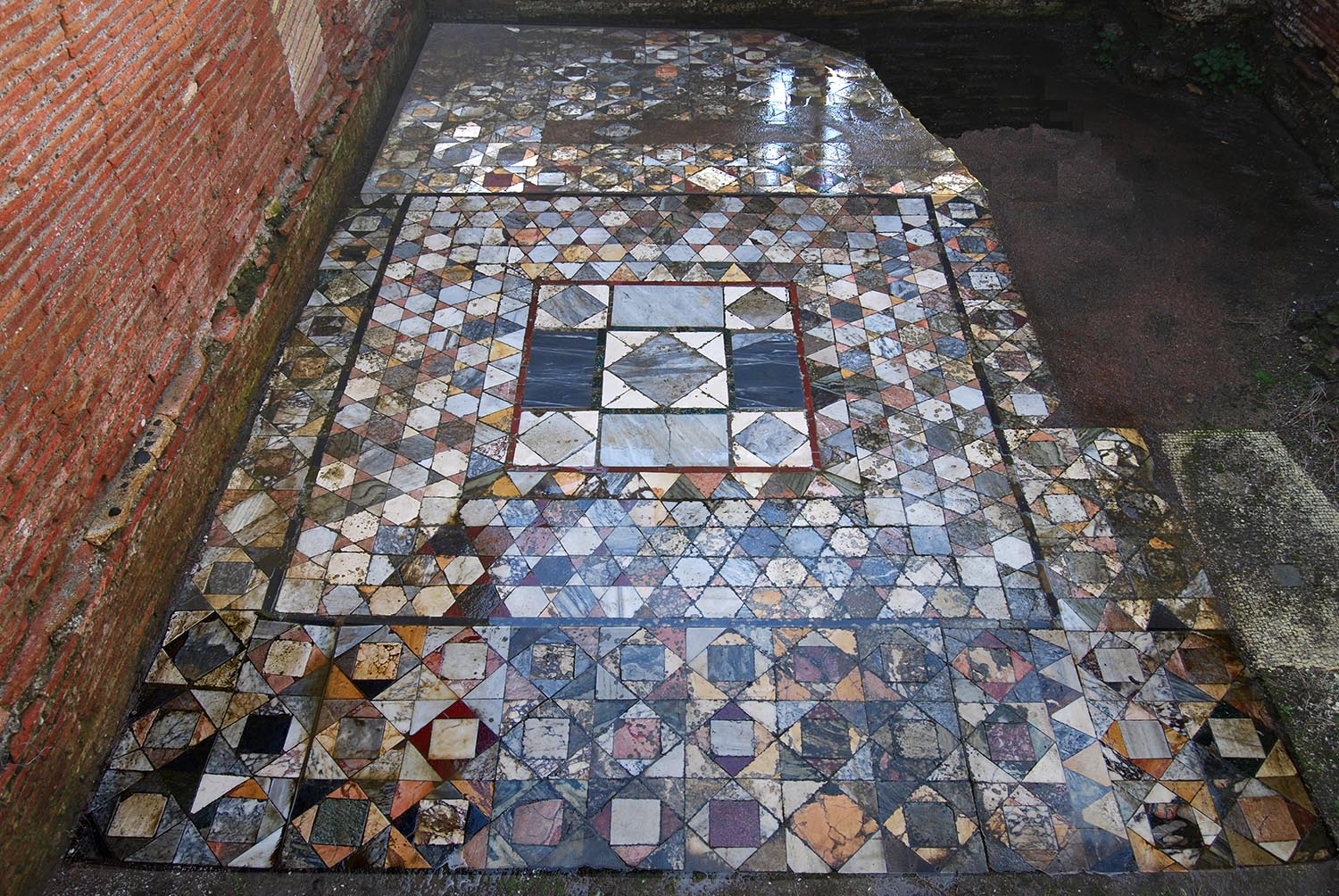
Pavement in opus sectile of the triclinium in the House of Diana
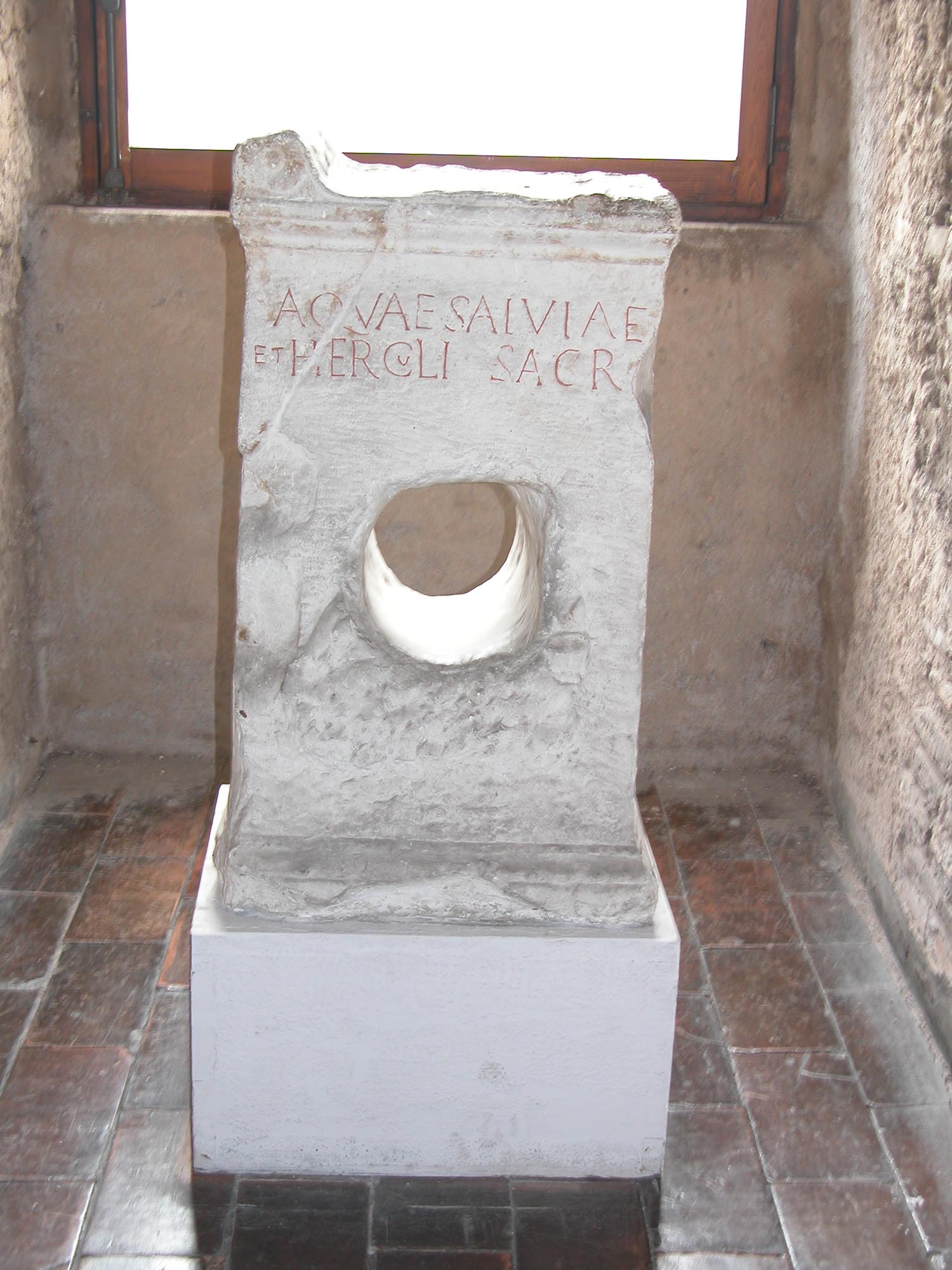
Re-used altar in the Mithraeum in the House of Diana