

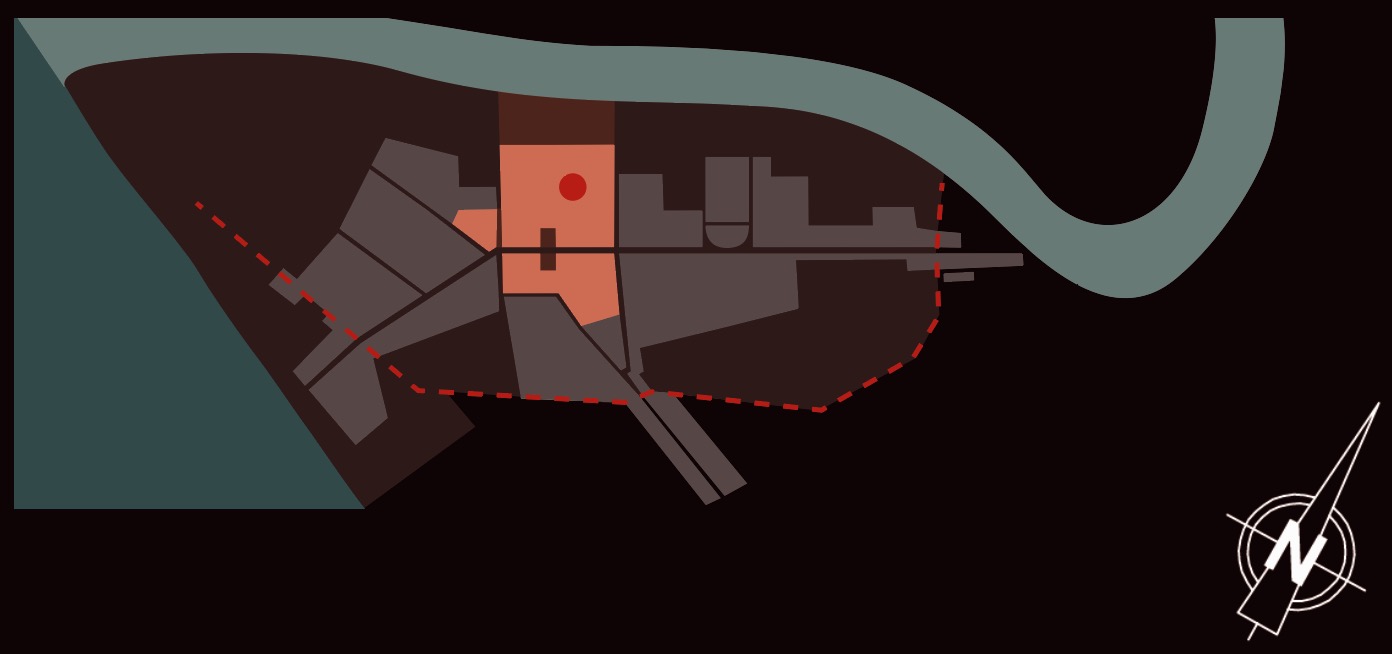
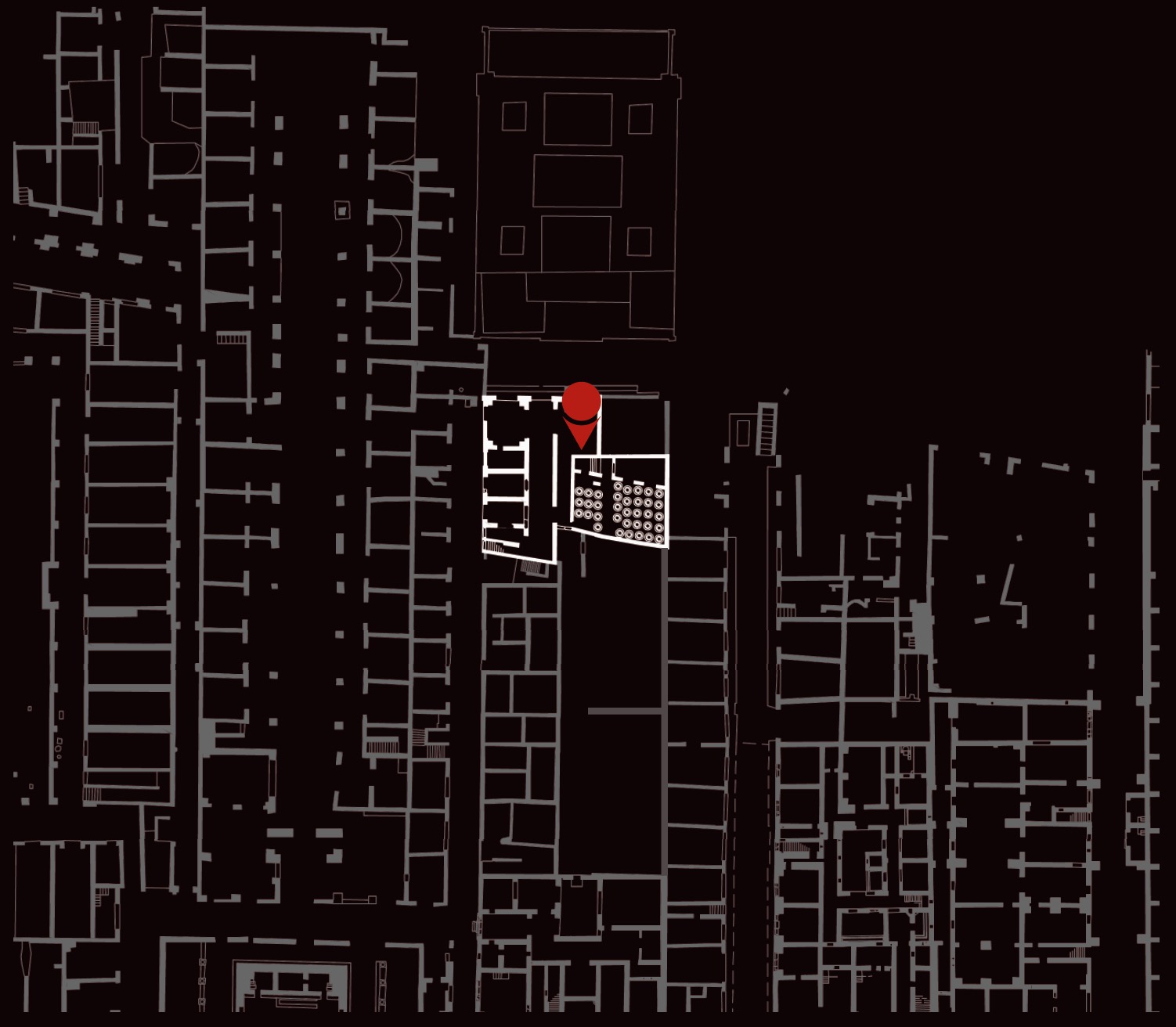
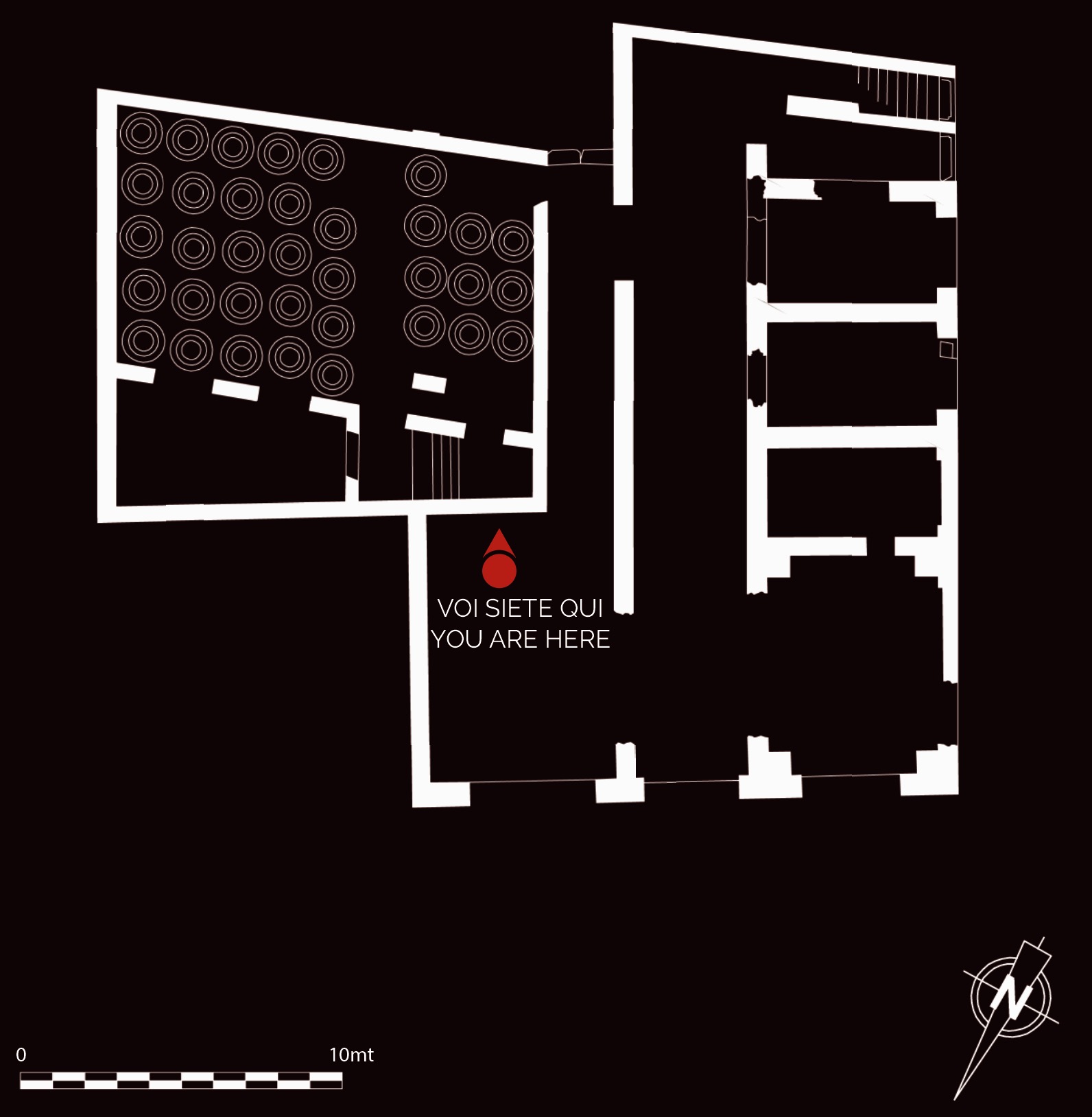
The complex had a commercial function and was built at the same time as the nearby Insula dei Dipinti in the Hadrianic period (AD 117-138). It had a row of shops opening onto the street with a vast space behind them: in the early 3rd century AD the latter was transformed into a storage area for large containers for liquids (oil, wine) that were in part set into the ground (dolia defossa). Some dolia still have numbers incised on them indicating their capacity in amphorae, a unit of measurement equivalent to about 26 litres. Inside the dolia about 400 terracotta moulds, perhaps for cakes, were found, with mythological, theatrical, erotic and circus scenes; the cakes may have been handed out during public banquets or sold during shows.
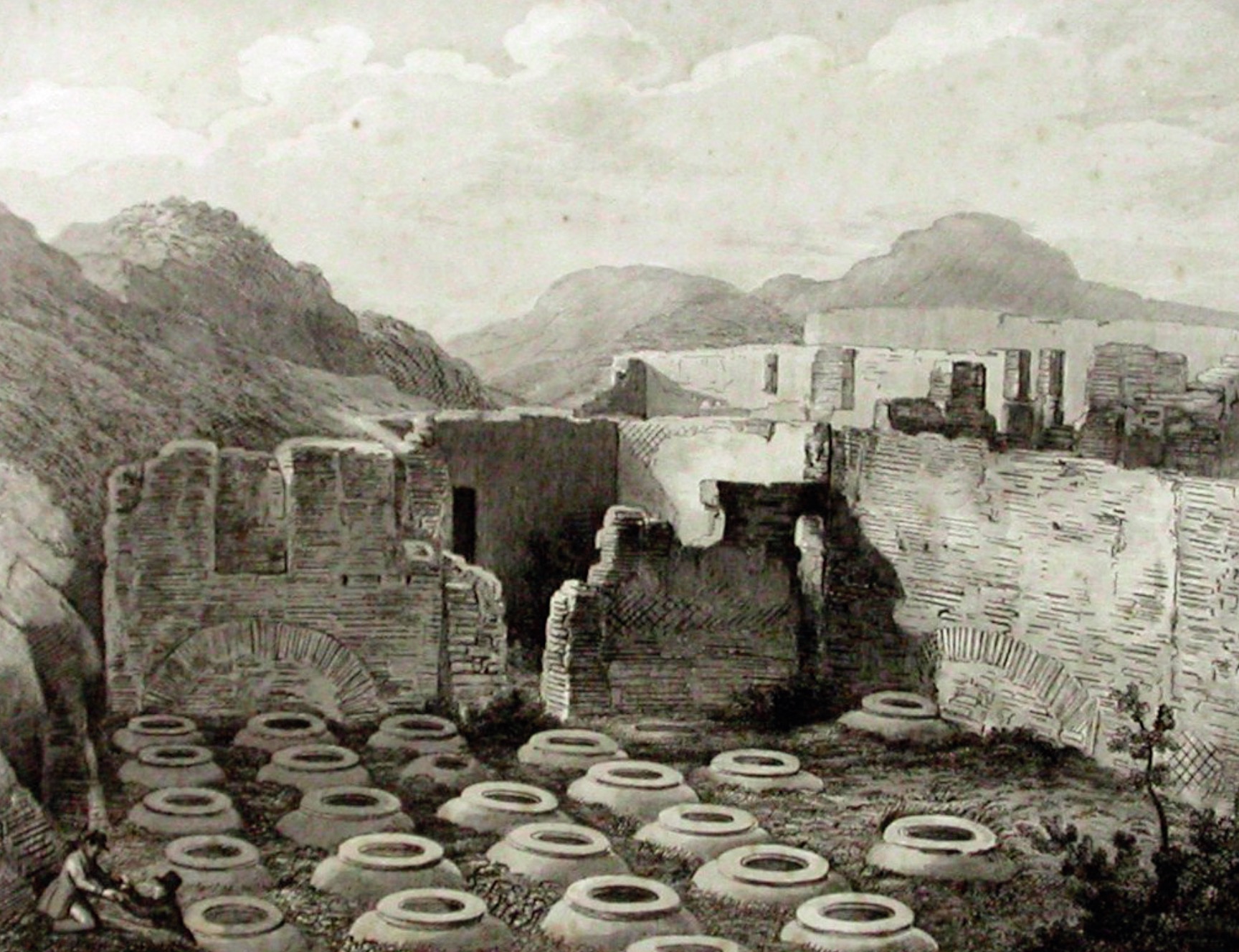
Engraving with general view of the Complex of the Dolia
(P. Petri)
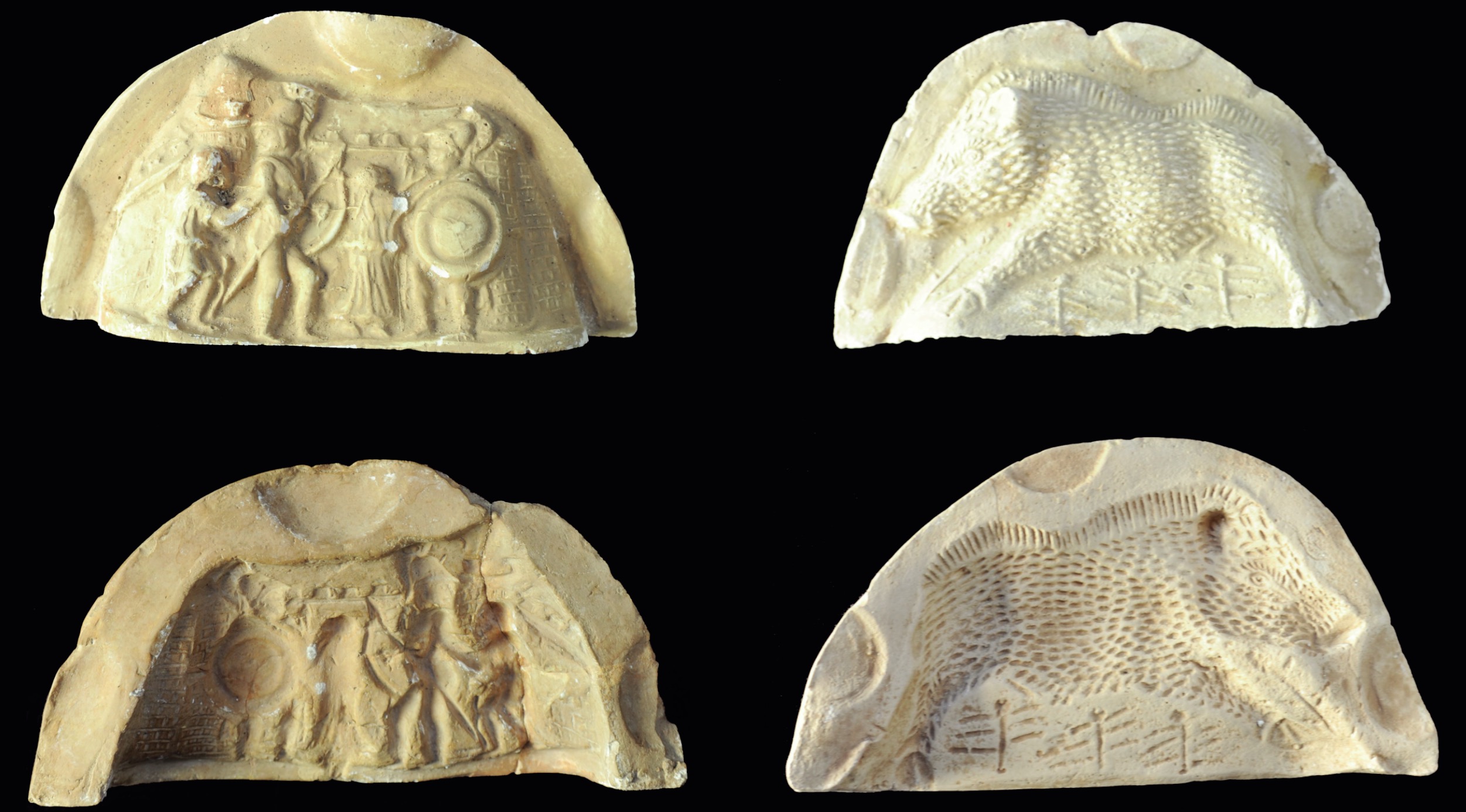
Terracotta moulds for cakes and their casts
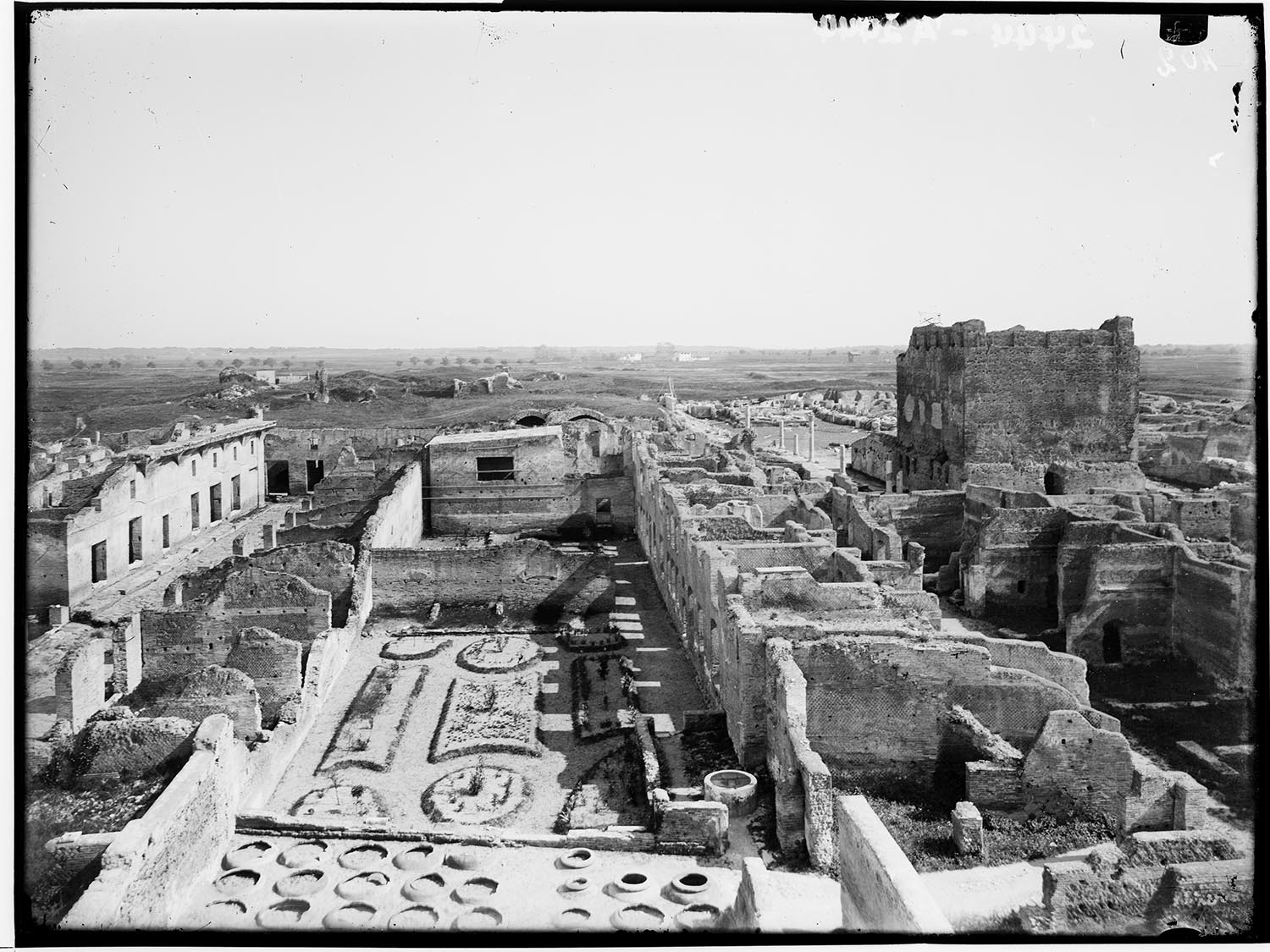
General view of the courtyard in the House of the paintings
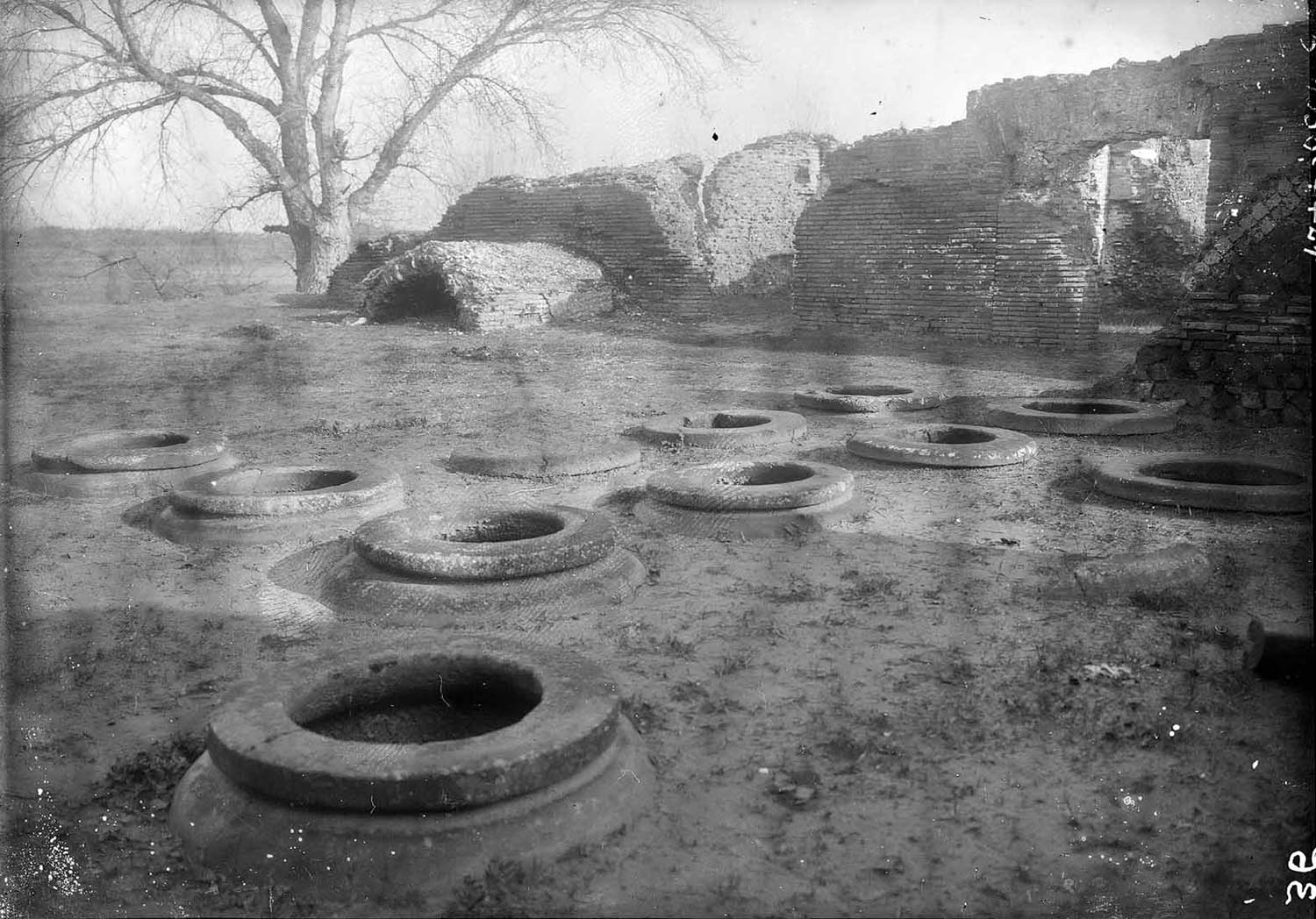
General view of the buried dolia
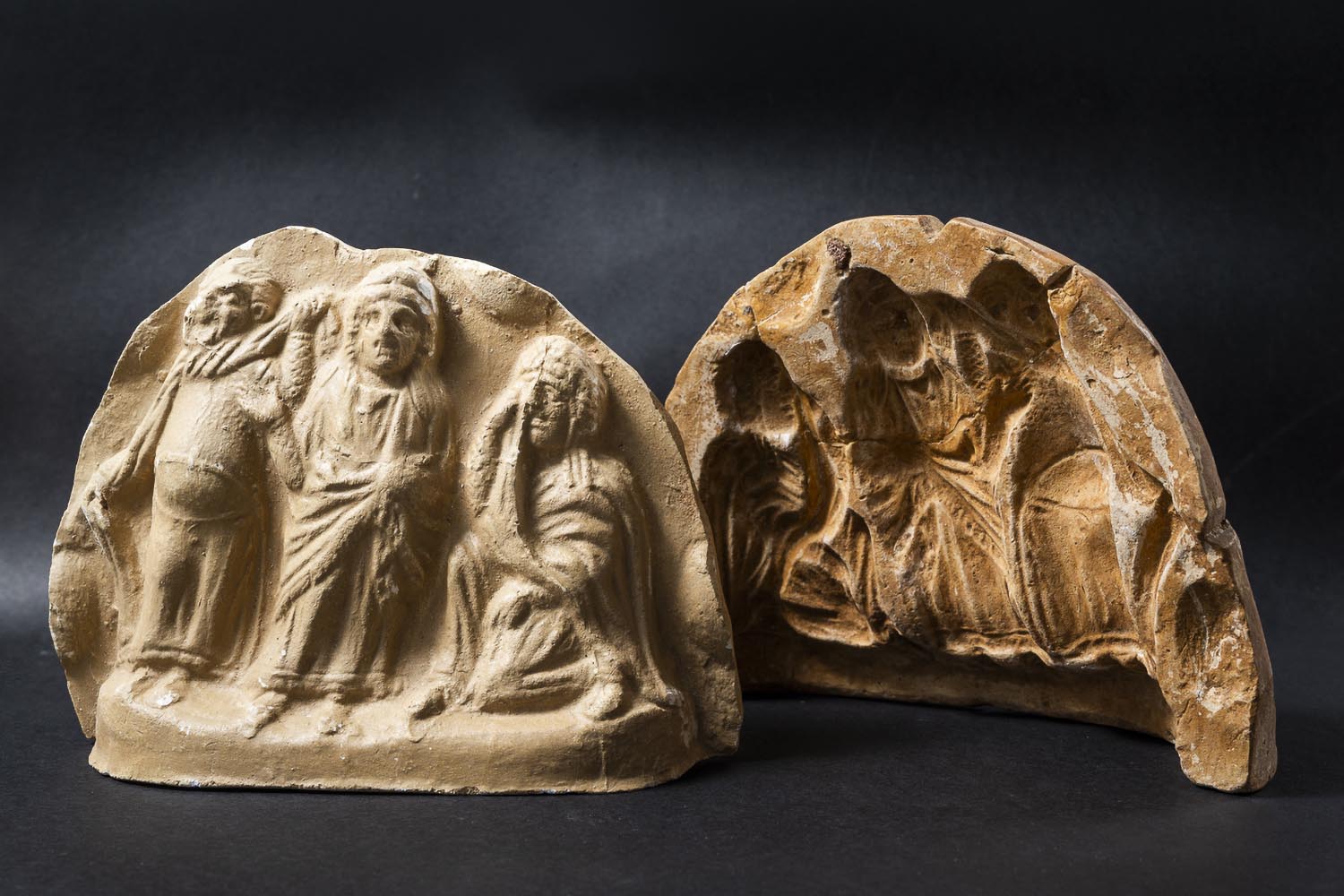
Terracotta mould depicting actors
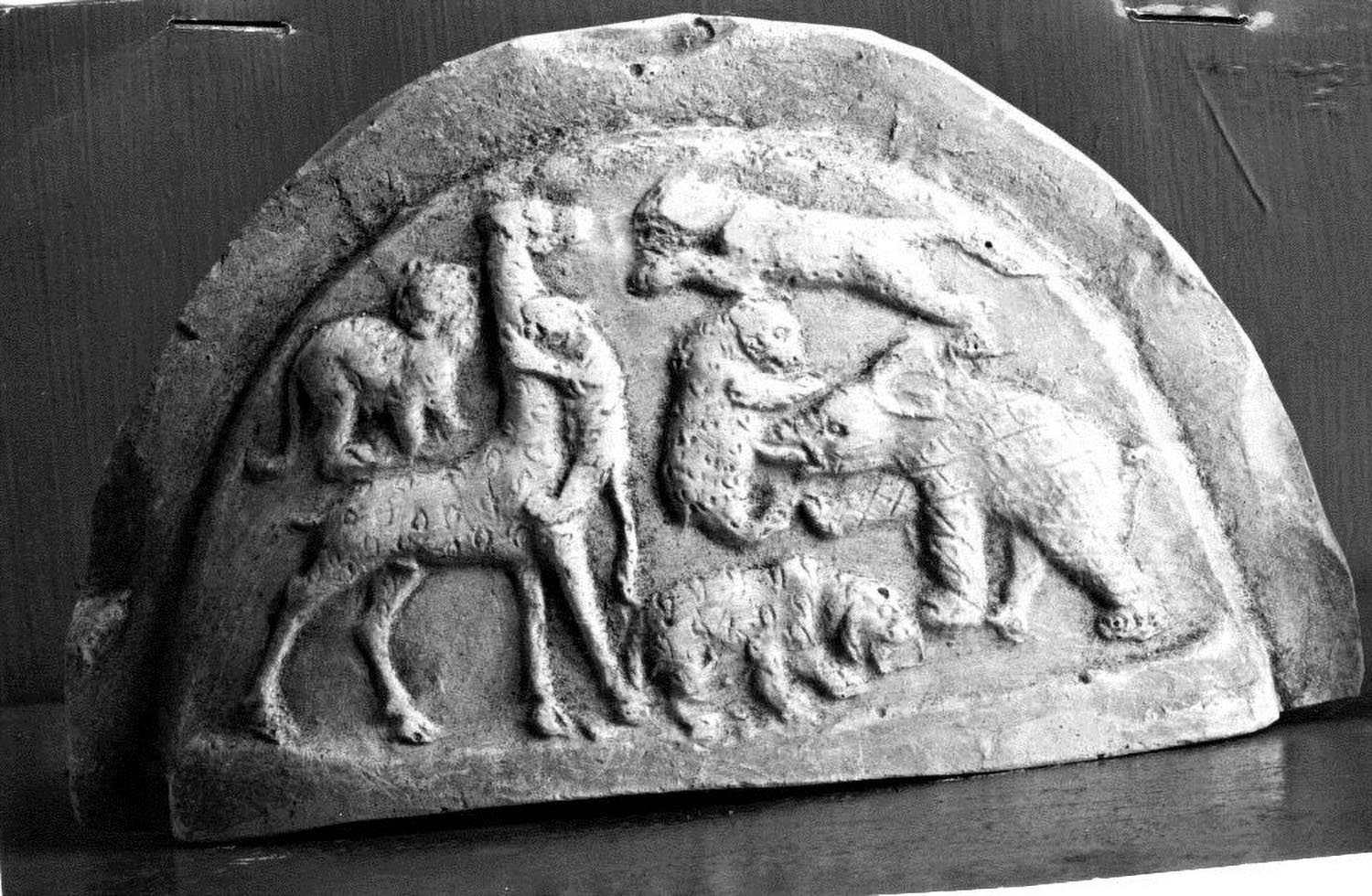
Terracotta mould depicting wild beasts
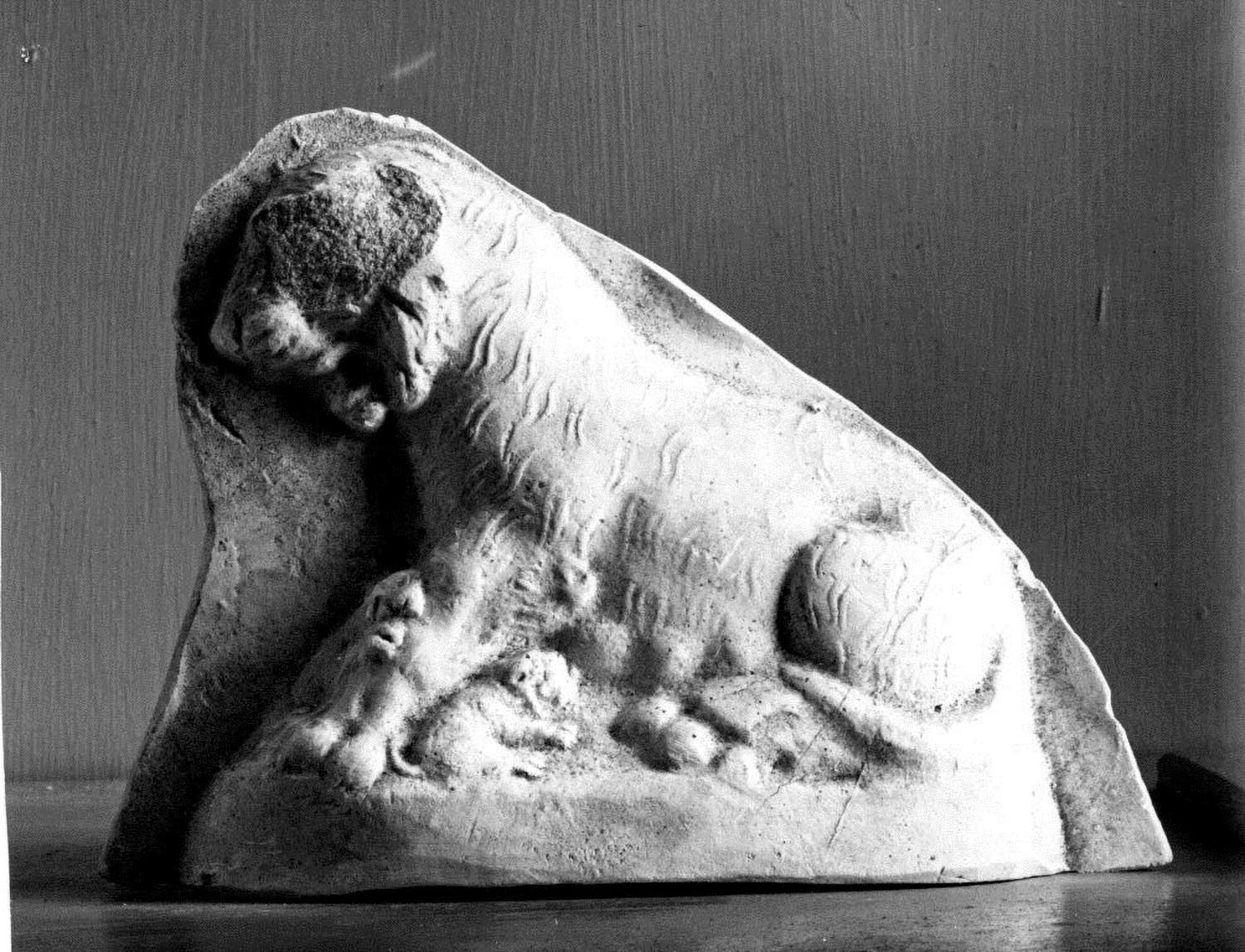
Terracotta mould depicting nursing lioness