


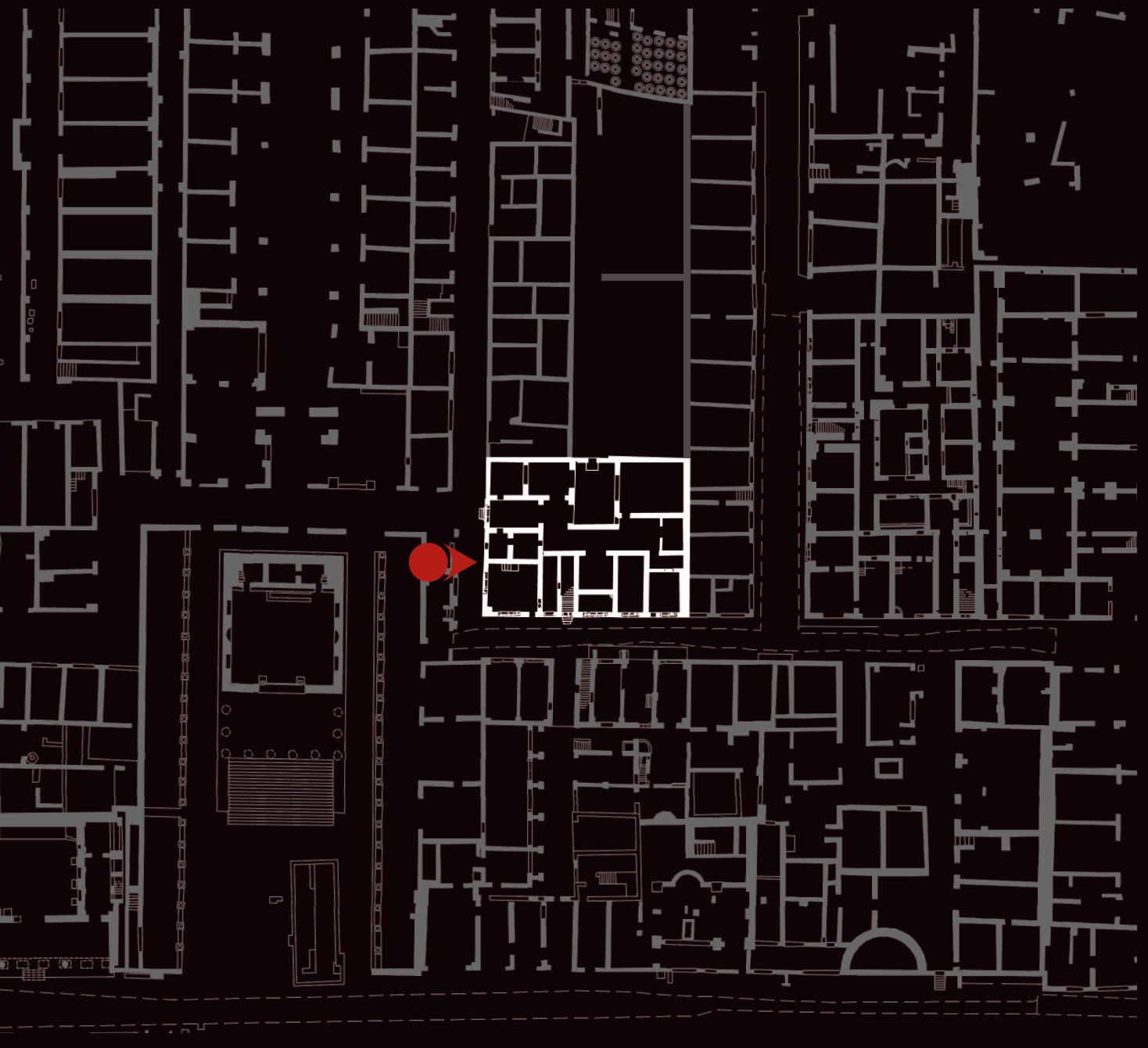

The insula (apartment building) occupies part of the residential area known as the Caseggiato dei Dipinti of the Hadrianic period (AD 117-138), with houses opening onto the street and a large communal courtyard behind (A). The layout has a central corridor (B) and a small courtyard (C), serving to light the main room (D), located in the innermost sector of the house. The building takes its name from the subject of the mythological painting in the large reception room and was altered in the late 2nd century AD, when the ceiling of this room was raised to a height of two storeys and the painted decorations were made. At the same time, the frescoes of the other rooms were also redone; they preserve a graffito dating to the period of the emperor Commodus (AD 180-192). The mosaic floors belong to the building’s original phase.
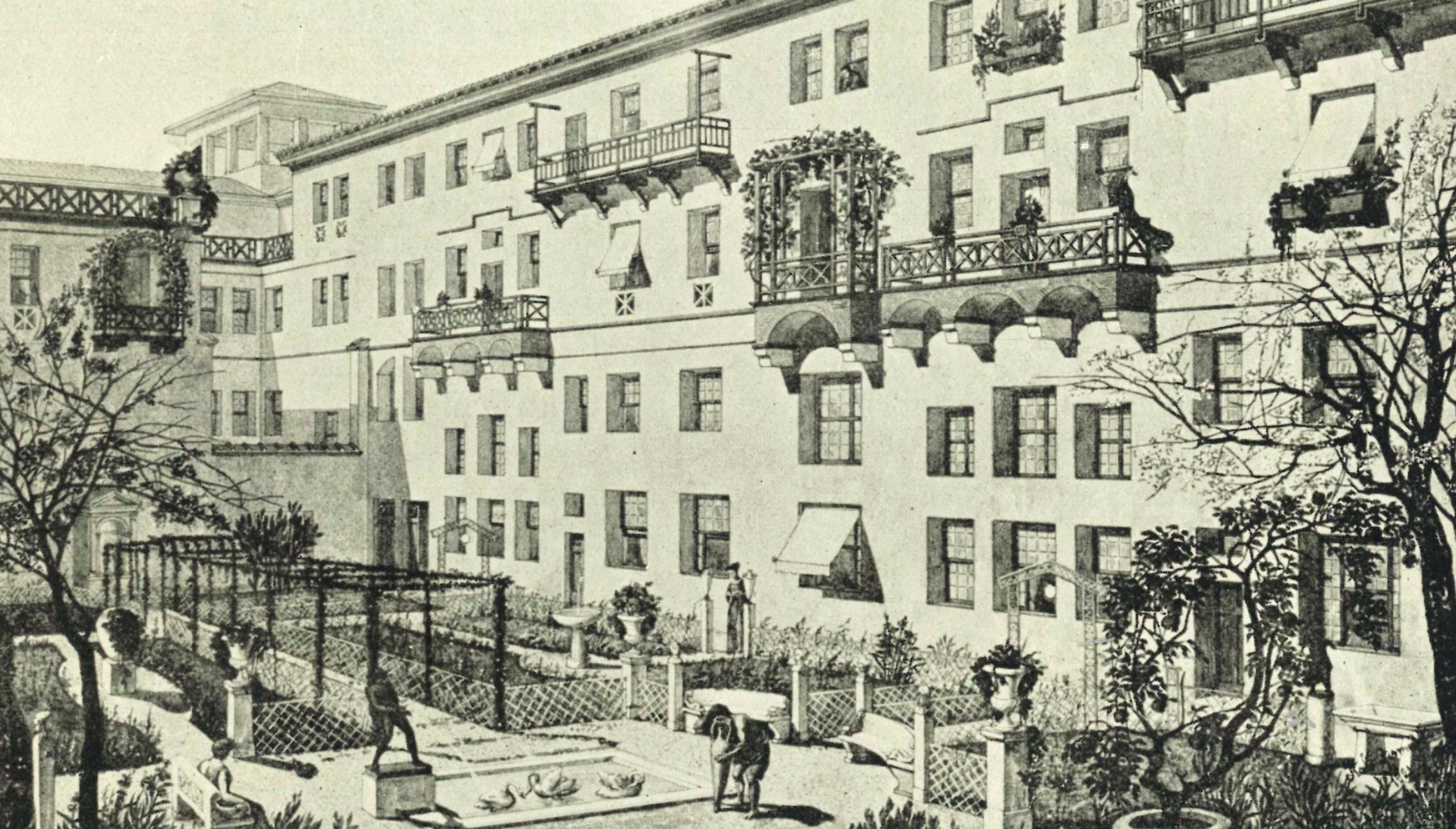
Reconstruction of the courtyard of the Caseggiato dei Dipinti (A)
(I. Gismondi)
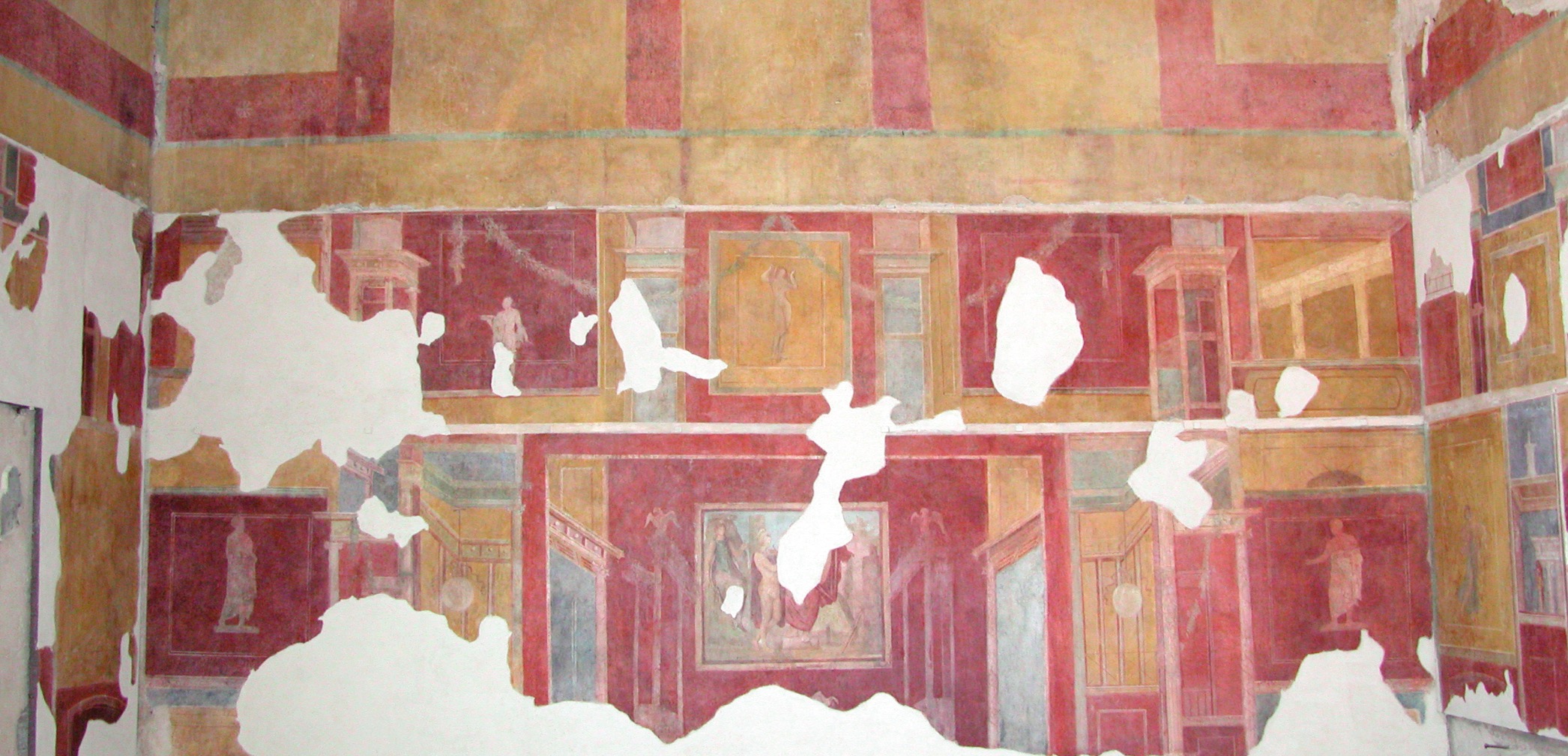
General view of the fresco in the main room (D)
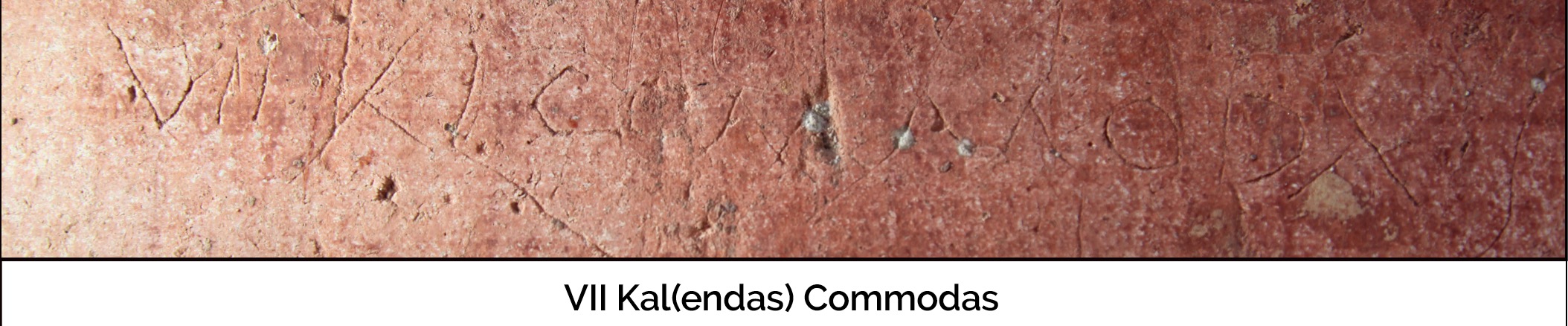
"The seventh day before the calends of the month of Commodus (August/September)"
Graffito incised onto the painted decoration of one of the rooms in the insula
(photo Ostia Graffiti Project)
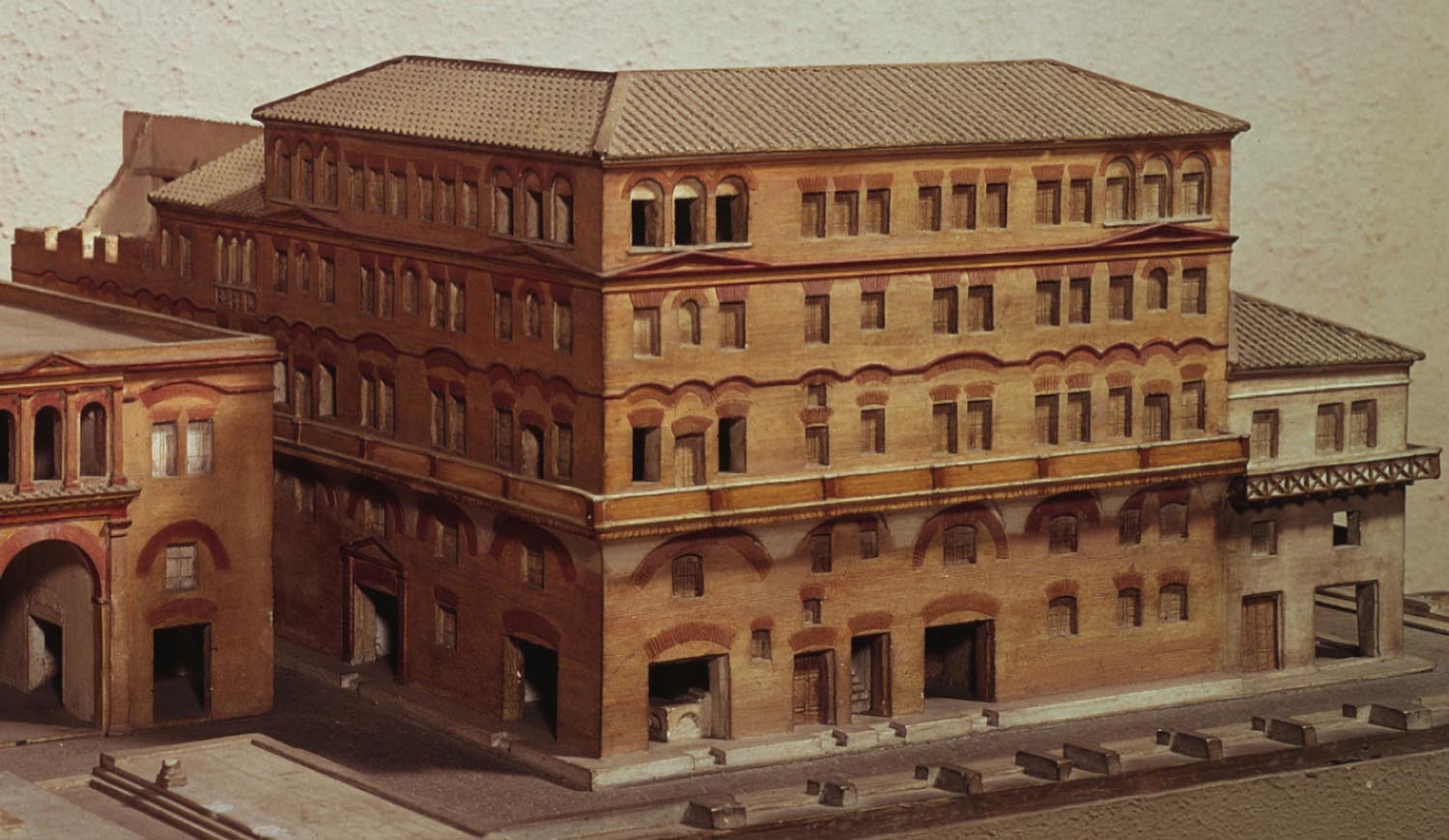
Model of the Insula’s southern façade (Museo della Civiltà Romana)
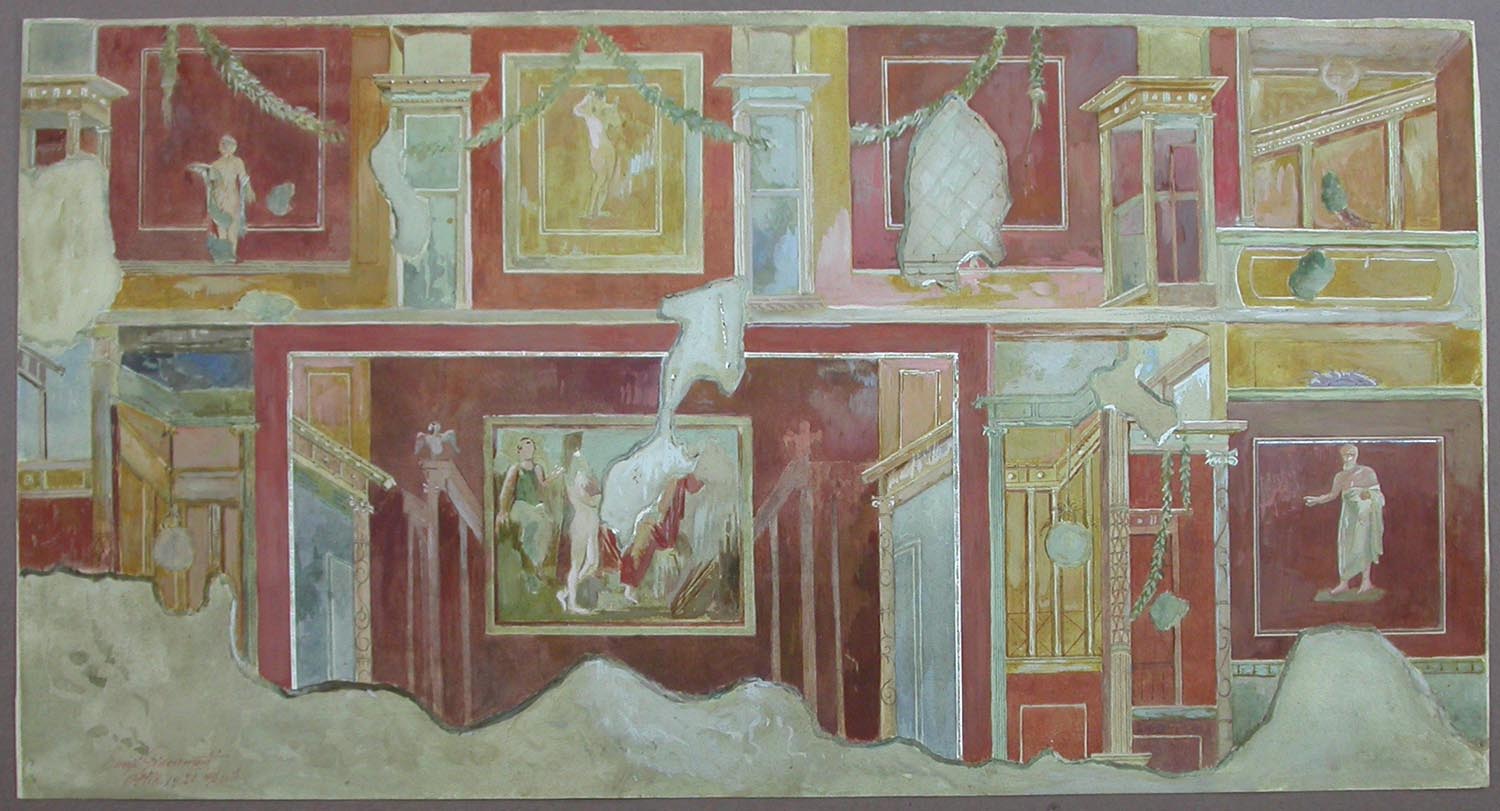
Watercolour reproduction of frescoes in main hall (L. Giammiti)
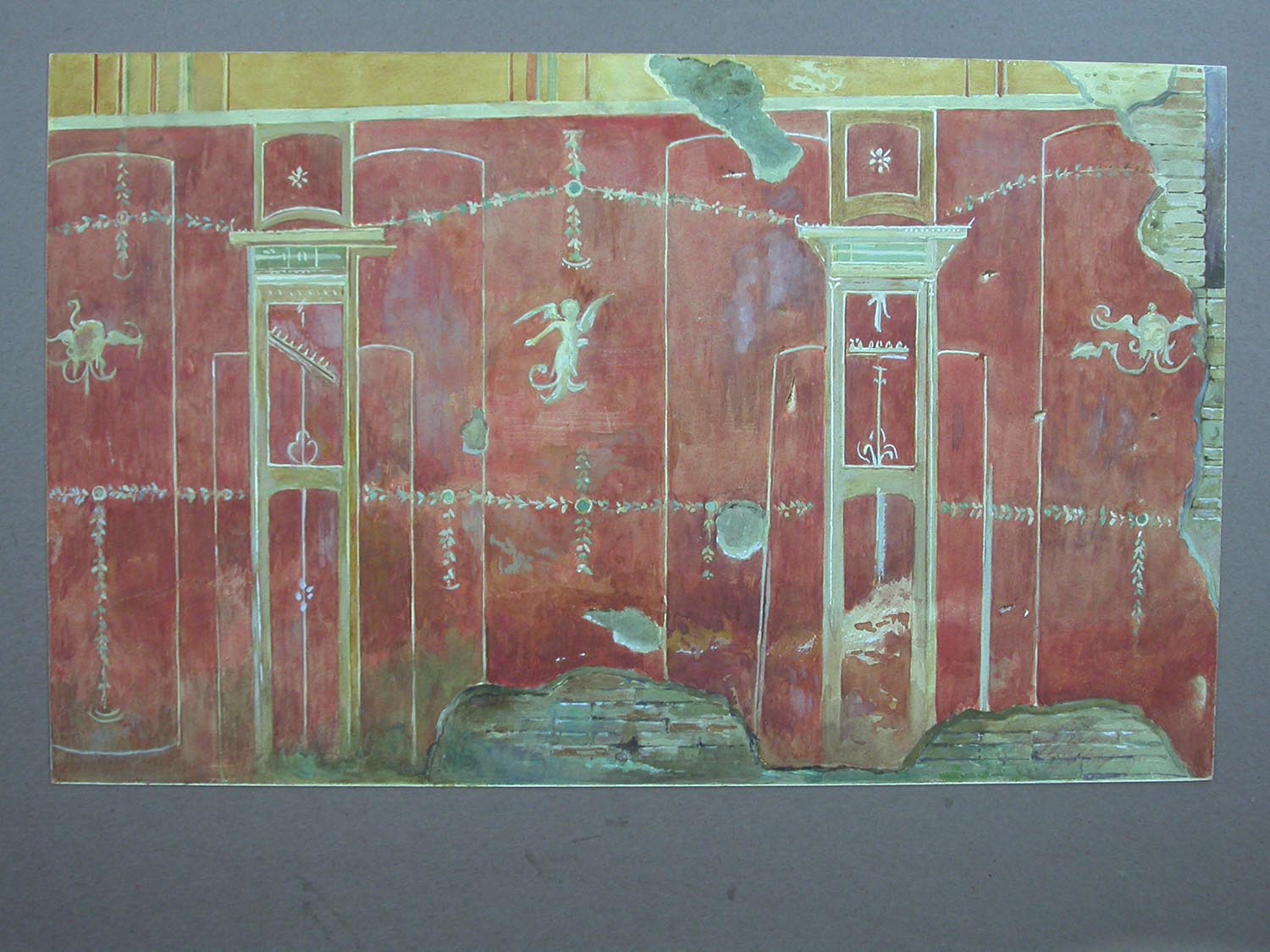
Watercolour reproduction of frescoes in main hall (L. Giammiti)
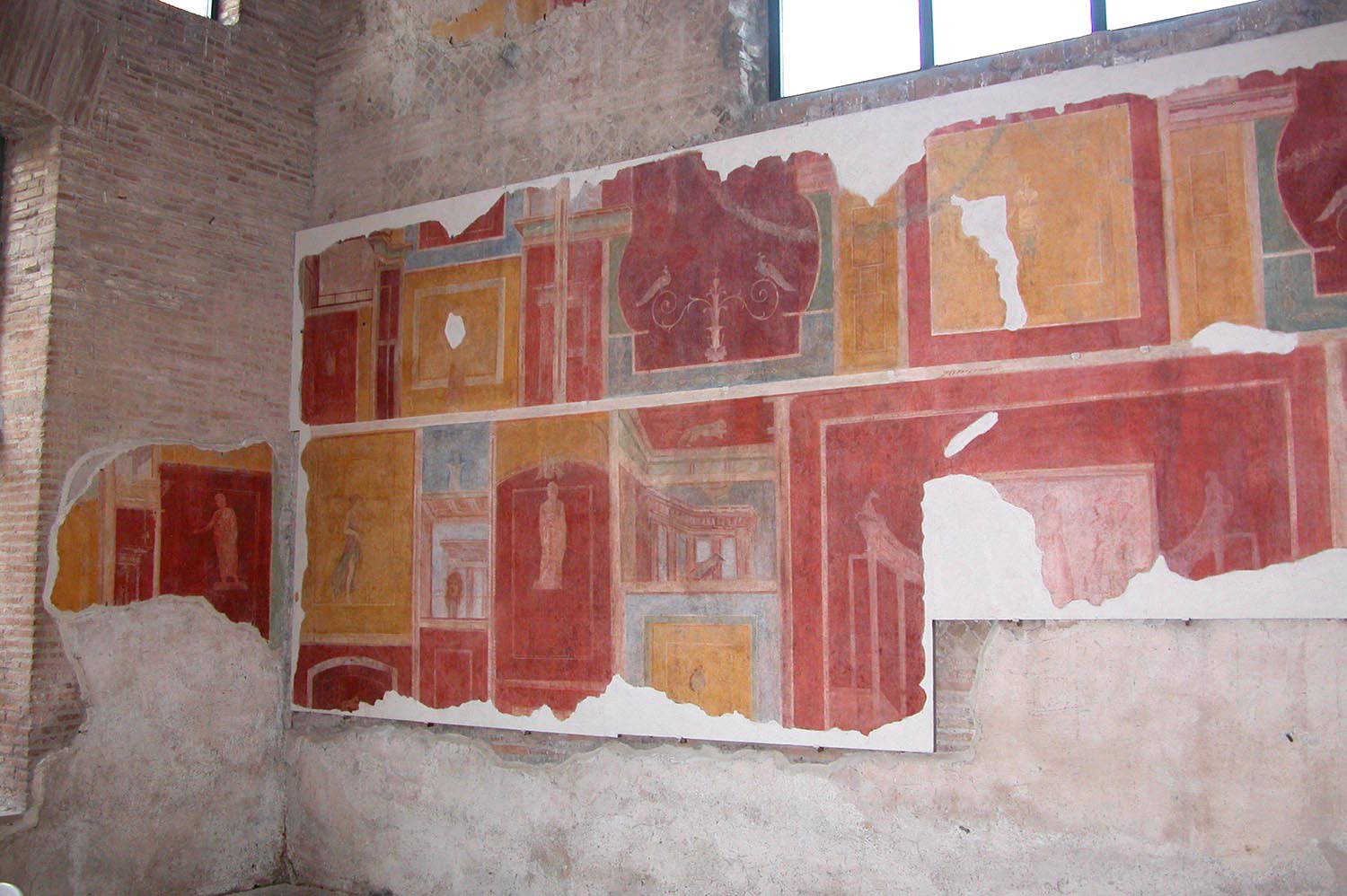
Fresco in main hall
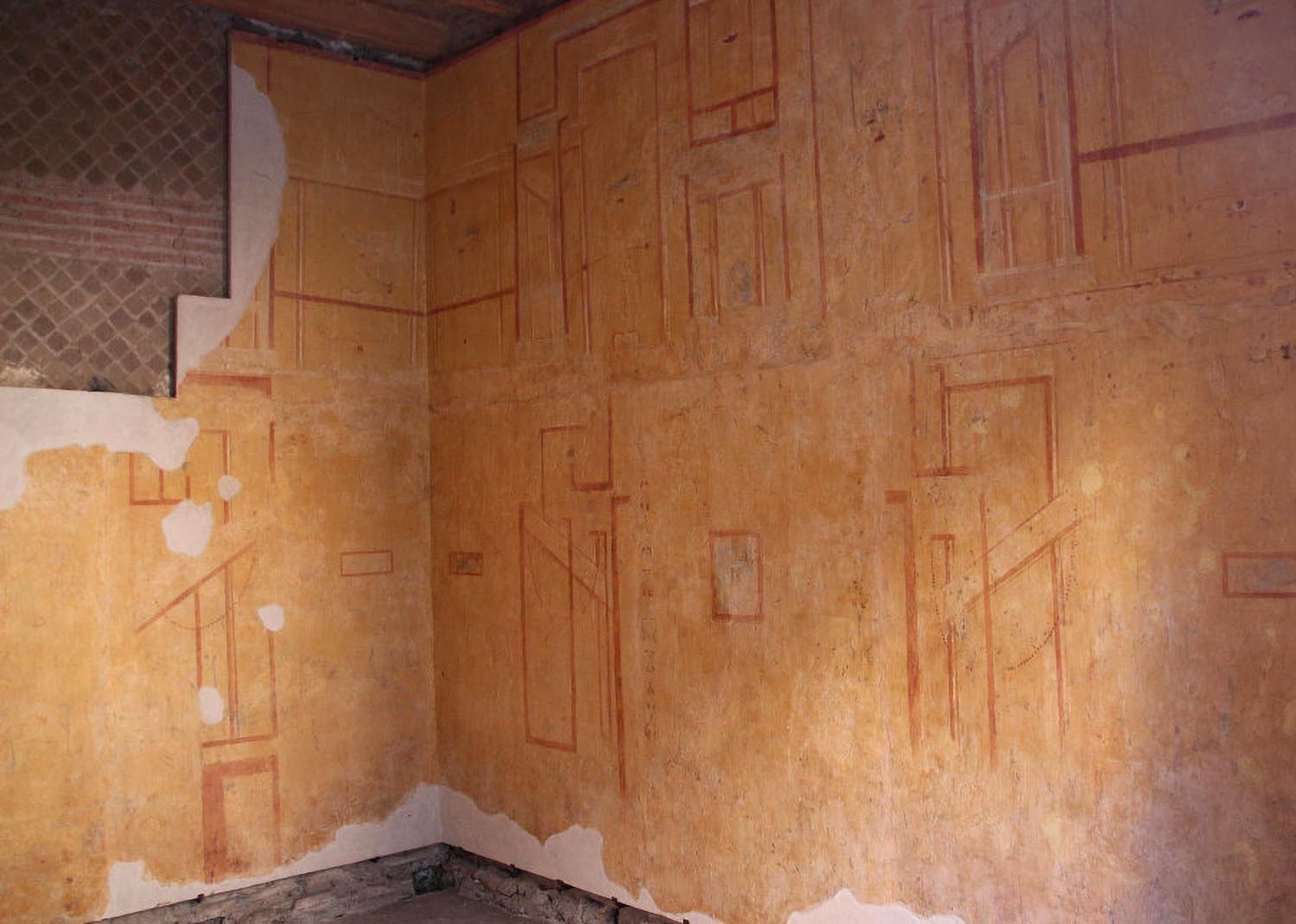
Yellow background fresco from one of the Insula’s settings