

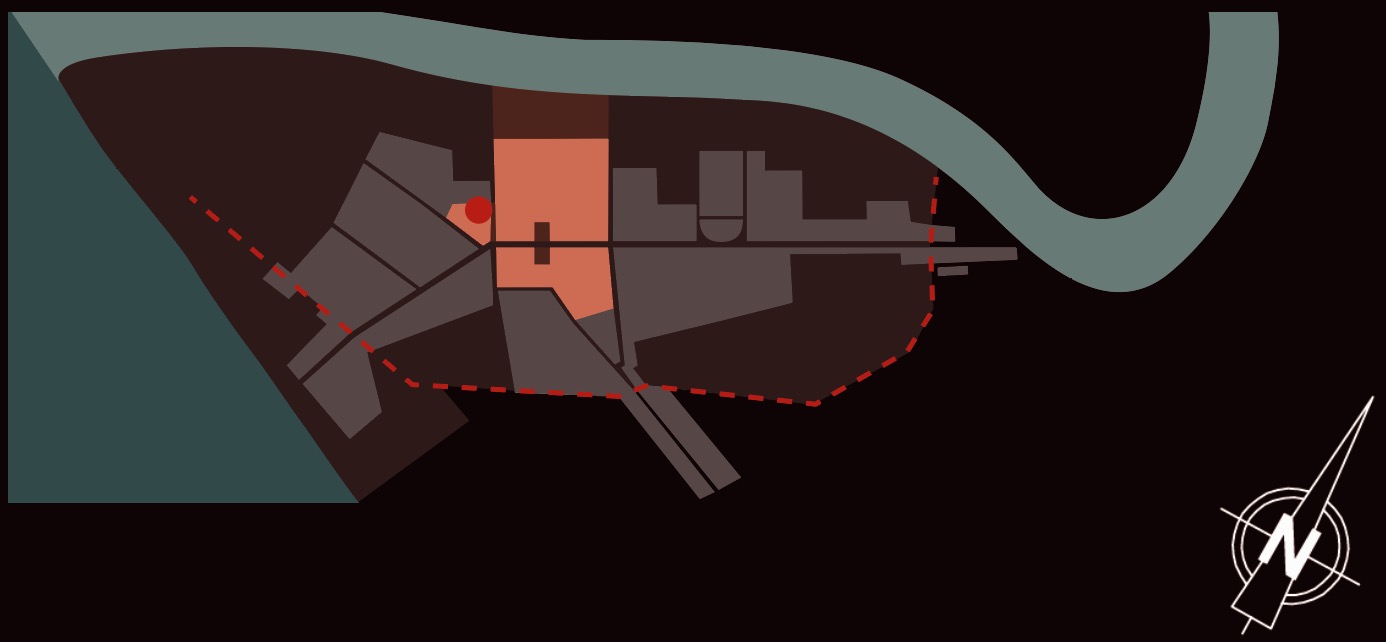
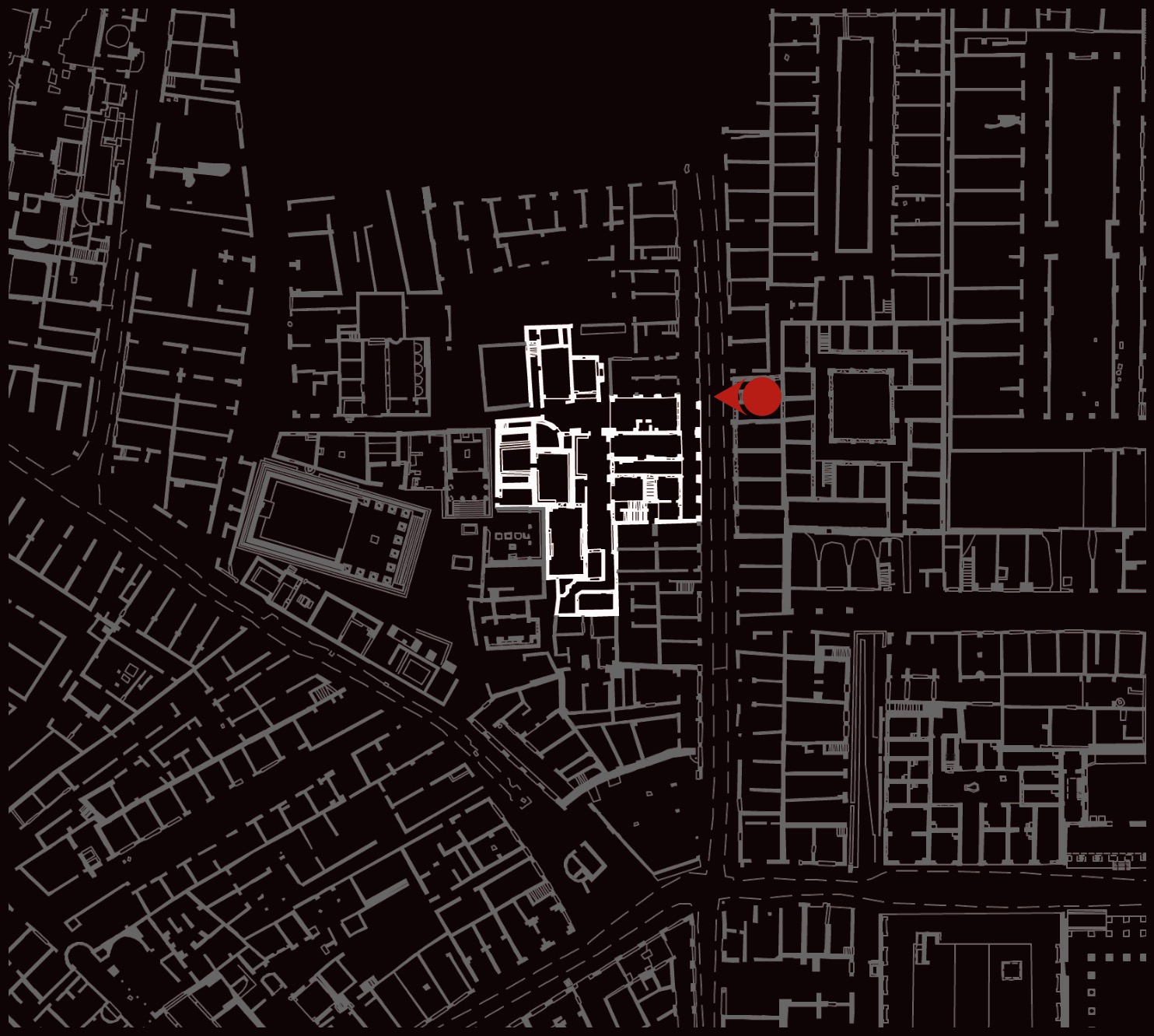
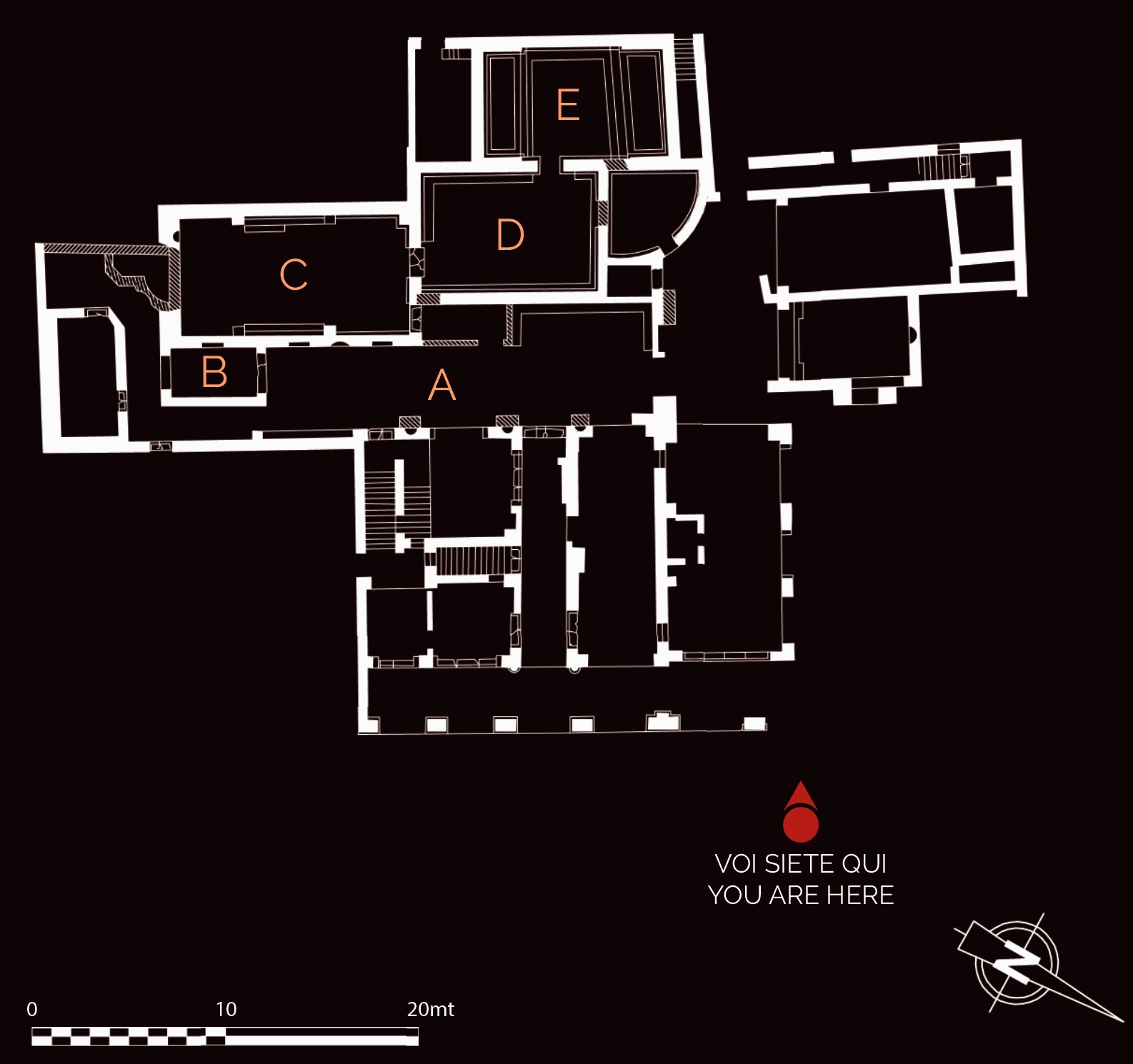
This privately-owned bath complex was built in around AD 110 and renovated a few decades later. It was accessed through a long entrance hall with benches (A), decorated with paintings with plant motifs, which are repeated in the back room (B). The heated rooms were in the western part: the mosaic floor of one of the hot rooms (C) depicts a nude male figure accompanied by an inscription with the name Epictetus Buticosus, who can be identified as the manager of the baths. The calidarium (room for hot baths) preserves a mosaic with a sea scene (a Triton and a Nereid) and two marble-clad basins (E). The water supply was guaranteed by a cistern equipped with a noria (water wheel), located in the adjacent Republican Sacred Area.
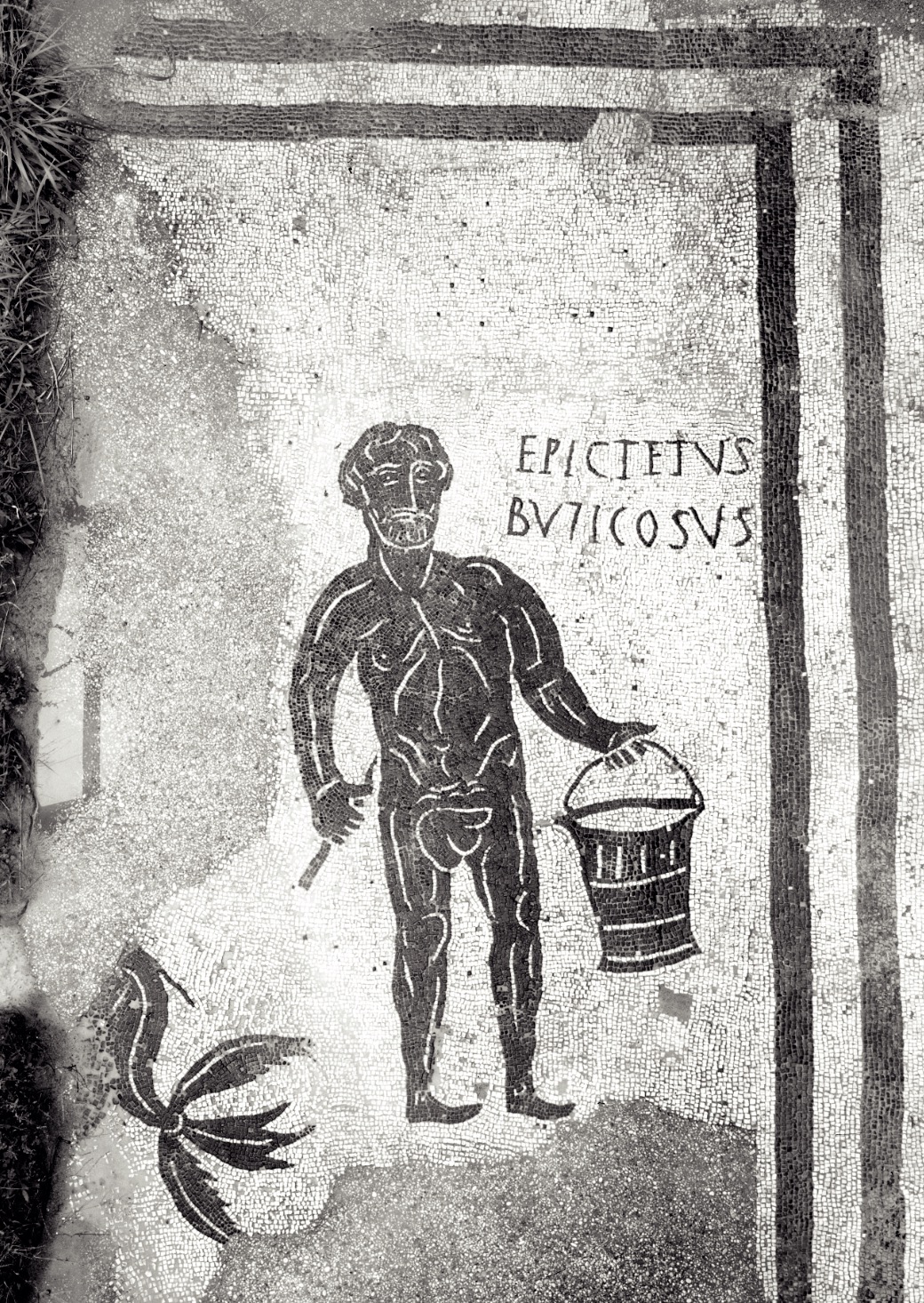
Detail of the mosaic representing Epictetus Buticosus (C)
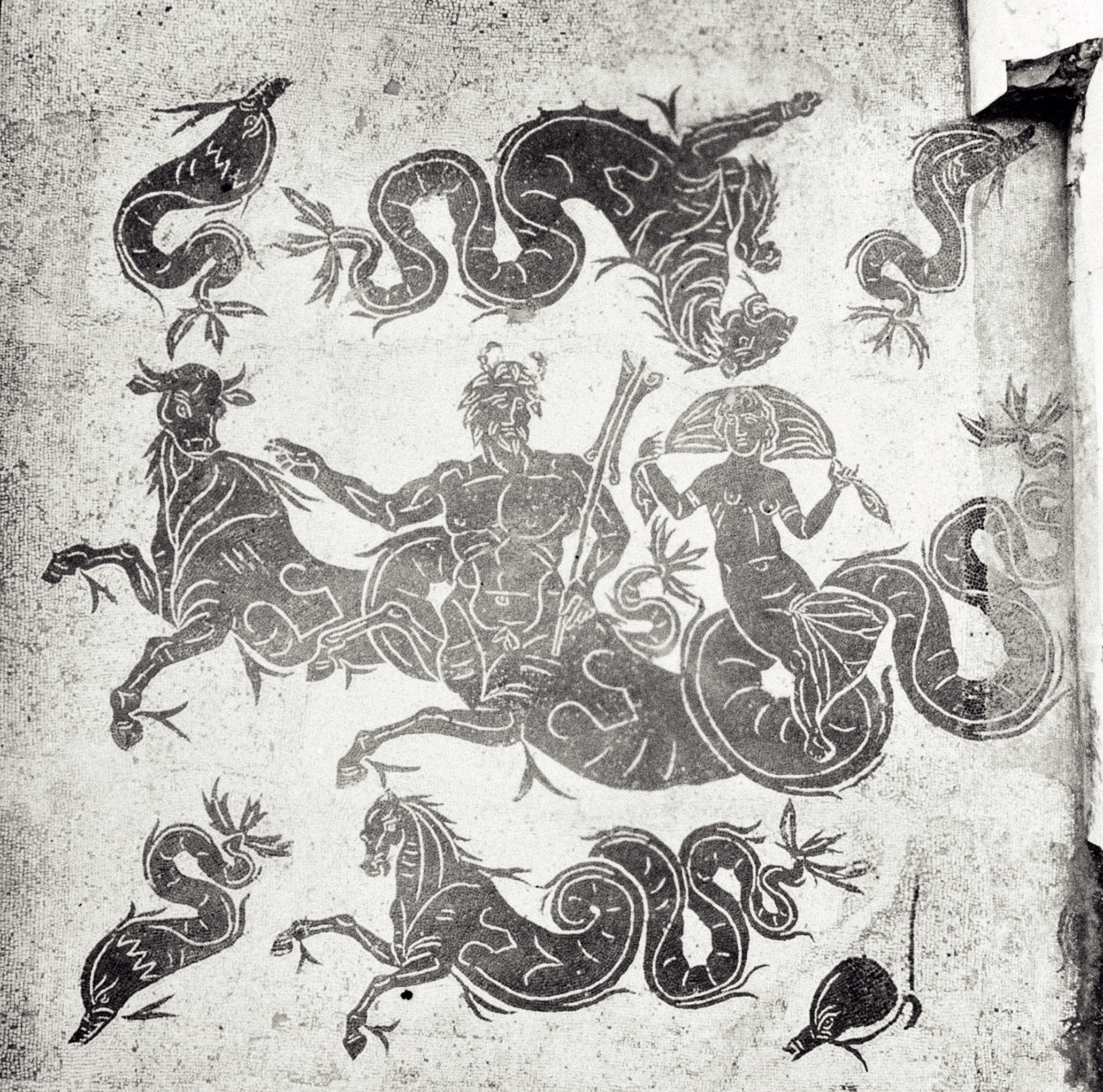
General view of the mosaic in the calidarium with a sea scene (E)
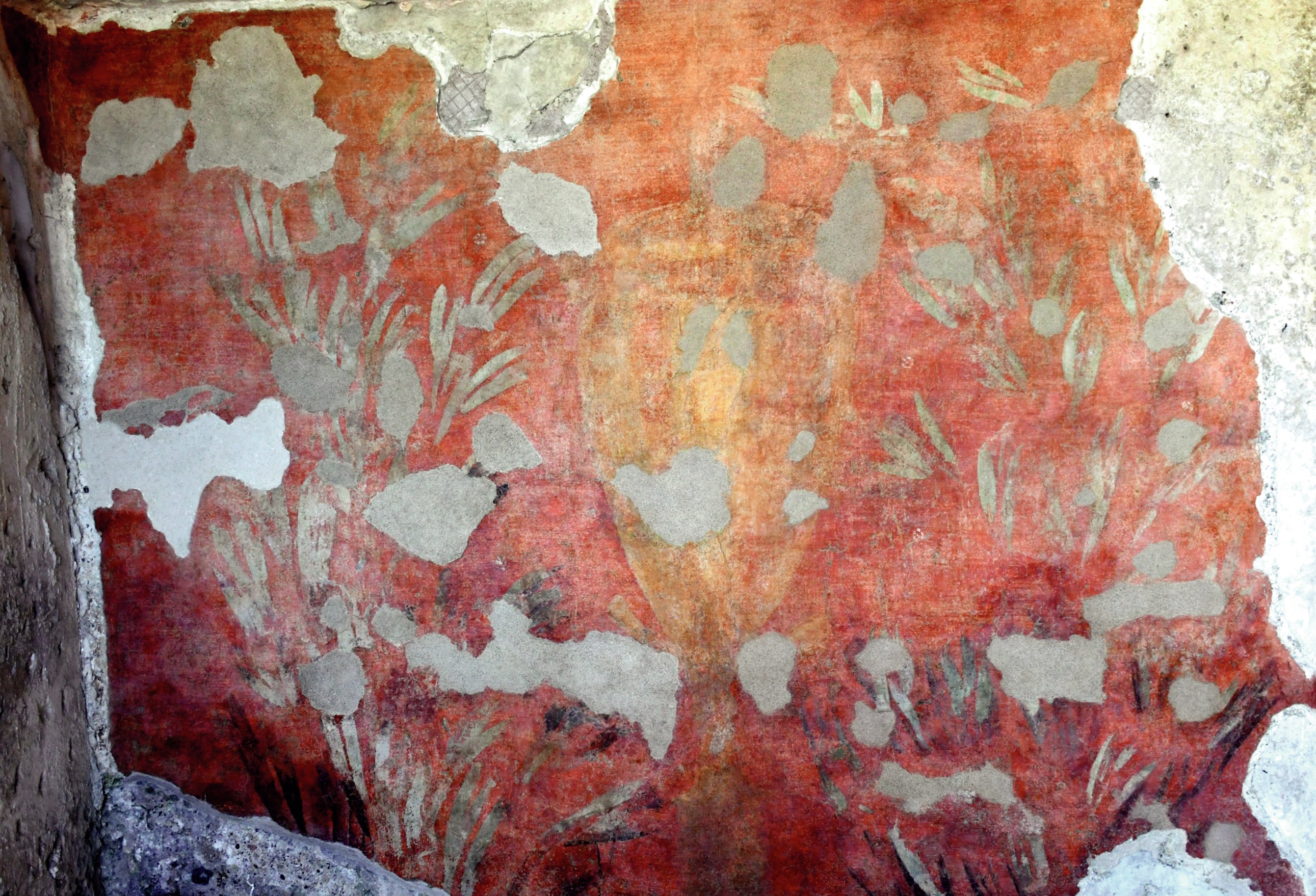
General view of the fresco with plant motifs on the back wall of room B
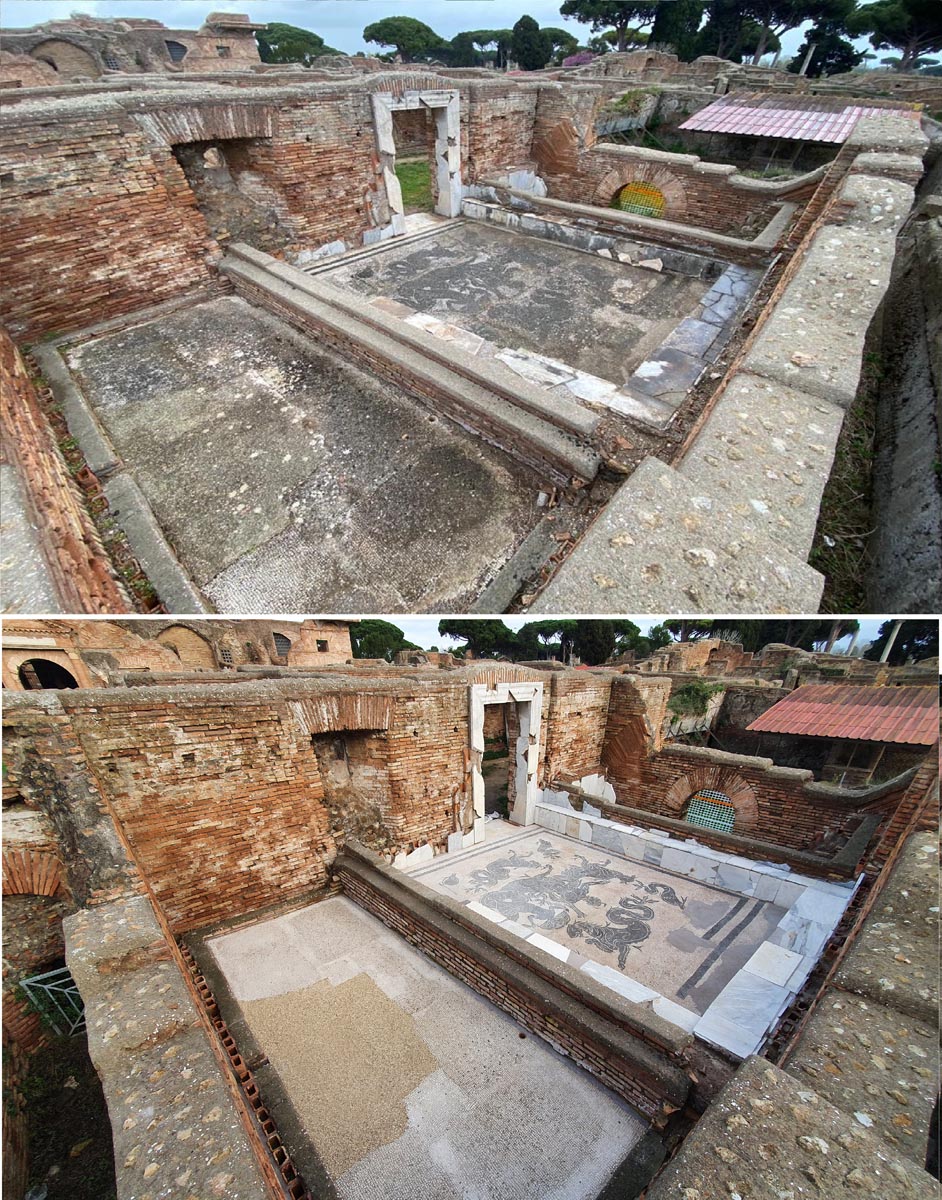
The calidarium before and after the 2021 restoration
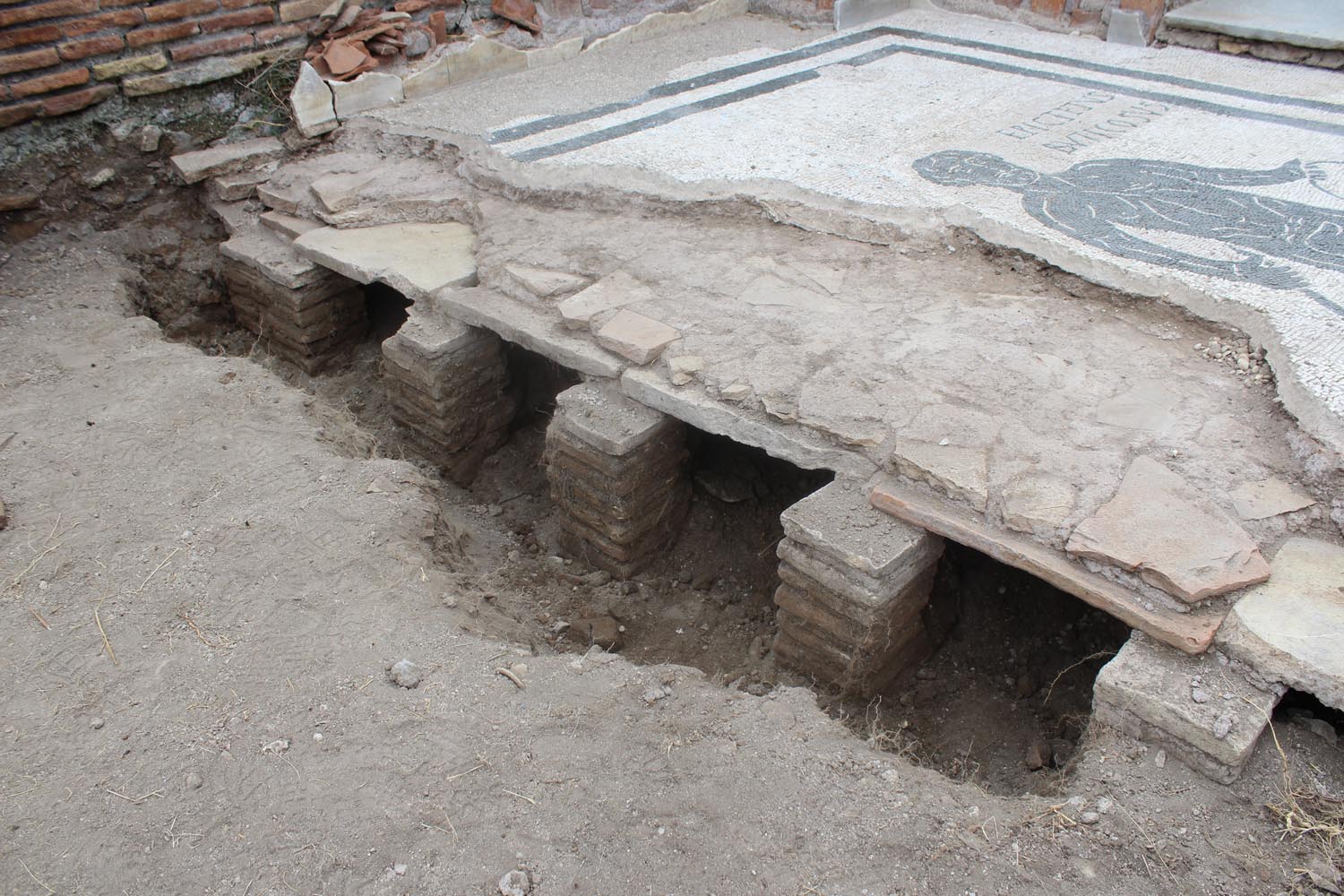
Detail of the suspensurae of one of the heated rooms
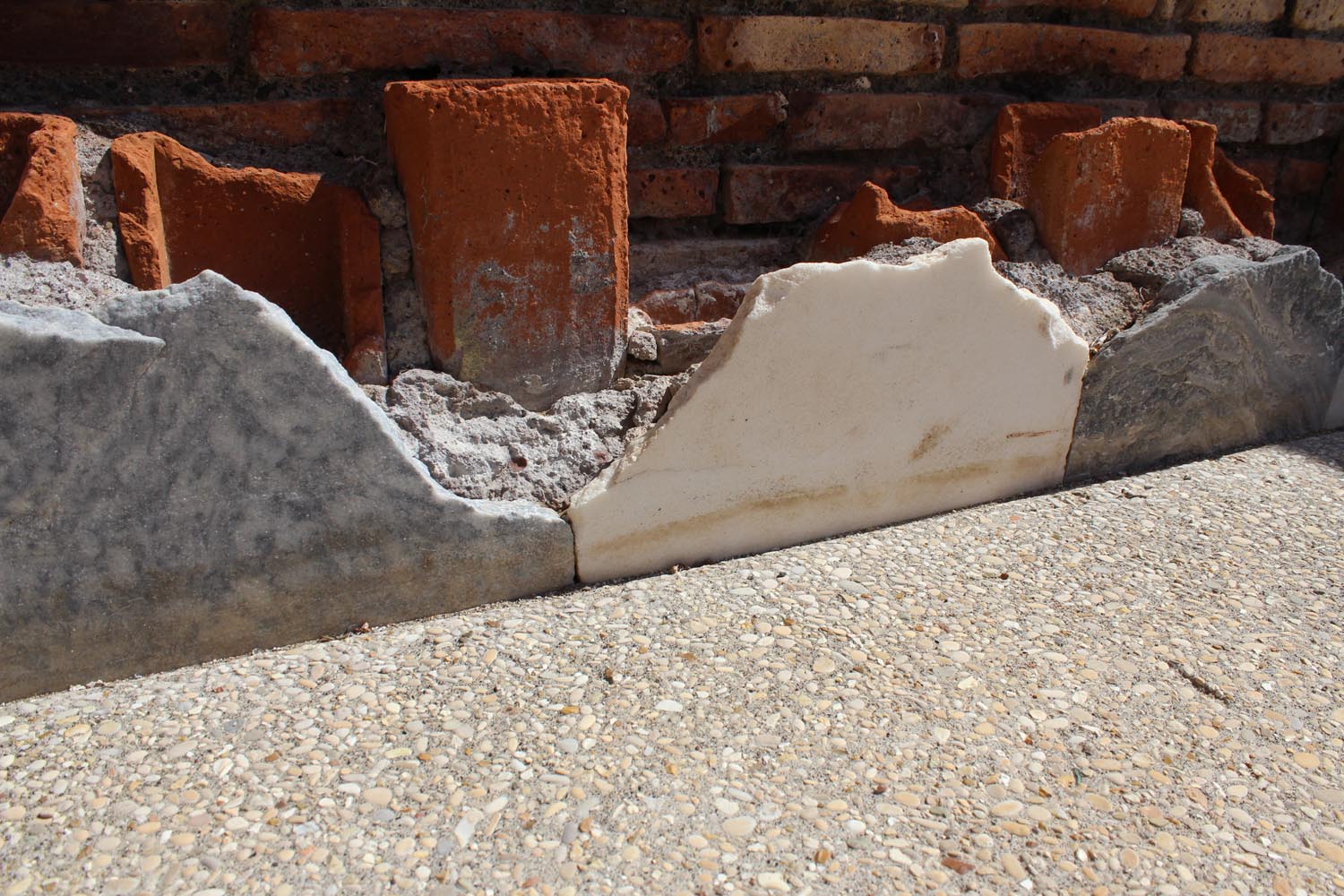
Detail of the heating tubuli and of the marble slab lining of one of the heated rooms
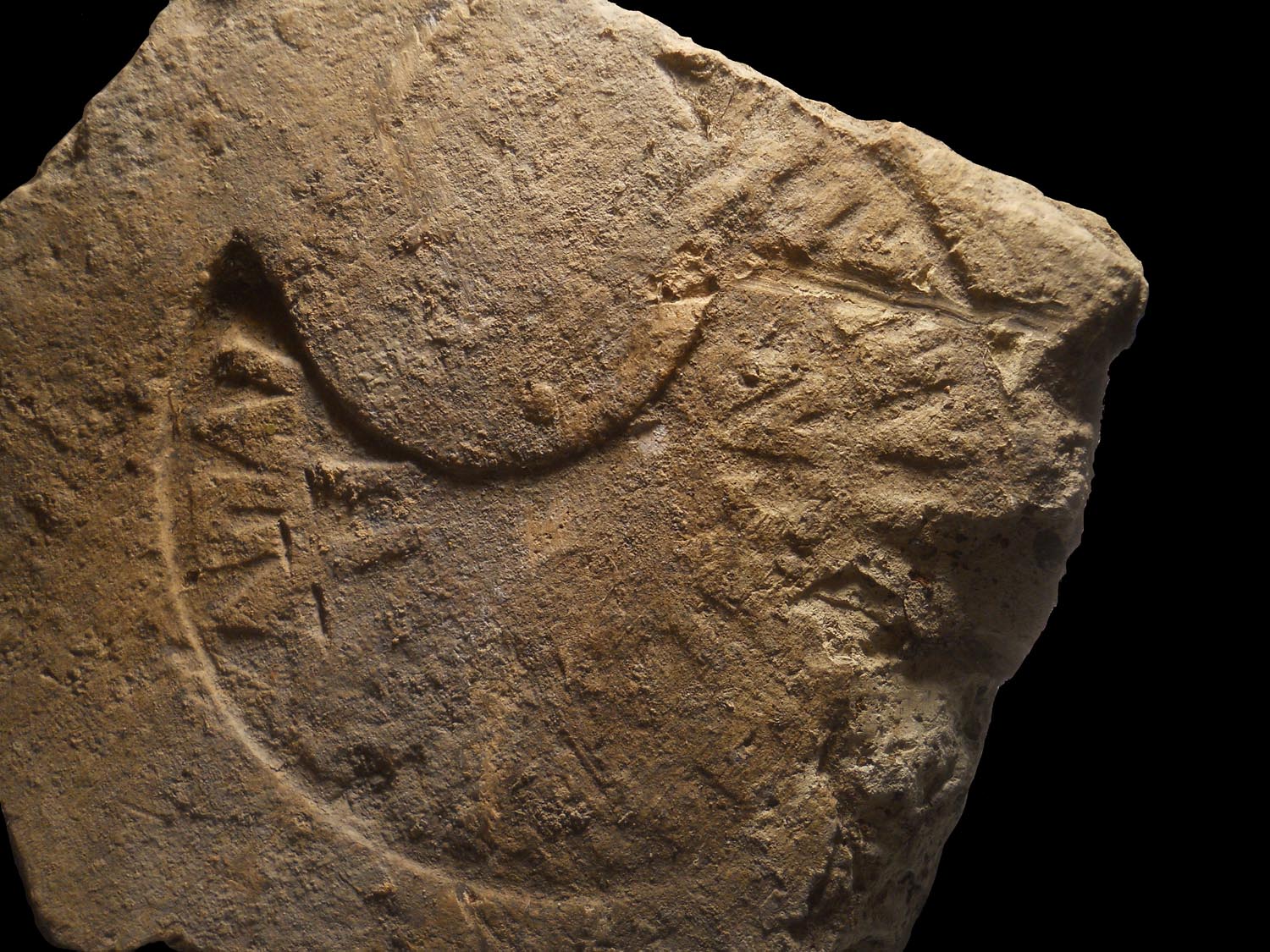
Stamped brick originating from the baths